
 Aperçu en situation
 Envoyer
 Partager
 Détails de l'œuvre

 Télécharger
 Articles similaires
 Radiographie
 Diaporama
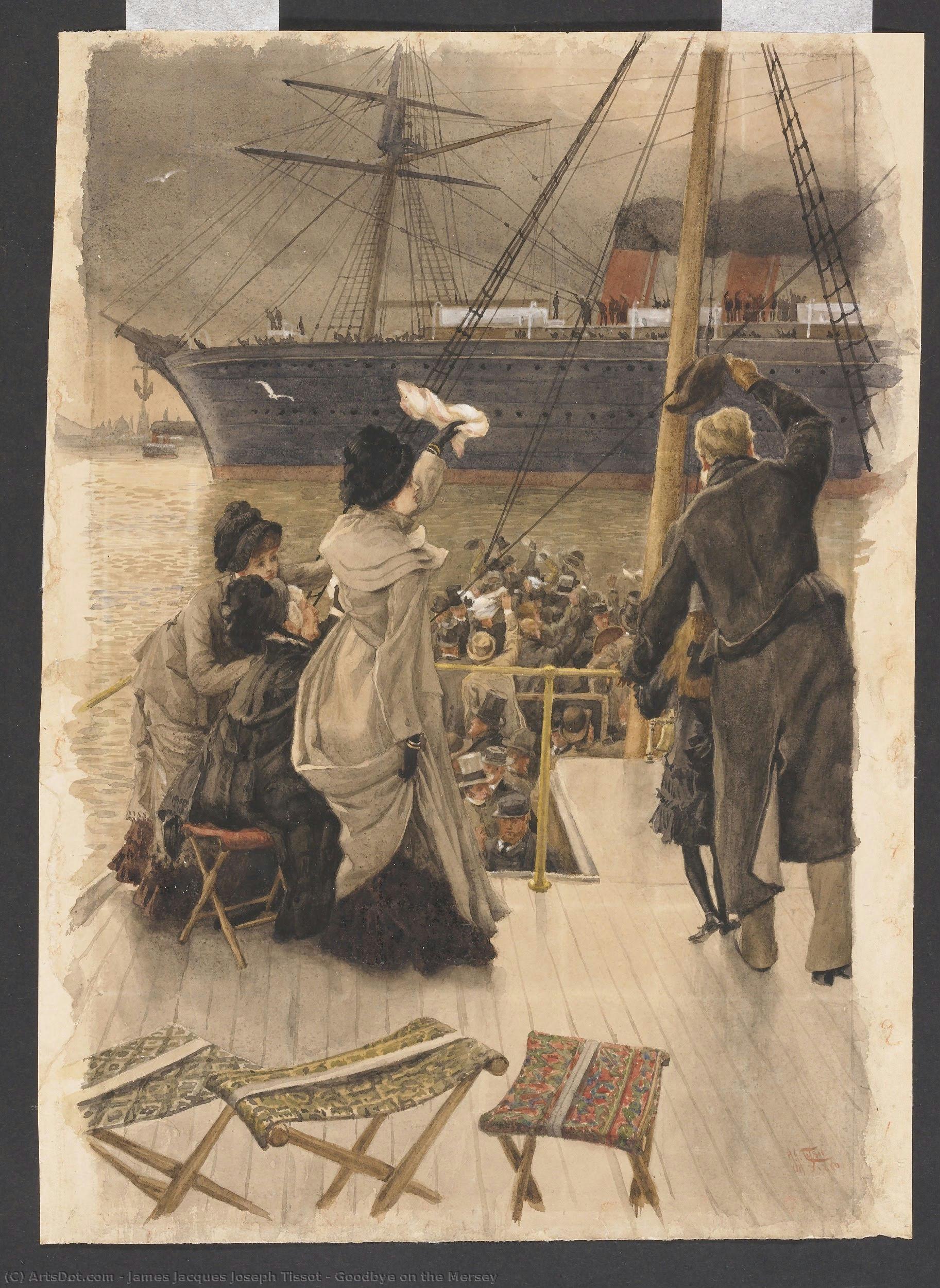
Goodbye on the Mersey
 Acrylic On Canvas
- WallArt
- Contemporary Realism
 1880
1880 42.0 x 30.0 cm
 National Museums Liverpool
 Lire la suite
Acquérez une image numérique haute résolution et optimisée, d'une qualité bien supérieure à l'aperçu en ligne.
Chaque fichier est méticuleusement préparé par nos spécialistes internes à l'aide d'outils avancés et d'une retouche manuelle experte. Nous garantissons que chaque image possède une clarté exceptionnelle, une précision des couleurs irréprochable et un niveau de détail fin.
Le fichier final est livré par e-mail sous 72 heures, optimisé pour une utilisation immédiate dans des contextes professionnels, éditoriaux et d'impression. Il offre la même qualité de confiance que celle utilisée par les plus grands studios de création, éditeurs et galeries.
Image numérique
Téléchargez un fichier haute résolution pour votre usage personnel, l'impression et vos projets créatifs. ( Commander l'impression Commander la reproduction peinte à la main)
Inclus avec chaque commande d'image numérique
Livraison numérique experte, garantie.
En choisissant OriginalUniqueArt.com, vous n'obtenez pas seulement une simple image : vous recevez une œuvre numérique sublimée avec professionnalisme, conçue avec précision et accompagnée d'une garantie de satisfaction. Voici tout ce qui accompagne automatiquement votre commande :

Envoi rapide par e-mail
Votre fichier d'image numérique haute résolution vous sera envoyé par e-mail sous 72 heures après votre commande — prêt à un usage immédiat.

Fichier numérique optimisé par l'IA
Votre œuvre d'art bénéficie d'une optimisation professionnelle grâce à des outils d'IA avancés et une retouche manuelle, garantissant un niveau maximal de détail, de clarté et de fidélité chromatique.

Réexpédition gratuite à vie
Vous avez accidentellement supprimé ou perdu votre fichier ? Pas d'inquiétude — nous vous le renverrons gratuitement, quand vous le souhaitez.

Aucun frais de douane - À jamais
Profitez de votre œuvre d'art instantanément sans frais de douane ni de livraison — les téléchargements numériques sont toujours exonérés de taxes.

Garantie de fidélité des couleurs
Nous garantissons que votre image numérique reproduit les couleurs de l'original aussi fidèlement que possible grâce à des outils professionnels et une gestion rigoureuse des couleurs.

Garantie satisfaction 60 jours
Si vous n'êtes pas satisfait de votre image numérique, nous la retoucherons ou vous rembourserons 100% sous 60 jours — sans poser de questions.

Garantie de remboursement à 100%
Pas satisfait ? Obtenez un remboursement intégral dans les 60 jours suivant la réception de votre fichier numérique — sans aucune question posée.

Remises sur les commandes groupées
Achetez 3 images, économisez 10% - Achetez 5, économisez 15% - Achetez 10+, économisez 20%. Idéal pour les projets créatifs, les galeries et les agences.
Description de la collection
A Farewell Echoed Across Liverpool’s Skyline
Jacques Joseph Tissot's "Goodbye on the Mersey," painted in 1880, transcends mere depiction; it captures the poignant beauty of a moment frozen in time—a family bidding farewell to loved ones embarking on an ambitious voyage across the Atlantic. This watercolor study, destined for a larger oil canvas and exhibited at both the Royal Academy and the Liverpool Autumn Exhibition (LAE), stands as a testament to Tissot’s meticulous observation of contemporary life and his masterful blending of narrative drama with artistic precision.The Canvas of Observation: Technique and Style
Tissot's approach is characterized by an unwavering commitment to realism, honed during his formative years at the École des Beaux-Arts. The watercolor itself demonstrates a remarkable level of detail—minute brushstrokes capturing the subtle nuances of light and shadow on the weathered faces of the departing family and the shimmering expanse of Liverpool’s harbor. He employs a squared-up grid technique, meticulously transferring his sketches onto canvas, ensuring accuracy and consistency across the final oil version. This painstaking process reflects Tissot's belief that art should faithfully represent the world around him, prioritizing observation over idealized representation. The resulting image possesses a luminous quality—a hallmark of watercolor’s ability to convey atmospheric perspective and evoke feelings of tranquility amidst bustling activity.Liverpool’s Maritime Heartbeat: Historical Context
“Goodbye on the Mersey” isn't simply a portrait; it’s deeply rooted in Liverpool’s history as Britain’s premier port city during the Victorian era—a period defined by rapid industrial growth and transatlantic migration. The artist painstakingly researched the cityscape, confirming Ian Murphy’s MMM (Liverpool Museums Management Trust) assertion that the scene accurately portrays Liverpool in 1880. The inclusion of the Mersey estuary, visible against a hazy skyline, underscores the city's vital role as a gateway to America—a destination pursued by countless Britons seeking opportunity and fortune. Furthermore, Tissot’s depiction of Victorian costume reflects the social realities of the time, showcasing the elegance and formality prevalent in upper-class society.Symbolism Within Sentiment: Narrative Resonance
Beyond its visual fidelity, “Goodbye on the Mersey” resonates with profound symbolic significance. The act of farewell itself embodies universal themes of loss, longing, and remembrance— emotions skillfully conveyed through expressive facial expressions and gestures. The family’s posture conveys both sadness and determination—a poignant acknowledgment of the inevitable separation while simultaneously reaffirming their unwavering faith in reunion. Moreover, the ship symbolizes aspiration and progress—representing not only physical travel but also intellectual and spiritual exploration. The watercolor's muted palette contributes to its emotional impact—creating a contemplative mood that invites viewers to contemplate the complexities of human relationships and the enduring power of memory.A Legacy of Light and Emotion
“Goodbye on the Mersey” remains an exceptional achievement in Victorian art, admired for its technical brilliance and evocative storytelling. Its influence can be discerned in subsequent landscape paintings—artists striving to capture similar atmospheric qualities and conveying comparable emotional depth. Today, reproductions of this masterpiece continue to inspire interior designers and collectors alike—serving as reminders that true beauty lies not merely in visual splendor but also in the ability to communicate profound human experience.Biographie de l'artiste
Early Life and Artistic Beginnings
Jacques Joseph Tissot, born October 15, 1836, in Nantes, France, was destined for a life steeped in artistic passion from his earliest years. His father, Marcel Théodore Tissot, was a successful drapery merchant. His mother, Marie Durand, assisted her husband in the family business and designed hats. A devout Catholic, Tissot's formative years were marked by a deep appreciation for faith and tradition—influences that would permeate his artistic vision throughout his life. From a young age, he demonstrated an exceptional talent for drawing and painting, nurturing aspirations that defied societal expectations for men of his time. Encouraged by his parents’ unwavering support, Tissot embarked on formal artistic training at the École des Beaux-Arts in Paris—a pivotal step toward realizing his lifelong ambition to become a celebrated painter. Under the tutelage of luminaries like Ingres, Flandrin, and Lamothe, Tissot honed his skills in classical technique and composition—absorbing the stylistic precepts of the era’s most influential artists. This immersive environment fostered intellectual curiosity and propelled him toward exploring diverse artistic inspirations—ranging from medieval narratives to biblical scenes—demonstrating remarkable versatility. His early works showcased a masterful command of color and light, reflecting Impressionistic influences while maintaining a grounding in realism—a distinctive blend that would characterize his oeuvre for decades to come. The École des Beaux-Arts provided Tissot with invaluable connections within the Parisian art milieu—establishing him firmly as a rising talent poised for artistic success.The Salon Years and Recognition
Tissot’s debut at the Paris Salon in 1861 marked a transformative moment—the unveiling of “The Meeting of Faust and Marguerite,” a dramatic tableau that captivated audiences and garnered considerable acclaim from critics. This ambitious undertaking signaled Tissot's burgeoning reputation as a painter capable of capturing complex narratives and conveying profound emotion—a hallmark of his artistic style. Purchased by the state for inclusion in the Luxembourg Gallery, this monumental canvas cemented his position within the artistic establishment—establishing him as one of France’s most promising artists. Subsequent Salon exhibitions showcased his evolving technique and stylistic preferences—attracting commissions from prominent patrons and bolstering his growing fame. The critical praise he received underscored the significance of his work—demonstrating its ability to resonate with viewers on both intellectual and emotional levels. The Salon served as a crucible for artistic experimentation—allowing Tissot to refine his approach and explore new subjects—most notably the burgeoning world of Parisian high society during the Belle Époque. His meticulous attention to detail extended beyond mere visual representation; he sought to convey not only appearances but also psychological nuances—reflecting the anxieties and aspirations of his subjects with uncanny accuracy. This dedication to realism—combined with subtle Impressionistic influences—became a defining characteristic of his artistic style—establishing him as an icon of Victorian art. His paintings captured the glamour, elegance, and social rituals of the era—providing invaluable insights into the cultural landscape of late nineteenth-century France.Genre Painting and Parisian Society
Tissot’s magnum opus, “La Femme à Paris,” solidified his legacy as a painter of unparalleled observation—a series of canvases that immortalized the demi-mondaine world of Victorian London with breathtaking realism. These paintings—characterized by their luminous color palettes and masterful rendering of textures—became synonymous with capturing the allure and dynamism of Parisian high society—establishing Tissot as a pioneer in genre painting. He meticulously documented the fashions, customs, and social interactions of his subjects—creating portraits that transcended mere likeness—revealing profound psychological depth and conveying an evocative sense of atmosphere. His artistic vision was profoundly influenced by Japonisme—the fascination with Japanese art and aesthetics that swept across Europe during the Victorian era—evident in compositions infused with asymmetrical arrangements and subtle color harmonies reminiscent of Japanese prints. This stylistic fusion underscored Tissot’s intellectual curiosity and his willingness to embrace innovative artistic approaches—demonstrating a remarkable capacity for synthesizing disparate influences into a cohesive aesthetic vision. Through his canvases, Tissot captured not only the visual splendor of Victorian London but also its underlying social tensions—offering a nuanced portrayal of human experience that continues to captivate audiences today. ## Biblical Themes and Japonisme Throughout his prolific output, Tissot embraced diverse artistic inspirations—ranging from medieval narratives to biblical scenes—demonstrating remarkable versatility. His depictions of religious subjects—imbued with spiritual depth and emotional resonance—showcased his ability to elevate visual storytelling into profound contemplation—a testament to his artistic integrity and humanist convictions. He meticulously researched historical sources—incorporating accurate details into his compositions—reflecting a commitment to scholarly rigor alongside artistic creativity. His exploration of biblical themes—particularly the Passion of Christ—revealed an unwavering faith—expressed through evocative imagery and masterful technique—establishing him as one of France’s foremost religious artists. His canvases conveyed the drama, pathos, and spiritual significance of biblical narratives—inspiring viewers with their beauty and conveying a powerful message of compassion and redemption. He skillfully utilized chiaroscuro—the dramatic interplay of light and shadow—to heighten emotional impact—creating artworks that resonate with timeless artistic power. ## Later Years and Legacy Tissot served in the Franco-Prussian War—an experience that profoundly shaped his worldview—instilling him with a sense of duty and patriotism—influences that permeated his artistic output. Following the war’s conclusion, he relocated to London—where he pursued etching alongside Sir Seymour Haden—further honing his artistic skills through portrait commissions and caricatures for Vanity Fair—establishing himself as a celebrated artist recognized internationally. His relationship with Kathleen Newton blossomed into a passionate companionship—providing him with enduring inspiration for numerous paintings—a testament to the transformative power of human connection. Tragically, Newton succumbed to tuberculosis in 1882—leaving Tissot devastated—a profound loss that deeply affected his creative output—yet he persevered—producing exceptional artwork until his death in 1902—securing his place as one of France’s most distinguished artists of the nineteenth century. His enduring influence on genre painting and Impressionism continues to inspire admiration for its artistic brilliance and evocative portrayal of Victorian life and faith.
Jacques Joseph Tissot
1836 - 1902 , France
En bref
- Artistic Movement Or Style: Genre Painting
- Artists Or Movements Influenced By This Artist: ['Impressionism']
- Artists Who Influenced This Artist:
- Ingres
- Lamothe
- Date Of Birth: October 15, 1836
- Date Of Death: August 8, 1902
- Full Name: Jacques Joseph Tissot
- Nationality: French
- Notable Artworks:
- The Meeting of Faust and Marguerite
- La Femme à Paris
- Place Of Birth: Nantes, France

