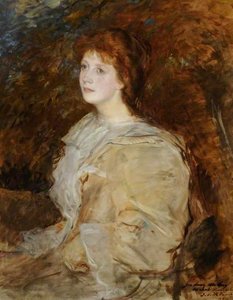
Aperçu en situation
 Partager
 Partager
 Détails
 Guide imprimable

 Télécharger
 Articles similaires
 Radiographie
 Voir le diaporama
 Statistiques
Walter Richard Sickert
 Oil On Canvas
- WallArt
- Realism
 1898
1898- 19th Century
 81.0 x 65.0 cm
 Afficher la suite
Reproduction à l'huile faite à la main
Huile sur toile peinte à la main, avec cadre et dimensions personnalisés, réalisée sur commande par nos artistes. ( Passer au format impression Passer au format image numérique)




































Choisissez parmi nos formats prédéfinis qui respectent les proportions originales de l’œuvre.

Saisissez la largeur et la hauteur souhaitées, pour s'adapter à votre cadre ou à votre mur. Cette œuvre est peinte à la main ; ainsi, pour un format de forme différente, l'artiste peut peindre un peu plus autour du tableau ou réduire légèrement les bords — c'est vous qui choisissez. Nous vous envoyons une maquette numérique pour approbation avant que la peinture ne commence. L'image présentée sur cette page ne reflète pas le résultat réel — seule la maquette le fait.
Après la commande, l’équipe OriginalUniqueArt.com contactera le client par e-mail pour recueillir ses instructions et lui fournira une maquette d’aperçu
Livraison dans le monde entier () en 3 à 4 semaines au lieu des 5 semaines habituelles. (23 octobre). Aucun compromis sur la qualité.

Livraison express gratuite dans le monde entier

Toile de lin de haute qualité

Assurance transport complète

Garantie de remboursement des droits de douane

Garantie de fidélité des couleurs

Garantie de retour de 100 jours (uniquement en cas de défaut)

Garantie de remboursement à 100%

Tarifs dégressifs sur quantité
 L'option verre n'est disponible que pour les dimensions inférieures à 110 cm.

Walter Richard Sickert
Technique de reproduction
Format de la reproduction
-


Prix total final
€ 264
A Gaze Through Time: The Introspective Soul of Jacques-Émile Blanche
In the quiet, shadowed corners of late nineteenth-century Parisian art, few works capture the profound weight of identity as poignantly as this 1898 portrait. While the title suggests a connection to the gritty realism of Walter Richard Sickert, the hand behind this masterful oil on canvas is none other than Jacques-Élamile Blanche, a painter whose lineage and training placed him at the very heart of the French Belle Époque. This piece serves as more than just a depiction of a man; it is an invitation into a private moment of contemplation. The subject sits in a poised, seated pose, his presence commanding the space through a subtle, angled perspective that pulls the viewer directly into his steady, searching gaze. It is a composition that feels both intimate and monumental, perfect for a collector seeking a centerpiece that breathes life and history into a sophisticated interior.
The technique employed here is a masterclass in the use of light and texture, reminiscent of the great masters who preceded him. Blanche utilizes a directional light source originating from the upper left, a choice that does not merely illuminate but actively sculpts the subject's features. This chiaroscuro effect creates deep, dramatic shadows that define the contours of the face and the heavy folds of the clothing, lending the figure a three-dimensional vitality. The artist’s brushwork is remarkably tactile; through an impasto-like application of oil paint, he achieves a rich, layered texture that invites the eye to wander over the canvas. One can almost feel the weight of the fabric and the warmth of the skin, as the organic curves of the subject's hands and face are set against the more structured, geometric lines of his attire.
Beyond its technical brilliance, the painting resonates with a deep sense of psychological depth. The background is intentionally dark and indistinct, a void that strips away the distractions of the outside world to focus entirely on the subject's internal state. This stylistic choice fosters an atmosphere of introspection and perhaps a touch of artistic vanity, as if the sitter is acutely aware of his own legacy being captured for eternity. Subtle symbolic elements, such as the formal hat, hint at the social standing and professional dignity of the era, yet the overall mood remains grounded in a raw, human realism. For the interior designer or art enthusiast, this work offers a profound emotional impact—it is a piece that does not merely decorate a wall but anchors a room with its silent, powerful narrative of character and permanence.
Questions et réponses
En quelle année «Walter Richard Sickert» de Jacques-Émile Blanche a-t-il été créé ?
«Walter Richard Sickert» date de 1898. Cette date inscrit l'œuvre dans la carrière de Jacques-Émile Blanche ainsi que dans son époque.
«Walter Richard Sickert» de Jacques-Émile Blanche est-elle une œuvre lumineuse ou sombre ?
La luminosité perçue de «Walter Richard Sickert» de Jacques-Émile Blanche est deep_shadow. Elle peut être harmonisée avec la lumière de l'espace prévu.
Qui est l'auteur de « Walter Richard Sickert », et dans quel mouvement ?
Derrière « Walter Richard Sickert » se trouvent Jacques-Émile Blanche et le mouvement Realism.
Biographie de l'artiste
Early Life and Training
Jacques Émile Blanche (1861–1942) was born in Paris on January 1, 1861, within the affluent Parisian neighborhood of Passy, where his father, Émile Blanche—a noted pathologist—established a prestigious clinic. Surrounded by influential families and artists, Blanche’s upbringing fostered an appreciation for culture and creativity from a young age. His father encouraged his son's artistic inclinations, recognizing the importance of nurturing talent beyond the medical profession. He met many prominent writers and painters during his childhood, including Édouard Manet, who would profoundly shape his artistic vision. Blanche’s formative years were marked by exposure to intellectual discourse and artistic experimentation—experiences that instilled in him a lifelong dedication to observation and expressive representation.Career
Blanche pursued his artistic endeavors largely independently, honing his skills through self-discipline and tireless practice. Despite lacking formal training, he achieved considerable success as a portrait painter, developing a distinctive style influenced by both English Romanticism and Impressionist aesthetics. He established himself in London from 1870, becoming a member of the New English Art Club (NEAC), where he engaged with fellow artists and explored innovative techniques. Blanche’s artistic output spanned decades, characterized by meticulous attention to detail and a masterful command of tonal color—a hallmark of his oeuvre. His portraits captured not only physical likeness but also psychological nuance, conveying the inner lives of his subjects with sensitivity and insight. Notable among his accomplishments were collaborations with literary figures like Marcel Proust and Virginia Woolf, demonstrating his versatility as an artist and intellectual.Influences and Style
Blanche’s artistic style drew inspiration from several key sources—primarily Édouard Manet and James McNeill Whistler—whom he regarded as kindred spirits in their pursuit of truthfulness and expressive beauty. Like these artists, Blanche sought to capture the essence of his subjects through bold brushstrokes and a restrained palette, prioritizing emotional resonance over mere visual accuracy. His portraits embody a blend of observation and imagination, reflecting the influence of Impressionist principles while retaining elements of traditional portraiture conventions.Notable Works and Exhibitions
Blanche’s artistic legacy includes iconic paintings such as “The Kreutzer Sonata,” which exemplifies his ability to convey musical emotion through visual imagery; “Portrait of Henry James,” a masterpiece of psychological portraiture; and “London Views,” a series documenting the cityscape with remarkable clarity and atmospheric depth. His works were showcased in prestigious salons and exhibitions throughout his lifetime, securing his place among the leading artists of his era—a testament to his talent and unwavering commitment to artistic excellence.Historical Significance
Jacques Émile Blanche’s contribution to Impressionist art is undeniable—he stands as a symbol of Parisian elegance and intellectual sophistication during the Belle Époque. His portraits continue to resonate with audiences today, capturing the spirit of a bygone era and demonstrating the enduring power of visual storytelling.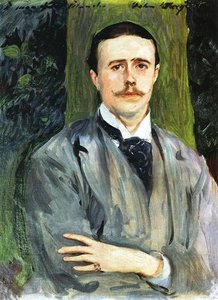
Jacques-Émile Blanche
1861 - 1942 , France
En bref
- Artistic Movement Or Style: Impressionism
- Artists Who Influenced This Artist:
- Edouard Manet
- James McNeill Whistler
- Date Of Birth: January 1, 1861
- Date Of Death: September 30, 1942
- Full Name: Jacques Émile Blanche
- Nationality: French
- Notable Artworks:
- The Kreutzer Sonata
- Portrait of Marcel Proust
- Place Of Birth: Paris, France
Articles connexes

Les 10 Chefs-d'œuvre Impressionnistes qui ont Révolutionné le Paysage
Plongez au cœur de l'Impressionnisme avec les 10 chefs-d'œuvre qui ont révolutionné le paysage. Découvrez Monet, Renoir et plus encore sur OriginalUniqueArt.com – reproductions d'art de qualité muséale pour sublimer votre intérieur.
Renoir : 25 Chefs-d'œuvre Incontournables – L’Art de la Lumière
Plongez au cœur de l'univers vibrant de Pierre-Auguste Renoir ! Découvrez 25 chefs-d’œuvre emblématiques, explorant la lumière, les couleurs et la joie de vivre. Reproductions d'art de qualité musée sur OriginalUniqueArt.com.
Jacques-Émile Blanche: Capturing Belle Époque Society & the Cult of Personality
Explore the captivating portraits of Jacques-Émile Blanche, a master Impressionist who captured the essence of Belle Époque society in Paris and London. Discover his unique style & lasting legacy.

Capturing Light: A Masterclass in the Ethereal Beauty of Impressionistic Landscapes
Explore the ethereal beauty of Impressionist landscapes. Discover how masters like Monet captured fleeting light through color and texture, and learn to curate these timeless, luminous masterpieces for your home collection.

Impressionistic Realism's Finest: 10 Masterpieces for Your Home | OriginalUniqueArt
Journey through Impressionistic Realism with 10 iconic masterpieces by Monet, Renoir & Van Gogh. Explore art history, techniques & find museum-quality reproductions for your home at OriginalUniqueArt.com. Discover all masterpieces online!