Aperçu en situation
 Partager
 Partager
 Détails
 Guide imprimable

 Télécharger
 Articles similaires
 Radiographie
 Voir le diaporama
 Statistiques
L Hôte
 Acrylic On Canvas
- WallArt
- Cubism
 1892
1892 220.0 x 290.0 cm
 Musée Des Beaux
 Afficher la suite
Giclées et impressions d'art
Impressions giclées ou sur toile de qualité musée, avec une production rapide et des finitions au choix. ( Acheter la peinture faite à la main Passer au format image numérique)




P118B €10

P118H €10

P118W €10

P438Z €10

P508JH €12

P508YH €12

P805H €10

P805Z €10

P919BZ €10

P919G €10

P919XJ €10

P959ZH €10

P968JZ €12

W106C €8

W218G €10

W218JH €8

W218Y €10

W307PJ €10

W316G €10

W316PJ €8

W316Y €10

W398PJ €8

W4111J €10

W500HY €15

W500JH €15

W692G €12

W849H €8

W940BG €15

W953PJ €8




Choisissez parmi nos formats prédéfinis qui respectent les proportions originales de l’œuvre.

Saisissez la largeur et la hauteur souhaitées pour qu'elles s'adaptent à votre cadre ou à votre mur. Une impression ne peut être que découpée, elle ne peut jamais être agrandie au-delà de l'image originale ; ainsi, un format de forme différente entraînera la perte d'une partie de l'image. Nous vous envoyons une maquette numérique pour approbation avant toute impression. L'image présentée sur cette page ne montre pas le recadrage réel — seule la maquette le permet.
Livraison dans le monde entier () en 2 semaines au lieu des 4/5 semaines habituelles. (24 octobre)

Livraison express gratuite dans le monde entier

Toile de lin de haute qualité

Assurance transport complète

Garantie de remboursement des droits de douane

Garantie de fidélité des couleurs

Garantie de retour de 100 jours (uniquement en cas de défaut)

Garantie de remboursement à 100%

Tarifs dégressifs sur quantité
 L'option verre n'est disponible que pour les dimensions inférieures à 110 cm.

L Hôte
Giclées et impressions d'art
Format de la reproduction
-


Prix total final
€ 70
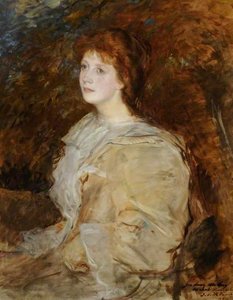
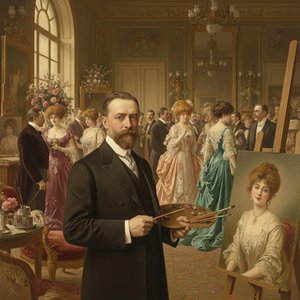
L'Hôte by Jacques Emile Blanche – A Portrait of Parisian Elegance
Jacques-Émile Blanche’s “L’Hôte” (The Host) stands as a quintessential emblem of Belle Époque Paris, capturing not merely a likeness but an atmosphere—a palpable sense of refined social interaction and intellectual curiosity. Painted in 1892, this monumental oil on canvas measuring 220 x 290 cm resides at the Musée Des Beaux Arts in Rouen, France, offering viewers a glimpse into a bygone era defined by artistic innovation and aristocratic refinement. Blanche’s distinctive style—characterized by loose brushwork and a muted palette—immediately distinguishes itself from the more polished conventions of his contemporaries. He eschewed meticulous detail in favor of conveying emotion and capturing the subtle nuances of human expression, techniques honed during his formative years alongside luminaries like Édouard Manet and Whistler.A Masterful Blend of Realism and Symbolism
Blanche’s artistic approach transcends mere representation; it delves into symbolism to illuminate deeper themes concerning identity and social dynamics. The composition itself is carefully orchestrated—the central figures seated around a dining table dominate the canvas, their gaze directed outwards, suggesting contemplation and engagement with the world beyond the immediate setting. Notably absent are chairs positioned strategically behind the guests, an element that has been interpreted as representing those excluded from this privileged circle – perhaps individuals deemed unworthy of inclusion or simply those whose presence wasn’t considered essential to the narrative. This deliberate omission underscores Blanche's astute observation of societal hierarchies and his ability to communicate complex ideas through visual cues.Technique and Color Palette: Echoes of Impressionism
The painting’s execution showcases Blanche’s mastery of Impressionist techniques. Thick, visible brushstrokes imbue the canvas with texture and movement, mirroring the fleeting impressions of light and atmosphere that were central to the artistic movement. Blanche employed a restrained color scheme—primarily dominated by warm browns and ochres—creating a cozy and inviting ambiance reminiscent of candlelight illumination. These muted hues contribute to the painting’s emotional resonance, fostering a sense of intimacy and conveying the quiet dignity of the subjects depicted. The artist skillfully blended pigments to achieve subtle gradations of tone, enhancing the illusion of depth and capturing the nuances of light reflecting off surfaces.Historical Context: Parisian Society at Its Zenith
“L’Hôte” was created during Paris's golden age—the Belle Époque (roughly 1871-1914)—a period marked by unprecedented artistic creativity, economic prosperity, and cultural dynamism. Blanche himself was deeply embedded in the intellectual milieu of his time, surrounded by writers, artists, and thinkers who championed progressive ideas and challenged traditional conventions. The painting reflects this spirit of experimentation and celebrates the pursuit of beauty and knowledge—values that were paramount to Parisian society during Belle Époque. It serves as a testament to Blanche’s ability to capture not only the visual appearance of his subjects but also the intellectual and social currents shaping their lives.Emotional Impact: Capturing Inner Life
Ultimately, “L’Hôte” succeeds in conveying profound emotional depth. Blanche's portraits are renowned for capturing the inner life of his subjects—their personalities, aspirations, and vulnerabilities—with remarkable sensitivity. The gaze of the figures is imbued with quiet contemplation, hinting at unspoken thoughts and emotions. This masterful portrayal speaks to the enduring power of art to illuminate human experience and transcends time, inviting viewers to contemplate themes of identity, social status, and the complexities of human relationships. Blanche’s legacy continues to inspire artists today who strive to achieve similar levels of psychological insight and artistic virtuosity.Questions et réponses
Quels sont les droits de reproduction pour « L Hôte » au Musée Des Beaux ?
Le statut des droits d'auteur de «L Hôte» de Jacques-Émile Blanche est clair : l'œuvre est dans le dans le domaine public - ses droits d'auteur ont expiré. Sa présence au Musée Des Beaux ne modifie pas ce statut.
Quelle ambiance "L Hôte" apporterait-elle à une pièce ?
«L Hôte» de Jacques-Émile Blanche possède une atmosphère Elegant et est recommandé pour une Living Room. L'ambiance correspond à ce que l'œuvre apporte à l'espace qui l'entoure.
Quelle saturation et quelle intensité «L Hôte» de Jacques-Émile Blanche présente-t-il ?
La couleur de « L Hôte » présente une saturation de Muted et une intensité de Monochromatic.
Biographie de l'artiste
Early Life and Training
Jacques Émile Blanche (1861–1942) was born in Paris on January 1, 1861, within the affluent Parisian neighborhood of Passy, where his father, Émile Blanche—a noted pathologist—established a prestigious clinic. Surrounded by influential families and artists, Blanche’s upbringing fostered an appreciation for culture and creativity from a young age. His father encouraged his son's artistic inclinations, recognizing the importance of nurturing talent beyond the medical profession. He met many prominent writers and painters during his childhood, including Édouard Manet, who would profoundly shape his artistic vision. Blanche’s formative years were marked by exposure to intellectual discourse and artistic experimentation—experiences that instilled in him a lifelong dedication to observation and expressive representation.Career
Blanche pursued his artistic endeavors largely independently, honing his skills through self-discipline and tireless practice. Despite lacking formal training, he achieved considerable success as a portrait painter, developing a distinctive style influenced by both English Romanticism and Impressionist aesthetics. He established himself in London from 1870, becoming a member of the New English Art Club (NEAC), where he engaged with fellow artists and explored innovative techniques. Blanche’s artistic output spanned decades, characterized by meticulous attention to detail and a masterful command of tonal color—a hallmark of his oeuvre. His portraits captured not only physical likeness but also psychological nuance, conveying the inner lives of his subjects with sensitivity and insight. Notable among his accomplishments were collaborations with literary figures like Marcel Proust and Virginia Woolf, demonstrating his versatility as an artist and intellectual.Influences and Style
Blanche’s artistic style drew inspiration from several key sources—primarily Édouard Manet and James McNeill Whistler—whom he regarded as kindred spirits in their pursuit of truthfulness and expressive beauty. Like these artists, Blanche sought to capture the essence of his subjects through bold brushstrokes and a restrained palette, prioritizing emotional resonance over mere visual accuracy. His portraits embody a blend of observation and imagination, reflecting the influence of Impressionist principles while retaining elements of traditional portraiture conventions.Notable Works and Exhibitions
Blanche’s artistic legacy includes iconic paintings such as “The Kreutzer Sonata,” which exemplifies his ability to convey musical emotion through visual imagery; “Portrait of Henry James,” a masterpiece of psychological portraiture; and “London Views,” a series documenting the cityscape with remarkable clarity and atmospheric depth. His works were showcased in prestigious salons and exhibitions throughout his lifetime, securing his place among the leading artists of his era—a testament to his talent and unwavering commitment to artistic excellence.Historical Significance
Jacques Émile Blanche’s contribution to Impressionist art is undeniable—he stands as a symbol of Parisian elegance and intellectual sophistication during the Belle Époque. His portraits continue to resonate with audiences today, capturing the spirit of a bygone era and demonstrating the enduring power of visual storytelling.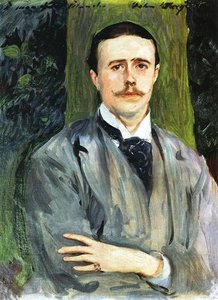
Jacques-Émile Blanche
1861 - 1942 , France
En bref
- Artistic Movement Or Style: Impressionism
- Artists Who Influenced This Artist:
- Edouard Manet
- James McNeill Whistler
- Date Of Birth: January 1, 1861
- Date Of Death: September 30, 1942
- Full Name: Jacques Émile Blanche
- Nationality: French
- Notable Artworks:
- The Kreutzer Sonata
- Portrait of Marcel Proust
- Place Of Birth: Paris, France
Articles connexes

Echoes of 1875: Art, Culture & the Belle Époque's Pivotal Moment
Explore the art & culture of 1875 Paris – a pivotal year for Impressionism & the Belle Époque. Discover Degas, Béraud, Stewart & more with OriginalUniqueArt's expert insights.
Echoes of 1882: Art, Culture & the Belle Époque's Lasting Impression
Explore the art & culture of the Belle Époque! Discover Impressionism, Realism, and iconic Parisian paintings from Degas, Béraud & more. High-quality reproductions at OriginalUniqueArt.

Giovanni Boldini: A Study in Belle Époque Portraiture & the Cult of Personality
Explore the captivating world of Giovanni Boldini, master of Belle Époque portraiture. Discover his signature style, iconic works like 'Miss Bell,' and lasting influence on art history. Expert analysis for collectors.
Jean-Georges Béraud: Capturing Parisian Life in the Belle Époque
Explore the captivating world of Jean-Georges Béraud, master painter of Belle Époque Paris. Discover his iconic scenes, artistic evolution, and social commentary. A deep dive into 19th-century French art.
Jacques-Émile Blanche: Capturing Belle Époque Society & the Cult of Personality
Explore the captivating portraits of Jacques-Émile Blanche, a master Impressionist who captured the essence of Belle Époque society in Paris and London. Discover his unique style & lasting legacy.