

 Aperçu en situation
 Partager
 Partager
 Détails
 Guide imprimable

 Télécharger
 Articles similaires
 Radiographie
 Voir le diaporama
 Statistiques
Dumpy level


 Afficher la suite
Reproduction à l'huile faite à la main
Huile sur toile peinte à la main, avec cadre et dimensions personnalisés, réalisée sur commande par nos artistes. ( Passer au format impression Passer au format image numérique)




P118B €10

P118H €10

P118W €10

P438Z €10

P508JH €12

P508YH €12

P805H €10

P805Z €10

P919BZ €10

P919G €10

P919XJ €10

P959ZH €10

P968JZ €12

W106C €8

W218G €10

W218JH €8

W218Y €10

W307PJ €10

W316G €10

W316PJ €8

W316Y €10

W398PJ €8

W4111J €10

W500HY €15

W500JH €15

W692G €12

W849H €8

W940BG €15

W953PJ €8




Choisissez parmi nos formats prédéfinis qui respectent les proportions originales de l’œuvre.

Saisissez la largeur et la hauteur souhaitées, pour s'adapter à votre cadre ou à votre mur. Cette œuvre est peinte à la main ; ainsi, pour un format de forme différente, l'artiste peut peindre un peu plus autour du tableau ou réduire légèrement les bords — c'est vous qui choisissez. Nous vous envoyons une maquette numérique pour approbation avant que la peinture ne commence. L'image présentée sur cette page ne reflète pas le résultat réel — seule la maquette le fait.
Après la commande, l’équipe OriginalUniqueArt.com contactera le client par e-mail pour recueillir ses instructions et lui fournira une maquette d’aperçu
Livraison dans le monde entier () en 3 à 4 semaines au lieu des 5 semaines habituelles. (18 octobre). Aucun compromis sur la qualité.

Livraison express gratuite dans le monde entier

Toile de lin de haute qualité

Assurance transport complète

Garantie de remboursement des droits de douane

Garantie de fidélité des couleurs

Garantie de retour de 100 jours (uniquement en cas de défaut)

Garantie de remboursement à 100%

Tarifs dégressifs sur quantité
 L'option verre n'est disponible que pour les dimensions inférieures à 110 cm.

Dumpy level
Technique de reproduction
Format de la reproduction
-


Prix total final
€ 261
Questions et réponses
En quelle année et dans quel mouvement "Dumpy level" a-t-elle été réalisée ?
«Dumpy level» a été réalisé en 1733, au sein du mouvement Neoclassicism.
À quel point la palette de "Dumpy level" est-elle saturée ?
«Dumpy level» de Jacques Canivet est présenté avec une saturation de Muted.
Quelle est la date de création de «Dumpy level» de Jacques Canivet ?
«Dumpy level» de Jacques Canivet a été créé en 1733.
Biographie de l'artiste
Jacques Canivet: The Silent Maker of Parisian Instruments
Jacques Canivet (1714-1773) remains a figure shrouded in scholarly curiosity, largely absent from the popular narrative of 18th-century France. Yet, his contribution to scientific instrumentation—a legacy quietly shaping the intellectual landscape of Paris—is undeniable. Born into a family steeped in craftsmanship and tradition, Canivet’s path diverged from the grand salons of Versailles, finding its focus instead within the workshops of Lordelle and Jean Chapotot, where he honed his skills alongside Claude Langlois, establishing himself as a pivotal figure in the burgeoning field of scientific measurement.- Early Life & Apprenticeship: Canivet’s formative years were spent mastering the art of instrument making—a craft passed down through generations—laying the groundwork for his future endeavors. His association with Langlois, a celebrated maker known for his meticulous attention to detail and innovative designs, proved invaluable in shaping his artistic sensibilities.
- The Workshop Legacy: Following Langlois’s death in 1756, Canivet assumed leadership of the workshop, inheriting not only expertise but also a reputation for excellence. This continuity ensured that the traditions of precision and artistry persisted—a testament to the enduring power of familial craftmanship.
- Instrument Production & Innovation: Canivet’s output spanned an impressive array of instruments – compasses, graphometers, astronomical quadrants, transit instruments, drawing instruments, and even parallactic machines. These creations weren't merely tools; they were embodiments of Enlightenment ideals—instruments designed to unlock the secrets of the cosmos and advance scientific understanding.
A Patron of Science & Artistic Vision
Canivet’s involvement extended beyond mere fabrication. He served as supplier of instruments to the Académie Royale des Sciences in Paris, actively collaborating with leading thinkers and scientists of his time. This engagement fostered a symbiotic relationship between artistic skill and intellectual pursuit—a hallmark of the era—demonstrating that beauty could be found within the realm of mathematics and observation.- Commissioned Artwork: Notably, Canivet was entrusted with crafting instruments for Napoleon Bonaparte’s expedition to Egypt. These commissions demanded not only technical proficiency but also an understanding of artistic symbolism—a reflection of Napoleon's ambition to elevate France as a beacon of enlightenment.
- Influence & Legacy: Canivet’s meticulous craftsmanship and dedication to accuracy established him as a benchmark for instrument makers, influencing subsequent generations. His work exemplifies the spirit of the Enlightenment—a commitment to empirical observation and reasoned inquiry that continues to resonate today.
Notable Instruments & Artistic Style
Canivet’s instruments are characterized by their exceptional quality and aesthetic refinement. He prioritized precision, utilizing techniques honed over years of experience—resulting in creations that were both functional and visually striking. His designs incorporated elegant curves and subtle ornamentation—reflecting the prevailing stylistic trends of the period while upholding the highest standards of craftsmanship.- Compasses & Graphometers: Canivet’s compasses and graphometers stand out for their meticulous construction and graceful proportions—testaments to his mastery of geometric principles and artistic sensibilities.
- Astronomical Quadrants: His astronomical quadrants exemplify the pursuit of scientific knowledge through visual observation—incorporating innovative designs that maximized accuracy and clarity.
Concluding Reflections
Jacques Canivet’s contribution to French science and art deserves greater recognition. Though he remained largely outside the spotlight of aristocratic circles, his unwavering dedication to craftsmanship and innovation cemented his place as a pivotal figure in shaping the intellectual landscape of Paris during the Enlightenment—a silent maker whose instruments continue to inspire awe and admiration.
Jacques Canivet
1714 - 1773 , France
En bref
- Full Name: Jacques Canivet
- Nationality: French
- Date Of Birth: 1714
- Date Of Death: 1773
- Place Of Birth: France
- Notable Artworks:
- The Death of Marat
- Portrait of Madame Vigée Le Brun
- Artistic Movement Or Style: Neoclassical
- Artists Who Influenced This Artist: ['Claude Langlois']
- Artists Or Movements Influenced By This Artist: ['Classical Art']
Articles connexes
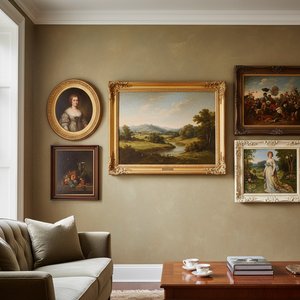
Les 10 Chefs-d'œuvre Incontournables du 18e et 19e Siècle : Art, Histoire & Décor
Plongez dans l'univers des 10 chefs-d'œuvre du 18e et 19e siècle : David, Monet, Renoir… Découvrez leur histoire, les techniques artistiques & trouvez l'inspiration déco. Reproductions de qualité musée sur OriginalUniqueArt.com !

L'Éclat du Siècle des Lumières : Une Exploration Approfondie de la Peinture au XVIIIe Siècle
Explorez l'univers raffiné de la peinture rococo du XVIIIe siècle. Découvrez les maîtres, thèmes et symbolisme de ce mouvement artistique unique avec OriginalUniqueArt.com.

Reflets d'une Époque : Société et Représentation Artistique au XVIIIe Siècle
Explorez l'art et la société du XVIIIe siècle : Rococo, Canaletto, Lumières… Analyse approfondie des chefs-d’œuvre et des enjeux de cette époque fascinante. Découvrez OriginalUniqueArt !
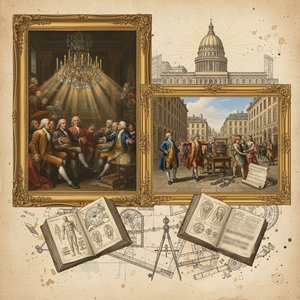
Lumières et Révolution : L'Art du XVIIIe Siècle au Miroir d'une Époque en Mutation
Explorez l'art du XVIIIe siècle : Rococo, Néoclassicisme et Lumières. Découvrez les maîtres (David, Fragonard) et leur contexte historique. Guide expert pour collectionneurs et passionnés.
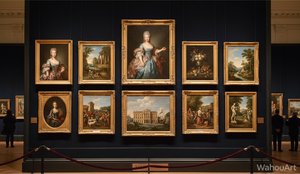
Le Siècle des Lumières en Peinture : 10 Chefs-d'œuvre à Redécouvrir
Plongez au cœur du XVIIIe siècle avec 10 chefs-d'œuvre incontournables ! Découvrez Fragonard, Boucher, David et les secrets de l’art rococo & néoclassique. Reproductions de qualité muséale sur OriginalUniqueArt.com.