
 Aperçu en situation
 Envoyer
 Partager
 Détails de l'œuvre
 Guide
Guide

 Télécharger l'image
 Articles similaires
 Radiographie
 Diaporama
 Questions et réponses
 Statistiques
Hurdy-Gurdy Player


 Lire la suite
Giclées et impressions d'art
Impressions giclées ou sur toile de qualité musée, avec une production rapide et des finitions au choix. ( Commander la reproduction peinte à la main Passer au format numérique)




P118B €10

P118H €10

P118W €10

P438Z €10

P508JH €12

P508YH €12

P805H €10

P805Z €10

P919BZ €10

P919G €10

P919XJ €10

P959ZH €10

P968JZ €12

W106C €8

W218G €10

W218JH €8

W218Y €10

W307PJ €10

W316G €10

W316PJ €8

W316Y €10

W398PJ €8

W4111J €10

W500HY €15

W500JH €15

W692G €12

W849H €8

W940BG €15

W953PJ €8




Choisissez parmi nos formats prédéfinis qui respectent les proportions originales de l’œuvre.

Saisissez la largeur et la hauteur souhaitées pour qu'elles s'adaptent à votre cadre ou à votre mur. Une impression peut être recadrée, mais jamais agrandie au-delà de l'image originale ; ainsi, un format de forme différente entraînera la perte d'une partie de l'image. Nous vous envoyons une maquette numérique pour approbation avant toute impression. L'image présentée sur cette page ne montre pas le recadrage réel — seule la maquette le permet.
Livraison dans le monde entier () en 2 semaines au lieu des 4/5 semaines habituelles. (10 novembre)

Livraison express gratuite dans le monde entier

Toile de lin de qualité supérieure

Assurance transport complète

Garantie de remboursement des droits de douane

Garantie de fidélité des couleurs

Politique de retour de 100 jours (uniquement en cas de défaut)

Garantie de remboursement à 100%

Offre de tarifs dégressifs
 L'option verre n'est disponible que pour les dimensions inférieures à 110 cm.

Hurdy-Gurdy Player
Giclées et impressions d'art
Format de la reproduction
-


Prix total
€ 73
A Portrait of Wandering Sound: Jacques Bellange’s “Hurdy-Gurdy Player”
Jacques Bellange's "Hurdy-Gurdy Player," etched in the early 17th century, is more than a simple depiction of a street musician; it’s a hauntingly intimate study of human character and a masterful demonstration of Northern Mannerist aesthetics. Born in Bâse-les-Vosges around 1575, Bellange carved an extraordinary path as a printmaker, leaving behind no paintings but producing works that resonate with a profound psychological intensity rarely seen outside of the most accomplished Renaissance masters. This particular etching, rendered in stark monochrome, immediately draws the viewer into its world – a world of shadowed streets and solitary figures, reflecting the anxieties and complexities of early modern life.
- Technical Brilliance: The work’s power lies fundamentally in Bellange's technical mastery. Executed as an etching on copper, the image is built entirely from meticulously crafted lines. Hatching and cross-hatching create a remarkable range of tonal values, generating a convincing illusion of volume and texture. Notice how the rough fabric of the musician’s cloak and the weathered surface of his face are rendered with a deliberate roughness, achieved through varying line density – a testament to Bellange's control over the etching process.
- Compositional Tension: The subject is positioned slightly off-center, creating an immediate sense of dynamic tension. This subtle compositional choice elevates the image beyond a mere portrait; it suggests a moment of contemplation, perhaps even melancholy, within the musician’s solitary existence.
The Language of Mannerism
Bellange's work firmly places him within the Northern Mannerist movement – a style characterized by its deliberate distortions, heightened emotions, and an intense focus on psychological realism. Unlike the idealized forms favored by earlier Renaissance artists, Bellange’s figures are rendered with a palpable sense of unease and vulnerability. The hurdy-gurdy player himself embodies this characteristic; his hunched posture and somewhat grotesque facial features suggest a character study rather than a flattering portrait – a deliberate departure from conventional artistic norms.
The monochromatic palette, achieved solely through variations in line density, further amplifies the work’s dramatic effect. The absence of color intensifies the focus on form and texture, forcing the viewer to confront the subject with unflinching honesty. This restraint is characteristic of Mannerist aesthetics, which sought to evoke a deeper emotional response than mere visual representation.
Symbolism and Context
Beyond its technical brilliance and stylistic merits, “Hurdy-Gurdy Player” carries significant symbolic weight. The hurdy-gurdy itself – a medieval instrument powered by hand rotation – represents music, entertainment, and perhaps most powerfully, the wandering life. It’s a symbol of itinerant musicians who traveled from town to town, offering their services for coin. This image likely depicts a street performer from the early 17th century, a common sight in European urban centers.
Considering Bellange's origins in the Bassigny region, tragically destroyed during the siege of Lorraine in 1645, adds another layer of poignancy to the work. The image may be interpreted as a meditation on loss, displacement, and the precariousness of human existence – themes that resonate deeply within the context of Bellange’s life and times.
A Window into a Lost World
"Hurdy-Gurdy Player" is more than just an etching; it's a portal to a lost world—a glimpse into the artistic sensibilities of Jacques Bellange, one of Northern Mannerism’s most compelling figures. Its enduring appeal lies in its ability to evoke a powerful emotional response and to remind us of the timeless human themes that continue to resonate across centuries. OriginalUniqueArt offers meticulously crafted hand-painted reproductions of this remarkable artwork, allowing you to bring its haunting beauty into your own space.
Questions et réponses
« Hurdy-Gurdy Player » est-il représentatif de l'œuvre habituelle de Jacques Bellange ?
Parmi les thèmes récurrents de Jacques Bellange — dramatic contrasts, mannerism, lorraine, street life, bellange's prints — « Hurdy-Gurdy Player » met l'accent sur hurdy-gurdy player, portrait art, 17th century music, northern mannerism, street performer, line drawing.
Quelle ambiance "Hurdy-Gurdy Player" apporterait-elle à une pièce ?
Avec son atmosphère Dramatic, « Hurdy-Gurdy Player » est idéal pour une Living Room.
Quelle taille de reproduction est suggérée pour «Hurdy-Gurdy Player» de Jacques Bellange ?
Une reproduction en Large est suggérée pour «Hurdy-Gurdy Player» de Jacques Bellange. Le format peut être ajusté tout en conservant les proportions.
Biographie de l'artiste
Un Maître de l'Ombre et de l'Esprit Maniériste Nordique
Jacques Bellange demeure l'une des figures les plus énigmatiques et captivantes de l'histoire de la gravure européenne. Maître du style maniériste nordique, sa vie s'est déroulée dans le crépuscule de la Renaissance tardive, une période définie par des formes allongées, une tension théâtrale et une intensité psychologique presque fiévreuse. Bien qu'une grande partie de sa biographie personnelle reste enveloppée dans les brumes du début du XVIIe siècle, son héritage artistique éclate avec une clarté vibrante à travers les lignes complexes de ses eaux-fortes. Né vers 1575 dans la région de Bâse-les-Vosges en France, Bellange a émergé d'un paysage de frontières mouvantes et de ferveur religieuse intense, trouvant finalement son foyer créatif au sein des cercles de cour sophistées de Nancy.
Les traces de sa jeunesse sont aussi délicates et insaisissables que ses gravures. Si les archives historiques concernant ses origines familiales sont rares, les érudits soulignent souvent sa rapide ascension au sein du duché de Lorraine comme la preuve d'un lien significatif, voire noble. De nombreuses spéculations suggèrent qu'il aurait pu être le fils illégitime d'un protecteur de haut rang, une théorie soutenue par le prestigieux titre de « chevalier » qui lui fut attribué et par son intégration parfaite à la cour des ducs de Lorraine. Dès 1595, il était déjà établi à La Mothe, perfectionnant un art qui allait bientôt transformer la gravure en un vecteur d'expression émotionnelle profonde.
L'Élégance de la Cour de Lorraine
La carrière de Bellange atteignit son apogée sous le patronage d'Henri II et de Philippe III, les ducs de Lorraine. Cette période de stabilité courtisane lui offrit le luxe du temps et des ressources, lui permettant de raffiner une technique qui n'appartenait qu'à lui. Contra qu'à nombre de ses contemporains qui privilégiaient la clarté de la Haute Renaissance, Bellange embrassa les complexités du maniérisme. Son œuvre se caractérise par une énergie impétueuse, où les figures semblent se tordre et onduler avec une grâce presque surnaturelle. Dans les salons de Nancy, il développa un langage visuel mêlant le sacré au profane, créant des œuvres qui parlaient autant de la psyché humaine que de la dévotion religieuse.
Sa maîtrise de l'aiguille d'eau-forte lui permettait de manipuler l'ombre et la lumière avec un dramatisme sans précédent. Grâce à l'usage méticuleux des hachures et des contre-hachures, il parvenait à invoquer des textures allant des plis lourds des draperies antiques à la peau tannée d'un saltimbanque. Cette prouesse technique est peut-être plus évidente dans sa capacité à imprégner le sujet le plus simple d'un sentiment de mystère profond. Qu'il représente une figure noble ou un musicien de passage, la main de Bellange est reconnaissable entre toutes, laissant derrière elle une traînée de lignes argentées et lumineuses qui semblent vibrer de vie.
Un Héritage Gravé dans l'Ombre et la Lumière
La véritable importance de Jacques Bellange réside dans sa capacité à capturer l'éphémère. Son œuvre sert de fenêtre sur un monde de luttes spirituelles intenses et de beauté théâtrale. Certaines de ses œuvres les plus marquantes illustrent cette étendue :
- Les Trois Marie au Tombeau : Un exemple frappant de sa gravité religieuse, où des figures dramatiques et des détails complexes convergent pour créer un moment d'une profonde tension biblique.
- Le Joueur de Vielle : Un chef-d'œuvre d'étude de caractère, démontrant sa capacité à utiliser un travail de ligne complexe pour capturer l'essence voûtée et lassée d'un musicien de rue, insufflant à un sujet commun une profondeur psychologique immense.
- Gentleman en Costume Ancien : Une exploration de l'obsession maniériste pour le fantasme historique et l'élégance stylisée, mettant en scène un guerrier paré d'atours qui évoquent une grandeur mythique.
Bien que sa vie fut écourtée en 1616, l'influence de Bellange a perduré bien au-delà des frontières de la Lorraine. Sa redécouverte au XXe siècle a apporté une appréciation renouvelée pour le potentiel expressif du trait gravé et la puissance durable de l'esthétique maniériste. Aujourd'hui, il est célébré non seulement comme un artiste de cour, mais comme un pionnier qui a repoussé les limites de la gravure, laissant une marque indélébile dans l'histoire de l'art occidental à travers ses visions d'une beauté envoûtante et baignées d'ombres.

Jacques Bellange
1575 - 1616 , France
L'essentiel de l'artiste
- Artistic Movement Or Style: Northern Mannerisme
- Artists Who Influenced This Artist: ['Hendrik Goltzius']
- Date Of Birth: c. 1575
- Date Of Death: 1616
- Full Name: Jacques Bellange
- Nationality: Francais
- Notable Artworks:
- Lamentation
- La Colère d'Achille
- Place Of Birth: Bâse-les-Vosges, France
Articles connexes

Elegance & Distortion: A Cultural Reflection on the Captivating World of Northern Mannerism
Embark on a cultural journey through Northern Mannerism. Discover how artists moved from Renaissance harmony to an era of elegant distortion, psychological depth, and exquisite tension in the 16th-century European art landscape.

Northern Mannerism: The Dramatic Evolution of European Art through Elegant Distortion and Tension
Explore the dramatic evolution of Northern Mannerism. Discover how 16th-century artists moved from Renaissance harmony to elegant distortion, tension, and complex symbolism in European art history.

Northern Mannerism: The Bold Revolution of Elegant Distortion and High-Impact Tension
Explore the high-impact world of Northern Mannerism. Discover how artists mastered elegant distortion and psychological tension to revolutionize European art through bold, visually striking compositions for the modern collector.
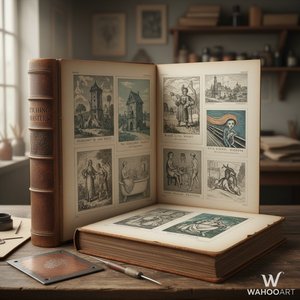
Les 10 plus grandes gravures : Chefs-d'œuvre qui ont révolutionné l'art | OriginalUniqueArt
Plongez dans l'univers fascinant des 10 plus grandes gravures de l'histoire ! Découvrez les chefs-d'œuvre de Rembrandt, Goya et Dürer. Inspirez votre décoration intérieure avec OriginalUniqueArt : reproductions d'art de qualité muséale en ligne. Explorez la collection sur OriginalUniqueArt.com

L'Eau-Forte : Histoire d'une Technique Gravée dans le Temps et l'Art
Explorez l'histoire fascinante de l'eau-forte : technique, maîtres, et qualités esthétiques uniques. Découvrez ce procédé gravé dans le temps avec OriginalUniqueArt.

