
 Aperçu en situation
 Envoyer
 Partager
 Détails de l'œuvre
 Guide
Guide

 Télécharger l'image
 Articles similaires
 Radiographie
 Diaporama
 Questions et réponses
 Statistiques
Amazon on horseback


 Lire la suite
Giclées et impressions d'art
Impressions giclées ou sur toile de qualité musée, avec une production rapide et des finitions au choix. ( Commander la reproduction peinte à la main Passer au format numérique)




P118B €10

P118H €10

P118W €10

P438Z €10

P508JH €12

P508YH €12

P805H €10

P805Z €10

P919BZ €10

P919G €10

P919XJ €10

P959ZH €10

P968JZ €12

W106C €8

W218G €10

W218JH €8

W218Y €10

W307PJ €10

W316G €10

W316PJ €8

W316Y €10

W398PJ €8

W4111J €10

W500HY €15

W500JH €15

W692G €12

W849H €8

W940BG €15

W953PJ €8




Choisissez parmi nos formats prédéfinis qui respectent les proportions originales de l’œuvre.

Saisissez la largeur et la hauteur souhaitées pour qu'elles s'adaptent à votre cadre ou à votre mur. Une impression peut être recadrée, mais jamais agrandie au-delà de l'image originale ; ainsi, un format de forme différente entraînera la perte d'une partie de l'image. Nous vous envoyons une maquette numérique pour approbation avant toute impression. L'image présentée sur cette page ne montre pas le recadrage réel — seule la maquette le permet.
Livraison dans le monde entier () en 2 semaines au lieu des 4/5 semaines habituelles. (10 novembre)

Livraison express gratuite dans le monde entier

Toile de lin de qualité supérieure

Assurance transport complète

Garantie de remboursement des droits de douane

Garantie de fidélité des couleurs

Politique de retour de 100 jours (uniquement en cas de défaut)

Garantie de remboursement à 100%

Offre de tarifs dégressifs
 L'option verre n'est disponible que pour les dimensions inférieures à 110 cm.

Amazon on horseback
Giclées et impressions d'art
Format de la reproduction
-


Prix total
€ 73
A Vision of Northern Mannerist Majesty
In the delicate yet commanding lines of Jacques Bellange’s Amazon on horseback, we encounter a window into the enigmatic world of Northern Mannerism. Created in 1606, this evocative work transcends mere illustration, offering instead a dramatic tableau of power and myth. The subject—a woman clad in regal, flowing attire—perches atop her steed with an air of sovereign authority. As she grips her sword, the viewer is immediately drawn into a narrative of martial prowess and aristocratic grace. Bellange, a master of the etching needle, utilizes the medium to weave a complex tapestry of light and shadow, where every stroke contributes to a sense of psychological depth and theatrical tension that was the hallmark of his singular style.
The composition is a masterclass in stylized elegance, characteristic of the Lorraine school. The figure of the Amazon is not merely a warrior but a symbol of untamed strength refined by royal dignity. There is a surreal, almost dreamlike quality to the scene; notice the peculiar anatomical flourishes, such as the unusual positioning of the horse's features, which suggest the artist's departure from strict naturalism in favor of emotional and aesthetic impact. This intentional distortion serves to elevate the subject from the mundane to the legendary, making the piece an ideal focal point for those who appreciate art that challenges the eye and stirs the imagination.
Symbolism and the Spirit of the Era
To gaze upon this work is to engage with the complex symbolism of the early 17th century. The sword held by the Amazon serves as a potent emblem of justice, defense, and the indomitable spirit of the female warrior. In an era where much of the art focused on static religious iconography, Bellange’s exploration of a mythological figure riding through a landscape of shadows offers a refreshing sense of movement and agency. The interplay between the rider's delicate garments and the raw energy of the horse creates a profound tension between civilization and nature, a theme that continues to resonate with modern collectors.
For the discerning interior designer or art enthusiast, this piece offers more than just visual beauty; it provides a conversation piece steeped in historical intrigue. The dark, moody atmosphere of the etching lends itself beautifully to sophisticated, curated spaces—perhaps an executive study, a library, or a gallery-style hallway where the play of light on a high-quality reproduction can truly shine. It evokes a sense of timelessness, bridging the gap between the mysterious history of the Bâse-les-Vosges region and the contemporary desire for art that possesses both intellectual weight and aesthetic splendor.
A Legacy Captured in Ink
Though Jacques Bellange left behind no surviving paintings, his mastery of printmaking ensures his immortality. Amazon on horseback stands as a testament to his ability to command the etched line, creating textures that feel almost tactile. The way the light catches the folds of the queen's gown and the muscular tension of the horse invites the viewer to linger, searching for meaning in the shadows. Owning a reproduction of such a significant work allows one to bring the haunting beauty of Northern Mannerism into the home, offering a daily encounter with the sublime artistry of a forgotten master.
Questions et réponses
Existe-t-il une fiche informative sur «Amazon on horseback» de Jacques Bellange destinée aux étudiants ?
La page Fiche pédagogique de «Amazon on horseback» de Jacques Bellange propose une fiche pédagogique imprimable en deux volets : l'œuvre accompagnée de sa fiche d'identité, une frise chronologique la situant dans la vie de l'artiste, d'autres œuvres de l'artiste, la palette de couleurs mesurée, ainsi que des citations prêtes à être copiées en quatre styles différents.
Quelles couleurs dominent «Amazon on horseback» de Jacques Bellange ?
L'identité chromatique de «Amazon on horseback» de Jacques Bellange : une palette Neutrals, dominée par le Quinacridone Magenta (#695553).
Quelle place occupe « Amazon on horseback » parmi les thèmes récurrents de Jacques Bellange ?
Parmi les thèmes récurrents de Jacques Bellange — northern mannerism style, power and authority, key etching work, stylized figures, dramatic contrasts — « Amazon on horseback » met l'accent sur woman, horse, sword, royal attire, person.
Biographie de l'artiste
Un Maître de l'Ombre et de l'Esprit Maniériste Nordique
Jacques Bellange demeure l'une des figures les plus énigmatiques et captivantes de l'histoire de la gravure européenne. Maître du style maniériste nordique, sa vie s'est déroulée dans le crépuscule de la Renaissance tardive, une période définie par des formes allongées, une tension théâtrale et une intensité psychologique presque fiévreuse. Bien qu'une grande partie de sa biographie personnelle reste enveloppée dans les brumes du début du XVIIe siècle, son héritage artistique éclate avec une clarté vibrante à travers les lignes complexes de ses eaux-fortes. Né vers 1575 dans la région de Bâse-les-Vosges en France, Bellange a émergé d'un paysage de frontières mouvantes et de ferveur religieuse intense, trouvant finalement son foyer créatif au sein des cercles de cour sophistées de Nancy.
Les traces de sa jeunesse sont aussi délicates et insaisissables que ses gravures. Si les archives historiques concernant ses origines familiales sont rares, les érudits soulignent souvent sa rapide ascension au sein du duché de Lorraine comme la preuve d'un lien significatif, voire noble. De nombreuses spéculations suggèrent qu'il aurait pu être le fils illégitime d'un protecteur de haut rang, une théorie soutenue par le prestigieux titre de « chevalier » qui lui fut attribué et par son intégration parfaite à la cour des ducs de Lorraine. Dès 1595, il était déjà établi à La Mothe, perfectionnant un art qui allait bientôt transformer la gravure en un vecteur d'expression émotionnelle profonde.
L'Élégance de la Cour de Lorraine
La carrière de Bellange atteignit son apogée sous le patronage d'Henri II et de Philippe III, les ducs de Lorraine. Cette période de stabilité courtisane lui offrit le luxe du temps et des ressources, lui permettant de raffiner une technique qui n'appartenait qu'à lui. Contra qu'à nombre de ses contemporains qui privilégiaient la clarté de la Haute Renaissance, Bellange embrassa les complexités du maniérisme. Son œuvre se caractérise par une énergie impétueuse, où les figures semblent se tordre et onduler avec une grâce presque surnaturelle. Dans les salons de Nancy, il développa un langage visuel mêlant le sacré au profane, créant des œuvres qui parlaient autant de la psyché humaine que de la dévotion religieuse.
Sa maîtrise de l'aiguille d'eau-forte lui permettait de manipuler l'ombre et la lumière avec un dramatisme sans précédent. Grâce à l'usage méticuleux des hachures et des contre-hachures, il parvenait à invoquer des textures allant des plis lourds des draperies antiques à la peau tannée d'un saltimbanque. Cette prouesse technique est peut-être plus évidente dans sa capacité à imprégner le sujet le plus simple d'un sentiment de mystère profond. Qu'il représente une figure noble ou un musicien de passage, la main de Bellange est reconnaissable entre toutes, laissant derrière elle une traînée de lignes argentées et lumineuses qui semblent vibrer de vie.
Un Héritage Gravé dans l'Ombre et la Lumière
La véritable importance de Jacques Bellange réside dans sa capacité à capturer l'éphémère. Son œuvre sert de fenêtre sur un monde de luttes spirituelles intenses et de beauté théâtrale. Certaines de ses œuvres les plus marquantes illustrent cette étendue :
- Les Trois Marie au Tombeau : Un exemple frappant de sa gravité religieuse, où des figures dramatiques et des détails complexes convergent pour créer un moment d'une profonde tension biblique.
- Le Joueur de Vielle : Un chef-d'œuvre d'étude de caractère, démontrant sa capacité à utiliser un travail de ligne complexe pour capturer l'essence voûtée et lassée d'un musicien de rue, insufflant à un sujet commun une profondeur psychologique immense.
- Gentleman en Costume Ancien : Une exploration de l'obsession maniériste pour le fantasme historique et l'élégance stylisée, mettant en scène un guerrier paré d'atours qui évoquent une grandeur mythique.
Bien que sa vie fut écourtée en 1616, l'influence de Bellange a perduré bien au-delà des frontières de la Lorraine. Sa redécouverte au XXe siècle a apporté une appréciation renouvelée pour le potentiel expressif du trait gravé et la puissance durable de l'esthétique maniériste. Aujourd'hui, il est célébré non seulement comme un artiste de cour, mais comme un pionnier qui a repoussé les limites de la gravure, laissant une marque indélébile dans l'histoire de l'art occidental à travers ses visions d'une beauté envoûtante et baignées d'ombres.

Jacques Bellange
1575 - 1616 , France
L'essentiel de l'artiste
- Artistic Movement Or Style: Northern Mannerisme
- Artists Who Influenced This Artist: ['Hendrik Goltzius']
- Date Of Birth: c. 1575
- Date Of Death: 1616
- Full Name: Jacques Bellange
- Nationality: Francais
- Notable Artworks:
- Lamentation
- La Colère d'Achille
- Place Of Birth: Bâse-les-Vosges, France
Articles connexes
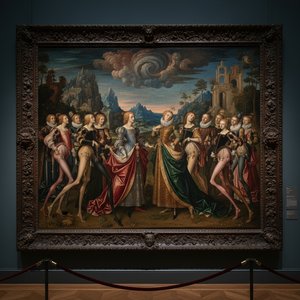
Northern Mannerism: The Dramatic Evolution of Renaissance Art and the Mastery of Elegant Distortion
Explore the dramatic evolution of Northern Mannerism. Discover how masters like Bosch and Grünewald transitioned from Renaissance harmony to profound, elegant distortion through an expert analysis of symbolism, emotional intensity, and artistic innovation.

La Renaissance Septentrionale : Éclosion du Réalisme et de l'Innovation Artistique
Explorez la Renaissance septentrionale et l'éclosion du réalisme flamand avec OriginalUniqueArt. Découvrez Jan van Eyck, Robert Campin et les techniques révolutionnaires de cette période artistique majeure.

Northern Mannerism: The Dramatic Evolution of European Art through Elegant Distortion and Tension
Explore the dramatic evolution of Northern Mannerism. Discover how 16th-century artists moved from Renaissance harmony to elegant distortion, tension, and complex symbolism in European art history.
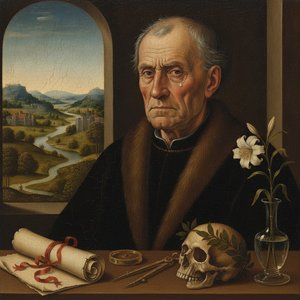
The Northern Renaissance: A Masterclass in Hyper-Realism, Oil Innovation, and Symbolic Depth
Explore the profound mastery of Northern Renaissance art. Discover the technical brilliance of Flemish oil painting, the intricate symbolism of Bosch and Bruegel, and the revolutionary realism that redefined European art history through an expert historical lens.
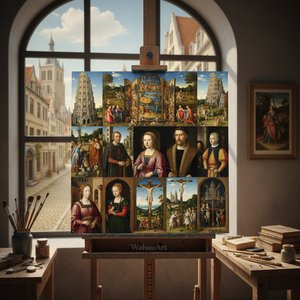
Renaissance du Nord : 10 Chefs-d'œuvre Incontournables pour Décorer avec Art et Histoire
Plongez au cœur de la Renaissance du Nord ! Découvrez 10 chefs-d'œuvre emblématiques de Jan van Eyck à Bruegel, leurs histoires et techniques. Trouvez l'inspiration déco & achetez des reproductions de tableaux exceptionnels sur .

