Passer au format impression
 Lire la suite







































 Pour les œuvres ou reproductions dont un côté mesure plus de 105 cm (environ 41 pouces), le cadre sera expédié sous forme de kit démonté. Cette méthode garantit une livraison sécurisée et prévient tout dommage pendant le transport.


A Renaissance Reverie: Exploring Jacopo Sansovino’s Bacchus
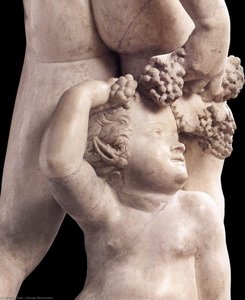
The sculpture of *Bacchus*, attributed to Florentine artist Jacopo Sansovino, stands as a testament to the humanist ideals and artistic innovations that defined the High Renaissance. Completed around 1515, this marble masterpiece resides within the Bargello museum in Florence—a location steeped in artistic heritage—and continues to captivate viewers with its masterful depiction of Dionysus, the Greek god of wine and revelry. More than just a beautiful object, *Bacchus* embodies a profound engagement with classical antiquity and represents Sansovino’s unwavering commitment to reviving the sculptural traditions of Greece and Rome.The Artist's Vision: Sansovino and Classical Influence
Jacopo Sansovino (1486-1570) emerged from Florence’s vibrant artistic crucible as a protégé of Andrea Sansovino, inheriting his mentor’s dedication to anatomical precision and stylistic elegance. Early training instilled in him an acute awareness of the sculptural achievements of antiquity—particularly the Belvedere Apollo—which profoundly shaped his aesthetic sensibilities. Unlike many artists of his time who embraced Mannerism's stylized distortions, Sansovino steadfastly pursued a path rooted in classical ideals, prioritizing naturalistic proportions and harmonious composition. This commitment is vividly evident in *Bacchus*, where Sansovino skillfully blends elements from various sculptural precedents to create an image that transcends mere imitation; it’s a deliberate reimagining of the past informed by contemporary artistic concerns.A Dynamic Pose: Anatomy and Movement
The sculpture's striking dynamism immediately draws the eye. Sansovino meticulously rendered the musculature of Bacchus’s body, demonstrating unparalleled anatomical accuracy—a hallmark of Florentine Renaissance art. The figure stands with one leg forward, creating a subtle counterbalance that conveys movement and energy. His left arm extends upward, holding a bunch of grapes or possibly a cup – symbols of Dionysian abundance and celebration – while his right hand rests on the thigh, adding to the sculpture’s sense of fluidity. This posture echoes depictions of Apollo Belvedere and other Classical sculptures, underscoring Sansovino's conscious engagement with sculptural traditions. The sculptor’s masterful manipulation of form contributes significantly to conveying the god’s joyous spirit.Symbolism and Context: Renaissance Florence
*Bacchus* operates within a broader artistic context—the flourishing intellectual and cultural landscape of Renaissance Florence under Cosimo I de Medici. The Medicis championed humanist scholarship and artistic patronage, fostering an environment where artists like Sansovino could explore classical ideals while simultaneously innovating stylistic conventions. The sculpture’s placement in Giovanni Bartolini's garden at Gualfonda reflects the Renaissance fascination with reviving the beauty and grandeur of antiquity—a desire to recapture the spirit of Classical Greece and Rome. Furthermore, Sansovino’s work aligns with the broader artistic trends of the period, exemplified by Raphael’s frescoes in the Stanza della Segnatura, where artists sought to elevate art as a vehicle for philosophical contemplation.A Legacy Enduring Beauty
Despite suffering significant damage during the 1762 fire that ravaged Florence's Palazzo Pitti—a tragedy that claimed many irreplaceable artworks—*Bacchus* remains an enduring symbol of Renaissance artistic excellence. Its captivating form, combined with Sansovino’s unwavering devotion to classical principles and humanist ideals, continues to inspire admiration and awe. The sculpture serves as a poignant reminder of the transformative power of art—its ability to transcend time and convey profound emotions while simultaneously engaging in dialogue with the artistic heritage of antiquity. It stands as an exemplar of Florentine Renaissance sculpture, cementing Sansovino’s place among the greatest artists of his era.Questions et réponses
L'artiste Jacopo Sansovino, créateur de « Bacchus », est-il connu sous d'autres noms ?
Jacopo Sansovino est également connu sous le nom de Jacopo Tatti.
À quelle période de la carrière de Jacopo Sansovino appartient « Bacchus » ?
«Bacchus» appartient à la période Mature Period de la carrière de Jacopo Sansovino. Cette classification relie l'œuvre à l'évolution de l'artiste.
Quel est l'usage recommandé pour une impression de « Bacchus » ?
Une reproduction de «Bacchus» de Jacopo Sansovino est recommandée pour Focal. Cette suggestion découle du sujet, de l'atmosphère et des couleurs de l'œuvre.
 Envoyer
 Partager
 Détails de l'œuvre
 Guide
Guide

 Télécharger l'image
 Articles similaires
 Diaporama
 Questions et réponses
 Statistiques