Aperçu en situation
 Partager
 Partager
 Détails
 Guide imprimable

 Télécharger
 Articles similaires
 Radiographie
 Voir le diaporama
 Statistiques
La Grande Forêt
 Huile sur toile
- Décoration murale
- Âge d'Or des Pays-Bas
 Époque moderne précoce
 140.0 x 180.0 cm
 Kunsthistorisches Museum
 Afficher la suite
Giclées et impressions d'art
Impressions giclées ou sur toile de qualité musée, avec une production rapide et des finitions au choix. ( Acheter la peinture faite à la main Passer au format image numérique)




P118B €10

P118H €10

P118W €10

P438Z €10

P508JH €12

P508YH €12

P805H €10

P805Z €10

P919BZ €10

P919G €10

P919XJ €10

P959ZH €10

P968JZ €12

W106C €8

W218G €10

W218JH €8

W218Y €10

W307PJ €10

W316G €10

W316PJ €8

W316Y €10

W398PJ €8

W4111J €10

W500HY €15

W500JH €15

W692G €12

W849H €8

W940BG €15

W953PJ €8




Choisissez parmi nos formats prédéfinis qui respectent les proportions originales de l’œuvre.

Saisissez la largeur et la hauteur souhaitées pour qu'elles s'adaptent à votre cadre ou à votre mur. Une impression ne peut être que découpée, elle ne peut jamais être agrandie au-delà de l'image originale ; ainsi, un format de forme différente entraînera la perte d'une partie de l'image. Nous vous envoyons une maquette numérique pour approbation avant toute impression. L'image présentée sur cette page ne montre pas le recadrage réel — seule la maquette le permet.
Livraison dans le monde entier () en 2 semaines au lieu des 4/5 semaines habituelles. (25 octobre)

Livraison express gratuite dans le monde entier

Toile de lin de haute qualité

Assurance transport complète

Garantie de remboursement des droits de douane

Garantie de fidélité des couleurs

Garantie de retour de 100 jours (uniquement en cas de défaut)

Garantie de remboursement à 100%

Tarifs dégressifs sur quantité
 L'option verre n'est disponible que pour les dimensions inférieures à 110 cm.

La Grande Forêt
Giclées et impressions d'art
Format de la reproduction
-


Prix total final
€ 70
Une Majesté Naturelle Captivante
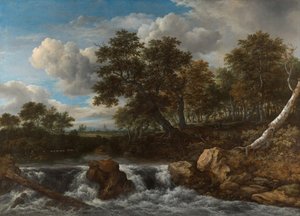
Plongez dans la beauté tranquille de cette vaste scène de forêt, où la grandeur de la nature est capturée avec un souci du détail et une approche réaliste. La composition s'articule autour d’un majestueux arbre mature aux branches luxuriantes, invitant les spectateurs à explorer la profondeur et la sérénité de l’environnement forestier. La scène évoque un sentiment de solitude paisible, soulignant la splendeur inaltérable de la nature et inspirant un état de contemplation. L'attention minutieuse de l'artiste aux textures naturelles et aux subtiles variations de couleurs crée une expérience immersive, faisant de cette œuvre un point focal parfait pour tout espace recherchant calme et élégance naturelle.Maîtrise Technique et Style Réaliste
Réalisée avec des coups de pinceau fins et du glacis stratifié, cette œuvre d'art illustre le style naturaliste caractéristique de la peinture de paysage du XVIIe siècle. L’artiste utilise habilement la lumière et l’ombre pour suggérer un soleil doux filtrant à travers la canopée, projetant des motifs tacheté sur le sol forestier. Les textures – allant l'écorce rugueuse des arbres à la végétation douce et au sol inégalé – sont rendues avec un réalisme tactile remarquable, invitant les spectateurs à presque sentir la scène. La perspective, depuis un point de vue légèrement élevé, renforce le sentiment de profondeur et invite à explorer le chemin de terre sinueux qui disparaît dans la distance, créant un voyage visuel captivant.Signification Historique et Artistique
Bien que la date exacte de création reste inconnue, ce travail s'aligne sur la fascination des Pays-Bas d’or pour le réalisme paysager et la beauté naturelle. Pendant cette période, la peinture de paysage est devenue un genre célébré, soulignant la majesté et la tranquillité du monde naturel. Des artistes comme Jacob van Ruisdael ont pionné dans ce mouvement, élevant les paysages de simples arrière-plans à des expressions profondes de la force et de la sérénité durables de la nature. Cette œuvre incarne cette tradition, offrant un aperçu d'une époque où les artistes cherchaient à capturer le sublime et la beauté quotidienne de la wilderness.Symbolisme et Résonance Émotionnelle
Au-delà de son attrait visuel, la scène peut symboliser des thèmes tels que la solitude, la résilience et le respect de la grandeur tranquille de la nature. L'arbre solitaire se dressant au milieu d’une forêt luxuriante peut évoquer des sentiments de force et de persévérance, inspirant les spectateurs à réfléchir sur le pouvoir durable du monde naturel. Les douces teintes chaudes du coucher de soleil – un mélange de rose, d'orange, de violet et d'or – imprègnent la scène d’un sentiment de calme et d’espoir, encourageant une introspection paisible. La profondeur émotionnelle de cette œuvre en fait un élément idéal pour créer une atmosphère sereine dans les environnements privés et professionnels.Parfait pour la Collection et l'Intérieur
Que vous soyez amateur d'art, collectionneur averti ou décorateur d’intérieur à la recherche d’une façon d’élever un espace, cette reproduction de haute qualité constitue une addition intemporelle à tout environnement. Son travail soigné et sa beauté naturaliste en font un choix approprié pour une variété de styles de décoration, du classique au contemporain. Exposez-la dans un salon, un bureau ou une galerie pour évoquer un sentiment de calme et de connexion avec la nature. En tant que reproduction peinte à la main, elle offre la sensation authentique d'une œuvre maîtresse originale, vous permettant de profiter de l’attrait durable d’une scène forestière sereine dans votre propre espace.Questions et réponses
L'œuvre « La Grande Forêt » est-elle libre de droits ?
Concernant les droits d'auteur, « La Grande Forêt » est dans le dans le domaine public - ses droits d'auteur ont expiré.
Pour quelle pièce «La Grande Forêt» de Jacob van Ruisdael est-il recommandé ?
Une reproduction de « La Grande Forêt » s'intègre parfaitement dans une Espaces de vie.
Quelle est la luminosité perçue de «La Grande Forêt» de Jacob van Ruisdael ?
La luminosité perçue de «La Grande Forêt» de Jacob van Ruisdael est équilibré. Elle peut être harmonisée avec la lumière de l'espace prévu.
Biographie de l'artiste
Early Life and Career
Jacob Isaackszoon van Ruisdael, a name synonymous with the grandeur of the Dutch Golden Age, emerged in Haarlem around 1628 or 1629, into a family deeply rooted in the world of art. His lineage included his father, Isaak van Ruisdael, a skilled craftsman who combined painting with the production of frames – a crucial skill for any landscape artist of the time. His uncle, Salomon van Ruysdael, was already establishing himself as a respected figure within the Haarlem guild of painters, specializing in atmospheric landscapes that would profoundly influence his nephew’s artistic development. The family's dedication to visual arts created an environment where Jacob was immersed in techniques and aesthetics from a young age.
Unlike many artists of his era who received formal training under established masters, Ruisdael’s education appears to have been largely self-directed, honed through observation and apprenticeship within his family circle. Early influences likely included the works of Jan van Goyen, whose masterful depictions of Dutch landscapes—particularly their use of light and atmospheric perspective—were highly admired by contemporary artists. The subtle techniques employed by Pieter de Molyn, another prominent landscape painter, also played a role in shaping Ruisdael’s nascent style.
Ruisdael joined the prestigious Guild of Saint Luke in Haarlem around 1646, marking his official entry into the professional art world. This guild membership provided him with legitimacy and access to trade networks, but it also dictated certain constraints on his work—he was expected to primarily create smaller-scale paintings that could be sold directly to patrons, rather than undertaking large-scale commissions.
Artistic Style and Contributions
Ruisdael’s artistic style is characterized by a remarkable versatility and an astonishing output. He produced a vast range of landscape subjects—from serene countryside scenes to dramatic cityscapes and evocative seascapes—demonstrating a deep understanding of light, color, and composition. His early works, dating from 1646, already showcased his talent for capturing the essence of the Dutch countryside, but it was after his journey to Germany in 1650 that his style underwent a significant transformation.
The trip to Germany exposed Ruisdael to new artistic influences and broadened his perspective. He began to incorporate more heroic elements into his landscapes—larger-than-life figures, dramatic lighting effects, and a sense of scale that conveyed the power and majesty of nature. His later work, produced during his time in Amsterdam, continued this trend, with city panoramas and seascapes often dominated by expansive skies – occupying roughly two-thirds of the canvas.
A key element of Ruisdael’s technique was his masterful use of light. He expertly manipulated shadows and highlights to create a sense of depth and atmosphere, imbuing his landscapes with an almost palpable realism. His paintings are not merely representations of scenery; they are immersive experiences that transport the viewer into the heart of the Dutch countryside or the bustling streets of Amsterdam.
- Waterfall in a Rocky and Mountainous Landscape: This work exemplifies Ruisdael’s mastery of light and composition, showcasing the raw power and beauty of nature.
- View of Haarlem with Bleaching Grounds: A quintessential example of Ruisdael’s ability to capture the everyday life and atmosphere of the Dutch countryside.
- View of the Dam and the Damrak in Amsterdam: Demonstrates Ruisdael’s skill in capturing the dynamism and energy of a bustling city.
Museums and Collections
Ruisdael's paintings are treasured by institutions worldwide, reflecting their enduring appeal and historical significance. Notable holdings can be found in:
- The National Gallery in London
- The Rijksmuseum in Amsterdam
- The Hermitage Museum in St. Petersburg
Influence and Legacy
Jacob van Ruisdael’s influence on landscape painting traditions is profound and far-reaching. His work served as a crucial inspiration for generations of artists across Europe and beyond. The English Romantic painters, such as John Constable and J.M.W. Turner, were deeply affected by Ruisdael's atmospheric landscapes and his ability to capture the sublime beauty of nature. Similarly, the Barbizon School in France—a movement characterized by a return to landscape painting based on direct observation—looked to Ruisdael as a key figure in their artistic lineage.
In America, the Hudson River School embraced Ruisdael’s techniques and themes, producing iconic paintings of the American wilderness. His legacy extends beyond specific movements; he is considered one of the foundational figures of landscape painting, shaping the way artists approached the depiction of nature for centuries to come.

Jacob van Ruisdael
1628 - 1682 , Pays-Bas
En bref
- Artistic Movement Or Style: Baroque, Golden Age
- Artists Or Movements Influenced By This Artist:
- Romantiques anglais
- Barbizon
- Artists Who Influenced This Artist:
- Vroom
- Van de Velde
- Date Of Birth: 1628/1629, Haarlem
- Date Of Death: 1682, Amsterdam
- Full Name: Jacob Isaackszoon van Ruisdael
- Nationality: Néerlandais
- Notable Artworks:
- Vue de Haarlem
- Cascade rocheuse
- Amsterdam
- Place Of Birth: Haarlem, Pays-Bas
Articles connexes

Jan van Goyen: Master of Dutch Landscape & Atmospheric Perspective
Discover Jan van Goyen, the master of Dutch landscape painting. Explore his subtle technique, atmospheric realism & lasting influence on art history. Learn about this 17th-century pioneer at OriginalUniqueArt.
Jacob van Ruisdael: Master of Dutch Landscape & the Evocation of National Identity
Explore the life & work of Jacob van Ruisdael, the preeminent Dutch landscape painter. Discover his technical brilliance, symbolic depth, and lasting influence on art history. Learn about collecting Ruisdael's masterpieces.
Adriaen van Ostade: A Master of Dutch Genre Painting & Social Commentary
Explore the life & work of Adriaen van Ostade, a leading Dutch Golden Age painter. Discover his realistic genre scenes, social commentary, and lasting influence on art history. Learn more at OriginalUniqueArt.

Rembrandt van Rijn : Les 25 Œuvres Maîtresses à Redécouvrir | OriginalUniqueArt
Plongez dans l'univers de Rembrandt van Rijn avec les 25 œuvres incontournables du maître baroque. Découvrez l'histoire, la technique et l'émotion derrière ses portraits célèbres et 'La Ronde de Nuit'. Reproductions tableaux haute qualité sur OriginalUniqueArt.com
Maîtres du XVIIe Siècle : 10 Œuvres Incontournables pour une Décoration Raffinée
Plongez au cœur du XVIIe siècle avec 10 œuvres majeures de Rembrandt, Vermeer et Caravaggio. Découvrez l'histoire, les techniques et la beauté intemporelle des maîtres baroques. Trouvez votre reproduction d'art idéale sur OriginalUniqueArt.com !