 Aperçu en situation
 Envoyer
 Partager
 Détails de l'œuvre

 Télécharger
 Articles similaires
 Radiographie
 Diaporama
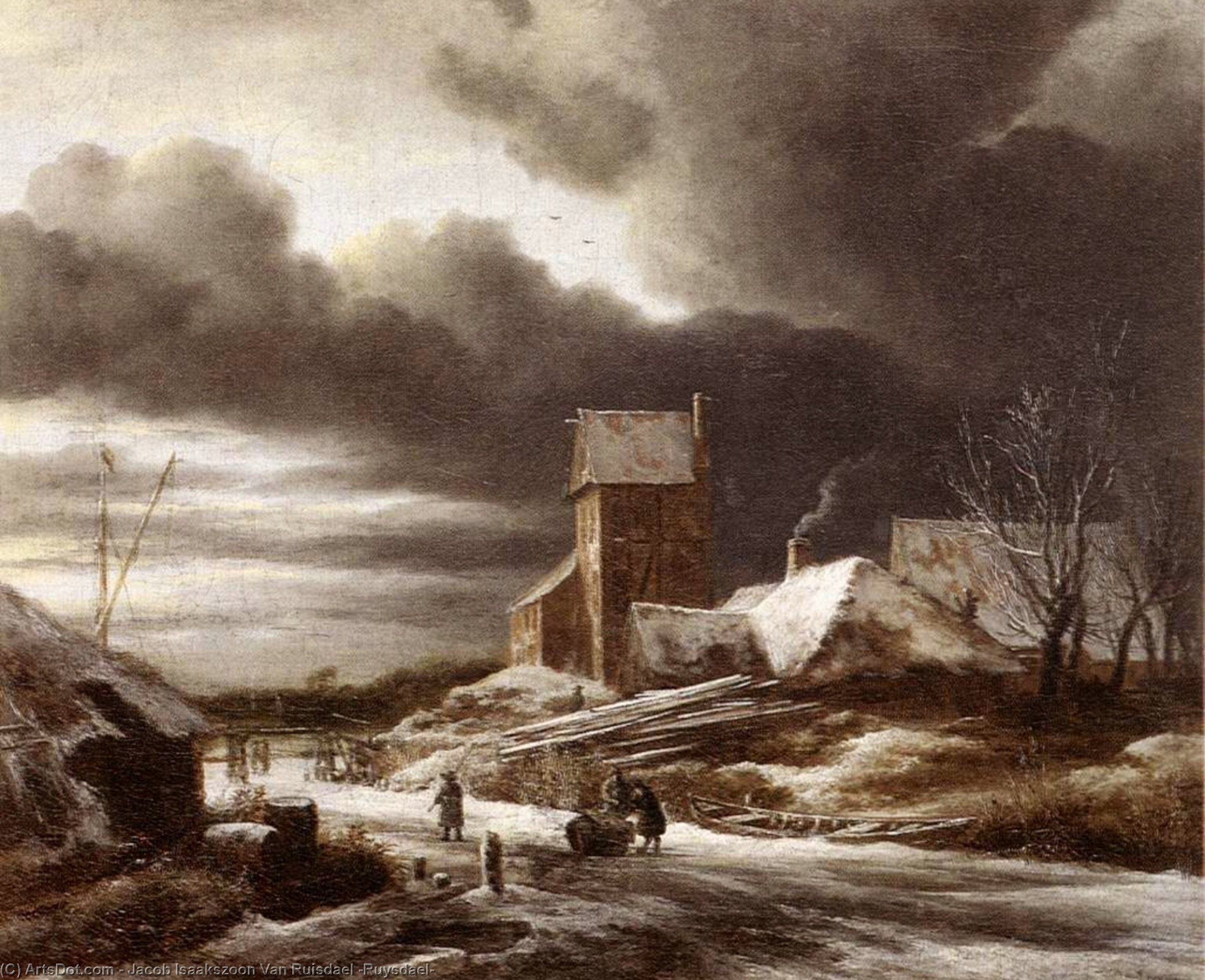
Winter Landscape
 Acrylique sur toile
- Art mural
- Baroque
 1670
1670 42.0 x 49.0 cm
 Rijksmuseum
 Lire la suite
Giclées et impressions d'art
Impressions giclées ou sur toile de qualité musée, avec une production rapide et des finitions au choix. ( Commander la reproduction peinte à la main Télécharger l'image haute résolution)




P118B $10

P118H $10

P118W $10

P438Z $10

P508JH $12

P508YH $12

P805H $10

P805Z $10

P919BZ $10

P919G $10

P919XJ $10

P959ZH $10

P968JZ $12

W106C $8

W218G $10

W218JH $8

W218Y $10

W307PJ $10

W316G $10

W316PJ $8

W316Y $10

W398PJ $8

W4111J $10

W500HY $15

W500JH $15

W692G $12

W849H $8

W940BG $15

W953PJ $8




Choisissez parmi nos formats prédéfinis qui respectent les proportions originales de l’œuvre.

Vous pouvez saisir vos propres dimensions pour vous adapter à un cadre ou à un espace spécifique. Si la taille sélectionnée ne correspond pas aux proportions de l'image originale, nous recadrerons l'œuvre ou étendrons l'image avec une bordure en miroir ou une couleur unie. Une maquette numérique vous sera envoyée pour approbation avant le début de la production.
Veuillez noter que l'aperçu à l'écran ne reflète pas le recadrage ou l'extension réelle. Seule la maquette montrera avec précision la composition finale.
Bien que des tailles personnalisées soient disponibles, nous vous recommandons de choisir une dimension dans la liste prédéfinie afin de préserver les proportions originales.
Livraison dans le monde entier () en 2 semaines au lieu des 4/5 semaines habituelles. (16 août)

Livraison express gratuite dans le monde entier

Toile de lin de qualité supérieure

Assurance transport complète

Garantie de remboursement des droits de douane

Garantie de fidélité des couleurs

Politique de retour de 60 jours (uniquement en cas de défaut)

Garantie de remboursement à 100%

Offre de tarifs dégressifs
 L'option verre n'est disponible que pour les dimensions inférieures à 110 cm.

Winter Landscape
Giclées et impressions d'art
Format de la reproduction
-


Prix total
$ 80
Description de la pièce
Winter Landscape Near Haarlem – A Symphony of Darkness and Light
Jacob Isaacksz van Ruisdael’s “Winter Landscape Near Haarlem,” painted circa 1670s, stands as a cornerstone of Dutch Baroque landscape painting. More than just a depiction of winter scenery, it embodies the artistic spirit of its time—a fascination with dramatic atmospheric effects and an exploration of human insignificance against the grandeur of nature. The canvas captures a bleak yet beautiful vista overlooking Haarlem, showcasing a church spire piercing through heavy grey clouds, reflecting the spiritual anxieties prevalent in seventeenth-century Holland.Composition and Technique: Mastering Atmospheric Perspective
Ruisdael’s masterful technique is immediately apparent upon observation. He employs a pyramidal composition, anchoring the eye to the prominent church spire while subtly guiding it across the expansive landscape. Crucially, he utilizes atmospheric perspective—a technique pioneered by artists like Albert Dürer—to create depth and realism. Layers of muted blues and greys dominate the sky, gradually lightening as they recede into the distance, mirroring the diminishing intensity of light. The snow-covered ground is rendered with textured brushstrokes that convey a palpable sense of coldness and stillness. Ruisdael’s meticulous attention to detail—the subtle variations in snow texture, the delicate rendering of tree branches—demonstrates his unwavering commitment to capturing the essence of the natural world.Symbolism: Confronting Mortality and Divine Majesty
Beyond its aesthetic beauty, “Winter Landscape Near Haarlem” carries profound symbolic weight. The desolate winter scene serves as a visual metaphor for mortality and decay, reminding viewers of the ephemeral nature of earthly existence. Yet, simultaneously, the towering church spire symbolizes divine majesty and offers solace amidst despair. The figures scattered across the icy expanse—a solitary man walking towards the church—represent humanity’s yearning for spiritual guidance and transcendence. Their diminutive size underscores our vulnerability in the face of overwhelming natural forces.Historical Context: Rembrandt's Contemporaries and the Baroque Aesthetic
Painted during the Dutch Golden Age, “Winter Landscape Near Haarlem” aligns perfectly with the broader artistic trends of the era—specifically, the Baroque aesthetic championed by artists like Rembrandt van Rijn and Johannes Vermeer. Like these masters, Ruisdael sought to evoke emotion through dramatic lighting and expressive brushwork, prioritizing psychological impact over mere visual representation. The painting reflects the anxieties surrounding religious dogma and the growing awareness of scientific discoveries that challenged traditional beliefs—themes central to Baroque art’s exploration of human experience.Emotional Impact: A Momentary Pause Before Eternity
Viewing “Winter Landscape Near Haarlem” is akin to stepping into a frozen tableau vivant—a living picture—that captures a fleeting moment of contemplation. The painting's subdued palette and masterful composition instill a sense of melancholy beauty, prompting viewers to confront the inevitability of death while simultaneously appreciating the sublime grandeur of God’s creation. It remains an enduring testament to Ruisdael’s artistic genius and his ability to transform observation into profound emotional resonance.Biographie de l'artiste
Early Life and Career
Jacob Isaackszoon van Ruisdael, a name synonymous with the grandeur of the Dutch Golden Age, emerged in Haarlem around 1628 or 1629, into a family deeply rooted in the world of art. His lineage included his father, Isaak van Ruisdael, a skilled craftsman who combined painting with the production of frames – a crucial skill for any landscape artist of the time. His uncle, Salomon van Ruysdael, was already establishing himself as a respected figure within the Haarlem guild of painters, specializing in atmospheric landscapes that would profoundly influence his nephew’s artistic development. The family's dedication to visual arts created an environment where Jacob was immersed in techniques and aesthetics from a young age.
Unlike many artists of his era who received formal training under established masters, Ruisdael’s education appears to have been largely self-directed, honed through observation and apprenticeship within his family circle. Early influences likely included the works of Jan van Goyen, whose masterful depictions of Dutch landscapes—particularly their use of light and atmospheric perspective—were highly admired by contemporary artists. The subtle techniques employed by Pieter de Molyn, another prominent landscape painter, also played a role in shaping Ruisdael’s nascent style.
Ruisdael joined the prestigious Guild of Saint Luke in Haarlem around 1646, marking his official entry into the professional art world. This guild membership provided him with legitimacy and access to trade networks, but it also dictated certain constraints on his work—he was expected to primarily create smaller-scale paintings that could be sold directly to patrons, rather than undertaking large-scale commissions.
Artistic Style and Contributions
Ruisdael’s artistic style is characterized by a remarkable versatility and an astonishing output. He produced a vast range of landscape subjects—from serene countryside scenes to dramatic cityscapes and evocative seascapes—demonstrating a deep understanding of light, color, and composition. His early works, dating from 1646, already showcased his talent for capturing the essence of the Dutch countryside, but it was after his journey to Germany in 1650 that his style underwent a significant transformation.
The trip to Germany exposed Ruisdael to new artistic influences and broadened his perspective. He began to incorporate more heroic elements into his landscapes—larger-than-life figures, dramatic lighting effects, and a sense of scale that conveyed the power and majesty of nature. His later work, produced during his time in Amsterdam, continued this trend, with city panoramas and seascapes often dominated by expansive skies – occupying roughly two-thirds of the canvas.
A key element of Ruisdael’s technique was his masterful use of light. He expertly manipulated shadows and highlights to create a sense of depth and atmosphere, imbuing his landscapes with an almost palpable realism. His paintings are not merely representations of scenery; they are immersive experiences that transport the viewer into the heart of the Dutch countryside or the bustling streets of Amsterdam.
- Waterfall in a Rocky and Mountainous Landscape: This work exemplifies Ruisdael’s mastery of light and composition, showcasing the raw power and beauty of nature.
- View of Haarlem with Bleaching Grounds: A quintessential example of Ruisdael’s ability to capture the everyday life and atmosphere of the Dutch countryside.
- View of the Dam and the Damrak in Amsterdam: Demonstrates Ruisdael’s skill in capturing the dynamism and energy of a bustling city.
Museums and Collections
Ruisdael's paintings are treasured by institutions worldwide, reflecting their enduring appeal and historical significance. Notable holdings can be found in:
- The National Gallery in London
- The Rijksmuseum in Amsterdam
- The Hermitage Museum in St. Petersburg
Influence and Legacy
Jacob van Ruisdael’s influence on landscape painting traditions is profound and far-reaching. His work served as a crucial inspiration for generations of artists across Europe and beyond. The English Romantic painters, such as John Constable and J.M.W. Turner, were deeply affected by Ruisdael's atmospheric landscapes and his ability to capture the sublime beauty of nature. Similarly, the Barbizon School in France—a movement characterized by a return to landscape painting based on direct observation—looked to Ruisdael as a key figure in their artistic lineage.
In America, the Hudson River School embraced Ruisdael’s techniques and themes, producing iconic paintings of the American wilderness. His legacy extends beyond specific movements; he is considered one of the foundational figures of landscape painting, shaping the way artists approached the depiction of nature for centuries to come.

Jacob van Ruisdael
1628 - 1682 , Pays-Bas
L'essentiel de l'artiste
- Artistic Movement Or Style: Baroque, Golden Age
- Artists Or Movements Influenced By This Artist:
- Romantiques anglais
- Barbizon
- Artists Who Influenced This Artist:
- Vroom
- Van de Velde
- Date Of Birth: 1628/1629, Haarlem
- Date Of Death: 1682, Amsterdam
- Full Name: Jacob Isaackszoon van Ruisdael
- Nationality: Néerlandais
- Notable Artworks:
- Vue de Haarlem
- Cascade rocheuse
- Amsterdam
- Place Of Birth: Haarlem, Pays-Bas
Articles connexes
Van Gogh : 25 Chefs-d'Œuvres Iconiques - L'Âme et l'Émotion d'un Génie
Plongez au cœur de l'univers créatif de Van Gogh ! Découvrez 25 tableaux emblématiques, explorez ses couleurs vibrantes et son style unique. Reproductions d’art de qualité musée sur OriginalUniqueArt.com. Explorez la collection !
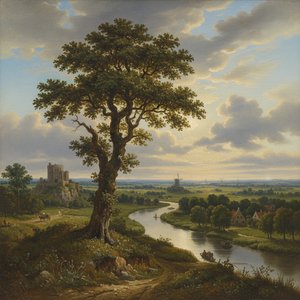
Jacob van Ruisdael: Master of Dutch Landscape & the Evocation of National Identity
Explore the life & work of Jacob van Ruisdael, the preeminent Dutch landscape painter. Discover his technical brilliance, symbolic depth, and lasting influence on art history. Learn about collecting Ruisdael's masterpieces.
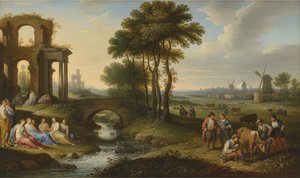
Cornelis van Poelenburch: Bridging Mannerism & the Dutch Baroque Landscape
Discover Cornelis van Poelenburch, a pivotal Dutch Baroque landscape painter bridging Mannerism & Italianate styles. Explore his life, key works, and lasting influence on 17th-century art with OriginalUniqueArt.

Rembrandt van Rijn : Les 25 Œuvres Maîtresses à Redécouvrir | OriginalUniqueArt
Plongez dans l'univers de Rembrandt van Rijn avec les 25 œuvres incontournables du maître baroque. Découvrez l'histoire, la technique et l'émotion derrière ses portraits célèbres et 'La Ronde de Nuit'. Reproductions tableaux haute qualité sur OriginalUniqueArt.com

Les 10 Chefs-d'œuvre du Baroque Néerlandais : Artistes et Décor Intemporels
Plongez au cœur du Baroque néerlandais avec les 10 œuvres incontournables de Rembrandt, Vermeer et autres maîtres hollandais. Découvrez l'histoire, la lumière et les couleurs qui ont façonné ce mouvement artistique. Reproductions d'art de qualité muséale sur OriginalUniqueArt.com