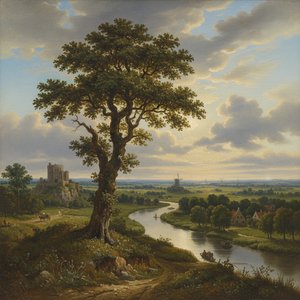
Wheat Fields
Acrylique sur toile
Décoration murale
Dutch Golden Age Landscape
1670
100.0 x 130.0 cm
Metropolitan Museum of Art
Reproduction à l'huile faite à la main
Huile sur toile peinte à la main, avec cadre et dimensions personnalisés, réalisée sur commande par nos artistes. ( Passer au tirage
Passer à l'image)
P118B $10
P118H $10
P118W $10
P438Z $10
P508JH $12
P508YH $12
P805H $10
P805Z $10
P919BZ $10
P919G $10
P919XJ $10
P959ZH $10
P968JZ $12
W106C $8
W218G $10
W218JH $8
W218Y $10
W307PJ $10
W316G $10
W316PJ $8
W316Y $10
W398PJ $8
W4111J $10
W500HY $15
W500JH $15
W692G $12
W849H $8
W940BG $15
W953PJ $8
Choisissez parmi nos formats prédéfinis qui respectent les proportions originales de l’œuvre.
Vous pouvez saisir vos propres dimensions pour l'adapter à un cadre ou à un espace spécifique. Si la taille sélectionnée ne correspond pas aux proportions de l'image d'origine, nous recadrerons l'œuvre ou prolongerons la peinture avec des éléments peints à la main supplémentaires. Une maquette numérique vous sera envoyée pour approbation avant le début de la production.
Veuillez noter que l'aperçu à l'écran ne reflète pas le recadrage ou l'extension réels. Seule la maquette montrera fidèlement la composition finale.
Bien que des tailles personnalisées soient disponibles, nous vous recommandons de sélectionner une dimension dans la liste prédéfinie afin de préserver les proportions d'origine.
Après la commande, l’équipe OriginalUniqueArt.com contactera le client par e-mail pour recueillir ses instructions et lui fournira une maquette d’aperçu
Livraison dans le monde entier () en 3 à 4 semaines au lieu des 5 semaines habituelles. (1 août). Aucun compromis sur la qualité.
Livraison express gratuite dans le monde entier
Toile de lin de qualité supérieure
Assurance transport complète
Garantie de remboursement des droits de douane
Garantie de fidélité des couleurs
Politique de retour de 60 jours (uniquement en cas de défaut)
Garantie de remboursement à 100%
Offre de tarifs dégressifs
Wheat Fields
Technique de reproduction
Format de la reproduction
-
Prix total
$ 300
Description de l'œuvre
Jacob van Ruisdael’s “Wheat Fields”: A Symphony of Light and Landscape
“Wheat Fields,” painted circa 1670 by Jacob Jansz van Ruisdael, stands as arguably the most arresting depiction of Dutch pastoralism from the Golden Age. More than just a scenic vista, it's a masterful orchestration of atmospheric perspective and compositional dynamism—a painting that continues to resonate with viewers centuries later. Examining its intricacies reveals not only Van Ruisdael’s technical prowess but also his profound understanding of conveying emotion through visual language.A Masterclass in Atmospheric Perspective
Van Ruisdael's signature style is characterized by a deliberate flattening of depth, achieved through subtle gradations of color and tonal variation. The distant wheat field recedes into hazy blues and greens—a technique known as atmospheric perspective—creating an illusion of vastness and conveying the serenity of rural life. Unlike many contemporaries who prioritized detailed realism, Ruisdael prioritized capturing the essence of a landscape rather than meticulously recreating every blade of grass. This approach aligns perfectly with the prevailing philosophical currents of the time, where contemplation and reflection on nature held considerable sway. The artist skillfully uses light—particularly diffused sunlight filtering through clouds—to sculpt the forms of the field and its inhabitants, imbuing the scene with an ethereal quality.Compositional Drama: Figures Amidst Vastness
The inclusion of two figures—a man carrying a bag and a woman accompanied by a child—adds a crucial element of narrative complexity to the landscape. Their placement at the forefront draws the eye inward, anchoring the viewer’s gaze amidst the expansive expanse of wheat and sky. The figures aren't merely decorative additions; they serve as symbols of human presence within the natural world, prompting contemplation about our relationship with the environment. Furthermore, Van Ruisdael employs a dynamic diagonal line that bisects the canvas, guiding the eye across the scene and enhancing its visual impact. This compositional device contributes to the painting’s dramatic tension—the subtle interplay between light and shadow emphasizing the contours of the landscape and the figures alike.Symbolism Rooted in Dutch Identity
“Wheat Fields” embodies the spirit of the Dutch Golden Age, reflecting a fascination with idealized representations of national identity. The wheat field itself symbolizes fertility and prosperity—themes central to Dutch agricultural traditions and economic success during this period. The inclusion of livestock reinforces these associations, grounding the scene in tangible realities while simultaneously elevating it to a realm of symbolic significance. Van Ruisdael’s depiction of the sky—dominated by swirling clouds illuminated by sunlight—suggests both beauty and vulnerability—a motif that resonates with broader anxieties about the unpredictable forces of nature.Emotional Resonance: Tranquility and Reflection
Ultimately, “Wheat Fields” succeeds in evoking a profound sense of tranquility and contemplation. The muted palette—primarily blues, greens, and browns—creates an atmosphere of calm repose, inviting viewers to immerse themselves in the stillness of the countryside. Yet, beneath this surface serenity lies a subtle undercurrent of drama—the interplay of light and shadow hinting at hidden complexities. As Gavin Finney eloquently describes it, Ruisdael “picks the moment you’d want to press the shutter on a camera,” capturing not just what is seen but also what is felt—a testament to Van Ruisdael's ability to transform visual observation into emotionally resonant art.- Artist: Jacob Jansz van Ruisdael
- Date: Circa 1670
- Medium: Oil on Canvas
- Dimensions: 39 3/8 x 51 1/4 in. (100 x 130.2 cm)
Biographie de l'artiste
Early Life and Career
Jacob Isaackszoon van Ruisdael, a name synonymous with the grandeur of the Dutch Golden Age, emerged in Haarlem around 1628 or 1629, into a family deeply rooted in the world of art. His lineage included his father, Isaak van Ruisdael, a skilled craftsman who combined painting with the production of frames – a crucial skill for any landscape artist of the time. His uncle, Salomon van Ruysdael, was already establishing himself as a respected figure within the Haarlem guild of painters, specializing in atmospheric landscapes that would profoundly influence his nephew’s artistic development. The family's dedication to visual arts created an environment where Jacob was immersed in techniques and aesthetics from a young age.
Unlike many artists of his era who received formal training under established masters, Ruisdael’s education appears to have been largely self-directed, honed through observation and apprenticeship within his family circle. Early influences likely included the works of Jan van Goyen, whose masterful depictions of Dutch landscapes—particularly their use of light and atmospheric perspective—were highly admired by contemporary artists. The subtle techniques employed by Pieter de Molyn, another prominent landscape painter, also played a role in shaping Ruisdael’s nascent style.
Ruisdael joined the prestigious Guild of Saint Luke in Haarlem around 1646, marking his official entry into the professional art world. This guild membership provided him with legitimacy and access to trade networks, but it also dictated certain constraints on his work—he was expected to primarily create smaller-scale paintings that could be sold directly to patrons, rather than undertaking large-scale commissions.
Artistic Style and Contributions
Ruisdael’s artistic style is characterized by a remarkable versatility and an astonishing output. He produced a vast range of landscape subjects—from serene countryside scenes to dramatic cityscapes and evocative seascapes—demonstrating a deep understanding of light, color, and composition. His early works, dating from 1646, already showcased his talent for capturing the essence of the Dutch countryside, but it was after his journey to Germany in 1650 that his style underwent a significant transformation.
The trip to Germany exposed Ruisdael to new artistic influences and broadened his perspective. He began to incorporate more heroic elements into his landscapes—larger-than-life figures, dramatic lighting effects, and a sense of scale that conveyed the power and majesty of nature. His later work, produced during his time in Amsterdam, continued this trend, with city panoramas and seascapes often dominated by expansive skies – occupying roughly two-thirds of the canvas.
A key element of Ruisdael’s technique was his masterful use of light. He expertly manipulated shadows and highlights to create a sense of depth and atmosphere, imbuing his landscapes with an almost palpable realism. His paintings are not merely representations of scenery; they are immersive experiences that transport the viewer into the heart of the Dutch countryside or the bustling streets of Amsterdam.
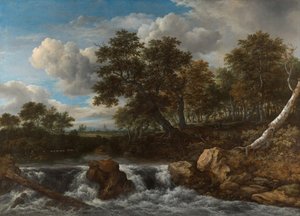
- Waterfall in a Rocky and Mountainous Landscape: This work exemplifies Ruisdael’s mastery of light and composition, showcasing the raw power and beauty of nature.
- View of Haarlem with Bleaching Grounds: A quintessential example of Ruisdael’s ability to capture the everyday life and atmosphere of the Dutch countryside.
- View of the Dam and the Damrak in Amsterdam: Demonstrates Ruisdael’s skill in capturing the dynamism and energy of a bustling city.
Museums and Collections
Ruisdael's paintings are treasured by institutions worldwide, reflecting their enduring appeal and historical significance. Notable holdings can be found in:
- The National Gallery in London
- The Rijksmuseum in Amsterdam
- The Hermitage Museum in St. Petersburg
Influence and Legacy
Jacob van Ruisdael’s influence on landscape painting traditions is profound and far-reaching. His work served as a crucial inspiration for generations of artists across Europe and beyond. The English Romantic painters, such as John Constable and J.M.W. Turner, were deeply affected by Ruisdael's atmospheric landscapes and his ability to capture the sublime beauty of nature. Similarly, the Barbizon School in France—a movement characterized by a return to landscape painting based on direct observation—looked to Ruisdael as a key figure in their artistic lineage.
In America, the Hudson River School embraced Ruisdael’s techniques and themes, producing iconic paintings of the American wilderness. His legacy extends beyond specific movements; he is considered one of the foundational figures of landscape painting, shaping the way artists approached the depiction of nature for centuries to come.
Jacob van Ruisdael
1628 - 1682 , Pays-Bas
L'essentiel de l'artiste
- Artistic Movement Or Style: Baroque, Golden Age
- Artists Or Movements Influenced By This Artist:
- Romantiques anglais
- Barbizon
- Artists Who Influenced This Artist:
- Vroom
- Van de Velde
- Date Of Birth: 1628/1629, Haarlem
- Date Of Death: 1682, Amsterdam
- Full Name: Jacob Isaackszoon van Ruisdael
- Nationality: Néerlandais
- Notable Artworks:
- Vue de Haarlem
- Cascade rocheuse
- Amsterdam
- Place Of Birth: Haarlem, Pays-Bas

L'option verre n'est disponible que pour les dimensions inférieures à 110 cm.