
 Aperçu en situation
 Partager
 Partager
 Détails
 Guide imprimable

 Télécharger
 Articles similaires
 Radiographie
 Voir le diaporama
 Statistiques
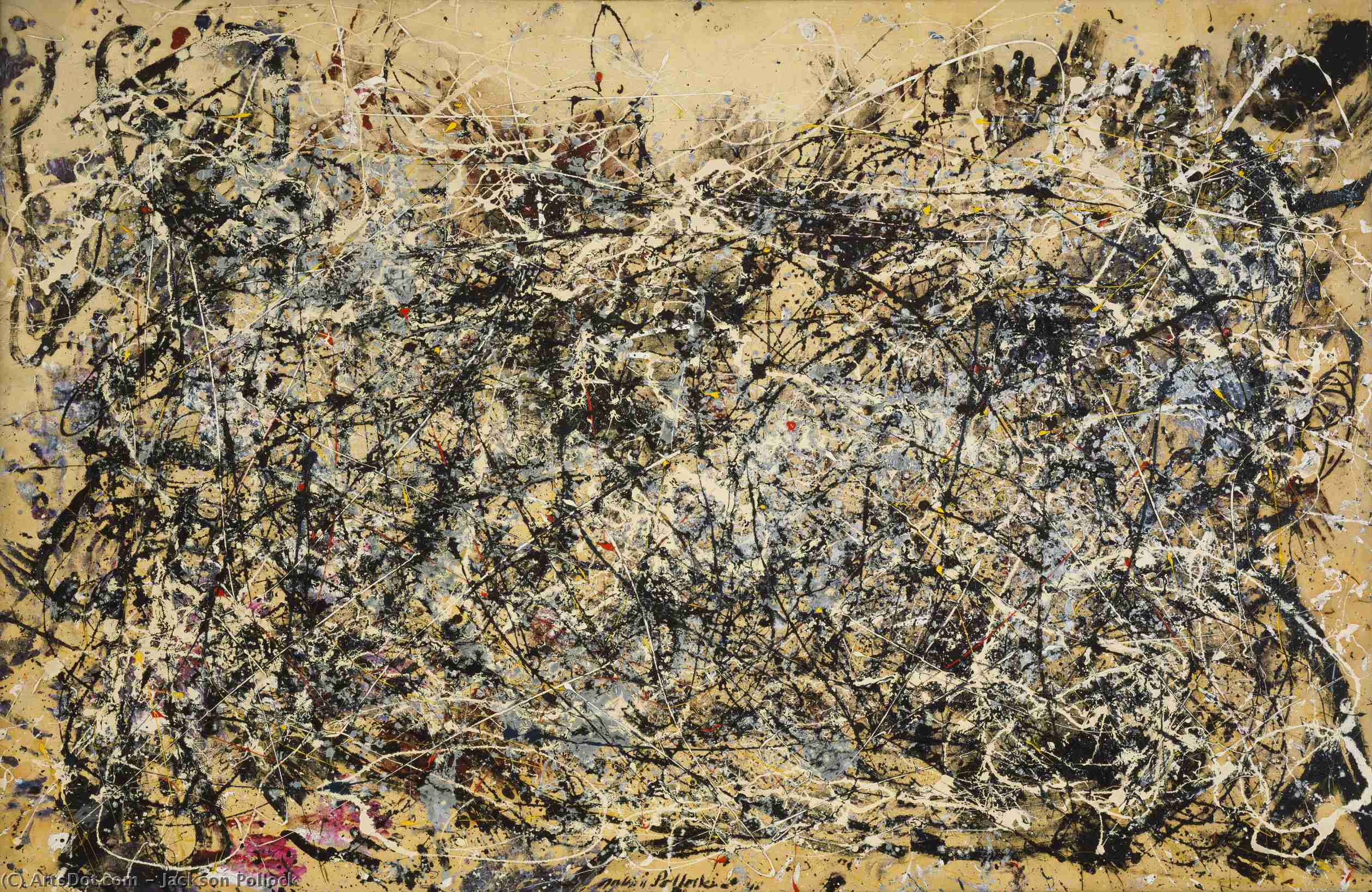
Numéro 1, 1949
 Huile sur toile
- Art mural
- Expressionnisme abstrait
 1950
1950- Moderne
 240.0 x 120.0 cm
 Neue Galerie NYC
 Afficher la suite
Acquérez une image numérique haute résolution et optimisée, d'une qualité bien supérieure à l'aperçu en ligne.
Chaque fichier est méticuleusement préparé par nos spécialistes internes à l'aide d'outils avancés et d'une retouche manuelle experte. Nous garantissons que chaque image possède une clarté exceptionnelle, une précision des couleurs irréprochable et un niveau de détail fin.
Le fichier final est livré par e-mail sous 72 heures, optimisé pour une utilisation immédiate dans des contextes professionnels, éditoriaux et d'impression. Il offre la même qualité de confiance que celle utilisée par les plus grands studios de création, éditeurs et galeries.
Image numérique
Téléchargez un fichier haute résolution pour votre usage personnel, l'impression et vos projets créatifs. ( Passer au format impression Acheter la peinture faite à la main)
Inclus avec chaque commande d'image numérique
Livraison numérique experte, garantie.
En choisissant OriginalUniqueArt.com, vous n'obtenez pas seulement une simple image : vous recevez une œuvre numérique sublimée avec professionnalisme, conçue avec précision et accompagnée d'une garantie de satisfaction. Voici tout ce qui accompagne automatiquement votre commande :

Livraison rapide par e-mail
Votre fichier d'image numérique haute résolution vous sera envoyé par e-mail sous 72 heures après votre commande — prêt à un usage immédiat.

Fichier numérique optimisé par l'IA
Votre œuvre d'art bénéficie d'une optimisation professionnelle grâce à des outils d'IA avancés et une retouche manuelle, garantissant un niveau maximal de détail, de clarté et de fidélité chromatique.

Réexpédition gratuite à vie
Vous avez accidentellement supprimé ou perdu votre fichier ? Pas d'inquiétude — nous vous le renverrons gratuitement, quand vous le souhaitez.

Aucuns frais de douane — À jamais
Profitez de votre œuvre d'art instantanément sans frais de douane ni de livraison — les téléchargements numériques sont toujours exonérés de taxes.

Garantie de fidélité des couleurs
Nous garantissons que votre image numérique reproduit les couleurs de l'original aussi fidèlement que possible grâce à des outils professionnels et une gestion rigoureuse des couleurs.

Garantie de satisfaction de 100 jours
Si vous n'êtes pas satisfait de votre image numérique, nous la retoucherons ou vous rembourserons 100% sous 100 jours — sans poser de questions.

Garantie de remboursement à 100%
Pas satisfait ? Obtenez un remboursement intégral dans les 100 jours suivant la réception de votre fichier numérique — sans aucune question posée.

Remises sur les commandes groupées
Achetez 3 images, économisez 10% - Achetez 5, économisez 15% - Achetez 10+, économisez 20%. Idéal pour les projets créatifs, les galeries et les agences.
Une expression monumentale de l'émotion abstraite
Créée en 1950, cette œuvre captivante incarne l'esprit révolutionnaire de l'expressionnisme abstrait et constitue un excellent exemple de la technique emblématique de la goutte à goutte de Jackson Pollock. Mesurant un impressionnant 240 x 120 cm, elle attire l'attention non seulement par son échelle, mais aussi par l'énergie pure qui rayonne de sa surface complexe.
La naissance de la peinture d'action
Rejetant la peinture traditionnelle sur chevalet, Pollock a posé ses toiles directement sur le sol, lui permettant d'aborder l'œuvre de tous les côtés. Ce changement radical de perspective est fondamental pour comprendre la pièce. Le travail de Pollock, en particulier, s'est libéré des traditions artistiques européennes, établissant New York comme un nouveau centre pour l'art d'avant-garde. Il a contesté les notions conventionnelles de beauté et d'habileté, donnant la priorité à l'expression authentique sur la précision technique. Cette peinture illustre les principes fondamentaux du mouvement: liberté, spontanéité et puissance du subconscient. Je ne sais pas.
Questions et réponses
Un téléchargement est-il disponible pour « Numéro 1, 1949 » ?
Un téléchargement est disponible pour « Numéro 1, 1949 » : la page Télécharger de l'œuvre propose un téléchargement d'image numérique haute résolution.
Quelle est l'intensité des couleurs de "Numéro 1, 1949" ?
Les couleurs de «Numéro 1, 1949» de Jackson Pollock présentent une saturation Couleurs subtiles avec une intensité Équilibré.
Qui est l'artiste derrière « Numéro 1, 1949 » ?
« Numéro 1, 1949 » a été créé par Jackson Pollock. Les informations présentes sur cette page décrivent l'œuvre originale de Jackson Pollock.
Biographie de l'artiste
Early Life and the Seeds of Innovation
Paul Jackson Pollock, born in Cody, Wyoming, in 1912, was a restless spirit from the outset. His early life was marked by frequent relocation as his father pursued work as a land surveyor across the vast landscapes of the American West. This itinerant existence instilled in young Pollock a deep connection to the natural world and an exposure to diverse cultures, particularly through encounters with Native American art during those surveying trips – impressions that would subtly permeate his artistic vision later in life.
Pollock’s formal artistic training began at the Manual Arts High School in Los Angeles, followed by studies at the Art Students League of New York under the tutelage of Thomas Hart Benton. Benton, a prominent figure in the Regionalist movement, emphasized rhythmic composition and narrative themes rooted in American life. While Pollock initially absorbed these lessons, his inherent inclination leaned toward more abstract explorations. He was also profoundly impacted by Mexican muralists like José Clemente Orozco, whose powerful depictions of social struggle resonated deeply with him. These early influences laid a foundation, but it was the burgeoning world of Surrealism that truly unlocked Pollock’s artistic potential.
The Birth of Action Painting and a Revolutionary Technique
The 1930s saw Pollock experimenting with various techniques, seeking alternatives to traditional brushwork. He began pouring paint, exploring its fluidity and unpredictable nature. However, it was around 1947 that his artistic trajectory underwent a radical transformation. Abandoning the easel altogether, Pollock laid canvases directly on the floor, initiating what would become known as his “drip painting” technique.
This wasn’t merely about applying paint; it was about embodying the act of creation itself. Pollock's canvases became arenas for physical expression, capturing the immediacy of his gestures and emotions. The resulting paintings are characterized by their “all-over” composition – a lack of central focus that invites the viewer to explore the entire surface as a unified field of energy. Intricate networks of lines and colors intertwine, creating a visual complexity that is both captivating and challenging. He employed unconventional tools—sticks, knives, even syringes—to manipulate the paint in unpredictable ways, further emphasizing the spontaneous nature of his process.
This innovative approach positioned Pollock as a central figure in the burgeoning Abstract Expressionist movement, which emerged in post-World War II New York City. Abstract Expressionism prioritized spontaneous gesture, large scale, and non-representational imagery, reflecting a broader cultural shift away from traditional artistic conventions. His marriage to fellow artist Lee Krasner was also pivotal; she provided unwavering emotional support and actively encouraged his artistic development, recognizing the groundbreaking nature of his work.
Iconic Works and Lasting Legacy
Pollock’s most celebrated works—such as Number 1, 1950 (Lavender Mist), One: Number 31, 1950, Blue Poles: Number 11, 1952, and Convergence—are testaments to his revolutionary technique. These paintings are not simply images; they are records of a performance, imbued with the artist’s physical presence and emotional intensity. The dynamic energy that emanates from these canvases is palpable, drawing viewers into a world of pure abstraction.
His style transcends mere aesthetics; it's an exploration of process over product. Pollock sought to capture the immediacy of his actions and emotions on canvas, rejecting traditional notions of composition and representation. He delved into Jungian psychology, exploring archetypes and the subconscious in his art, seeking to tap into universal symbols and primal energies.
Pollock’s impact on the history of art is immeasurable. He fundamentally altered the way artists approached painting, breaking free from easel-based methods and embracing a more performative approach. His work helped solidify New York City's position as a global center for modern art, shifting the focus away from European dominance. His influence can be seen in the work of countless artists who followed, including those associated with Color Field painting and later forms of abstract expressionism.
Though initially met with mixed reviews—some critics dismissed his work as chaotic or lacking skill—Pollock’s reputation grew steadily after his untimely death in 1956 at age 44. Today, he is universally recognized as one of the most important and influential artists of the 20th century, a visionary who dared to challenge conventions and redefine the boundaries of artistic expression.

Jackson Pollock
1912 - 1956 , États-Unis
En bref
- Artistic Movement Or Style: Abstract Expressionism
- Artists Who Influenced This Artist:
- José Clemente Orozco
- Thomas Hart Benton
- Date Of Birth: January 28, 1912
- Date Of Death: August 11, 1956
- Full Name: Paul Jackson Pollock
- Nationality: American
- Notable Artworks:
- Number 1, 1950 (Lavender Mist)
- One: Number 31, 1950
- Blue Poles: Number 11, 1952
- Convergence
- Place Of Birth: Cody, USA