

 Aperçu en situation
 Envoyer
 Partager
 Détails de l'œuvre
 Guide
Guide

 Télécharger l'image
 Articles similaires
 Radiographie
 Diaporama
 Statistiques
Dublin Evening
 Oil On Canvas
- WallArt
- Expressionism
 1946
1946 23.0 x 36.0 cm
 Musée Ashmolean d’Art et d’Archéologie
 Lire la suite
L’œuvre d'art présentée sur cette page est protégée par le droit d'auteur, ce qui signifie que nous ne pouvons légalement créer ou vendre de reproduction identique. Cette protection est appliquée en vertu d'accords internationaux tels que la Convention de Berne et par les lois nationales, notamment celles énoncées par le Loi américaine sur le droit d'auteur - Titre 17.
Cette méthode est pleinement conforme aux réglementations sur le droit d'auteur car elle ne repose pas sur la copie ou la duplication de l'œuvre protégée. Il s'agit plutôt d'une réinterprétation créative — une nouvelle peinture qui s'inspire de l'original sans pour autant lui être identique.
Giclées et impressions d'art
Impressions giclées ou sur toile de qualité musée, avec une production rapide et des finitions au choix. ( Commander la reproduction peinte à la main Passer au format numérique)




P118B €10

P118H €10

P118W €10

P438Z €10

P508JH €12

P508YH €12

P805H €10

P805Z €10

P919BZ €10

P919G €10

P919XJ €10

P959ZH €10

P968JZ €12

W106C €8

W218G €10

W218JH €8

W218Y €10

W307PJ €10

W316G €10

W316PJ €8

W316Y €10

W398PJ €8

W4111J €10

W500HY €15

W500JH €15

W692G €12

W849H €8

W940BG €15

W953PJ €8




Choisissez parmi nos formats prédéfinis qui respectent les proportions originales de l’œuvre.

Saisissez la largeur et la hauteur souhaitées pour qu'elles s'adaptent à votre cadre ou à votre mur. Une impression peut être recadrée, mais jamais agrandie au-delà de l'image originale ; ainsi, un format de forme différente entraînera la perte d'une partie de l'image. Nous vous envoyons une maquette numérique pour approbation avant toute impression. L'image présentée sur cette page ne montre pas le recadrage réel — seule la maquette le permet.
Livraison dans le monde entier () en 2 semaines au lieu des 4/5 semaines habituelles. (27 octobre)

Livraison express gratuite dans le monde entier

Toile de lin de qualité supérieure

Assurance transport complète

Garantie de remboursement des droits de douane

Garantie de fidélité des couleurs

Politique de retour de 100 jours (uniquement en cas de défaut)

Garantie de remboursement à 100%

Offre de tarifs dégressifs
 L'option verre n'est disponible que pour les dimensions inférieures à 110 cm.

Dublin Evening
Giclées et impressions d'art
Format de la reproduction
-


Prix total
€ 70
Dublin Evening: A Portrait of Urban Solitude
Jack Butler Yeats’s “Dublin Evening,” painted in 1946, isn't merely a depiction of a street scene; it’s a poignant meditation on the quiet dignity and inherent loneliness of urban life. This oil painting, housed within the Ashmolean Museum in Oxford, captures a fleeting moment along St. Stephen’s Green, Dublin, rendered with Yeats’s signature blend of evocative realism and expressive abstraction. The work immediately draws the viewer into a scene populated by figures seemingly lost in their own thoughts – a cluster of men seated on benches, engaged in an unspoken ritual of observation. They are not grand heroes or dramatic characters; rather, they represent the everyday citizens of Dublin, quietly existing within the heart of the city.
Yeats’s style during this period is particularly compelling. He moved away from a purely illustrative approach, embracing a more gestural and emotionally charged technique. Notice how the paint itself seems to vibrate with energy – thick impasto strokes build up layers of color, creating a palpable sense of texture and movement. The figures are not sharply defined; instead, they’re suggested through loose brushwork and subtle shifts in tone, lending them an almost spectral quality. This deliberate ambiguity invites speculation about their individual stories and inner lives. The muted palette – dominated by blues, greens, and browns – reinforces the painting's melancholic mood, mirroring the subdued light of a late evening.
A Celtic Visionary: Context and Influences
To fully appreciate “Dublin Evening,” it’s crucial to understand Jack Butler Yeats’s broader artistic context. Born in London but deeply rooted in Irish culture, Yeats spent much of his life navigating the complexities of identity as an Anglo-Irish artist. His childhood experiences in Sligo profoundly shaped his work, imbuing it with a deep connection to the landscape and folklore of Ireland. He was heavily influenced by the Romantic movement, particularly its emphasis on emotion and the sublime beauty of nature – qualities he translated into his depictions of the Irish countryside.
However, Yeats’s artistic journey took an unexpected turn in the 1920s, as he embraced Expressionism. This shift is powerfully evident in “Dublin Evening.” He began to experiment with bolder colors, distorted forms, and a more direct approach to conveying emotion. His work became increasingly concerned with capturing the psychological states of his subjects – their anxieties, hopes, and vulnerabilities. The painting’s quiet intensity reflects this evolving artistic sensibility.
Symbolism and Narrative Resonance
The title itself, “Dublin Evening,” is laden with symbolic weight. It evokes a sense of transition, of twilight and reflection. The men on the benches can be interpreted as representatives of Dublin society – perhaps observing the city’s changing fortunes, contemplating their own place within it, or simply seeking solace in shared silence. The act of sitting together, yet remaining largely apart, speaks to the inherent isolation that can exist even amidst human connection.
There's a subtle nod to James Joyce’s “Ulysses,” which was published just a few years later. The painting shares with the novel a focus on the mundane details of everyday life and a sense of searching for meaning within the ordinary. The figures, like Bloom, are caught in a moment of contemplation, grappling with the complexities of existence. Yeats’s masterful use of light and shadow further enhances this narrative resonance, creating an atmosphere of mystery and intrigue.
A Legacy of Quiet Intensity
“Dublin Evening” stands as one of Jack Butler Yeats's most enduring works – a testament to his ability to capture the essence of human experience with remarkable sensitivity and skill. It’s not a painting that shouts for attention; rather, it invites quiet contemplation and rewards repeated viewing. Its understated beauty and profound emotional depth continue to resonate with audiences today, solidifying Yeats’s place as one of Ireland's most important artists.
Questions et réponses
À quelle période de la carrière de Jack Butler Yeats se situe « Dublin Evening » ?
« Dublin Evening » est représentatif de la période Mature Period de Jack Butler Yeats.
Existe-t-il des œuvres similaires à « Dublin Evening » ?
Les œuvres similaires à « Dublin Evening » sont répertoriées sur la page Œuvres similaires de l'œuvre.
Comment le médium et le mouvement se conjuguent-ils dans « Dublin Evening » ?
«Dublin Evening» de Jack Butler Yeats allie la technique du Oil On Canvas au style Expressionism. La technique et le mouvement désignent respectivement le procédé de réalisation et l'esthétique de l'œuvre.
Biographie de l'artiste
Jack Butler Yeats : Une Vie Entre Art et Lettres
- Né: Londres, Royaume-Uni (1871)
- Décédé: 1957
John Butler Yeats, plus communément connu sous le nom de Jack Butler Yeats, est une figure essentielle de l'art irlandais du XXe siècle et un talent unique dans le paysage plus large du modernisme. Il n’était pas seulement un peintre célébré, mais aussi médaillé olympique, dramaturge, romancier et essayiste, démontrant une remarquable étendue d’expression artistique. Son héritage est intimement lié à celui de son frère, W.B. Yeats, le célèbre poète qui a reçu le prix Nobel de littérature en 1923.
Jeunesse et Développement Artistique
- Origines Familiales: Né à Londres du portraitiste irlandais John Butler Yeats et plus jeune frère de W. B. Yeats.
- Enfance à Sligo: A passé ses années formatives à Sligo avec ses grands-parents maternels, influençant profondément ses représentations ultérieures du paysage irlandais.
- Débuts en tant qu'Illustrateur: A d’abord poursuivi une carrière d'illustrateur pour des magazines tels que Boy's Own Paper et Judy, créant des bandes dessinées comme "Chubb-Lock Homes" et contribuant à Punch sous le pseudonyme de “W. Bird”.
- Mariage et Résidence au Wicklow: A épousé Mary Cottenham en 1894 et a résidé dans le comté de Wicklow, en Irlande, selon le recensement de 1911.
- Transition vers l'Huile: A commencé à travailler régulièrement à l’huile vers 1906, passant de l’illustration vers un style artistique plus personnel. Ses premières peintures à l’huile présentaient des représentations simples et lyriques de paysages et de figures, souvent tirées de ses souvenirs de Sligo.
Style Artistique et Thèmes
- Romantisme Précoce: Le travail initial de Yeats affichait des éléments de romantisme, caractérisés par des représentations évocatrices de la campagne irlandaise et de son peuple.
- Tour vers l'Expressionnisme (c. 1920): Vers 1920, son style a subi une transformation significative, évoluant vers une approche intensément expressionniste. Ce changement impliquait de s’éloigner de la précision représentative pour transmettre l’émotion et l’expérience subjective.
- Thèmes Clés: Le travail de Yeats explorait fréquemment les thèmes de l'identité irlandaise, de la solitude de l'individu, de l'universalité de la souffrance humaine et de la vitalité de la vie irlandaise – en particulier des scènes représentant des chevaux, des cirques et des joueurs ambulants.
- Technique: Ses peintures ultérieures étaient marquées par un traitement vigoureux et expérimental de la peinture, souvent appliquée épaissièrement. Il abandonnait fréquemment le travail traditionnel au pinceau, optant pour une application directe avec divers outils afin d'obtenir des textures et des effets expressifs. Un intérêt profond pour la puissance de la couleur était également évident dans son œuvre.
Réalisations Majeures et Reconnaissance
- Médaillé Olympique: Détient la distinction d’être le premier médaillé irlandais aux Jeux olympiques, remportant une médaille d'argent dans la catégorie arts et culture lors des Jeux olympiques d'été de 1924 à Paris pour sa peinture "The Liffey Swim" (enregistrée comme “Swimming” dans les archives de la compétition).
- Prix Elevés aux Enchères: Ses œuvres ont atteint des prix importants aux enchères, démontrant une reconnaissance croissante de son mérite artistique. Par exemple, "A Fair Day, Mayo" a été vendu pour 1 000 000 € en 2011.
- Adhésion à la Royal Hibernian Academy: Élu membre de la Royal Hibernian Academy en 1916.
- Contributions Littéraires: Au-delà de la peinture, Yeats était un écrivain prolifique, produisant des romans (dont "The Careless Flower" et "The Amaranthers"), des pièces jouées à l'Abbey Theatre et des essais. Son style d’écriture en flux de conscience a influencé des écrivains comme James Joyce.
Héritage et Influence
- L'Artiste Irlandais Prééminent: Considéré comme le plus important artiste irlandais du XXe siècle.
- Une Voix Artistique Unique: Est resté une figure unique, refusant de prendre des élèves ou de permettre à quiconque d’observer son processus de travail.
- Influence et Comparaisons: Son style artistique a été comparé à celui du peintre autrichien Oskar Kokoschka.
- Acclamation Critique: Samuel Beckett a salué Yeats comme l'un des "grands de notre temps", tandis que John Berger l’a loué comme un “grand peintre” doté d’un sens du futur.
- Signification Artistique: Le travail de Yeats a contribué à articuler un Dublin moderne du XXe siècle, dépeignant des sujets spécifiquement irlandais à travers le prisme de thèmes universels et d'expressionnisme moderniste.
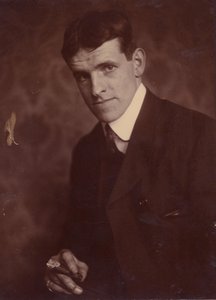
Jack Butler Yeats
1871 - 1957 , Royaume-Uni
L'essentiel de l'artiste
- Artistes Influents: ['Oskar Kokoschka']
- Date De Décès: 1957
- Date De Naissance: 1871
- Lieu De Naissance: Londres, Royaume-Uni
- Mouvement Artistique: Expressionnisme, Art moderne
- Nationalité: Irlandais
- Nom Complet: Jack Butler Yeats
- Oeuvres Notables:
- The Riverside (Long Ago)
- An Old Timer Reading
- Humanity's Alibi
- Landing Cargo, Mayo Coast
- Darrynane (In the Sun)
Articles connexes

Les 10 Chefs-d'œuvre de l'Aquarelle qui ont Révolutionné l'Art | OriginalUniqueArt
Plongez dans l'univers fascinant des 10 chefs-d'œuvre de l'aquarelle qui ont marqué l'histoire de l'art. Découvrez Turner, Monet, Goya et bien d'autres ! Retrouvez ces œuvres emblématiques en reproductions exceptionnelles sur OriginalUniqueArt.com.

Ephemeral Visions: Exploring the Artistic Legacy & Contemporary Practice of Watercolor Painting
Explore the captivating world of watercolor painting! Discover its rich history, essential techniques, influential artists & collecting tips. A comprehensive guide for art enthusiasts from OriginalUniqueArt.

Éphémères Visions : L'Aquarelle, Histoire et Résonance Émotionnelle d'un Art Intemporel
Explorez l'histoire fascinante de l'aquarelle, des origines à nos jours. Découvrez les techniques, les artistes emblématiques et nos conseils d'experts pour collectionner ces œuvres éphémères. OriginalUniqueArt.

L'Aquarelle : Histoire, Techniques et Nuances d'une Peinture de Lumière Éphémère
Explorez l'histoire fascinante de l'aquarelle, des techniques ancestrales aux maîtres impressionnistes. Découvrez les artistes emblématiques et nos conseils pour apprécier et collectionner cette peinture lumineuse.

L'Aquarelle : Histoire, Techniques et Éclat Contemporain d'un Art Intemporel
Explorez l'histoire fascinante et les techniques de l'aquarelle avec . Découvrez des artistes contemporains, des conseils d'experts et trouvez l'œuvre parfaite pour votre collection.