

 Aperçu en situation
 Partager
 Partager
 Détails
 Guide imprimable

 Télécharger
 Articles similaires
 Radiographie
 Voir le diaporama
 Statistiques
Arc-en-ciel


 Afficher la suite
Reproduction à l'huile faite à la main
Huile sur toile peinte à la main, avec cadre et dimensions personnalisés, réalisée sur commande par nos artistes. ( Passer au format impression Passer au format image numérique)




P118B €10

P118H €10

P118W €10

P438Z €10

P508JH €12

P508YH €12

P805H €10

P805Z €10

P919BZ €10

P919G €10

P919XJ €10

P959ZH €10

P968JZ €12

W106C €8

W218G €10

W218JH €8

W218Y €10

W307PJ €10

W316G €10

W316PJ €8

W316Y €10

W398PJ €8

W4111J €10

W500HY €15

W500JH €15

W692G €12

W849H €8

W940BG €15

W953PJ €8




Choisissez parmi nos formats prédéfinis qui respectent les proportions originales de l’œuvre.

Saisissez la largeur et la hauteur souhaitées, pour s'adapter à votre cadre ou à votre mur. Cette œuvre est peinte à la main ; ainsi, pour un format de forme différente, l'artiste peut peindre un peu plus autour du tableau ou réduire légèrement les bords — c'est vous qui choisissez. Nous vous envoyons une maquette numérique pour approbation avant que la peinture ne commence. L'image présentée sur cette page ne reflète pas le résultat réel — seule la maquette le fait.
Après la commande, l’équipe OriginalUniqueArt.com contactera le client par e-mail pour recueillir ses instructions et lui fournira une maquette d’aperçu
Livraison dans le monde entier () en 3 à 4 semaines au lieu des 5 semaines habituelles. (23 octobre). Aucun compromis sur la qualité.

Livraison express gratuite dans le monde entier

Toile de lin de haute qualité

Assurance transport complète

Garantie de remboursement des droits de douane

Garantie de fidélité des couleurs

Garantie de retour de 100 jours (uniquement en cas de défaut)

Garantie de remboursement à 100%

Tarifs dégressifs sur quantité
 L'option verre n'est disponible que pour les dimensions inférieures à 110 cm.

Arc-en-ciel
Technique de reproduction
Format de la reproduction
-


Prix total final
€ 263
A Symphony of Light and Hope
To gaze upon Ivan Konstantinovich Aivazovsky’s 1873 masterpiece, “The Rainbow,” is to witness a profound dialogue between the heavens and the sea. Aivazovsky, a titan of Romantic marine painting, possessed an almost supernatural ability to act as a conduit for the ocean’s soul. In this particular work, we find ourselves not merely observing a seascape, but participating in a moment of celestial alchemy. The painting captures that fleeting, ethereal instant where sunlight and rain converge to fracture white light into a breathtaking spectrum of color, casting a prismatic promise over the undulating waves. It is a scene that transcends mere maritime documentation, offering instead a meditative exploration of transition and the divine intersection of the earthly and the ethereal.
The composition is anchored by the delicate interplay of two vessels navigating the vast expanse. One small boat rests toward the left, while a larger vessel occupies much of the right-hand side, their presence providing a sense of scale against the infinite horizon. Within these boats, figures can be seen—some standing, some preparing for the journey ahead—adding a layer of human narrative to the elemental drama. There is a palpable sense of quiet anticipation; the atmosphere is at once serene and picturesque, capturing a moment of calm that feels both fragile and enduring.
The Mastery of Romantic Technique
Aivazovsky’s technical prowess is on full display through his sophisticated use of light and shadow. While many of his contemporaries, such as Turner, leaned into bold and vibrant palettes to depict maritime drama, Aivazovsky chose a more restrained, contemplative approach for “The Rainbow.” He employs a subdued tonal range—a delicate tapestry of muted blues, deep greens, and earthy ochres—to create an atmosphere of grandeur rather than mere spectacle. This deliberate restraint serves to heighten the emotional resonance of the work, drawing the viewer’s eye toward the subtle shifts in luminosity that define the water's surface.
The artist’s brushwork captures the very texture of the sea, from the translucent crest of a wave to the heavy, salt-laced weight of the deep. Through his mastery of light, he guides us through the turbulent seascape, emphasizing the vulnerability of the human element against the backdrop of nature's immense power. For the collector or interior designer, this technique offers a unique visual depth; the painting does not simply sit upon a wall but seems to breathe with an inner light, making it a captivating centerpiece for any sophisticated space.
Symbolism and Emotional Resonance
Beyond its aesthetic brilliance, “The Rainbow” carries deep symbolic weight. In the lexicon of art history, the rainbow has long served as a symbol of hope, a bridge between the turbulent storms of life and the promise of peace. By juxtaposing the potential for maritime struggle with the serene beauty of the atmospheric phenomenon, Aivivelysky creates a powerful metaphor for resilience. The painting speaks to the human spirit's ability to find beauty and light even amidst the unpredictable and often dangerous currents of existence.
For those seeking to bring a sense of tranquility and intellectual depth into their homes or galleries, this work offers an unparalleled emotional impact. It is a piece that invites long periods of contemplation, rewarding the viewer with new layers of meaning upon every encounter. Whether viewed as a triumph of 19th-century Romanticism or as a timeless emblem of hope, Aivazovsky’s vision remains as potent today as it was when the final brushstroke was applied in 1873.
Questions et réponses
À quel point les couleurs de «Arc-en-ciel» de Ivan Aïvazovski sont-elles harmonieuses ?
Les couleurs de «Arc-en-ciel» de Ivan Aïvazovski présentent une harmonie Palette unifiée. L'harmonie décrit la relation entre les couleurs.
Quelle place occupe « Arc-en-ciel » parmi les thèmes récurrents de Ivan Aïvazovski ?
«Arc-en-ciel» dépeint marine, rainbow, sailors, hope, atmosphère, lumière, paysage, résurrection, tandis que les thèmes récurrents de Ivan Aïvazovski sont nature sauvage et émotion, symbolisme religieux et sacré, influence du mouvement romantique, réaffirmation de la beauté naturelle, œuvre phare de l’artiste majeur. La comparaison des deux montre comment l'œuvre s'inscrit dans la lignée des sujets habituels de l'artiste.
Puis-je voir «Arc-en-ciel» de Ivan Aïvazovski sur mon propre mur avant de l'acheter ?
La page Aperçu RA de «Arc-en-ciel» de Ivan Aïvazovski utilise la réalité augmentée pour visualiser l'œuvre dans votre propre espace, à partir d'un appareil compatible.
Biographie de l'artiste
Ivan Konstantinovich Aivazovsky : Une Vie au Service de la Mer
- Né : Feodosia, Russie (1817)
- Décédé : 1900
- Origine : OriginalUniqueArt
- Style : Peintre romantique russe, Art marin
Jeunesse et Formation
- Ivan Konstantinovich Aivazovsky, baptisé Hovhannes Aivazian, est né le 29 juillet 1817 à Feodosia, en Crimée, dans une famille arménienne.
- Il a reçu sa première éducation à l'église arménienne St. Sargis de Feodosia.
- Son talent artistique fut reconnu très tôt ; il étudia le dessin sous la direction de Jacob Koch, un architecte local.
- En 1833, Aivazovsky déménagea à Saint-Pétersbourg pour étudier à l'Académie impériale des arts sous Maxim Vorobiev.
Carrière et Évolution Artistique
- Aivazovsky voyagea abondamment dans toute l'Europe au début des années 1840, passant du temps en Italie.
- Après son retour en Russie, il fut nommé peintre principal de la marine russe, un poste qui influença considérablement sa carrière.
- Il développa un style distinctif caractérisé par des représentations dramatiques et évocatrices de paysages marins, souvent mettant en scène des eaux turbulentes et des tempêtes puissantes.
- Les œuvres d'Aivazovsky représentaient fréquemment des batailles navales et des scènes de la vie maritime, reflétant ses liens étroits avec l'élite militaire russe.
- Sa production prolifique comprenait environ 6 000 peintures tout au long de sa carrière.
Œuvres Majeures et Influences Artistiques
- Paysage marin à clair de lune : Un exemple essentiel de la maîtrise d'Aivazovsky de la lumière et de l'atmosphère dans le but de représenter la mer.
- Un navire dans une mer orageuse : Démontre sa capacité à transmettre la puissance et le danger de la nature.
- Le gondolier sur mer, la nuit : Met en valeur son talent pour capturer des scènes nocturnes avec un détail remarquable.
- Chaos (La Création) : Une œuvre précoce acquise par le pape Grégoire XVI, représentant un acte divin de création.
- La Neuvième Vague : Probablement son tableau le plus célèbre, dépeignant une scène dramatique de survivants d'un naufrage s'agrippant aux épaves.
Signification Historique et Héritage
- Aivazovsky est considéré comme l'un des plus grands maîtres de l'art marin dans l'histoire russe.
- Ses œuvres sont célébrées pour leur romantisme, leur compétence technique et leur capacité à évoquer de puissantes émotions.
- Il a contribué de manière significative au développement de la peinture de paysage russe et a influencé des générations d'artistes.
- Les peintures d'Aivazovsky restent populaires et sont largement exposées dans les musées et les galeries du monde entier.
- Son héritage continue d'inspirer les amateurs d'art et les artistes, consolidant sa place en tant que figure de proue de l'art du XIXe siècle.

Ivan Aïvazovski
1817 - 1900 , Russie
En bref
- Artistes Influents:
- Maxim Vorobiev
- J.M.W. Turner
- Date De Décès: May 2, 1900
- Date De Naissance: 29 juillet 1817
- Lieu De Naissance: Feodosia, Russie
- Mouvement Artistique: Romantisme, Marine
- Nationalité: Russe, Arménien
- Nom Complet: Ivan Konstantinovich Aivazovsky
- Oeuvres Notables:
- La Neuvième Vague
- Un navire dans la tempête
- Le gondolier sur mer
- Chaos (La Création)
- Paysage marin avec pleine lune
Articles connexes

Masterpieces of the Sea: An Authoritative Guide to Iconic Maritime Artworks and the Eternal Horizon
Embark on a scholarly journey through the history of maritime art. Discover the evolution of seascapes from navigational records to Romantic masterpieces. Explore museum-quality, hand-painted oil reproductions of the world's most iconic marine artworks at OriginalUniqueArt.com.
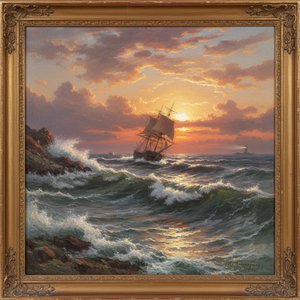
Ivan Aivazovsky: Mastering Light & Emotion in 19th-Century Marine Painting
Explore the captivating world of Ivan Aivazovsky, a master of 19th-century marine painting. Discover his techniques, iconic artworks & lasting legacy in this expert guide.

Mastering the Tempest: The Sublime Power of Stormy Seas in Fine Art History
Explore the sublime beauty of stormy seas through the lens of art history. From Turner to Aivazovsky, discover how masterfully captured tempests evoke profound emotion and luxury in fine art collections and high-end interior design.
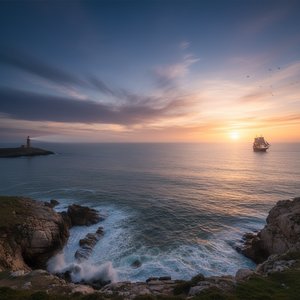
The Allure of the Horizon: A Comprehensive Exploration of Seascape Art Through History & Emotion
Explore the captivating world of seascape art! Discover its history, key artists & movements – from Dutch Masters to Impressionism. Expert insights for collectors and enthusiasts at OriginalUniqueArt.

10 chefs-d'œuvre de l'art sublimés par les nuances vert mer
Plongez dans la sérénité des nuances vert mer à travers 10 chefs-d'œuvre de l'impressionnisme et du post-impressionnisme. De Monet à Van Gogh, explorez l'histoire et la beauté de ces tableaux iconiques. Trouvez votre inspiration déco sur OriginalUniqueArt.com.


