

 Aperçu en situation
 Envoyer
 Partager
 Détails de l'œuvre
 Guide
Guide

 Télécharger l'image
 Articles similaires
 Radiographie
 Diaporama
 Statistiques
Landscape with Tower


 Lire la suite
Giclées et impressions d'art
Impressions giclées ou sur toile de qualité musée, avec une production rapide et des finitions au choix. ( Commander la reproduction peinte à la main Passer au format numérique)




P118B €10

P118H €10

P118W €10

P438Z €10

P508JH €12

P508YH €12

P805H €10

P805Z €10

P919BZ €10

P919G €10

P919XJ €10

P959ZH €10

P968JZ €12

W106C €8

W218G €10

W218JH €8

W218Y €10

W307PJ €10

W316G €10

W316PJ €8

W316Y €10

W398PJ €8

W4111J €10

W500HY €15

W500JH €15

W692G €12

W849H €8

W940BG €15

W953PJ €8




Choisissez parmi nos formats prédéfinis qui respectent les proportions originales de l’œuvre.

Saisissez la largeur et la hauteur souhaitées pour qu'elles s'adaptent à votre cadre ou à votre mur. Une impression peut être recadrée, mais jamais agrandie au-delà de l'image originale ; ainsi, un format de forme différente entraînera la perte d'une partie de l'image. Nous vous envoyons une maquette numérique pour approbation avant toute impression. L'image présentée sur cette page ne montre pas le recadrage réel — seule la maquette le permet.
Livraison dans le monde entier () en 2 semaines au lieu des 4/5 semaines habituelles. (28 octobre)

Livraison express gratuite dans le monde entier

Toile de lin de qualité supérieure

Assurance transport complète

Garantie de remboursement des droits de douane

Garantie de fidélité des couleurs

Politique de retour de 100 jours (uniquement en cas de défaut)

Garantie de remboursement à 100%

Offre de tarifs dégressifs
 L'option verre n'est disponible que pour les dimensions inférieures à 110 cm.

Landscape with Tower
Giclées et impressions d'art
Format de la reproduction
-


Prix total
€ 70
Biographie de l'artiste
Ike no Taiga: Bridging Tradition and Innovation in Edo Period Landscape Painting
Ike no Taiga (池大雅, 1723 – 1776) stands as a monumental figure within the *bunjinga* tradition—a uniquely Japanese form of literati painting that flourished during the Edo period. More than just an artist, he embodied the spirit of his time, skillfully blending classical Chinese aesthetics with groundbreaking experimental techniques to produce works that continue to resonate with collectors and scholars alike. His life story itself is a testament to perseverance and intellectual curiosity, shaping him into one of the most influential painters of his era. Born into humble circumstances—his father a farmer on the outskirts of Kyoto—Taiga’s early life was marked by hardship. The family moved into Kyoto proper shortly before his birth, possibly to escape famine conditions, and his father's employment at the silver mint afforded them modest financial stability. Tragically, he passed away when Taiga was just three years old, leaving his widowed mother to raise him with unwavering devotion. Remarkably, she prioritized his education, securing tutors who instilled in him a profound understanding of both Japanese and Chinese disciplines—a foundation that would prove crucial to his artistic development. By the age of six, he began formal training at Manpuku-ji Zen Temple, fostering connections that would endure throughout his life, grounding him in Buddhist philosophy and shaping his contemplative approach to artmaking. Taiga’s artistic journey commenced professionally at fourteen, establishing a fan painting workshop where he honed his craft alongside fellow artists and collectors. A pivotal encounter with Yanagisawa Kien—a prominent social and artistic patron—introduced him to the vibrant *bunjinga* circle of Kyoto, propelling him toward collaborations that would solidify his reputation as a leading figure in Japanese art. Notably, Taiga’s formative influence stemmed from Yi Fujiu (j: i fukyū), a Chinese pai- Early Life and Family Background: Ike no Taiga was born into a family of modest means; his father worked as a farmer on the outskirts of Kyoto. This relocation occurred before Taiga’s birth, driven by concerns about famine conditions, and his father's position at the silver mint provided a degree of financial security. Despite this relative stability, Taiga experienced profound loss when his father died prematurely at the age of three, leaving his mother to shoulder the responsibility for raising him with unwavering dedication.
- Education and Training: Recognizing Taiga’s exceptional talent—described as “supernaturally gifted”—his mother diligently pursued educational opportunities for him, securing tutors who imparted knowledge in both Japanese and Chinese disciplines. This comprehensive training laid the groundwork for his artistic pursuits and instilled a deep appreciation for intellectual rigor.
- Zen Temple Affiliations: At six years old, Taiga began formal instruction at Manpuku-ji Zen Temple, establishing enduring connections with Buddhist philosophy and shaping his contemplative worldview—a characteristic that would permeate throughout his entire artistic career.
- Fan Painting Workshop: At fourteen, Taiga established a fan painting workshop where he cultivated his skills alongside fellow artists and collectors—a testament to his commitment to honing his craft within a collaborative environment.
- Collaborations with Kien and Others: His encounter with Yanagisawa Kien marked a pivotal moment in his artistic trajectory, introducing him to the influential *bunjinga* circle of Kyoto and fostering partnerships that would elevate his reputation as a leading artist.
- Relationship with Fujiu: Taiga’s formative influence stemmed from Yi Fujiu's teachings—particularly the revolutionary techniques utilized in landscape painting inspired by Chinese traditions, documented comprehensively in *Yi Fujiu Ike no Taiga Sansui Gafu*.

Ike Taiga
1723 - 1776 , Japon
L'essentiel de l'artiste
- Artistic Movement Or Style: *Bunjinga*
- Artists Who Influenced This Artist: ['Yi Fujiu']
- Date Of Birth: 1723
- Date Of Death: 1776
- Full Name: Ike no Taiga
- Nationality: Japanese
- Notable Artworks:
- Landscape with Tower
- Fishing Boat on Reed Covered Bank and Calligraphy
- Place Of Birth: Kyoto
Articles connexes
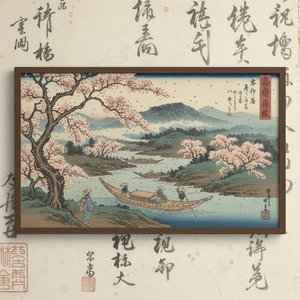
Ephemeral Landscapes: Hiroshige's Poetics of Transient Beauty in Edo Japan
Explore the captivating world of Utagawa Hiroshige's ukiyo-e landscapes. Discover his artistic innovations, influence on Western art, and the poetics of transient beauty in Edo period Japan. A guide for collectors & enthusiasts.

Les 10 Chefs-d'œuvre du Paysage Romantique : Artistes et Décor d'Intérieur
Plongez dans l'émotion du Romantisme avec les 10 plus beaux paysages de Friedrich, Turner & Delacroix. Découvrez leur histoire et trouvez l'inspiration déco idéale sur OriginalUniqueArt.com !
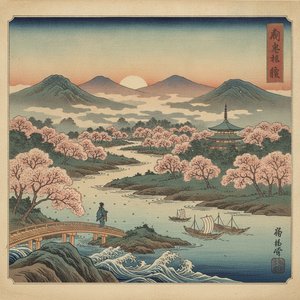
Zen on Canvas: The Timeless Artistry and Spiritual Depth of Japanese Landscape Painting
Explore the profound beauty of Japanese landscape painting. From Hokusai's iconic vistas to Zen-inspired compositions, discover the spiritual depth and historical mastery of Ukiyo-e art in this expert cultural retrospective.

Hokusai : Les 25 Œuvres Maîtresses d'un Génie Japonais | OriginalUniqueArt
Plongez dans l'univers de Katsushika Hokusai avec les 25 œuvres incontournables du maître japonais. Découvrez l'histoire, les techniques d'ukiyo-e et la beauté intemporelle de 'La Grande Vague'. Reproductions tableaux de qualité muséale sur OriginalUniqueArt.com.
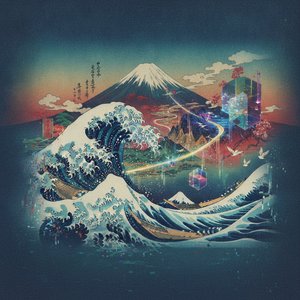
Beyond the Great Wave: The High-Impact Visual Revolution of Japanese Landscape Art
Go beyond Hokusai's Great Wave. Explore the high-impact, graphic world of Japanese Ukiyo-e landscapes and urban prints. Discover how these bold, vibrant woodblock masterpieces continue to shape modern pop culture and contemporary design aesthetics.