Text size

() ·

A painting made for you, by hand

The Ponte Solario

Reproduction à l'huile faite à la main

Huile sur toile peinte à la main, avec cadre et dimensions personnalisés, réalisée sur commande par nos artistes. ( Passer au format impression Passer au format numérique)

Description de la pièce

Experience Romantic decay with Hubert Robert's 1775 vision of The Ponte Solario, capturing sublime ruins bathed in atmospheric light; discover this masterpiece today.

Biographie de l'artiste

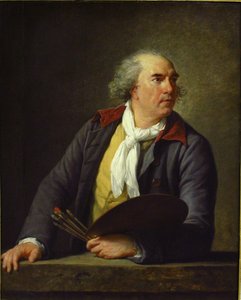
Hubert Robert (1733-1808) : peintre français des ruines et paysages, capturant la beauté de la décomposition & l'imagination créatrice. Découvrez son art sur OriginalUniqueArt !

from ·

Chapter 1

How large should it be?

Slide to change the size; the picture on the left shows the frame at its real width. The proportions of the original are kept.

Format standard
sur mesure
CM
INCH

Choisissez parmi nos formats prédéfinis qui respectent les proportions originales de l’œuvre.

largeur
hauteur

Saisissez la largeur et la hauteur souhaitées, pour s'adapter à votre cadre ou à votre mur. Cette œuvre est peinte à la main ; ainsi, pour un format de forme différente, l'artiste peut peindre un peu plus autour du tableau ou réduire légèrement les bords — c'est vous qui choisissez. Nous vous envoyons une maquette numérique pour approbation avant que la peinture ne commence. L'image présentée sur cette page ne reflète pas le résultat réel — seule la maquette le fait.

Chapter 2

How should it arrive?

Choose the edges of the stretched canvas

Choose your frame

Corner sample of the WhiteWrap canvas edge finish, stretched on bois massif bars
White €1
Corner sample of the BlurSideWrap canvas edge finish, stretched on bois massif bars
Blurside €1
Corner sample of the ExtendedWrap canvas edge finish, stretched on bois massif bars
Extended €1
Corner sample of the P118B picture frame: polystyrène moulé, 5 cm wide and 3 cm thick
P118B €10
Corner sample of the P118H picture frame: polystyrène moulé, 5 cm wide and 3 cm thick
P118H €10
Corner sample of the P118W picture frame: polystyrène moulé, 5 cm wide and 3 cm thick
P118W €10
Corner sample of the P438Z picture frame: polystyrène moulé, 5.5 cm wide and 3.5 cm thick
P438Z €10
Corner sample of the P508JH picture frame: polystyrène moulé, 7 cm wide and 3.5 cm thick
P508JH €12
Corner sample of the P508YH picture frame: polystyrène moulé, 7 cm wide and 3.5 cm thick
P508YH €12
Corner sample of the P805H picture frame: polystyrène moulé, 5 cm wide and 3.5 cm thick
P805H €10
Corner sample of the P805Z picture frame: polystyrène moulé, 5 cm wide and 3.5 cm thick
P805Z €10
Corner sample of the P919BZ picture frame: polystyrène moulé, 7 cm wide and 3.5 cm thick
P919BZ €10
Corner sample of the P919G picture frame: polystyrène moulé, 7 cm wide and 3.5 cm thick
P919G €10
Corner sample of the P919XJ picture frame: polystyrène moulé, 7 cm wide and 3.5 cm thick
P919XJ €10
Corner sample of the P959ZH picture frame: polystyrène moulé, 5 cm wide and 3 cm thick
P959ZH €10
Corner sample of the P968JZ picture frame: polystyrène moulé, 6 cm wide and 4 cm thick
P968JZ €12
Corner sample of the W106C picture frame: bois massif, 5 cm wide and 3 cm thick
W106C €8
Corner sample of the W218G picture frame: bois massif, 5 cm wide and 3 cm thick
W218G €10
Corner sample of the W218JH picture frame: bois massif, 5 cm wide and 3 cm thick
W218JH €8
Corner sample of the W218Y picture frame: bois massif, 5 cm wide and 3 cm thick
W218Y €10
Corner sample of the W307PJ picture frame: bois massif, 6 cm wide and 3 cm thick
W307PJ €10
Corner sample of the W316G picture frame: bois massif, 6 cm wide and 3 cm thick
W316G €10
Corner sample of the W316PJ picture frame: bois massif, 6 cm wide and 3 cm thick
W316PJ €8
Corner sample of the W316Y picture frame: bois massif, 6 cm wide and 3 cm thick
W316Y €10
Corner sample of the W398PJ picture frame: bois massif, 5 cm wide and 3 cm thick
W398PJ €8
Corner sample of the W4111J picture frame: bois massif, 6.5 cm wide and 3.5 cm thick
W4111J €10
Corner sample of the W500HY picture frame: bois massif, 7 cm wide and 5 cm thick
W500HY €15
Corner sample of the W500JH picture frame: bois massif, 7 cm wide and 5 cm thick
W500JH €15
Corner sample of the W692G picture frame: bois massif, 8 cm wide and 4 cm thick
W692G €12
Corner sample of the W849H picture frame: bois massif, 5 cm wide and 3 cm thick
W849H €8
Corner sample of the W940BG picture frame: bois massif, 7.5 cm wide and 4.5 cm thick
W940BG €15
Corner sample of the W953PJ picture frame: bois massif, 6 cm wide and 3.5 cm thick
W953PJ €8
Corner sample of the H24-GOLD picture frame: bois sculpté et apprêté au gesso, 10 cm wide and 6 cm thick
H24-GOLD €30
Corner sample of the H24-SILVER picture frame: bois sculpté et apprêté au gesso, 10 cm wide and 6 cm thick
H24-SILVER €30
Corner sample of the H36-GOLD picture frame: bois sculpté et apprêté au gesso, 15 cm wide and 6.5 cm thick
H36-GOLD €45
Corner sample of the H36-SILVER picture frame: bois sculpté et apprêté au gesso, 15 cm wide and 6.5 cm thick
H36-SILVER €45
Aperçu du cadre
Sous cadre

Moulding: . Overall size with the frame: .

Chapter 3

Who paints it, and should anything change?

Examples of what can be changed: Replace face with customer photo; Add pet (e.g., replace cat with dog); Include hidden message in background; Change background landscape or elements.
After order, OriginalUniqueArt.com team will email client for instructions and provide a mockup preview

Livraison dans le monde entier () en 3 à 4 semaines au lieu des 5 semaines habituelles. (31 octobre). Aucun compromis sur la qualité.

Chapter 4

The finishing touches

A nameplate, as in a museum?

Détails de la plaque en bronze gravée

This elegant plaque features the artist's name and the title of the artwork, finely engraved for a timeless presentation.

It is made from bronze with a refined, elegant finish. The text is precisely laser-engraved for a sharp and permanent result. Measuring 9x2 cm, the plaque is compact yet easy to read. It's built to be durable and scratch-resistant, offering a professional, museum-quality look. Mounting is simple thanks to the included adhesive backing.

Détails de la plaque en acrylique transparent

The plaque includes essential engraved details such as the artist's name, the title of the artwork, the date it was created, the type of media used-like oil on canvas or watercolor-a brief description of the piece, and a QR code that links to the complete artwork information.

It is crafted from clear acrylic, offering a sleek, modern appearance. The text is UV-engraved in black to ensure strong visual contrast. With a size of 10x15 cm, it ensures optimal readability. It comes equipped with two metal hooks for secure wall mounting. The plaque is designed to be weather-resistant, making it suitable for various environments, and it includes interactive features that work seamlessly with smartphone scanning.

Détails de la plaque en acrylique noir

This elegant plaque includes engraved information such as the artist's name, the title of the artwork, the date it was created, the type of media used (like oil on canvas or watercolor), a short description of the artwork, and a QR code for quick access to more information.

The plaque itself is made from refined black acrylic with a premium finish. The text is laser-engraved in white for high contrast and readability. Its size is 10x15 cm, designed to be easy to read. It comes with two metal hooks for professional mounting. The design is sleek and fits any interior style. It is also weather-resistant and durable, with built-in digital integration for mobile compatibility.

A protective varnish?

When do you need it?

Chapter 5

Your painting, as you ordered it

The Ponte Solario

Technique de reproduction

Format de la reproduction

-

Artiste de prestige

Plus de détails, de finesse et un temps de production accru

-

Cadre de reproduction

-

-

Pour les œuvres ou reproductions dont un côté mesure plus de 105 cm (environ 41 pouces), le cadre sera expédié sous forme de kit démonté. Cette méthode garantit une livraison sécurisée et prévient tout dommage pendant le transport.

Assemblage professionnel requis - ce produit n'est pas destiné au bricolage (DIY).
Le kit doit être assemblé et la toile tendue par un encadreur professionnel expérimenté, en utilisant de la colle à bois (non fournie), une pince à tendre la toile et des serre-joints pour maintenir les traverses d'équerre pendant le séchage de la colle. Un assemblage incorrect ou une tension inégale de la toile peut endommager l'œuvre de manière irréversible et n'est pas couvert par notre garantie.

  • Toutes les baguettes en bois massif sont incluses, découpées avec précision à la taille requise.

  • À assembler avec les vis fournies, ainsi qu'avec de la colle à bois pour les assemblages d'angles (non fournie), à prévoir par votre encadreur.

  • L'utilisation d'outils professionnels est requise et non incluse : une pince à tendre la toile (tendeur) et des serre-joints pour maintenir les baguettes bien d'équerre pendant le séchage de la colle.

Important :
L'assemblage des angles nécessite de la colle à bois, les barres doivent être maintenues avec des serre-joints jusqu'au séchage complet de la colle, et le tendage de la toile sur le châssis assemblé nécessite une pince à tendre la toile. Aucun de ces éléments n'est inclus dans le kit. Veuillez consulter un encadreur professionnel expérimenté avant de commander ce format.

Cartel

-

-

Vernis de protection

Vernis brillant (intensifie les couleurs, protège de la lumière et de l'humidité)

-

Personnaliser mon œuvre

Exemples de personnalisation : remplacer le visage par une photo du client ; ajouter un animal de compagnie (par exemple, remplacer un chat par un chien) ; inclure un message caché en arrière-plan ; modifier le paysage ou les éléments d'arrière-plan.

-

Livraison urgente

Livraison dans le monde entier () en 3 à 4 semaines au lieu des 5 semaines habituelles. (31 octobre). Aucune concession sur la qualité.

-

Livraison express

Livraison dans le monde entier () sous 5 semaines. (7 novembre).

Inclus

Prix total

€ 267

Prix total € 267

L'option verre n'est disponible que pour les dimensions inférieures à 110 cm.

Included with every order

  • Livraison express gratuite dans le monde entier
  • Toile de lin de qualité supérieure
  • Assurance transport complète
  • Garantie de remboursement des droits de douane
  • Garantie de fidélité des couleurs
  • Politique de retour de 100 jours (uniquement en cas de défaut)
  • Garantie de remboursement à 100%
  • Offre de tarifs dégressifs

The Ponte Solario: A Vision of Decay Embraced by Romantic Light

Hubert Robert’s “The Ponte Solario,” completed in 1775, stands as a cornerstone of Romantic landscape painting—a genre that prioritized emotion and imagination over strict adherence to classical ideals. More than just a depiction of crumbling stone and weathered timbers, the canvas embodies Robert's fascination with ruins as symbols of time’s relentless passage and the sublime beauty inherent in decay.

Subject Matter and Composition

The painting portrays a magnificent castle perched atop a rocky promontory overlooking a tranquil lake. A graceful bridge spans across the water, connecting the castle to the shore—a deliberate compositional element that reinforces the sense of grandeur juxtaposed with vulnerability. Scattered boats dot the surface of the lake, adding dynamism and hinting at human presence within this desolate landscape.

Style and Technique: Romantic Impressionism

Robert’s approach aligns closely with the burgeoning Romantic movement, anticipating elements of Impressionism decades before its formal emergence. He eschewed meticulous detail in favor of capturing fleeting atmospheric effects—the diffused light filtering through mist, the subtle gradations of color reflecting off the stone surfaces. Robert skillfully employed a technique known as “plein air” painting, venturing outdoors to directly observe and render the natural world, prioritizing immediacy and sensory experience.

Historical Context: The Enlightenment’s Shadow

Robert's work emerged during the waning years of the Enlightenment, a period characterized by rational thought and scientific inquiry. However, Robert actively resisted these dominant intellectual currents, embracing instead the emotional power of imagination and memory—themes central to Romantic aesthetics. He drew inspiration from the ruins of Roman temples and villas, reflecting a broader cultural preoccupation with antiquity and its perceived moral lessons. The painting speaks to a yearning for beauty amidst ruin, mirroring anxieties about mortality and the inevitable decline of civilization.

Symbolism: Decay as Beauty

Robert’s masterful use of light and shadow elevates decay beyond mere physical deterioration; it becomes an emblem of spiritual transformation. The crumbling castle represents not just structural weakness but also the fading glory of aristocratic power—a poignant commentary on societal change. Yet, the pervasive luminescence imbues the scene with a sense of serenity and wonder, suggesting that even in ruin, beauty persists—a profound meditation on the cyclical nature of existence.

Emotional Impact

"The Ponte Solario" evokes a powerful emotional response in viewers. Its melancholic atmosphere invites contemplation on themes of loss, remembrance, and acceptance. The painting’s luminous palette captures the sublime grandeur of nature while simultaneously conveying a sense of poignant solitude—a testament to Robert's ability to translate complex psychological ideas into visually arresting imagery.

Questions et réponses

Quelle place occupe «The Ponte Solario» de Hubert Robert dans l'histoire de l'art ?

«The Ponte Solario» de Hubert Robert appartient au mouvement Romantic Landscape, durant la période L'époque moderne. Ensemble, ils confèrent à l'œuvre sa place dans l'histoire de l'art.

Quel est le format de « The Ponte Solario » ?

«The Ponte Solario» de Hubert Robert est une composition en Format paysage. Il convient de vérifier les proportions avant de choisir un format d'impression.

À qui offrir «The Ponte Solario» de Hubert Robert ?

«The Ponte Solario» de Hubert Robert est recommandé comme cadeau pour Anniversaire de mariage, particulièrement pour Élément d'accentuation. Une reproduction de l'œuvre peut être offerte en cadeau.

More about this painting

Aperçu en situation Visualiser en RA Passer au format impression Passer au format numérique Envoyer
Détails de l'œuvre Guide Ajouter aux favoris Télécharger l'image Articles similaires Radiographie Diaporama Q&A Statistiques

In numbers

  • 1775the year it was painted
  • 29frames to choose from
  • standard sizes, in its own proportions
  • 5weeks to paint and deliver it
Hubert Robert

Hubert Robert

1733 - 1808, France

Quick facts about Hubert Robert

  • Artistes Influents: ['Giovanni Paolo Panini']
  • Date De Décès: 15 avril 1808
  • Date De Naissance: 22 mai 1733
  • Lieu De Naissance: Paris, France
  • Mouvement Artistique: Romantisme
  • Nationalité: Française
  • Nom Complet: Hubert Robert
  • Oeuvres Notables:
    • Le port de Ripetta
    • Ruines du temple rond
    • Arc de triomphe en ruines

Biographie de l'artiste

Hubert Robert : Peintre des Ruines et Visionnaire

  • Né: 22 mai 1733, Paris, France
  • Décédé: 15 avril 1808, Paris, France

Hubert Robert fut un peintre français célébré pour ses paysages évocateurs et ses peintures de *capriccio* – des représentations pittoresques semi-fictives de ruines en Italie et en France. Il est considéré comme une figure essentielle reliant les périodes rococo et néoclassique, anticipant des aspects du romantisme avec sa fascination pour la décomposition, l'histoire et les reconstructions imaginatives.

Jeunesse et Formation Artistique

Nicolas Robert, le père de Hubert, était au service de François-Joseph de Choiseul, marquis de Stainville. Robert reçut une éducation jésuite au Collège de Navarre en 1751. Il étudia ensuite la sculpture avec Michel-Ange Slodtz, qui l'encouragea à se consacrer à la peinture. Cette formation précoce lui inculqua une solide base en dessin et en perspective, des éléments cruciaux qui définiraient plus tard son style artistique.

Les Années Romaines et Développement Artistique (1754-1765)

  • Départ pour Rome: En 1754, Robert se rendit à Rome avec Étienne-François de Choiseul, fils de l'employeur de son père.
  • Onze Ans en Italie: Il passa onze ans à Rome, une période formatrice pour son développement artistique.
  • Soutien et Patronage: Il se maintint en créant des œuvres pour les connaisseurs visitant la ville, comme l'abbé de Saint-Non.
  • Influence de Giovanni Paolo Panini: Robert travailla aux côtés de Giovanni Paolo Panini, dont l’influence est visible dans ses premières compositions de *capriccio*.
  • Croquis et Observations: Il esquissa méticuleusement les ruines romaines et les paysages, documentant des sites tels que la Villa d'Este et Caprarola, démontrant un sens aigu du détail et de la perspective atmosphérique.

Son séjour à Rome façonna profondément sa vision artistique. La juxtaposition des ruines antiques romaines avec la vie contemporaine suscita son intérêt pour représenter la décomposition aux côtés de la vitalité, un thème récurrent tout au long de sa carrière.

Retour à Paris et Reconnaissance (1765-1790)

  • Succès Rapide: À son retour à Paris en 1765, Robert gagna rapidement une reconnaissance.
  • Admission à l'Académie Royale de Peinture et de Sculpture: Il fut admis à l'Académie Royale de Peinture et de Sculpture avec un *capriccio* romain, "Le Port de Rome, Orné de Différents Monuments d'Architecture, Anciens et Modernes".
  • Expositions au Salon: Ses expositions au Salon (à partir de 1767) attirèrent une attention considérable. Denis Diderot remarqua notamment la grandeur évoquée par ses représentations de ruines.
  • Œuvres Notables: Parmi les œuvres clés de cette période figurent "Paysage avec les Ruines du Temple Rond, avec une Statue de Vénus et un Monument à Marc Aurèle", témoignant de sa maîtrise de la peinture de *capriccio*.

Le succès parisien de Robert provenait de sa capacité à capturer à la fois la grandeur de l'Antiquité classique et la vitalité de la vie contemporaine. Ses œuvres résonnaient auprès d’un public fasciné par l’histoire, l’archéologie et le pittoresque.

Les Dernières Années, la Révolution et l'Héritage (1790-1808)

  • Révolution Française: Robert fut témoin et documenta la Révolution française, y compris la démolition de monuments historiques.
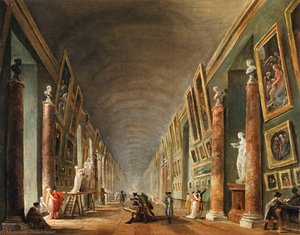
  • Conservateur du Muséum Central des Arts: Il servit de conservateur du Muséum Central des Arts nouvellement établi (plus tard le Louvre), démontrant son engagement à préserver le patrimoine culturel.
  • Production Artistique Continue: Malgré le climat politique tumultueux, Robert continua à peindre et à dessiner avec une grande productivité.
  • Reproduction et Influence: Ses œuvres furent fréquemment reproduites par des artistes tels que l'abbé de Saint-Non, Châtelain, Linard et Le Veau, témoignant de son influence généralisée.

L’héritage de Hubert Robert réside dans sa capacité unique à mélanger la rigueur historique avec une vision imaginative. Il a ouvert un genre de peinture qui célébrait à la fois la beauté de la décomposition et le pouvoir durable de la créativité humaine. Son œuvre continue d'inspirer les artistes et de captiver le public, consolidant ainsi sa place en tant que figure significative dans l’art du XVIIIe siècle.