
 Aperçu en situation
 Envoyer
 Partager
 Détails de l'œuvre

 Télécharger
 Articles similaires
 Radiographie
 Diaporama
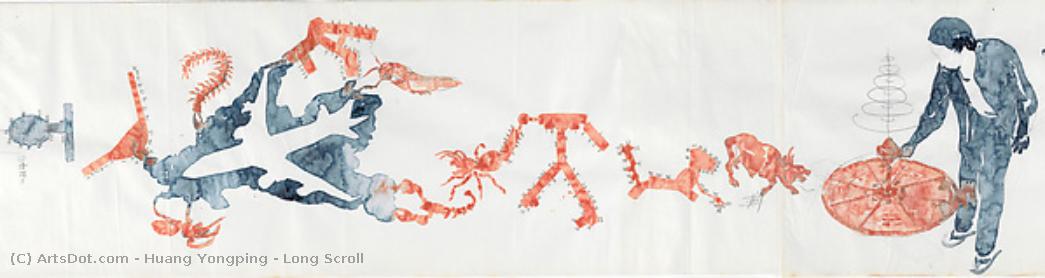
Long Scroll
 Contemporary Dada
 2001
2001 34.0 x 1532.0 cm
 Lire la suite
Reproduction à l'huile faite à la main
Huile sur toile peinte à la main, avec cadre et dimensions personnalisés, réalisée sur commande par nos artistes. ( Passer au tirage Passer à l'image)




































Choisissez parmi nos formats prédéfinis qui respectent les proportions originales de l’œuvre.

Vous pouvez saisir vos propres dimensions pour l'adapter à un cadre ou à un espace spécifique. Si la taille sélectionnée ne correspond pas aux proportions de l'image d'origine, nous recadrerons l'œuvre ou prolongerons la peinture avec des éléments peints à la main supplémentaires. Une maquette numérique vous sera envoyée pour approbation avant le début de la production.
Veuillez noter que l'aperçu à l'écran ne reflète pas le recadrage ou l'extension réels. Seule la maquette montrera fidèlement la composition finale.
Bien que des tailles personnalisées soient disponibles, nous vous recommandons de sélectionner une dimension dans la liste prédéfinie afin de préserver les proportions d'origine.
Après la commande, l’équipe OriginalUniqueArt.com contactera le client par e-mail pour recueillir ses instructions et lui fournira une maquette d’aperçu
Livraison dans le monde entier () en 3 à 4 semaines au lieu des 5 semaines habituelles. (7 août). Aucun compromis sur la qualité.

Livraison express gratuite dans le monde entier

Toile de lin de qualité supérieure

Assurance transport complète

Garantie de remboursement des droits de douane

Garantie de fidélité des couleurs

Politique de retour de 60 jours (uniquement en cas de défaut)

Garantie de remboursement à 100%

Offre de tarifs dégressifs
 L'option verre n'est disponible que pour les dimensions inférieures à 110 cm.

Long Scroll
Technique de reproduction
Format de la reproduction
-


Prix total
$ 375
Description de l'œuvre
Biographie de l'artiste
A Provocateur of Perception: The Life and Art of Huang Yongping
Huang Yongping, a name synonymous with conceptual audacity and philosophical inquiry in contemporary Chinese art, emerged as a pivotal figure challenging established norms and prompting critical reflection on history, culture, and the very nature of artistic creation. Born in Xiamen, Fujian Province, China, in 1954, his journey began amidst the tumultuous final years of Mao Zedong’s rule and unfolded through decades of profound societal transformation. Unlike many artists who followed a traditional academic path, Huang's early exposure to art was largely self-directed, fueled by an insatiable curiosity and a rebellious spirit. He initially studied mechanical engineering at Xiamen University, a background that would later profoundly influence his sculptural installations and his fascination with deconstruction. The Cultural Revolution cast a long shadow over his formative years, instilling in him a deep skepticism towards authority and a desire to dismantle conventional ideologies—themes that permeate his entire oeuvre. His early artistic endeavors were rooted in the avant-garde movement of the 1980s, specifically within the Xiamen Dada group, where he experimented with performance art and installation, often employing provocative imagery and challenging materials. This period was characterized by a rejection of socialist realism and an embrace of Western conceptual art practices, though Huang never simply adopted these ideas wholesale; instead, he filtered them through his own unique cultural lens.Deconstructing History: The Evolution of a Unique Aesthetic
Huang Yongping’s artistic development is marked by a consistent interrogation of power structures and the narratives they construct. He quickly moved beyond purely formal experimentation to create works that directly confronted China's complex history, particularly its relationship with Western imperialism and traditional cultural values. A turning point came in the late 1980s with his large-scale installations, which often involved meticulously recreating historical artifacts or iconic objects—only to then subject them to a process of deliberate destruction or alteration. “The Bridge,” created in 1988, exemplifies this approach. The work consisted of a painstakingly reconstructed replica of a traditional Chinese bridge, built from discarded materials and destined for eventual decay, symbolizing the fragility of cultural heritage and the inevitable passage of time. This act wasn’t merely destructive; it was a symbolic dismantling of idealized notions of history and tradition. His fascination with Western philosophy, particularly Nietzsche and Derrida, further informed his deconstructive practice. He sought to expose the inherent contradictions within systems of thought and representation, questioning the very foundations upon which knowledge is built. This philosophical underpinning led him to explore themes of chaos, randomness, and the limitations of human understanding. He wasn’t interested in offering solutions or definitive answers; rather, he aimed to provoke dialogue and encourage viewers to question their own assumptions about the world around them.Major Achievements and Iconic Works
Throughout his career, Huang Yongping produced a series of groundbreaking works that cemented his reputation as one of China’s most important contemporary artists. “The Theatre of the World” (1993), perhaps his most ambitious project, stands as a testament to his conceptual rigor and theatrical sensibility. This monumental installation comprised a vast landscape populated by hundreds of live animals—snakes, lizards, birds, and insects—interacting with miniature replicas of famous monuments from around the world. The work was presented within a darkened space, creating an unsettling atmosphere that evoked both wonder and anxiety. It served as a powerful metaphor for the interconnectedness of all living things and the precarious balance between civilization and nature. Another significant achievement is his series of “Wash Paintings,” which involved meticulously painting traditional Chinese landscapes onto large sheets of industrial plastic, then crumpling or folding them, disrupting their serene beauty with deliberate acts of distortion. These works challenged the conventional aesthetics of Chinese ink painting while simultaneously acknowledging its enduring power. “Lady from the Southern Dynasties” (1996), a life-sized sculpture of a reclining female figure constructed from metal and found objects, further exemplifies his exploration of cultural identity and gender roles. The work’s fragmented form and unsettling materiality challenged traditional representations of femininity in Chinese art history.Historical Significance and Lasting Legacy
Huang Yongping's impact on contemporary Chinese art is undeniable. He played a crucial role in challenging the dominance of socialist realism and paving the way for a more diverse and experimental artistic landscape. His work resonated with a generation of artists grappling with questions of identity, history, and cultural change in post-Mao China. He was among the first to openly address sensitive political issues and critique the legacy of colonialism, setting a precedent for greater freedom of expression within the art world.- His deconstructive approach influenced countless artists exploring themes of fragmentation, memory, and representation.
- Huang’s willingness to embrace unconventional materials and techniques expanded the boundaries of sculptural practice in China.
- He fostered a critical dialogue about the relationship between art, philosophy, and politics.

L'essentiel de l'artiste
- Artistic Movement Or Style: Neo-Conceptual Art
- Date Of Death: Living
- Full Name: Huang Yongping
- Nationality: Chinese
- Notable Artworks:
- The Bridge
- Lady from the Southern Sea
- War Machine
Articles connexes

The Enduring Power of Paint: A Journey Through Art History & Technique
Explore the rich history of painting! Discover master techniques from Renaissance to Modern art. Find museum-quality reproductions & expert advice at OriginalUniqueArt.

Les 10 Chefs-d'œuvre de l'Aquarelle qui ont Révolutionné l'Art | OriginalUniqueArt
Plongez dans l'univers fascinant des 10 chefs-d'œuvre de l'aquarelle qui ont marqué l'histoire de l'art. Découvrez Turner, Monet, Goya et bien d'autres ! Retrouvez ces œuvres emblématiques en reproductions exceptionnelles sur OriginalUniqueArt.com.
Xie Zhiliu: A Legacy of Ink Wash Painting & Modern Chinese Literati Tradition
Explore the legacy of Xie Zhiliu, a master of Chinese ink wash painting & prominent figure in modern art. Discover his techniques, influences, and contributions to literati tradition. A guide for discerning collectors.

L'Aquarelle : Histoire, Techniques et Nuances d'une Peinture de Lumière Éphémère
Explorez l'histoire fascinante de l'aquarelle, des techniques ancestrales aux maîtres impressionnistes. Découvrez les artistes emblématiques et nos conseils pour apprécier et collectionner cette peinture lumineuse.
25 Chefs-d'œuvre d'Edvard Munch : Exploration des Âmes et des Ombres
Plongez au cœur de l'univers d'Edvard Munch avec 25 chefs-d’œuvre emblématiques. Explorez les émotions intenses, les couleurs sombres et le symbolisme unique de cet artiste visionnaire. Découvrez des reproductions de qualité musée sur OriginalUniqueArt.com.

