

 Aperçu en situation
 Partager
 Partager
 Détails
 Guide imprimable

 Télécharger
 Articles similaires
 Radiographie
 Voir le diaporama
 Statistiques
Lady Hamilton as a Bacchante
 Oil On Canvas
- WallArt
- Neoclassicism
 1803
1803 22.0 x 28.0 cm
 Wallace Collection
 Afficher la suite
Reproduction à l'huile faite à la main
Huile sur toile peinte à la main, avec cadre et dimensions personnalisés, réalisée sur commande par nos artistes. ( Passer au format impression Passer au format image numérique)




P118B €10

P118H €10

P118W €10

P438Z €10

P508JH €12

P508YH €12

P805H €10

P805Z €10

P919BZ €10

P919G €10

P919XJ €10

P959ZH €10

P968JZ €12

W106C €8

W218G €10

W218JH €8

W218Y €10

W307PJ €10

W316G €10

W316PJ €8

W316Y €10

W398PJ €8

W4111J €10

W500HY €15

W500JH €15

W692G €12

W849H €8

W940BG €15

W953PJ €8




Choisissez parmi nos formats prédéfinis qui respectent les proportions originales de l’œuvre.

Saisissez la largeur et la hauteur souhaitées, pour s'adapter à votre cadre ou à votre mur. Cette œuvre est peinte à la main ; ainsi, pour un format de forme différente, l'artiste peut peindre un peu plus autour du tableau ou réduire légèrement les bords — c'est vous qui choisissez. Nous vous envoyons une maquette numérique pour approbation avant que la peinture ne commence. L'image présentée sur cette page ne reflète pas le résultat réel — seule la maquette le fait.
Après la commande, l’équipe OriginalUniqueArt.com contactera le client par e-mail pour recueillir ses instructions et lui fournira une maquette d’aperçu
Livraison dans le monde entier () en 3 à 4 semaines au lieu des 5 semaines habituelles. (25 octobre). Aucun compromis sur la qualité.

Livraison express gratuite dans le monde entier

Toile de lin de haute qualité

Assurance transport complète

Garantie de remboursement des droits de douane

Garantie de fidélité des couleurs

Garantie de retour de 100 jours (uniquement en cas de défaut)

Garantie de remboursement à 100%

Tarifs dégressifs sur quantité
 L'option verre n'est disponible que pour les dimensions inférieures à 110 cm.

Lady Hamilton as a Bacchante
Technique de reproduction
Format de la reproduction
-


Prix total final
€ 263
A Vision of Myth and Sensuality: Henry Bone’s ‘Lady Hamilton as a Bacchante’
Henry Bone's “Lady Hamilton as a Bacchante,” painted in 1803, is more than just a portrait; it’s a carefully constructed tableau vivant – a staged moment plucked from the realm of classical mythology and imbued with the intimate drama of personal relationships. The painting immediately draws the eye to Emma Hamilton, resplendent in a flowing gown of deep crimson and gold, reclining on a luxurious leopard-skin cushion amidst a riotous profusion of foliage and a distant, hazy seascape. This isn’t a simple depiction of a woman at leisure; it's an orchestrated scene brimming with symbolic weight and a palpable sense of restrained passion.
Bone, a Royal Academician renowned for his elaborate enamel paintings commissioned by the British monarchy, expertly blends neoclassical formality with a distinctly Romantic sensibility. The composition is meticulously balanced – the strong verticality of Emma’s figure contrasts beautifully with the undulating curves of the landscape and her own drapery. The use of light is particularly masterful; it pools dramatically across her body, highlighting her graceful form and creating an atmosphere of both intimacy and theatrical grandeur. Notice how the shadows deepen around her face, hinting at a contemplative mood beneath the surface of this seemingly carefree pose.
Technique and Materials: A Masterclass in Neo-Classical Detail
Examining the painting closely reveals Bone’s extraordinary technical skill. He employs a layered glazing technique, building up color gradually through thin washes of oil paint – a hallmark of the Neoclassical style. This method allows for incredible luminosity and depth, particularly evident in the rich textures of the leopard skin and the voluminous folds of Emma's gown. The artist demonstrates an almost obsessive attention to detail; from the individual leaves on the branches to the subtle sheen of the fabric, every element contributes to a sense of realism and luxuriousness.
- Canvas & Pigments: Bone utilized a finely prepared canvas treated with gesso for optimal paint adhesion. His palette consisted primarily of oil paints – ultramarine blue, vermilion red, ivory black, and various shades of green and gold – meticulously blended to achieve the desired effects.
- Glazing Technique: The layering of thin glazes created a remarkable depth and luminosity, capturing the play of light and shadow with exceptional subtlety.
- Brushwork: Bone’s brushstrokes are remarkably controlled and precise, particularly evident in the rendering of drapery and foliage. He demonstrates an understanding of how to create texture through variations in paint application.
Symbolism and Context: Echoes of Mythology and Romantic Intrigue
The title itself – “Bacchante” – immediately anchors the scene within Greek mythology. Bacchantes were female followers of Dionysus, the god of wine, revelry, and ecstasy. Emma Hamilton’s pose—reclining amidst foliage, with a slightly ecstatic expression—evokes this imagery powerfully. However, Bone doesn't simply depict a mythological figure; he subtly infuses the scene with personal meaning. Emma Hamilton was the mistress of Sir William Hamilton, the British Ambassador to Naples, and her affair with Admiral Lord Nelson became one of the most celebrated romances of the late 18th and early 19th centuries.
The leopard skin, a symbol of power and luxury, further emphasizes Emma’s elevated status. The distant seascape hints at both adventure and escape – mirroring the allure of her life with Sir William and Admiral Nelson. The painting can be interpreted as a celebration of beauty, passion, and the intoxicating blend of mythology and reality that defined the Romantic era.
A Timeless Masterpiece: Reproduction and Beyond
“Lady Hamilton as a Bacchante” remains a captivating work of art, offering a glimpse into a world of aristocratic intrigue, mythological romance, and exquisite artistic skill. High-quality reproductions capture much of the original’s luminous quality and intricate detail. This painting is not merely a beautiful image; it's a window into a pivotal moment in British history and a testament to Henry Bone’s mastery as an enamel painter.
Questions et réponses
L'œuvre «Lady Hamilton as a Bacchante» de Henry Bone est-elle conservée dans le pays d'origine de l'artiste ?
Oui - l'œuvre est conservée dans le pays d'origine de l'artiste. « Lady Hamilton as a Bacchante » est conservée en Royaume-Uni, tandis que Henry Bone est né(e) en Royaume-Uni.
Quel usage est suggéré pour «Lady Hamilton as a Bacchante» de Henry Bone ?
Une reproduction de «Lady Hamilton as a Bacchante» de Henry Bone est recommandée pour Statement. Cette suggestion découle du sujet, de l'atmosphère et des couleurs de l'œuvre.
Puis-je visionner « Lady Hamilton as a Bacchante » sous forme de diaporama en plein écran ?
Vous pouvez visionner «Lady Hamilton as a Bacchante» de Henry Bone sous forme de diaporama sur la page Diaporama de l'œuvre.
Biographie de l'artiste
Henry Bone : Une Vie Dédiée à l'Émail
- Né : Truro, Royaume-Uni (1755)
- Décédé : 1834
Henry Bone RA fut un éminent peintre sur émail anglais qui servit trois monarques successifs – George III, George IV et William IV – dans cette fonction officielle. Sa carrière s'étendit de la peinture sur porcelaine à la bijouterie avant qu’il ne devienne renommé pour ses peintures sur émail à grande échelle, ce qui lui valut une reconnaissance en tant que membre de la Royal Academy.
Jeunesse et Apprentissage
Né à Truro, dans le comté de Cornwall, le père de Henry Bone était un menuisier et sculpteur habile. En 1767, la famille déménagea à Plymouth, Devon, où le jeune Henry commença son apprentissage en 1771 sous William Cookworthy, fondateur des ateliers de porcelaine de Plymouth – le premier fabricant anglais de porcelaine tendre. Cette expérience précoce s'avéra déterminante, car il accompagna plus tard Cookworthy et Champion aux manufactures de Bristol pendant six ans. Durant cette période, Bone travailla avec diligence du matin au soir, consacrant ses nuits à l’étude du dessin. Ses contributions aux manufactures de Bristol sont considérées comme très méritoires, potentiellement marquées par un « 1 » distinctif à côté de la marque d'usine.
Ascension en tant que Peintre sur Émail
À la suite de la fermeture des ateliers de Bristol en 1778, Bone déménagea à Londres avec peu de ressources. Il trouva initialement du travail en émaillant des montres et des éventails avant de se tourner vers les portraits sur émail et aquarelle. Il entretint une amitié avec John Wolcot, qui encouragea ses aspirations artistiques et lui conseilla lors de tournées professionnelles dans le comté de Cornwall. En 1780, il épousa Elizabeth Vandermeulen, dont l'ascendance comprenait le peintre de batailles Adam Frans van der Meulen. Le talent de Bone gagna rapidement en reconnaissance ; il exposa sa première peinture, un portrait de sa femme, à la Royal Academy en 1781 – un émail inhabituellement grand pour son époque.
Patronage Royal et Œuvres Majeures
Bone se consacra entièrement à la peinture sur émail, exposant régulièrement à la Royal Academy. Un jalon important fut l'exposition de "A Muse and Cupid" en 1789, la plus grande peinture sur émail produite jusqu’à ce moment-là. Son talent artistique lui valut les faveurs royales ; il devint peintre sur émail du Prince de Galles en 1800, puis de George III en 1801, un poste qu'il conserva pendant les règnes de George IV et William IV. Il fut élu membre de la Royal Academy (RA) en 1811 et créa un émail encore plus grand, "Bacchus et Ariane", d’après le chef-d'œuvre de Titien. La popularité immense de cette œuvre entraîna sa vente pour 2 200 guinées – une somme sécurisée juste avant que la banque détenant son paiement ne suspende ses opérations !
Années Ultérieures et Héritage
Ses œuvres ultérieures comprirent des séries de portraits historiques représentant des figures de l'époque d'Elizabeth I et "Les Cavaliers distingués pendant la guerre civile", ainsi que des portraits de la famille Russell. Bien que la série élisabéthaine n’ait pas connu un succès financier immédiat, elle témoigna de son engagement envers un héritage artistique durable. Sa vue commença à faiblir en 1831, ce qui le conduisit à prendre sa retraite et à accepter une pension de la Royal Academy. Il décéda en 1834, étant rappelé comme "un homme d'une modestie et d'une générosité sans affectation". Ses collections furent vendues aux enchères après sa mort, dispersant de nombreuses œuvres entre divers collectionneurs. Les fils de Henry Bone, Henry Pierce Bone et Robert Trewick Bone, devinrent également des émaillistes notables, poursuivant la tradition artistique familiale.

Henry Bone
1755 - 1834 , Royaume-Uni
En bref
- Artistic Movement Or Style: Peinture sur émail
- Artists Who Influenced This Artist: ['Adam Frans van der Meulen']
- Date De Décès: 17 décembre 1834
- Date De Naissance: 6 février 1755
- Full Name: Henry Bone
- Lieu De Naissance: Truro, Royaume-Uni
- Nationalité: Britannique
- Notable Artworks:
- A Muse and Cupid
- Bacchus et Ariane
Articles connexes
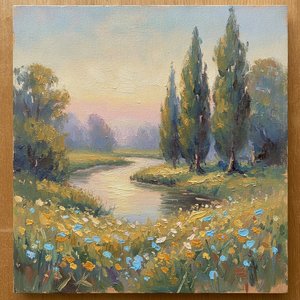
The Timeless Charm of Oil on Board: Reimagining Texture and Light through the Impressionist Lens
Discover the profound intimacy of oil on panel. Explore how Impressionist masters used rigid supports to capture light, texture, and impasto depth through exquisite, handmade oil reproductions for discerning collectors.

L'Huile sur Toile : Exploration Historique et Technique d'un Médium Artistique Intemporel
Explorez l'histoire fascinante de la peinture à l'huile, des techniques ancestrales aux maîtres flamands comme Van Eyck. Découvrez les secrets des pigments, liants et glacis pour comprendre cet art intemporel.

The Enduring Legacy of Oil on Canvas: Technique, History & Aesthetic Impact
Explore the rich history & techniques of oil painting – from Renaissance masters to Impressionism. Discover pigments, layering methods, and why this timeless medium endures. Expert insights for artists & art enthusiasts.

Henri Matisse : Les 25 Œuvres Maîtresses d'un Génie de la Couleur | OriginalUniqueArt
Plongez dans l'univers vibrant d'Henri Matisse ! Découvrez les 25 œuvres majeures du fauvisme et de la peinture moderne. Explorez La Danse, L'Atelier Rouge & plus encore. Reproductions de qualité musée sur OriginalUniqueArt.com.

The Enduring Power of Painting: A Historical & Contemporary Exploration of Form and Emotion
Explore the rich history & enduring techniques of oil painting with OriginalUniqueArt. Discover masterpieces, learn about art collecting, and find authentic handmade reproductions crafted by skilled artists.