Aperçu en situation
 Envoyer
 Partager
 Détails de l'œuvre
 Guide
Guide

 Télécharger l'image
 Articles similaires
 Radiographie
 Diaporama
 Statistiques
Goats


 Lire la suite
Giclées et impressions d'art
Impressions giclées ou sur toile de qualité musée, avec une production rapide et des finitions au choix. ( Commander la reproduction peinte à la main Passer au format numérique)




P118B €10

P118H €10

P118W €10

P438Z €10

P508JH €12

P508YH €12

P805H €10

P805Z €10

P919BZ €10

P919G €10

P919XJ €10

P959ZH €10

P968JZ €12

W106C €8

W218G €10

W218JH €8

W218Y €10

W307PJ €10

W316G €10

W316PJ €8

W316Y €10

W398PJ €8

W4111J €10

W500HY €15

W500JH €15

W692G €12

W849H €8

W940BG €15

W953PJ €8




Choisissez parmi nos formats prédéfinis qui respectent les proportions originales de l’œuvre.

Saisissez la largeur et la hauteur souhaitées pour qu'elles s'adaptent à votre cadre ou à votre mur. Une impression peut être recadrée, mais jamais agrandie au-delà de l'image originale ; ainsi, un format de forme différente entraînera la perte d'une partie de l'image. Nous vous envoyons une maquette numérique pour approbation avant toute impression. L'image présentée sur cette page ne montre pas le recadrage réel — seule la maquette le permet.
Livraison dans le monde entier () en 2 semaines au lieu des 4/5 semaines habituelles. (25 octobre)

Livraison express gratuite dans le monde entier

Toile de lin de qualité supérieure

Assurance transport complète

Garantie de remboursement des droits de douane

Garantie de fidélité des couleurs

Politique de retour de 100 jours (uniquement en cas de défaut)

Garantie de remboursement à 100%

Offre de tarifs dégressifs
 L'option verre n'est disponible que pour les dimensions inférieures à 110 cm.

Goats
Giclées et impressions d'art
Format de la reproduction
-


Prix total
€ 70
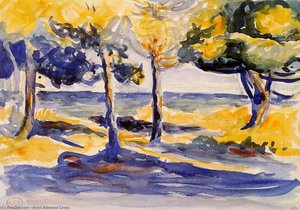
A Symphony of Light and Rural Tranquility: Henri Edmond Cross’s “Goats”
Henri Edmond Cross's "Goats," painted in 1895, is more than just a depiction of livestock; it’s an immersive experience of light, color, and the serene beauty of rural life. This captivating work, currently residing at the Musee du Petit Palais in Geneva, exemplifies the artist’s profound engagement with Post-Impressionism and his relentless pursuit of capturing the ephemeral qualities of nature. Cross, born Henri-Edmond-Joseph Delacroix in Douai, France, was a pivotal figure in the Neo-Impressionist movement, a group dedicated to exploring the scientific theories of color – particularly those championed by Michel Eugène Chevreul – to achieve unprecedented vibrancy and luminosity within their paintings. “Goats” stands as a testament to this dedication, showcasing his masterful manipulation of pigment and brushstroke to evoke a palpable sense of atmosphere.
- Subject Matter: The painting centers around a peaceful scene of goats grazing in a lush green pasture under a brilliant blue sky. Their white coats provide a striking contrast against the vibrant hues surrounding them, drawing the viewer’s eye and anchoring the composition.
- Style & Technique: Cross employs the techniques of Neo-Impressionism, utilizing small, distinct brushstrokes – known as “pointillé” – to build up color and create an optical mixing effect. This method allows the colors to vibrate and shimmer when viewed from a distance, intensifying the sense of light and atmosphere.
- Medium: Executed in chalk, a relatively uncommon medium for landscape painting at the time, adds a unique textural quality to the work. The chalk’s granular surface captures and reflects light differently than traditional oil paints, contributing to the painting's luminous effect.
Decoding the Palette: Color as Philosophy
Cross’s use of color is central to understanding “Goats.” He meticulously applied shades of blue, purple, and green, not merely for representational accuracy but as a deliberate philosophical statement. Inspired by Chevreul's theories on simultaneous contrast, Cross aimed to create an optical illusion – the colors appear brighter and more intense when viewed together than they would if seen individually. The twisted branches of the large tree in the background, painted in complementary blues and purples, further amplify this effect, creating a dynamic interplay of color that draws the eye across the canvas. This wasn’t simply about painting what he *saw*; it was about painting how he *felt* – a deep appreciation for the transformative power of light and color.
Historical Context & Symbolism
"Goats" was created during a period of significant artistic experimentation in France, marked by the rise of Neo-Impressionism and its challenge to traditional academic styles. The painting reflects the broader cultural shift towards valuing subjective experience and embracing new scientific discoveries about color. While seemingly straightforward in its subject matter – a rural scene – “Goats” can be interpreted as a meditation on themes of innocence, tranquility, and the harmony between humanity and nature. The goats themselves, symbols of pastoral life and fertility, evoke a sense of timelessness and connection to the earth.
Emotional Impact & Artistic Legacy
The enduring appeal of “Goats” lies in its ability to transport the viewer to a place of quiet contemplation. Cross’s masterful use of light and color creates an atmosphere of profound serenity, inviting us to pause and appreciate the simple beauty of the natural world. As a key work within Cross's oeuvre, "Goats" offers a valuable insight into the artist's artistic journey and his contribution to the development of modern art. A hand-painted reproduction allows one to experience this captivating artwork in its entirety, bringing its luminous qualities and evocative atmosphere directly into your space.
Questions et réponses
Quelle est la technique et la date de création de «Goats» de Henri Edmond Cross ?
«Goats» de Henri Edmond Cross est une œuvre réalisée en Acrylic, datant de 1895.
Les couleurs de «Goats» de Henri Edmond Cross sont-elles vives ou feutrées ?
La couleur de « Goats » présente une saturation de Balanced Soft et une intensité de Balanced.
Quelle est la technique utilisée pour "Goats" et quel en est le style ?
« Goats » est réalisé en Acrylic, dans le style Post-Impressionist Neo-Impressionism.
Biographie de l'artiste
Premières années et formation
- Né : Douai, France (1856)
- Décédé : 1910
- Henri-Edmond-Joseph Delacroix est né à Douai, une commune du département du Nord dans le nord de la France. Ses parents étaient Alcide Delacroix et la Britannique Fanny Woollett.
- En 1865, la famille déménagea à Lille. Il reçut une première instruction artistique du Dr Auguste Soins, qui reconnut son talent et finança des cours chez Carolus-Duran pendant un an.
- Il étudia à l'École des Beaux-Arts et s'inscrit aux Écoles Académiques de Dessin et d'Architecture en 1878, étudiant sous la direction d'Alphonse Colas. Sa formation se poursuivit avec Émile Dupont-Zipcy après avoir déménagé à Paris en 1881.
Première carrière artistique et changements de nom
- Il produisait initialement des portraits et des natures mortes influencés par le Réalisme.
- Pour se distinguer d'Eugène Delacroix, il changea son nom en "Henri Cross" en 1881.
- Il co-fonde la Société des Artistes Indépendants en 1884, présentant des artistes mécontents du Salon officiel.
- Ses premières œuvres montraient les influences de Jules Bastien-Lepage et Édouard Manet.
- Vers 1886, pour se différencier d'Henri Cros, il adopta le nom "Henri-Edmond Cross".
Développement du Néo-Impressionnisme et œuvres majeures
- Vers 1886, influencé par Georges Seurat et Paul Signac, il commença à explorer le Néo-Impressionnisme.
- Il passa l'hiver dans le sud de la France à partir de 1883, déménageant finalement là-bas en permanence en 1891 en raison du rhumatisme.
- Il développa un "second génération" du Néo-Impressionnisme avec des coups de pinceau plus grands et carrés au lieu de points ponctuillistes.
- Œuvres notables :
- Autoportrait (peint vers 1881) - Démontre les premières influences réalistes et un hommage à Gustave Courbet.
- Portraits de Madame Hector France, née Irma Clare (vers 1891) – Met en valeur son adoption du Néo-Impressionnisme.
- Son travail a considérablement influencé Henri Matisse et d'autres artistes contribuant au développement du Fauvisme.
Influences et signification historique
- Influences : Jules Bastien-Lepage, Édouard Manet, Claude Monet, Camille Pissarro, Georges Seurat, Paul Signac.
- Impact sur le Fauvisme : L'utilisation de couleurs non locales et de formes déformées par Cross a ouvert la voie aux palettes vibrantes et au travail expressif des pinceaux caractéristiques de la peinture fauviste.
- Idéologie anarchiste : Ses croyances anarchistes se reflètent dans ses représentations de scènes rurales idylliques, promouvant une vision de coexistence harmonieuse.
Dernières années et héritage
- Il tint sa première exposition individuelle à la Galerie Druet en 1905.
- Une rétrospective de son œuvre fut organisée par Félix Fénéon à la Galerie Bernheim-Jeune en 1908.
- Il décéda d'un cancer à Saint-Clair en 1910.
- Henri Edmond Cross est reconnu comme une figure essentielle du Néo-Impressionnisme et un précurseur important du Fauvisme, laissant un impact durable sur le développement de l'art moderne.

Henri Edmond Cross
1856 - 1910 , France
L'essentiel de l'artiste
- Artistes Influents:
- Claude Monet
- Paul Signac
- Date De Décès: 16 mai 1910
- Date De Naissance: 20 mai 1856
- Influences Artistiques:
- Henri Matisse
- Fauvisme
- Lieu De Naissance: Douai, France
- Mouvement Artistique: Néo-impressionnisme
- Nationalité: Française
- Nom Complet: Henri Edmond Cross
- Oeuvres Notables:
- Autoportrait
- Portrait de Madame Hector
Articles connexes
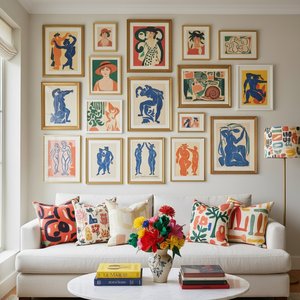
Henri Matisse : Les 25 Œuvres Maîtresses d'un Génie de la Couleur | OriginalUniqueArt
Plongez dans l'univers vibrant d'Henri Matisse ! Découvrez les 25 œuvres majeures du fauvisme et de la peinture moderne. Explorez La Danse, L'Atelier Rouge & plus encore. Reproductions de qualité musée sur OriginalUniqueArt.com.
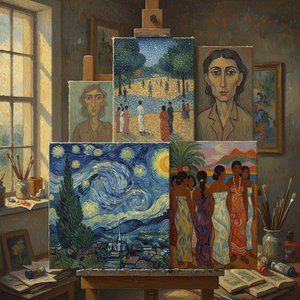
Au-Delà de l'Impressionnisme : Exploration des Profondeurs Émotionnelles de la Peinture Postimpressionniste
Explorez les profondeurs émotionnelles du postimpressionnisme avec OriginalUniqueArt. Découvrez Cézanne, Van Gogh, Gauguin et l'évolution de l'art moderne. Reproductions d'exception et expertise pour collectionneurs.
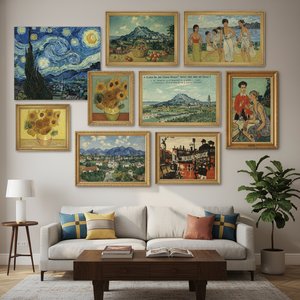
Les 10 Chefs-d'œuvre Post-Impressionnistes qui ont Révolutionné l'Art |
Plongez au cœur du post-impressionnisme avec ! Découvrez les 10 chefs-d'œuvre de Van Gogh, Monet, Cézanne et autres artistes célèbres. Reproductions tableaux haute qualité pour une décoration intérieure inspirée. Explorez la collection sur

Henri Edmond Cross: A Pioneer of Neo-Impressionism & the Divisionist Aesthetic
Explore the life & art of Henri Edmond Cross, a pivotal Neo-Impressionist painter. Discover his innovative divisionist technique, political affiliations, and lasting influence on modern art movements like Fauvism. Learn about key works & legacy.

L'Impressionnisme et le Post-Impressionnisme : Une Évolution Artistique Française
Explorez l'évolution de l'impressionnisme et du post-impressionnisme : histoire, artistes clés (Monet, Van Gogh…), techniques et héritage. Un guide expert pour les passionnés d'art.