

 Aperçu en situation
 Partager
 Partager
 Détails
 Guide imprimable

 Télécharger
 Articles similaires
 Radiographie
 Voir le diaporama
 Statistiques
Apollo Killing the Python
 Engraving
- Baroque Mannerism
 1589
1589 21.0 x 29.0 cm
 Musée du comté de Los Angeles
 Afficher la suite
Giclées et impressions d'art
Impressions giclées ou sur toile de qualité musée, avec une production rapide et des finitions au choix. ( Acheter la peinture faite à la main Passer au format image numérique)




P118B €10

P118H €10

P118W €10

P438Z €10

P508JH €12

P508YH €12

P805H €10

P805Z €10

P919BZ €10

P919G €10

P919XJ €10

P959ZH €10

P968JZ €12

W106C €8

W218G €10

W218JH €8

W218Y €10

W307PJ €10

W316G €10

W316PJ €8

W316Y €10

W398PJ €8

W4111J €10

W500HY €15

W500JH €15

W692G €12

W849H €8

W940BG €15

W953PJ €8




Choisissez parmi nos formats prédéfinis qui respectent les proportions originales de l’œuvre.

Saisissez la largeur et la hauteur souhaitées pour qu'elles s'adaptent à votre cadre ou à votre mur. Une impression ne peut être que découpée, elle ne peut jamais être agrandie au-delà de l'image originale ; ainsi, un format de forme différente entraînera la perte d'une partie de l'image. Nous vous envoyons une maquette numérique pour approbation avant toute impression. L'image présentée sur cette page ne montre pas le recadrage réel — seule la maquette le permet.
Livraison dans le monde entier () en 2 semaines au lieu des 4/5 semaines habituelles. (19 octobre)

Livraison express gratuite dans le monde entier

Toile de lin de haute qualité

Assurance transport complète

Garantie de remboursement des droits de douane

Garantie de fidélité des couleurs

Garantie de retour de 100 jours (uniquement en cas de défaut)

Garantie de remboursement à 100%

Tarifs dégressifs sur quantité
 L'option verre n'est disponible que pour les dimensions inférieures à 110 cm.

Apollo Killing the Python
Giclées et impressions d'art
Format de la reproduction
-


Prix total final
€ 70
Hendrik Goltzius’s Apollo Killing the Python: A Masterpiece of Mannerist Drama
Apollo Killing the Python is more than just an image; it's a distillation of Renaissance mythology into a powerfully expressive engraving by Hendrik Goltzius, completed in 1589. This artwork stands as a testament to Goltzius’s innovative approach to printmaking and his ability to convey complex narratives with breathtaking visual clarity—a skill that cemented his place among the foremost artists of the Baroque era. The piece captures a pivotal moment from Ovid's Metamorphoses, depicting Apollo, god of music and poetry, engaged in a brutal confrontation with Python, representing primordial chaos and evil.- Composition & Style: Goltzius’s masterful use of perspective creates a dynamic scene that draws the viewer into the drama unfolding before them. The engraving adheres to the principles of Mannerism—a stylistic movement characterized by elongated figures, stylized poses, and dramatic contrasts of light and shadow—reflecting a desire to transcend realism and explore psychological states rather than simply depicting observable reality.
- Technique: Goltzius employed a technique known as ‘swelling line,’ which he developed himself, resulting in lines that appear thicker than they actually are. This method dramatically enhances the visual impact of the engraving, emphasizing contours and creating an illusion of depth—a hallmark of Baroque art. The meticulous detail achieved through hatching and shading contributes to the overall sense of realism despite the stylized figures.
- Symbolism: The confrontation between Apollo and Python carries profound symbolic weight. Apollo embodies reason, order, and divine authority, battling against the forces of darkness and irrationality. The serpent symbolizes primordial chaos, representing the struggle between good and evil that underlies all human experience. Goltzius’s depiction underscores the enduring themes of heroism, triumph over adversity, and the victory of intellect over instinct.
- Historical Context: Created during a period of artistic experimentation and intellectual ferment—the early Baroque—Apollo Killing the Python reflects the broader cultural anxieties surrounding religious reform and the burgeoning humanist spirit. Goltzius’s engraving aligns with the prevailing aesthetic sensibilities of the time, demonstrating an artist's engagement with contemporary philosophical ideas.
- Emotional Impact: The engraving evokes a palpable sense of tension and drama—a hallmark of Mannerist art. Goltzius skillfully captures the physicality of the struggle between gods and serpent, conveying both violence and nobility. The image resonates with viewers today due to its exploration of universal themes concerning conflict, resilience, and the pursuit of enlightenment.
Questions et réponses
Où puis-je acheter une image numérique de «Apollo Killing the Python» de Hendrik Goltzius ?
« Apollo Killing the Python » est disponible en tant que un téléchargement d'image numérique haute résolution, à acheter directement sur sa page Image numérique.
Quel espace est suggéré pour «Apollo Killing the Python» de Hendrik Goltzius ?
Une reproduction de « Apollo Killing the Python » s'intègre parfaitement dans une Living Room.
Les couleurs de «Apollo Killing the Python» de Hendrik Goltzius sont-elles saturées ou atténuées ?
La palette de « Apollo Killing the Python » présente une saturation Muted.
Biographie de l'artiste
jeunesse et formation
Hendrick Goltzius, graveur, dessinateur et peintre né en Allemagne mais profondément lié aux Pays-Bas, vit le jour en janvier ou février 1558. Figure de proue de la gravure néerlandaise du début de la période baroque, ou maniérisme nordique, il fut célébré pour sa technique sophistiquée et l'exubérance de ses compositions. Selon A. Hyatt Mayor, Goltzius « était le dernier graveur professionnel qui dessinait avec l'autorité d'un bon peintre et le dernier qui inventait de nombreuses images pour que d'autres les copient ». Sa famille s'installa à Duisbourg lorsqu'il n'avait que trois ans ; après avoir appris la peinture sur verre auprès de son père, il se forma à la gravure sous l'égide du polymathe néerlandais Dirck Volckertszoon Coornhert.carrière artistique
En 1577, Goltzius rejoignit Coornhert à Haarlem, dans la République des Pays-Bas, ville où il établit son atelier pour le reste de sa vie. Il fut également sollicité par Philip Galle pour graver une série de estampes retraçant l'histoire de Lucretia. Un détail singulier de sa vie, bien que tragique, forgea son destin : une malformation à la main droite causée par un incendheur durant sa petite enfance s'avéra être un atout inattendu, rendant sa prise sur le burin d'une précision exceptionnelle. Cette particularité physique lui permit de maîtriser un mouvement de ligne magistral, conférant à ses gravures une identité visuelle unique. Hendrick Goltzius a porté l'usage de la « ligne gonflée » à un niveau sans précédent, une technique où le burin est manipulé pour varier l'épaisseur du trait, créant ainsi des effets de tonalité saisissants à distance.technique et style
Pionnier de la technique du « point et losange », Goltissus disposait des points au centre d'espaces en forme de losanges créés par des hachures croisées afin d'affiner encore davantage les dégradés de lumière. Sa maîtrise du burin est aujourd'hui comparée à celle de Dürer. En réalisant les gravures des peintures de Bartholomeus Spranger, il a non seulement accru la renommée de ce dernier, mais a aussi magnifié la sienne. Bien qu'il n'ait commencé la peinture qu'à l'âge de quarante-deux ans — certaines de ses œuvres étant aujourd'hui conservées à Vienne — il a également excellé dans l'exécution de quelques bois gravés en clair-obscur.collections publiques et héritage
Les plus prestigieuses salles d'estampes du monde abritent des trésors de Goltzius, notamment au Museum Boijmans Van Beuningen, au Rijksmuseum d'Amsterdam et au Metropolitan Museum of Art. Son héritage perdure à travers l'œuvre d'autres maîtres, tel que Jacques Bellange, lui aussi maître de la gravure maniériste nordique. Les gravures et peintures de Goltzius continuent d'inspirer passionnés et érudits, et son œuvre est accessible sur OriginalUniqueArt.com ainsi que dans l'article Wikipédia dédié à sa vie et son œuvre.- Parmi les œuvres notables de Goltzius, on peut citer : Jupiter, Minerve et le prophète Baruch
- Musées conservant ses œuvres : le Los Angeles County Museum of Art, le Philadelphia Museum of Art et le British Museum
- Techniques utilisées par Goltzius : la « ligne gonflée » et la technique du « point et losange »

Hendrik Goltzius
1558 - 1617 , Allemagne
En bref
- Artistic Movement Or Style: Northern Mannerism & Baroque engraving
- Artists Who Influenced This Artist:
- Dirck Volckertszoon Coornhert
- Bartholomeus Spranger
- Date Of Birth: January/February 1558
- Full Name: Hendrick Goltzius
- Nationality: Dutch
- Notable Artworks:
- The Adoration of the Shepherds
- Arcadian Landscape
- Head of a Siren
- Hercules Killing Cacus
- Demogorgon and the Deities
- Place Of Birth: Bracht-am-Niederrhein, Italy
Articles connexes

Chiaroscuro and Character: A Definitive Guide to Light and Shadow in the Dutch Baroque Era
Explore the dramatic mastery of the Dutch Baroque era. Discover how masters like Rembrandt used chiaroscuro to transform everyday life into timeless art. An expert guide for collectors and enthusiasts seeking to understand the profound interplay of light and shadow.
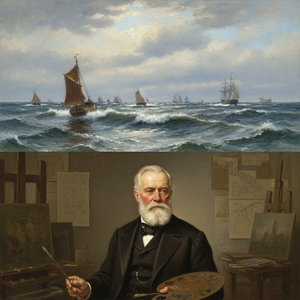
Hendrik Willem Mesdag: Pioneering Impressionism & the Dutch Maritime Tradition
Explore the life & work of Hendrik Willem Mesdag, a pioneer of Dutch Impressionism and leading figure of the Hague School. Discover his captivating seascapes and the immersive Panorama Mesdag – a true masterpiece.

Golden Light & Dutch Skies: The Timeless Magic of Dutch Golden Age Landscapes
Discover the breathtaking beauty of Dutch Golden Age landscapes. Explore the mastery of light, chiaroscuro, and 17th-century realism through an expert art history lens, celebrating the enduring legacy of the Dutch Masters for discerning collectors and art lovers.
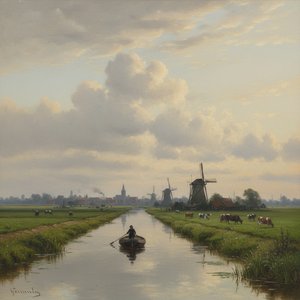
Johan Hendrik Weissenbruch: Capturing Dutch Light & Atmosphere – A Master of Realism
Discover Johan Hendrik Weissenbruch (1824-1903), a leading Dutch Hague School painter renowned for his atmospheric watercolours & oil landscapes. Explore his beautiful depictions of the Dutch countryside and skies – a master of light & detail.

Hendrick Goltzius: Master Engraver & the Flourishing of Dutch Mannerism
Explore the life & art of Hendrick Goltzius, a master engraver of Dutch Mannerism. Discover his innovative techniques, iconic engravings like 'Jahel', and lasting influence on Baroque art. Learn about collecting Goltzius today.


