

 Partager
 Partager
 Détails

 Télécharger
 Articles similaires
 Voir le diaporama
 Statistiques
New York City


 Afficher la suite
Giclées et impressions d'art
Impressions giclées ou sur toile de qualité musée, avec une production rapide et des finitions au choix. ( Acheter la peinture faite à la main Passer au format image numérique)




































Choisissez parmi nos formats prédéfinis qui respectent les proportions originales de l’œuvre.

Vous pouvez saisir vos propres dimensions pour vous adapter à un cadre ou à un espace spécifique. Si la taille sélectionnée ne correspond pas aux proportions de l'image originale, nous recadrerons l'œuvre ou étendrons l'image avec une bordure en miroir ou une couleur unie. Une maquette numérique vous sera envoyée pour approbation avant le début de la production.
Veuillez noter que l'aperçu à l'écran ne reflète pas le recadrage ou l'extension réelle. Seule la maquette montrera avec précision la composition finale.
Bien que des tailles personnalisées soient disponibles, nous vous recommandons de choisir une dimension dans la liste prédéfinie afin de préserver les proportions originales.
Livraison dans le monde entier () en 2 semaines au lieu des 4/5 semaines habituelles. (18 septembre)

Livraison express gratuite dans le monde entier

Toile de lin de haute qualité

Assurance transport complète

Garantie de remboursement des droits de douane

Garantie de fidélité des couleurs

Garantie de retour de 100 jours (uniquement en cas de défaut)

Garantie de remboursement à 100%

Tarifs dégressifs sur quantité
 L'option verre n'est disponible que pour les dimensions inférieures à 110 cm.

New York City
Giclées et impressions d'art
Format de la reproduction
-


Prix total final
$ 80
A Snapshot of Childhood in the City
Helen Levitt’s “New York City,” a black and white photograph from around 1945, isn't merely a depiction of three young boys playing on the steps of an urban building; it’s a poignant window into the heart of a vanished New York. The image, imbued with a remarkable sense of immediacy and quiet drama, captures a fleeting moment of unscripted joy amidst the gritty reality of the city’s Lower East Side. Levitt, a master observer of everyday life, eschewed grand narratives in favor of capturing the subtle poetry found within ordinary scenes – children at play, neighbors sharing stories, and the rhythms of urban existence. This particular photograph feels less like a staged portrait and more like a stolen glance into a private world, radiating an authentic warmth that transcends time. The boys themselves are rendered with remarkable detail: their faces etched with concentration, limbs poised mid-action, suggesting a game in progress—perhaps stickball, a quintessential New York pastime.The Language of the Street
Levitt’s approach to photography was deeply rooted in her understanding of the city's streets as a living theater. She wasn’t interested in documenting events; she sought to *feel* the pulse of urban life. Her technique—primarily handheld shooting with available light—allowed for an unparalleled sense of spontaneity and intimacy. The grainy texture of the silver print, characteristic of her era, adds to this feeling of immediacy, as if we've stumbled upon a secret moment captured on film. Notice how she utilizes strong directional lighting from the left, casting dramatic shadows that define form without resorting to harsh contrasts. This subtle manipulation emphasizes the textures of clothing, brickwork, and the boys’ faces, drawing our attention to the details that often go unnoticed in everyday life. The composition itself is carefully considered—the diagonal arrangement of the children leads the eye through the frame, creating a sense of movement and inviting us into their world.A Window into a Lost Era
To fully appreciate “New York City,” it’s essential to understand the historical context in which it was created. The 1940s were a period of profound social and economic change in New York, marked by post-war austerity, immigration from Europe, and the rise of urban poverty. Levitt's photographs offer a rare glimpse into the lives of children growing up in this environment—children who navigated a complex world with resilience, imagination, and an innate sense of play. The building’s façade, partially obscured by the boys, hints at the dense, crowded tenements that characterized much of the city at the time. The graffiti on the door – a simple, almost childlike scrawl – adds another layer of authenticity, suggesting a space where children could express themselves freely and create their own rules. The photograph serves as a powerful reminder of a New York City that is rapidly disappearing, replaced by towering skyscrapers and sanitized urban landscapes.Symbolism and Emotional Resonance
Beyond its technical merits, “New York City” resonates with profound symbolic meaning. The boys’ game represents the enduring power of childhood—a realm of innocence, imagination, and unburdened joy. Their carefree play stands in stark contrast to the anxieties and uncertainties of adult life. Levitt's ability to capture this sense of youthful exuberance is truly remarkable. The photograph evokes a feeling of nostalgia for a simpler time, while simultaneously prompting us to reflect on the challenges faced by children growing up in urban environments. It’s a testament to Levitt’s skill that she can convey such complex emotions with such understated elegance—a quiet celebration of the beauty and resilience found within the everyday moments of life. It's a photograph that invites contemplation, reminding us of the importance of preserving the spirit of childhood amidst the relentless pace of modern urban living.Further Exploration
For those seeking to delve deeper into Helen Levitt’s work, we recommend exploring resources such as the Museum of the City of New York and its extensive collection of her photographs, as well as articles and essays available on platforms like Wikipedia and the Fraenkel Gallery website. The Metropolitan Museum of Art also holds a significant example of her work, offering further insight into her artistic vision. Her legacy continues to inspire photographers today, demonstrating the power of street photography to capture the essence of human experience.Biographie de l'artiste
A Quiet Observer of the Urban Stage
Helen Levitt, a name perhaps less instantly recognizable than some of her photographic contemporaries, nevertheless occupies a pivotal position in the history of 20th-century photography. Born in Brooklyn in 1913 and passing away in 2009 at the age of 95, she dedicated nearly seven decades to documenting the vibrant, often overlooked moments of everyday life in New York City. Levitt wasn’t interested in grand narratives or sweeping statements; her vision was focused on the ephemeral poetry found within the ordinary—children playing stickball, chalk drawings adorning sidewalks, fleeting interactions between strangers. She possessed a remarkable ability to blend into the urban landscape, becoming an almost invisible observer who captured scenes with a disarming intimacy and spontaneity. Her work wasn’t about *showing* life; it was about *feeling* its pulse.From Portrait Studio to Poetic Accident
Levitt's path to photography wasn’t predetermined. Dropping out of high school during the Depression, she initially found employment as a darkroom assistant at J. Florian Mitchell’s commercial portrait studio in the Bronx. This practical experience provided her with a foundational understanding of photographic technique, but it was an encounter with the work of Henri Cartier-Bresson that truly ignited her artistic passion. Seeing his photographs at the Julien Levy Gallery proved transformative; she realized photography could be more than just documentation—it could be art. She acquired a 35mm Leica, mirroring Cartier-Bresson’s favored tool, and began to explore the streets of New York with a newfound purpose. Simultaneously, her involvement with the Photo League exposed her to a community of socially conscious photographers, but Levitt ultimately forged her own distinct path, one less concerned with overt social commentary and more attuned to the aesthetic qualities of urban life. She also developed a close working relationship with Walker Evans, who recognized her unique talent early on, even collaborating with her on subway photography in 1938-39. He famously stated that among his contemporaries, only Cartier-Bresson and Levitt possessed truly original voices.The Chalk Drawings and the Children of the Streets
In the late 1930s, while teaching art classes to children in New York City, Levitt became captivated by the ephemeral chalk drawings that blossomed on sidewalks throughout the city’s neighborhoods. These transient works of art—hopscotch grids, games, messages—became a recurring motif in her work. She meticulously documented these creations and the children who brought them to life, capturing their imaginative play and the fleeting nature of childhood itself. This project culminated in *In the Street: Chalk Drawings and Messages,* *New York City, 1938–1948*, published in 1987, a book that cemented her reputation as a master of street photography. Her approach was characterized by a remarkable sensitivity to her subjects; she rarely intervened or directed them, preferring instead to capture authentic moments as they unfolded. This resulted in images that feel remarkably unposed and natural, offering a glimpse into the lives of ordinary people without judgment or sentimentality. She wasn’t simply photographing *at* people, but rather *with* them, creating a sense of shared experience.Influences and Artistic Vision
Levitt's artistic sensibilities were profoundly shaped by her admiration for Henri Cartier-Bresson and Walker Evans. Cartier-Bresson’s unwavering belief in “the decisive moment”—that fleeting instant when light and composition converge to capture the essence of a scene—served as an inspiration for Levitt’s own photographic practice. She sought to distill complex emotions and narratives into single images, prioritizing visual clarity and emotional resonance above all else. Her work embodies a humanist aesthetic that prioritizes empathy and observation, reflecting her deep understanding of human behavior and social dynamics. Like Cartier-Bresson's photographs, Levitt’s images belonged to an “Art of the poetic accident,” which was the title of the retrospective show devoted to her work by the Henri Cartier-Bresson Foundation in 2007. They try to capture the energy, poetry and bustle of the New York melting pot.Major Achievements and Legacy
Helen Levitt achieved international recognition for her pioneering contributions to street photography and documentary filmmaking. Her photographs were exhibited extensively throughout Europe and North America, earning critical acclaim and establishing her as one of the foremost artists of her time. She received prestigious Guggenheim Fellowships in 1959 and 1960, fueling her exploration of color photography and resulting in groundbreaking projects like *In the Street* alongside James Agee. Levitt’s work was honored with numerous awards, including the Francis J. Greenburger Award for Excellence in the Arts and the Spectrum International Photography Prize. Her influence extended beyond the realm of art, inspiring countless photographers to embrace spontaneity and sensitivity as guiding principles. Helen Levitt's legacy lies not just in the photographs she created—images that continue to resonate with audiences worldwide—but in her unwavering commitment to capturing the beauty and complexity of everyday life, reminding us that profound artistic expression can emerge from seemingly insignificant moments.
Helen Levitt
1913 - 2009 , États-Unis
En bref
- Artistic Movement Or Style: Photographie de rue
- Artists Who Influenced This Artist:
- Henri Cartier-Bresson
- Walker Evans
- Date Of Birth: 1913
- Date Of Death: 2009
- Full Name: Helen Levitt
- Nationality: Américaine
- Notable Artworks:
- Mexico City (Boys in School Yard)
- New York City
- New York
- Place Of Birth: Brooklyn, États-Unis
Articles similaires

Urban Edge: The High-Impact Revolution of Street Art and Modern Pop Culture Trends
Dive into the high-impact revolution of street art and modern culture. From stencil legends to global urban canvases, explore the trends shaping today's aesthetic. Discover premium, hand-painted reproductions and custom pieces that bring the edge of the streets to your space with OriginalUniqueArt.com.

Witnessing History Through Lens & Light: Documentary Photography's Enduring Legacy
Explore the powerful history of documentary photography – from its origins to contemporary masters like Gordon Parks & W. Eugene Smith. Discover how this art form shapes our understanding of society and witness pivotal moments in time.

The Ashcan School: Capturing the Raw Spirit and Urban Realism of New York City Life
Explore the raw, evocative beauty of the Ashcan School. Discover how masters like Bellows and Glackens captured New York's urban soul through American Realism, and learn to bring this gritty, historical elegance into your modern art collection.

Beyond the Lens: Photography's Enduring Influence on Modern & Contemporary Art
Explore photography's pivotal role in shaping modern & contemporary art. Discover key movements, influential artists like Stieglitz, and expert collecting advice from OriginalUniqueArt.
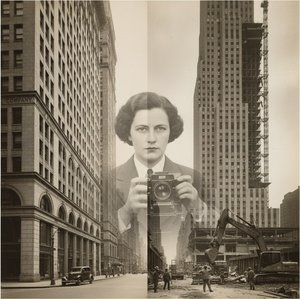
Berenice Abbott: Documenting a Changing America Through Photographic Vision
Explore the groundbreaking work of Berenice Abbott, a pioneer of documentary photography. Discover her iconic images of New York City, portraits, and scientific studies. Learn about her unique style & lasting legacy at OriginalUniqueArt.