

 Aperçu en situation
 Partager
 Partager
 Détails

 Télécharger l'image
 Articles similaires
 Radiographie
 Voir le diaporama
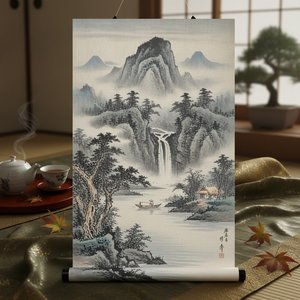
Landscape
 Shui-mo (Japanese Landscape)
 601
601 32.0cm x 50.0cm
 Afficher la suite
Reproduction à l'huile faite à la main
Huile sur toile peinte à la main, avec cadre et dimensions personnalisés, réalisée sur commande par nos artistes. ( Acheter l'impression Acheter l'image)




































Choisissez parmi nos formats prédéfinis qui respectent les proportions originales de l’œuvre.

Vous pouvez saisir vos propres dimensions pour l'adapter à un cadre ou à un espace spécifique. Si la taille sélectionnée ne correspond pas aux proportions de l'image d'origine, nous recadrerons l'œuvre ou prolongerons la peinture avec des éléments peints à la main supplémentaires. Une maquette numérique vous sera envoyée pour approbation avant le début de la production.
Veuillez noter que l'aperçu à l'écran ne reflète pas le recadrage ou l'extension réels. Seule la maquette montrera fidèlement la composition finale.
Bien que des tailles personnalisées soient disponibles, nous vous recommandons de sélectionner une dimension dans la liste prédéfinie afin de préserver les proportions d'origine.
Après la commande, l’équipe OriginalUniqueArt.com contactera le client par e-mail pour recueillir ses instructions et lui fournira une maquette d’aperçu
Livraison dans le monde entier () en 3 à 4 semaines au lieu des 5 semaines habituelles. (23 août). Aucun compromis sur la qualité.

Livraison express gratuite dans le monde entier

Toile de lin de haute qualité

Assurance transport complète

Garantie de remboursement des droits de douane

Garantie de fidélité des couleurs

Politique de retour de 60 jours (uniquement en cas de défaut)

Garantie de remboursement à 100%

Tarifs dégressifs sur quantité
 L'option verre n'est disponible que pour les dimensions inférieures à 110 cm.

Landscape
Technique de reproduction
Format de la reproduction
-


Prix total final
$ 300
Biographie de l'artiste
Hara Naoharu: A Pioneer of Monochrome Landscape Painting
Hara Naoharu (1547 – 1618), born in Saga, Japan, stands as a pivotal figure in the history of Japanese art, particularly renowned for his masterful execution of suiboku-ga—water-ink monochrome paintings—during the Momoyama period. He was the second son of Hara Naoe, lord of Nogomi Castle in Hizen Province, establishing him within a noble lineage deeply intertwined with the artistic patronage of the era. His artistic journey began under the tutelage of Sesshu Sesshū (1428–1506), arguably the most influential painter of his time, whose austere style profoundly shaped Naoharu’s approach to composition and tonal gradation—a hallmark of the Unkoku School he founded.- Early Life & Training: Naoharu's formative years were marked by exposure to the refined artistic environment fostered by his father’s castle, where he honed his skills alongside other prominent artists. Sesshu’s teachings instilled in him a dedication to capturing the essence of nature through subtle variations in ink tone—a technique prioritizing observation and conveying mood rather than detailed representation. This meticulous attention to detail—a characteristic inherited from Sesshu—became central to Naoharu's artistic vision.
- The Unkoku School: Unlike the Kanō school's meticulous layering of pigments and decorative motifs, Unkoku painters sought to evoke a sense of serenity by utilizing minimal tonal shifts—often just subtle gradations—to depict mountains, trees, and skies. This approach prioritized conveying emotion over precise visual accuracy, aligning perfectly with Zen ideals.
- Notable Works: Among his celebrated pieces are screens depicting scenes from Buddhist legends, showcasing Naoharu’s ability to integrate narrative elements with artistic subtlety. These works exemplify the Unkoku School's commitment to conveying spiritual contemplation through carefully crafted landscapes—a feat achieved through masterful tonal control and understated composition.

Hara Naoharu
1547 - 1618 , Japon
En bref
- Artistic Movement Or Style: Suiboku-ga (Eau-feuille)
- Artists Or Movements Influenced By This Artist: Kanō school
- Artists Who Influenced This Artist: Sesshu Sesshū
- Date Of Birth: 1547
- Date Of Death: 1618
- Full Name: Hara Naoharu
- Nationality: Japonais
- Notable Artworks: ['Paysages']
- Place Of Birth: Saga, Japon
Articles similaires

Hokusai : Les 25 Œuvres Maîtresses d'un Génie Japonais | OriginalUniqueArt
Plongez dans l'univers de Katsushika Hokusai avec les 25 œuvres incontournables du maître japonais. Découvrez l'histoire, les techniques d'ukiyo-e et la beauté intemporelle de 'La Grande Vague'. Reproductions tableaux de qualité muséale sur OriginalUniqueArt.com.
Serenity on Canvas: A Guide to the Timeless Beauty of Japanese Landscape Painting
Discover the serene beauty of Japanese landscape painting. From Hokusai's iconic woodblock prints to meditative sumi-e ink washes, explore a visual journey through the 'floating world' and learn how to bring this timeless Zen aesthetic into your modern home decor.

Les 10 Chefs-d'œuvre du Paysage Romantique : Artistes et Décor d'Intérieur
Plongez dans l'émotion du Romantisme avec les 10 plus beaux paysages de Friedrich, Turner & Delacroix. Découvrez leur histoire et trouvez l'inspiration déco idéale sur OriginalUniqueArt.com !

Zen on Canvas: The Timeless Beauty and Spiritual Depth of Japanese Landscape Painting
Explore the profound serenity of Japanese landscape painting. From Hokusai's waves to Zen-inspired ink washes, discover the history, technique, and spiritual depth of Ukiyo-e masters in this expert art historical guide for collectors and enthusiasts.

Évocations de lieux : Un voyage historique à travers l'art du paysage
Explorez l'histoire fascinante de la peinture de paysage à travers les chefs-d'œuvre du Romantisme. Découvrez Friedrich, Turner et Aivazovski et laissez-vous inspirer par la beauté sauvage et le sublime. Reproduction d'art de qualité chez OriginalUniqueArt.

