
 Aperçu en situation
 Envoyer
 Partager
 Détails de l'œuvre
 Guide
Guide

 Télécharger l'image
 Articles similaires
 Radiographie
 Diaporama
 Questions et réponses
 Statistiques
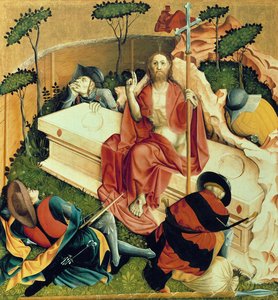
Christus before Pilate (detail)


 Lire la suite
Giclées et impressions d'art
Impressions giclées ou sur toile de qualité musée, avec une production rapide et des finitions au choix. ( Commander la reproduction peinte à la main Passer au format numérique)




P118B €10

P118H €10

P118W €10

P438Z €10

P508JH €12

P508YH €12

P805H €10

P805Z €10

P919BZ €10

P919G €10

P919XJ €10

P959ZH €10

P968JZ €12

W106C €8

W218G €10

W218JH €8

W218Y €10

W307PJ €10

W316G €10

W316PJ €8

W316Y €10

W398PJ €8

W4111J €10

W500HY €15

W500JH €15

W692G €12

W849H €8

W940BG €15

W953PJ €8




Choisissez parmi nos formats prédéfinis qui respectent les proportions originales de l’œuvre.

Saisissez la largeur et la hauteur souhaitées pour qu'elles s'adaptent à votre cadre ou à votre mur. Une impression peut être recadrée, mais jamais agrandie au-delà de l'image originale ; ainsi, un format de forme différente entraînera la perte d'une partie de l'image. Nous vous envoyons une maquette numérique pour approbation avant toute impression. L'image présentée sur cette page ne montre pas le recadrage réel — seule la maquette le permet.
Livraison dans le monde entier () en 2 semaines au lieu des 4/5 semaines habituelles. (5 novembre)

Livraison express gratuite dans le monde entier

Toile de lin de qualité supérieure

Assurance transport complète

Garantie de remboursement des droits de douane

Garantie de fidélité des couleurs

Politique de retour de 100 jours (uniquement en cas de défaut)

Garantie de remboursement à 100%

Offre de tarifs dégressifs
 L'option verre n'est disponible que pour les dimensions inférieures à 110 cm.

Christus before Pilate (detail)
Giclées et impressions d'art
Format de la reproduction
-


Prix total
€ 72
A Divine Encounter in the Northern Renaissance
In the quiet intensity of Hans Multscher’s 1437 masterpiece, Christus before Pilate (detail), we are invited to witness one of the most profound confrontations in human history. This exquisite detail from the Wurzach Altar does not merely depict a biblical event; it captures the very breath held between two worlds: the eternal and the temporal. As Jesus Christ stands before the Roman governor, the canvas vibrates with the tension of a trial that would alter the course of civilization. Multscher, a pioneer of German realism, moves beyond the flat, symbolic gestures of the Gothic era to present a scene where every furrowed brow and heavy fold of fabric tells a story of spiritual weight and earthly consequence.
The artistry of this piece lies in its breathtaking commitment to Northern Renaissance Realism. Utilizing the delicate medium of oil paint on fir wood, Multscher achieved a level of textural nuance that was revolutionary for his time. One can almost feel the heavy, tactile quality of the garments worn by the gathered crowd—the rougher textures of commoners contrasted against the more refined attire of those in positions of authority. This meticulous attention to detail serves a higher purpose than mere decoration; it grounds the divine narrative in a palpable, physical reality, making the miraculous feel disturbingly present and human.
Symbolism and the Language of Light
Every element within this composition is imbued with deep theological significance, designed to guide the viewer toward spiritual contemplation. The central figure of Christ is marked by a subtle yet unmistakable halo, a luminous emblem of his divine nature that pierces through the surrounding earthly chaos. Around him, the faces of the onlookers form a mosaic of human emotion—fear, doubt, skepticism, and apprehension. These expressions serve as a mirror for the viewer's own soul, reflecting the universal struggle to recognize truth amidst the noise of worldly judgment.
The interplay of light and shadow, or chiaroscuro, plays a vital role in directing the narrative flow. Light falls upon Christ with a clarity that suggests an inner radiance, while the deeper shadows enveloping the periphery represent the uncertainty and moral ambiguity of Pilate’s court. For the collector or the interior designer, this painting offers more than just visual beauty; it provides a focal point of profound intellectual and emotional depth. It is a piece that commands attention, inviting long periods of study and reflection, making it an ideal centerpiece for spaces dedicated to thought, heritage, and the appreciation of fine classical art.
A Legacy of Faith and Humanism
To look upon this work is to step into the cultural heart of 15th-century Ulm. Created during a period of intense religious fervor and the burgeoning movement of Northern Humanism, Multscher’s work embodies the era's desire to find the sacred within the natural world. His travels through France and the Netherlands clearly left an indelible mark on his technique, allowing him to bring a sophisticated, international realism to the German landscape. This painting is not just a relic of the past; it is a living testament to the moment when art began to look more closely at the human condition.
Whether displayed in a private gallery or as a sophisticated element of a curated interior, a high-quality reproduction of this detail allows the timeless drama of Multscher’s vision to inhabit modern spaces. It brings with it an atmosphere of historical gravity and artistic excellence, offering anyone who appreciates the masters a window into a period where every brushstroke was an act of devotion.
Questions et réponses
Comment la composition chromatique de «Christus before Pilate (detail)» de Hans Multscher est-elle construite ?
La composition chromatique de «Christus before Pilate (detail)» de Hans Multscher allie un contraste Statement à une harmonie Softly Mixed Palette.
Quelle atmosphère se dégage de « Christus before Pilate (detail) » ?
«Christus before Pilate (detail)» dégage une atmosphère Dramatic.
Que représente « Christus before Pilate (detail) » ?
«Christus before Pilate (detail)» de Hans Multscher représente : religious art, medieval painting, christian iconography, pilate trial, crucifixion scene, renaissance style, german sculpture.
Biographie de l'artiste
Introduction à Hans Multscher
Hans Multscher, un peintre et sculpteur renommé d'origine allemande, est né vers 1400 à Reichenhofen (aujourd’hui Leutkirch im Allgäu). Il est reconnu pour son travail exceptionnel dans le domaine artistique, notamment dans les régions de la France du Nord et des Pays-Bas.Jeunesse et Formation
Multscher s'est familiarisé avec de nouveaux styles artistiques provenant de la France du Nord et des Pays-Bas, ce qui a eu une influence significative sur son œuvre. En 1427, il est devenu citoyen libre de la ville d’Ulm, où il a épousé Adelheid Kitzin. Il a exercé sa propre entreprise en tant que peintre et sculpteur, aux côtés de son frère Heinrich Multscher.Œuvres Notables et Style Artistique
Style: Le style de Hans Multscher se caractérise par un réalisme expressif et une attention particulière aux détails, typiques du gothique tardif. Il a su intégrer des éléments de la Renaissance naissante dans son travail, créant ainsi une transition artistique notable. Ses sculptures et peintures sont souvent empreintes d'une profonde émotion religieuse. Parmi ses œuvres les plus notables figurent Sainte Marie-Madeleine, actuellement exposée au Liebieghaus à Francfort-sur-le-Main. Une autre œuvre célèbre est L'Homme aux Douleurs, dont une copie se trouve à la cathédrale d’Ulm. On peut également admirer son Groupe des Empereurs sur la fenêtre orientale de l'hôtel de ville d’Ulm.Collections et Expositions Muséales
La Gemäldegalerie Alte Meister, située à Dresde en Allemagne, est un musée de renommée mondiale qui abrite une impressionnante collection de peintures européennes du XVe au XVIIIe siècle. Pour plus d'informations sur les reproductions en huile peintes à la main et les impressions sur toile des œuvres célèbres de la Gemäldegalerie Alte Meister, veuillez consulter : https://OriginalUniqueArt.com/@@/9avdsj-painting-process--looking-over-the-artist’s-shoulder-–-2/2. Le musée accueille également des expositions temporaires et des événements spéciaux tout au long de l'année, offrant ainsi la possibilité de découvrir des œuvres rares et d'en apprendre davantage sur les maîtres anciens.Héritage et Importance Historique
Importance: Hans Multscher a laissé une marque indélébile dans le monde artistique grâce à son talent exceptionnel en tant que peintre et sculpteur. Son œuvre témoigne de la transition entre l'art gothique tardif et les prémices de la Renaissance, influençant les générations d’artistes qui ont suivi. Pour plus d'informations sur sa vie et son œuvre, veuillez consulter : https://OriginalUniqueArt.com/@/hans-multscher.- Pour un guide complet de la Gemäldegalerie Alte Meister, veuillez consulter : /fr/art/show/art-d3b9x3-fr/
- Découvrez la vie et l'œuvre de Hans Multscher sur Wikipédia : https://en.wikipedia.org/wiki/hans_multscher
- Découvrez l'art de Hans Multscher sur OriginalUniqueArt : https://OriginalUniqueArt.com/@/hans-multscher
Hans Multscher
1400 - 1467 , Allemagne
L'essentiel de l'artiste
- Artistic Movement Or Style: Gothique tardif et Renaissance
- Date Of Birth: vers 1400
- Date Of Death: 1467
- Full Name: Hans Multscher
- Museum Collections And Exhibitions: ['Gemäldegalerie Alte Meister']
- Nationality: Allemand
- Notable Artworks:
- Sainte Marie Madeleine
- Homme de douleurs
- Groupe des empereurs
- Place Of Birth (City And Country): Reichenbach im Baumes, Allemagne
Articles connexes

L'Huile sur Toile : Exploration Historique et Technique d'un Médium Artistique Intemporel
Explorez l'histoire fascinante de la peinture à l'huile, des techniques ancestrales aux maîtres flamands comme Van Eyck. Découvrez les secrets des pigments, liants et glacis pour comprendre cet art intemporel.

The Enduring Power of Painting: A Historical & Contemporary Exploration of Form and Emotion
Explore the rich history & enduring techniques of oil painting with OriginalUniqueArt. Discover masterpieces, learn about art collecting, and find authentic handmade reproductions crafted by skilled artists.
The Northern Awakening: Artistic Innovation & Cultural Transformation in the German Renaissance
Explore the artistic innovation of the German Renaissance! Discover Dürer, the Danube School & Reformation art. Learn about techniques, materials & lasting influence. Find museum-quality reproductions at OriginalUniqueArt.
The Northern Renaissance: A Masterclass in Hyper-Realism, Oil Innovation, and Symbolic Depth
Explore the profound mastery of Northern Renaissance art. Discover the technical brilliance of Flemish oil painting, the intricate symbolism of Bosch and Bruegel, and the revolutionary realism that redefined European art history through an expert historical lens.

The Enduring Legacy of Oil on Canvas: Technique, History & Aesthetic Impact
Explore the rich history & techniques of oil painting – from Renaissance masters to Impressionism. Discover pigments, layering methods, and why this timeless medium endures. Expert insights for artists & art enthusiasts.


