Aperçu en situation
 Partager
 Partager
 Détails
 Guide imprimable

 Télécharger
 Articles similaires
 Radiographie
 Voir le diaporama
 Statistiques
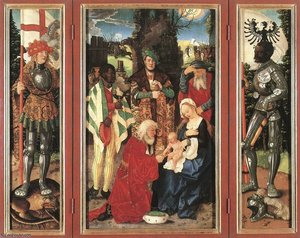
Virgin and Child
 Oil On Panel
- Northern Renaissance
 1540
1540- Renaissance
 91.0 x 64.0 cm
 Afficher la suite
Reproduction à l'huile faite à la main
Huile sur toile peinte à la main, avec cadre et dimensions personnalisés, réalisée sur commande par nos artistes. ( Passer au format impression Passer au format image numérique)




P118B €10

P118H €10

P118W €10

P438Z €10

P508JH €12

P508YH €12

P805H €10

P805Z €10

P919BZ €10

P919G €10

P919XJ €10

P959ZH €10

P968JZ €12

W106C €8

W218G €10

W218JH €8

W218Y €10

W307PJ €10

W316G €10

W316PJ €8

W316Y €10

W398PJ €8

W4111J €10

W500HY €15

W500JH €15

W692G €12

W849H €8

W940BG €15

W953PJ €8




Choisissez parmi nos formats prédéfinis qui respectent les proportions originales de l’œuvre.

Saisissez la largeur et la hauteur souhaitées, pour s'adapter à votre cadre ou à votre mur. Cette œuvre est peinte à la main ; ainsi, pour un format de forme différente, l'artiste peut peindre un peu plus autour du tableau ou réduire légèrement les bords — c'est vous qui choisissez. Nous vous envoyons une maquette numérique pour approbation avant que la peinture ne commence. L'image présentée sur cette page ne reflète pas le résultat réel — seule la maquette le fait.
Après la commande, l’équipe OriginalUniqueArt.com contactera le client par e-mail pour recueillir ses instructions et lui fournira une maquette d’aperçu
Livraison dans le monde entier () en 3 à 4 semaines au lieu des 5 semaines habituelles. (24 octobre). Aucun compromis sur la qualité.

Livraison express gratuite dans le monde entier

Toile de lin de haute qualité

Assurance transport complète

Garantie de remboursement des droits de douane

Garantie de fidélité des couleurs

Garantie de retour de 100 jours (uniquement en cas de défaut)

Garantie de remboursement à 100%

Tarifs dégressifs sur quantité
 L'option verre n'est disponible que pour les dimensions inférieures à 110 cm.

Virgin and Child
Technique de reproduction
Format de la reproduction
-


Prix total final
€ 263
The Artist's Style
Hans Baldung was a German artist known for his distinctive style, full of color, expression, and imagination. As a student of Albrecht Dürer, he developed a unique approach to painting, which is evident in "Virgin and Child". The use of bold colors and delicate lines creates a sense of intimacy and warmth, drawing the viewer into the scene. Key Features of the painting include:- The Virgin Mary's elegant attire, complete with a necklace, adds an air of sophistication to the composition.
- The two children, positioned on either side of Mary, are depicted with tender expressions, conveying a sense of love and devotion.
- The overall mood of the painting is one of serenity and peace, inviting the viewer to contemplate the beauty of the scene.
The beauty of "Virgin and Child" lies in its ability to evoke emotions and inspire contemplation. As a work of art, it continues to captivate audiences, offering a glimpse into the artistic genius of Hans Baldung and the Northern Renaissance.
Questions et réponses
Quelle couleur domine la composition de «Virgin and Child» de Hans Baldung Grien ?
Espresso (#593027) est la couleur dominante de «Virgin and Child» de Hans Baldung Grien.
Quels sujets apparaissent dans «Virgin and Child» de Hans Baldung Grien ?
Les sujets de « Virgin and Child » sont virgin mary, madonna and child, religious art, northern renaissance, motherhood, sacred scene, german renaissance.
Quel âge avait Hans Baldung Grien lors de la création de « Virgin and Child » en 1540 ?
Hans Baldung Grien a réalisé « Virgin and Child » à l'âge de 55. L'artiste est né en 1485 et l'œuvre date de 1540.
Biographie de l'artiste
A Swabian Enigma: The Life and Early Influences of Hans Baldung Grien
Hans Baldung—forever distinguished as Hans Baldung Grien due to his predilection for wearing green attire—emerged from an unexpectedly scholarly lineage. Born around 1485 in the Free Imperial City of Schwäbisch Gmünd, nestled within the rolling hills of Bavaria, Germany, he was the son of Johann Baldung, a university-educated jurist who held the office of legal adviser to the Bishopric of Strasbourg, Albert of Bavaria, from 1492, and Margarethe Herlin, daughter of Arbogast Herlin. His uncle, Hieronymus Baldung, was a doctor in medicine, with a son, Pius Hieronymus, cousin of Hans, who taught law at Freiburgand became chancellor of Tyrol in 1527. The family resided in Strasbourg. He was the first male in his family to not attend university, but he was one of the earliest German artists to come from an academic family. His formative years were marked by exposure to humanist ideals and intellectual currents that shaped his worldview—a characteristic that permeated his entire oeuvre. He received his initial artistic training around 1500 in the Upper Rhineland with an artist from Strasbourg, laying the groundwork for his technical skills before he sought out more prominent masters to hone his craft. This early period instilled within him a foundation of draftsmanship and composition, preparing him for the rigorous artistic environment that awaited him in Nuremberg.Under Dürer’s Wing and Forging an Individual Style
The pivotal moment in Baldung’s development arrived in 1503 when he became an assistant in Albrecht Dürer’s workshop in Nürnberg, where he perfected his art between 1503 and 1507. This period proved profoundly formative, exposing him to the meticulous detail, intellectual rigor, and innovative printmaking techniques that defined Dürer’s style. The two artists developed a close relationship; Baldung even managed Dürer’s workshop during his master’s sojourn to Venice. However, while deeply influenced by Dürer—evident in early works showcasing precise draftsmanship and Northern realism—Baldung quickly began to forge his own artistic identity. He absorbed the lessons of the Renaissance masters but infused them with a uniquely German sensibility, characterized by expressive color, imaginative compositions, and an increasingly unsettling psychological depth. This divergence from Dürer’s more classical approach would become a hallmark of Baldung’s mature style. His time in Venice, overseeing Dürer’s affairs, also exposed him to the burgeoning Italian Renaissance art scene, broadening his artistic horizons and subtly influencing his palette and compositional choices. He returned from Italy with a heightened sense of color and a willingness to experiment with spatial arrangements that set him apart from his contemporaries.A Master of Many Mediums: Themes and Techniques
Hans Baldung Grien was an artist of remarkable versatility, proficient in painting, printmaking—particularly woodcuts and engravings—drawing, tapestry design, and even stained glass work. His paintings often feature small-scale works brimming with puzzling allegories and mythological narratives, rendered with a vibrant palette and a distinctive sense of spatial ambiguity. He excelled at portraiture, capturing the likenesses of his patrons with both realism and psychological insight. However, it is perhaps for his woodcuts that Baldung is most widely recognized today. These prints are characterized by their dramatic compositions, intricate detail, and often macabre subject matter. A recurring theme throughout his work is a fascination with witchcraft, death, and the supernatural—a reflection of the anxieties and beliefs prevalent in 16th-century Germany. His depictions of witches are particularly striking, portraying them not as stereotypical hags but as complex, even alluring figures, embodying both fear and fascination. He exploited the medium’s capacity for stark contrasts and intricate detail to create images that were both visually arresting and psychologically unsettling. ## Reformation Currents and Lasting Legacy Baldung’s career unfolded during a period of immense religious and political upheaval, marked by the rise of the Protestant Reformation. While not overtly aligned with any particular faction, his work often reflects the changing spiritual landscape of Germany. His monumental high altar for the city of Münster, completed in 1531, is a testament to this engagement, showcasing support for the reformation movement through its iconography and stylistic choices. He died in Strasbourg in September 1545, leaving behind a body of work that continues to captivate and intrigue viewers today. His influence can be seen in the works of later German artists, and his unique blend of Renaissance technique, Northern expressionism, and allegorical complexity secures his place as a significant figure in art history. He remains an artist whose work invites contemplation, challenging us to confront the darker aspects of human nature and the mysteries of the unseen world.
Hans Baldung Grien
1485 - 1545 , Allemagne
En bref
- Artistic Movement Or Style: Renaissance, Mannerism
- Artists Who Influenced This Artist: ['Albrecht Dürer']
- Date Of Birth: c. 1485
- Full Name: Hans Baldung Grien
- Nationality: German
- Notable Artworks:
- Bewitched Groom
- Allegory of Death & Beauty
- Place Of Birth: Schwäbisch Gmünd, Germany
Articles connexes
Hans Baldung Grien: A Renaissance Master of Allegory, Innovation & the Grotesque
Explore the captivating world of Hans Baldung Grien, a Renaissance master renowned for his allegorical paintings, striking woodcuts & unique depictions of mythology and the grotesque. Discover his life, works & legacy with OriginalUniqueArt.
Renaissance du Nord : 10 Chefs-d'œuvre Incontournables pour Décorer avec Art et Histoire
Plongez au cœur de la Renaissance du Nord ! Découvrez 10 chefs-d'œuvre emblématiques de Jan van Eyck à Bruegel, leurs histoires et techniques. Trouvez l'inspiration déco & achetez des reproductions de tableaux exceptionnels sur .
Raphaël : Les 25 Chefs-d'œuvre Incontournables pour une Décoration d'Exception
Plongez dans l'univers de Raphaël avec les 25 œuvres incontournables du maître italien. Découvrez l'histoire, la technique et la beauté intemporelle de ses chefs-d'œuvre Renaissance. Reproductions de qualité muséale sur OriginalUniqueArt.com.
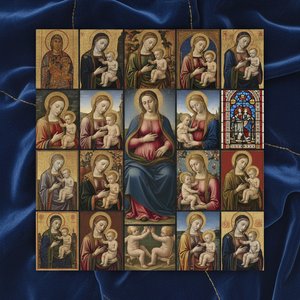
Divine Love: A Curated Guide to the Most Iconic Madonna and Child Masterpieces in Art History
Embark on a sophisticated journey through art history with our curated guide to the most iconic Madonna and Child masterpieces. Discover the profound beauty, theological depth, and enduring legacy of these sacred Renaissance treasures.
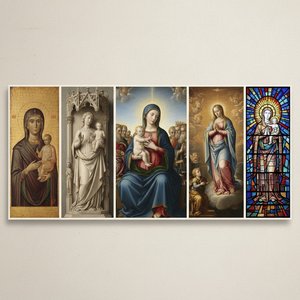
Divine Grace: A Journey Through the Most Iconic Depictions of the Virgin Mary in Art History
Embark on a profound journey through art history with our exploration of the most iconic depictions of the Virgin Mary. Discover the divine grace, symbolism, and masterful techniques found in Renaissance masterpieces and sacred iconography.