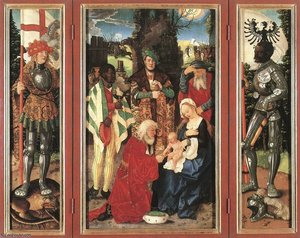
Aperçu en situation
 Envoyer
 Partager
 Détails de l'œuvre
 Guide
Guide

 Télécharger l'image
 Articles similaires
 Radiographie
 Diaporama
 Statistiques
Amants Inégaux


 Lire la suite
Giclées et impressions d'art
Impressions giclées ou sur toile de qualité musée, avec une production rapide et des finitions au choix. ( Commander la reproduction peinte à la main Passer au format numérique)




P118B €10

P118H €10

P118W €10

P438Z €10

P508JH €12

P508YH €12

P805H €10

P805Z €10

P919BZ €10

P919G €10

P919XJ €10

P959ZH €10

P968JZ €12

W106C €8

W218G €10

W218JH €8

W218Y €10

W307PJ €10

W316G €10

W316PJ €8

W316Y €10

W398PJ €8

W4111J €10

W500HY €15

W500JH €15

W692G €12

W849H €8

W940BG €15

W953PJ €8




Choisissez parmi nos formats prédéfinis qui respectent les proportions originales de l’œuvre.

Saisissez la largeur et la hauteur souhaitées pour qu'elles s'adaptent à votre cadre ou à votre mur. Une impression peut être recadrée, mais jamais agrandie au-delà de l'image originale ; ainsi, un format de forme différente entraînera la perte d'une partie de l'image. Nous vous envoyons une maquette numérique pour approbation avant toute impression. L'image présentée sur cette page ne montre pas le recadrage réel — seule la maquette le permet.
Livraison dans le monde entier () en 2 semaines au lieu des 4/5 semaines habituelles. (26 octobre)

Livraison express gratuite dans le monde entier

Toile de lin de qualité supérieure

Assurance transport complète

Garantie de remboursement des droits de douane

Garantie de fidélité des couleurs

Politique de retour de 100 jours (uniquement en cas de défaut)

Garantie de remboursement à 100%

Offre de tarifs dégressifs
 L'option verre n'est disponible que pour les dimensions inférieures à 110 cm.

Amants Inégaux
Giclées et impressions d'art
Format de la reproduction
-


Prix total
€ 70
Amants Inégaux : Une étude de l'intrigue à la Renaissance
L’œuvre « Amants Inégaux » de Hans Baldung, peinte vers 1528, n'est pas un simple portrait ; c'est un tableau méticuleusement construit, mêlant désir, commentaire social et les angoisses naissantes de la Renaissance septentrionale. Cette œuvre captivante, qui repose actuellement au Musée de l’Œuvre Notre-Dame à Strasbourg, attire immédiatement le regard par son éclairage dramatique en clair-obscur – une technique que Baldung a maîtrisée pour sculpter les formes et imprégner la scène d'une atmosphère mêlant opulence et tension troublante. La peinture dépeint un homme et une femme engagés dans ce qui semble être une discussion animée, pourtant, sous la surface se cache un réseau complexe de symbolisme et de critique sociale, reflétant la fascination de l'époque pour l'amour, la moralité et l'équilibre précaire entre plaisir terrestre et dévotion spirituelle.
La lignée artistique de Baldung est profondément entrelacée avec celle de son mentor, Albrecht Dürer. Formé dans son atelier durant ses « années d'errance », Baldung a absorbé l'approche novatrice de Dürer en matière de perspective, de théorie des couleurs et de réalisme psychologique. Cependant, là où Dürer se concentrait souvent sur une beauté idéalisée et des récits héroïques, Baldung a embrassé une esthétique plus sombre et ambiguë – une caractéristique qui s'exprime avec force dans « Amants Inégaux ». Les personnages sont rendus avec un sentiment d'immédiateté palpable, leurs expressions transmettant un mélange puissant de désir, de suspicion, et peut-être même d'une hostilité voilée. La barbe et la moustache de l'homme, couplées à sa posture imposante, suggèrent une position d'autorité ou de richesse, tandis que la robe élaborée de la femme et son regard séducteur laissent présager son influence captivante.
Une symphonie de détails : Technique et matériaux
La peinture est exécutée à l'huile sur panneau, un médium privilégié par Baldung pour sa capacité à capturer de subtiles gradations de tons et de textures. On remarque le détail minutieux prodigué aux vêtements des personnages – les plis complexes de la robe de la femme, le riche velours du pourpoint de l'homme et les broderies délicates qui ornent les deux parures. Ces détails ne font pas qu'accentuer l'impact visuel ; ils servent également de marqueurs de statut social et de richesse. L'usage magistral du clair-obscur par Baldung — ce contraste dramatique entre l'ombre et la lumière — accentue davantage ces distinctions, projetant certaines zones dans une illumination brillante tout en laissant d'autres enveloppées de ténèbres. Les pièces de monnaie éparpillées sur la table ne sont pas de simples éléments décoratifs ; elles représentent la prospérité matérielle et suggèrent potentiellement la nature transactionnelle de leur relation.
Symbolisme et critique sociale
Au-delà de son apparence de surface, « Amants Inégaux » est chargé de significations symboliques. La présence du livre dans le coin inférieur gauche suggère un discours intellectuel et peut-être même une critique des valeurs sociétales dominantes. Les pièces de monnaie, comme mentionné précédemment, représentent la richesse et pourraient évoquer la corruption ou la manipulation. Cependant, l'élément le plus frappant de la peinture est sans aucun doute le vol apparent de la bourse de l'homme par la femme – un acte qui défie les notions traditionnelles de cour et de bienséance sociale. Cette scène critique subtilement la dynamique du pouvoir au sein des relations, suggérant un déséquilibre potentiel de l'autorité et du contrôle. L'image fait écho aux thèmes explorés dans « Les Amants inégaux » de Quentin Matsys, où un homme plus âgé est trompé par une femme plus jeune.
Un aperçu de l'esprit de la Renaissance
« Amants Inégaux » offre une fenêtre fascinante sur les complexités de la Renaissance septentrionale — une période marquée à la fois par l'innovation artistique et par de profonds bouleversements sociaux et religieux. L'œuvre de Baldung reflète la fascination de l'époque pour la psychologie humaine, son exploration des dilemmes moraux et son engagement envers les idéaux humanistes émergents. Le récit ambigu de la peinture invite le spectateur à contempler la nature de l'amour, du pouvoir et de la tromperie – des questions qui continuent de résonner aujourd'hui. C'est un témoignage de la maîtrise de Baldung en tant qu'artiste et de sa capacité à capturer l'esprit de son temps, consolidant ainsi sa place parmi les figures les plus énigmatiques de la Renaissance allemande.
Questions et réponses
Existe-t-il une fiche informative sur «Amants Inégaux» de Hans Baldung Grien destinée aux étudiants ?
Une page Fiche pédagogique est disponible pour «Amants Inégaux» de Hans Baldung Grien : une fiche pédagogique imprimable sur l'œuvre, conçue pour les étudiants et un usage en classe.
De quel pays est originaire l'œuvre Renaissance nordique « Amants Inégaux » ?
«Amants Inégaux» a été créé par Hans Baldung Grien, né en Allemagne, au sein du mouvement Renaissance nordique. L'origine de l'artiste lie l'œuvre au Renaissance nordique tel que pratiqué par les artistes de Allemagne.
L'œuvre « Amants Inégaux » est-elle plutôt claire ou plutôt sombre dans l'ensemble ?
Les valeurs enregistrées pour «Amants Inégaux» de Hans Baldung Grien sont : une luminosité de ombreux, une luminance de Ombre douce.
Biographie de l'artiste
A Swabian Enigma: The Life and Early Influences of Hans Baldung Grien
Hans Baldung—forever distinguished as Hans Baldung Grien due to his predilection for wearing green attire—emerged from an unexpectedly scholarly lineage. Born around 1485 in the Free Imperial City of Schwäbisch Gmünd, nestled within the rolling hills of Bavaria, Germany, he was the son of Johann Baldung, a university-educated jurist who held the office of legal adviser to the Bishopric of Strasbourg, Albert of Bavaria, from 1492, and Margarethe Herlin, daughter of Arbogast Herlin. His uncle, Hieronymus Baldung, was a doctor in medicine, with a son, Pius Hieronymus, cousin of Hans, who taught law at Freiburgand became chancellor of Tyrol in 1527. The family resided in Strasbourg. He was the first male in his family to not attend university, but he was one of the earliest German artists to come from an academic family. His formative years were marked by exposure to humanist ideals and intellectual currents that shaped his worldview—a characteristic that permeated his entire oeuvre. He received his initial artistic training around 1500 in the Upper Rhineland with an artist from Strasbourg, laying the groundwork for his technical skills before he sought out more prominent masters to hone his craft. This early period instilled within him a foundation of draftsmanship and composition, preparing him for the rigorous artistic environment that awaited him in Nuremberg.Under Dürer’s Wing and Forging an Individual Style
The pivotal moment in Baldung’s development arrived in 1503 when he became an assistant in Albrecht Dürer’s workshop in Nürnberg, where he perfected his art between 1503 and 1507. This period proved profoundly formative, exposing him to the meticulous detail, intellectual rigor, and innovative printmaking techniques that defined Dürer’s style. The two artists developed a close relationship; Baldung even managed Dürer’s workshop during his master’s sojourn to Venice. However, while deeply influenced by Dürer—evident in early works showcasing precise draftsmanship and Northern realism—Baldung quickly began to forge his own artistic identity. He absorbed the lessons of the Renaissance masters but infused them with a uniquely German sensibility, characterized by expressive color, imaginative compositions, and an increasingly unsettling psychological depth. This divergence from Dürer’s more classical approach would become a hallmark of Baldung’s mature style. His time in Venice, overseeing Dürer’s affairs, also exposed him to the burgeoning Italian Renaissance art scene, broadening his artistic horizons and subtly influencing his palette and compositional choices. He returned from Italy with a heightened sense of color and a willingness to experiment with spatial arrangements that set him apart from his contemporaries.A Master of Many Mediums: Themes and Techniques
Hans Baldung Grien was an artist of remarkable versatility, proficient in painting, printmaking—particularly woodcuts and engravings—drawing, tapestry design, and even stained glass work. His paintings often feature small-scale works brimming with puzzling allegories and mythological narratives, rendered with a vibrant palette and a distinctive sense of spatial ambiguity. He excelled at portraiture, capturing the likenesses of his patrons with both realism and psychological insight. However, it is perhaps for his woodcuts that Baldung is most widely recognized today. These prints are characterized by their dramatic compositions, intricate detail, and often macabre subject matter. A recurring theme throughout his work is a fascination with witchcraft, death, and the supernatural—a reflection of the anxieties and beliefs prevalent in 16th-century Germany. His depictions of witches are particularly striking, portraying them not as stereotypical hags but as complex, even alluring figures, embodying both fear and fascination. He exploited the medium’s capacity for stark contrasts and intricate detail to create images that were both visually arresting and psychologically unsettling. ## Reformation Currents and Lasting Legacy Baldung’s career unfolded during a period of immense religious and political upheaval, marked by the rise of the Protestant Reformation. While not overtly aligned with any particular faction, his work often reflects the changing spiritual landscape of Germany. His monumental high altar for the city of Münster, completed in 1531, is a testament to this engagement, showcasing support for the reformation movement through its iconography and stylistic choices. He died in Strasbourg in September 1545, leaving behind a body of work that continues to captivate and intrigue viewers today. His influence can be seen in the works of later German artists, and his unique blend of Renaissance technique, Northern expressionism, and allegorical complexity secures his place as a significant figure in art history. He remains an artist whose work invites contemplation, challenging us to confront the darker aspects of human nature and the mysteries of the unseen world.
Hans Baldung Grien
1485 - 1545 , Allemagne
L'essentiel de l'artiste
- Artistic Movement Or Style: Renaissance, Mannerism
- Artists Who Influenced This Artist: ['Albrecht Dürer']
- Date Of Birth: c. 1485
- Full Name: Hans Baldung Grien
- Nationality: German
- Notable Artworks:
- Bewitched Groom
- Allegory of Death & Beauty
- Place Of Birth: Schwäbisch Gmünd, Germany
Articles connexes

Expressionnisme Allemand : 10 Chefs-d'œuvre Révolutionnaires à Découvrir | OriginalUniqueArt
Plongez au cœur de l'Expressionnisme Allemand avec OriginalUniqueArt. Découvrez 10 chefs-d'œuvre de Kandinsky, Munch et Kirchner. Explorez l'histoire, les couleurs et l'émotion derrière ces tableaux iconiques. Reproductions de qualité muséale disponibles sur OriginalUniqueArt.com
Mastering the Woodcut: A Definitive Guide to the Art of Relief Printing and its Historical Legacy
Explore the profound history and technical mastery of woodcut relief printing. From ancient origins to German Expressionism, discover how artists use the subtractive process to create iconic works. A definitive guide for art students, collectors, and historians.
Hans Baldung Grien: A Renaissance Master of Allegory, Innovation & the Grotesque
Explore the captivating world of Hans Baldung Grien, a Renaissance master renowned for his allegorical paintings, striking woodcuts & unique depictions of mythology and the grotesque. Discover his life, works & legacy with OriginalUniqueArt.
The Northern Awakening: Artistic Innovation & Cultural Transformation in the German Renaissance
Explore the artistic innovation of the German Renaissance! Discover Dürer, the Danube School & Reformation art. Learn about techniques, materials & lasting influence. Find museum-quality reproductions at OriginalUniqueArt.

Hans Holbein le Jeune : Maîtrise du Réalisme et Perspicacité Psychologique dans le Portrait Renaissance
Explorez la vie et l'œuvre de Hans Holbein le Jeune, maître du portrait Renaissance. Découvrez son réalisme saisissant, sa technique unique et les secrets psychologiques cachés dans ses célèbres tableaux. Un article expert pour les passionnés d'art.