
 Aperçu en situation
 Envoyer
 Partager
 Détails de l'œuvre

 Télécharger
 Articles similaires
 Radiographie
 Diaporama
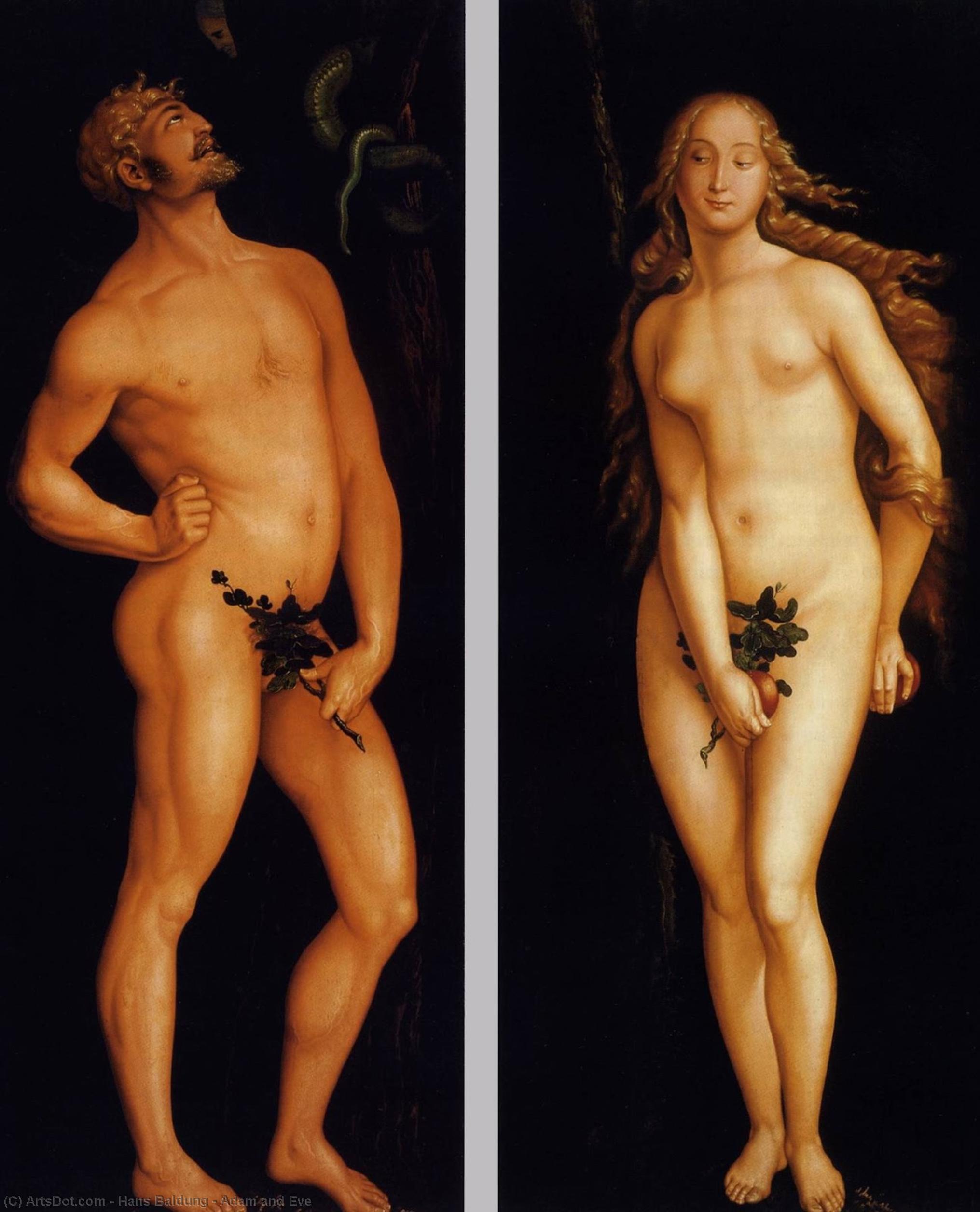
Adam and Eve
 Oil On Panel
- Northern Renaissance
 1524
1524- Renaissance
 208.0 x 83.0 cm
 Lire la suite
Acquérez une image numérique haute résolution et optimisée, d'une qualité bien supérieure à l'aperçu en ligne.
Chaque fichier est méticuleusement préparé par nos spécialistes internes à l'aide d'outils avancés et d'une retouche manuelle experte. Nous garantissons que chaque image possède une clarté exceptionnelle, une précision des couleurs irréprochable et un niveau de détail fin.
Le fichier final est livré par e-mail sous 72 heures, optimisé pour une utilisation immédiate dans des contextes professionnels, éditoriaux et d'impression. Il offre la même qualité de confiance que celle utilisée par les plus grands studios de création, éditeurs et galeries.
Image numérique
Téléchargez un fichier haute résolution pour votre usage personnel, l'impression et vos projets créatifs. ( Commander l'impression Commander la reproduction peinte à la main)
Inclus avec chaque commande d'image numérique
Livraison numérique experte, garantie.
En choisissant OriginalUniqueArt.com, vous n'obtenez pas seulement une simple image : vous recevez une œuvre numérique sublimée avec professionnalisme, conçue avec précision et accompagnée d'une garantie de satisfaction. Voici tout ce qui accompagne automatiquement votre commande :

Envoi rapide par e-mail
Votre fichier d'image numérique haute résolution vous sera envoyé par e-mail sous 72 heures après votre commande — prêt à un usage immédiat.

Fichier numérique optimisé par l'IA
Votre œuvre d'art bénéficie d'une optimisation professionnelle grâce à des outils d'IA avancés et une retouche manuelle, garantissant un niveau maximal de détail, de clarté et de fidélité chromatique.

Réexpédition gratuite à vie
Vous avez accidentellement supprimé ou perdu votre fichier ? Pas d'inquiétude — nous vous le renverrons gratuitement, quand vous le souhaitez.

Aucun frais de douane - À jamais
Profitez de votre œuvre d'art instantanément sans frais de douane ni de livraison — les téléchargements numériques sont toujours exonérés de taxes.

Garantie de fidélité des couleurs
Nous garantissons que votre image numérique reproduit les couleurs de l'original aussi fidèlement que possible grâce à des outils professionnels et une gestion rigoureuse des couleurs.

Garantie satisfaction 60 jours
Si vous n'êtes pas satisfait de votre image numérique, nous la retoucherons ou vous rembourserons 100% sous 60 jours — sans poser de questions.

Garantie de remboursement à 100%
Pas satisfait ? Obtenez un remboursement intégral dans les 60 jours suivant la réception de votre fichier numérique — sans aucune question posée.

Remises sur les commandes groupées
Achetez 3 images, économisez 10% - Achetez 5, économisez 15% - Achetez 10+, économisez 20%. Idéal pour les projets créatifs, les galeries et les agences.
Description de la collection
Hans Baldung's Adam and Eve: A Study in Human Emotion
Hans Baldung’s “Adam and Eve,” painted in 1524, is more than just a depiction of the biblical narrative; it’s a profound exploration of human emotion rendered with masterful skill. Executed in oil on panel, this artwork measures 208 x 83 cm and stands as a cornerstone of Northern Renaissance art, showcasing Baldung's unique ability to infuse religious subjects with a strikingly personal and often unsettling quality. The scene depicts the newly formed Adam and Eve standing before a grove of trees, their vulnerability and nascent connection immediately apparent. Baldung’s deliberate choice to portray them nude – a bold move for the time – elevates the work beyond a simple illustration, transforming it into an intensely psychological study of innocence and burgeoning sexuality.
- Style & Technique: Baldung's style is characterized by a dramatic interplay of light and shadow, achieved through meticulous layering of oil paint. He employs a technique known as ‘sfumato’ – a subtle blurring of edges – to create an atmospheric depth that draws the viewer into the scene. The use of color is rich and expressive, with earthy tones dominating alongside vibrant accents in the flowers held by Eve, adding to the painting's sensual impact.
- Composition: The composition itself is carefully constructed. The figures are positioned almost symmetrically, yet their postures subtly diverge, hinting at the complexities of their relationship. Baldung’s masterful use of perspective and spatial relationships further enhances the sense of realism and immediacy.
Symbolism and Interpretation
“Adam and Eve” is laden with symbolic meaning, reflecting the anxieties and intellectual currents of the early 16th century. The nudity of the figures isn’t merely a matter of artistic license; it represents humanity's primal state – untainted by sin but also vulnerable to temptation. The trees surrounding them symbolize the Garden of Eden, a paradise lost, while the flowers held by Eve represent fertility and new life. Baldung’s depiction of their exposed genitals adds a layer of unsettling realism, prompting viewers to confront uncomfortable truths about human nature. This wasn't simply a celebration of creation; it was an acknowledgement of its inherent vulnerability.
The painting’s emotional impact is palpable. Baldung captures the raw emotion of this pivotal moment with remarkable sensitivity. The figures aren’t idealized heroes, but rather flawed and vulnerable beings grappling with their newfound freedom and responsibility. This honesty contributes significantly to the artwork's enduring power.
Historical Context and Artistic Influence
Created during a period of significant artistic and intellectual ferment – the Northern Renaissance – “Adam and Eve” reflects the movement’s emphasis on realism, humanism, and individual expression. Hans Baldung was a pivotal figure in this era, bridging the gap between Gothic and Renaissance styles. His work anticipated Mannerism, with its distorted figures and exaggerated emotions, foreshadowing developments in later art movements. Comparisons to works by Hans Holbein the Younger, particularly his own “Adam and Eve,” reveal distinct stylistic differences; Baldung’s version possesses a greater emotional intensity and a more ambiguous portrayal of the subjects.
Handmade oil paintings reproductions of Hans Baldung's works, including Adam and Eve, are available at https://OriginalUniqueArt.com. These reproductions are created by skilled artists who use high-quality materials to ensure that the final product is identical to the original painting.
Biographie de l'artiste
A Swabian Enigma: The Life and Early Influences of Hans Baldung Grien
Hans Baldung—forever distinguished as Hans Baldung Grien due to his predilection for wearing green attire—emerged from an unexpectedly scholarly lineage. Born around 1485 in the Free Imperial City of Schwäbisch Gmünd, nestled within the rolling hills of Bavaria, Germany, he was the son of Johann Baldung, a university-educated jurist who held the office of legal adviser to the Bishopric of Strasbourg, Albert of Bavaria, from 1492, and Margarethe Herlin, daughter of Arbogast Herlin. His uncle, Hieronymus Baldung, was a doctor in medicine, with a son, Pius Hieronymus, cousin of Hans, who taught law at Freiburgand became chancellor of Tyrol in 1527. The family resided in Strasbourg. He was the first male in his family to not attend university, but he was one of the earliest German artists to come from an academic family. His formative years were marked by exposure to humanist ideals and intellectual currents that shaped his worldview—a characteristic that permeated his entire oeuvre. He received his initial artistic training around 1500 in the Upper Rhineland with an artist from Strasbourg, laying the groundwork for his technical skills before he sought out more prominent masters to hone his craft. This early period instilled within him a foundation of draftsmanship and composition, preparing him for the rigorous artistic environment that awaited him in Nuremberg.Under Dürer’s Wing and Forging an Individual Style
The pivotal moment in Baldung’s development arrived in 1503 when he became an assistant in Albrecht Dürer’s workshop in Nürnberg, where he perfected his art between 1503 and 1507. This period proved profoundly formative, exposing him to the meticulous detail, intellectual rigor, and innovative printmaking techniques that defined Dürer’s style. The two artists developed a close relationship; Baldung even managed Dürer’s workshop during his master’s sojourn to Venice. However, while deeply influenced by Dürer—evident in early works showcasing precise draftsmanship and Northern realism—Baldung quickly began to forge his own artistic identity. He absorbed the lessons of the Renaissance masters but infused them with a uniquely German sensibility, characterized by expressive color, imaginative compositions, and an increasingly unsettling psychological depth. This divergence from Dürer’s more classical approach would become a hallmark of Baldung’s mature style. His time in Venice, overseeing Dürer’s affairs, also exposed him to the burgeoning Italian Renaissance art scene, broadening his artistic horizons and subtly influencing his palette and compositional choices. He returned from Italy with a heightened sense of color and a willingness to experiment with spatial arrangements that set him apart from his contemporaries.A Master of Many Mediums: Themes and Techniques
Hans Baldung Grien was an artist of remarkable versatility, proficient in painting, printmaking—particularly woodcuts and engravings—drawing, tapestry design, and even stained glass work. His paintings often feature small-scale works brimming with puzzling allegories and mythological narratives, rendered with a vibrant palette and a distinctive sense of spatial ambiguity. He excelled at portraiture, capturing the likenesses of his patrons with both realism and psychological insight. However, it is perhaps for his woodcuts that Baldung is most widely recognized today. These prints are characterized by their dramatic compositions, intricate detail, and often macabre subject matter. A recurring theme throughout his work is a fascination with witchcraft, death, and the supernatural—a reflection of the anxieties and beliefs prevalent in 16th-century Germany. His depictions of witches are particularly striking, portraying them not as stereotypical hags but as complex, even alluring figures, embodying both fear and fascination. He exploited the medium’s capacity for stark contrasts and intricate detail to create images that were both visually arresting and psychologically unsettling. ## Reformation Currents and Lasting Legacy Baldung’s career unfolded during a period of immense religious and political upheaval, marked by the rise of the Protestant Reformation. While not overtly aligned with any particular faction, his work often reflects the changing spiritual landscape of Germany. His monumental high altar for the city of Münster, completed in 1531, is a testament to this engagement, showcasing support for the reformation movement through its iconography and stylistic choices. He died in Strasbourg in September 1545, leaving behind a body of work that continues to captivate and intrigue viewers today. His influence can be seen in the works of later German artists, and his unique blend of Renaissance technique, Northern expressionism, and allegorical complexity secures his place as a significant figure in art history. He remains an artist whose work invites contemplation, challenging us to confront the darker aspects of human nature and the mysteries of the unseen world.
Hans Baldung Grien
1485 - 1545 , Allemagne
En bref
- Artistic Movement Or Style: Renaissance, Mannerism
- Artists Who Influenced This Artist: ['Albrecht Dürer']
- Date Of Birth: c. 1485
- Full Name: Hans Baldung Grien
- Nationality: German
- Notable Artworks:
- Bewitched Groom
- Allegory of Death & Beauty
- Place Of Birth: Schwäbisch Gmünd, Germany

