Aperçu en situation
 Partager
 Partager
 Détails
 Guide imprimable

 Télécharger
 Articles similaires
 Radiographie
 Voir le diaporama
 Statistiques
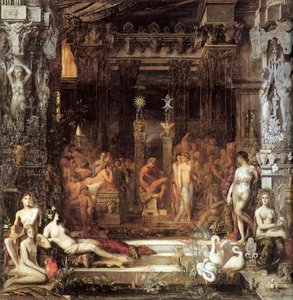
Leda and the Swan


 Afficher la suite
Reproduction à l'huile faite à la main
Huile sur toile peinte à la main, avec cadre et dimensions personnalisés, réalisée sur commande par nos artistes. ( Passer au format impression Passer au format image numérique)




P118B €10

P118H €10

P118W €10

P438Z €10

P508JH €12

P508YH €12

P805H €10

P805Z €10

P919BZ €10

P919G €10

P919XJ €10

P959ZH €10

P968JZ €12

W106C €8

W218G €10

W218JH €8

W218Y €10

W307PJ €10

W316G €10

W316PJ €8

W316Y €10

W398PJ €8

W4111J €10

W500HY €15

W500JH €15

W692G €12

W849H €8

W940BG €15

W953PJ €8




Choisissez parmi nos formats prédéfinis qui respectent les proportions originales de l’œuvre.

Saisissez la largeur et la hauteur souhaitées, pour s'adapter à votre cadre ou à votre mur. Cette œuvre est peinte à la main ; ainsi, pour un format de forme différente, l'artiste peut peindre un peu plus autour du tableau ou réduire légèrement les bords — c'est vous qui choisissez. Nous vous envoyons une maquette numérique pour approbation avant que la peinture ne commence. L'image présentée sur cette page ne reflète pas le résultat réel — seule la maquette le fait.
Après la commande, l’équipe OriginalUniqueArt.com contactera le client par e-mail pour recueillir ses instructions et lui fournira une maquette d’aperçu
Livraison dans le monde entier () en 3 à 4 semaines au lieu des 5 semaines habituelles. (25 octobre). Aucun compromis sur la qualité.

Livraison express gratuite dans le monde entier

Toile de lin de haute qualité

Assurance transport complète

Garantie de remboursement des droits de douane

Garantie de fidélité des couleurs

Garantie de retour de 100 jours (uniquement en cas de défaut)

Garantie de remboursement à 100%

Tarifs dégressifs sur quantité
 L'option verre n'est disponible que pour les dimensions inférieures à 110 cm.

Leda and the Swan
Technique de reproduction
Format de la reproduction
-


Prix total final
€ 263
Leda and the Swan: A Symbol of Desire and Transformation
Gustave Moreau’s “Leda and the Swan” is not merely a depiction of a classical myth; it's an immersive plunge into a world of dreamlike symbolism and potent emotion. Born in 1826, Moreau was a pivotal figure in the Symbolist movement, rejecting the objective realism favored by his contemporaries to instead explore the depths of human psychology and spiritual yearning through intensely evocative imagery. This particular painting, created in 1865, exemplifies his signature style – rich, saturated colors layered with intricate patterns that seem to shimmer with an otherworldly glow. Moreau wasn’t interested in a straightforward narrative; he sought to capture the *feeling* of the myth, the unsettling beauty and inherent tension within the story of Zeus's seduction of Leda.
The Myth Unveiled: A Story of Divine Intervention
The painting draws upon the enduring Greek legend of Leda and the Swan. According to mythology, Zeus, disguised as a magnificent white swan, lured Leda onto a secluded shore. The encounter, depicted with both tenderness and an undeniable sense of power, resulted in the birth of Helen of Troy, Clytemnestra, and the twin boys Castor and Pollux – figures deeply intertwined with Greek history and legend. Moreau masterfully captures this moment of divine intervention, transforming a tale of illicit desire into a profound meditation on transformation and the blurring lines between the mortal and immortal realms. The swan itself becomes a potent symbol of Zeus’s deceptive power, while Leda embodies humanity's vulnerability and susceptibility to the allure of the gods.
Symbolism Woven into Every Detail
Moreau’s meticulous attention to detail elevates “Leda and the Swan” beyond a simple illustration. The composition is deliberately layered with symbolic elements. The opulent bedroom setting, bathed in muted colors, suggests a dreamscape – a realm where logic dissolves and the subconscious reigns supreme. Leda's pose, lying languidly on her side, conveys both vulnerability and surrender. The swan’s head resting upon her shoulder isn’t just a gesture of affection; it represents the divine force that has irrevocably altered her fate. Notice also the subtle figures surrounding Leda – they are not clearly defined, adding to the painting's enigmatic quality and suggesting the presence of unseen forces at play. The use of gold leaf and shimmering pigments further enhances this sense of otherworldly beauty and reinforces the painting’s symbolic weight.
A Masterpiece of Symbolist Technique
Moreau’s technique is characterized by a deliberate avoidance of sharp lines and clear definition, creating a hazy, dreamlike atmosphere. He employs glazing – applying thin layers of translucent paint over one another – to build up depth and luminosity, resulting in a surface that seems to vibrate with color. The intricate patterns and textures contribute to the painting’s overall sense of richness and complexity. “Leda and the Swan” stands as a testament to Moreau's mastery of Symbolist principles, demonstrating his ability to translate subjective experience into a visually arresting and emotionally resonant work of art. To truly appreciate this masterpiece, we encourage you to visit the Musée National Gustave-Moreau in Paris, where it resides alongside other treasures from Moreau’s extraordinary oeuvre.
Questions et réponses
Les couleurs de «Leda and the Swan» de Gustave Moreau sont-elles saturées ou atténuées ?
«Leda and the Swan» de Gustave Moreau est présenté avec une saturation de Subtle Color.
Quelle est la luminosité perçue de «Leda and the Swan» de Gustave Moreau ?
Dans l'ensemble, « Leda and the Swan » présente une luminosité de balanced. La luminosité perçue décrit si l'œuvre paraît claire ou sombre.
L'œuvre « Leda and the Swan » dispose-t-elle d'un aperçu en réalité augmentée ?
« Leda and the Swan » dispose d'un aperçu en réalité augmentée : la page Aperçu RA de l'œuvre vous permet de la visualiser dans votre propre espace sur un appareil compatible.
Biographie de l'artiste
**Jeunesse et Éducation**
Gustave Moreau, artiste français, est né le 6 avril 1826 à Paris. Il a reçu une formation académique traditionnelle en peinture à l’École des Beaux-Arts, démontrant un talent pour le dessin dès son plus jeune âge.**Le Mouvement Symboliste**
L'œuvre de Moreau, caractérisée par des sujets allégoriques et mythologiques, l'a positionné comme un peintre symboliste de premier plan, en particulier dans les années 1890. Son art (et le symbolisme en général) a connu une période de déclin mais a été réévalué depuis les années 1960, Moreau étant désormais considéré comme l’un des peintres symbolistes les plus importants.**Œuvres Notables et Expositions**
* Salomé dans la prison (peinture de 'Gustave Moreau') est un exemple notable de son œuvre, mettant en valeur sa maîtrise du symbolisme. * Autoportrait (peinture de 'Gustave Moreau') est une autre représentation puissante de l’artiste lui-même.**Musée Gustave Moreau**
Le Musée National Gustave-Moreau (Musée Gustave Moreau Paris, France) à Paris est dédié à l’œuvre de Moreau, abritant plus de 1 200 peintures, aquarelles et dessins. Le musée témoigne de son héritage artistique.**Héritage et Influence**
L'influence de Moreau sur le mouvement symboliste est indéniable. Il a enseigné à l’École des Beaux-Arts, influençant des artistes notables tels que Henri Matisse et Georges Rouault. Sa nature recluse n'a pas diminué son impact sur le monde de l’art.- Découvrez plus d'informations sur la vie et l'œuvre de Gustave Moreau sur OriginalUniqueArt.com
- Explorez le Musée National Gustave-Moreau et sa collection impressionnante d'œuvres d’art sur Musée Gustave Moreau Paris, France
- Apprenez-en davantage sur le mouvement symboliste et son importance dans l'histoire de l'art sur le mouvement symboliste

Gustave Moreau
1826 - 1898 , France
En bref
- Artistes Influents:
- Eugène Delacroix
- Michelangelo
- Leonard de Vinci
- Date De Décès: 1898
- Date De Naissance: 6 avril 1826
- Influence Sur Les Artistes:
- Henri Matisse
- Georges Rouault
- Lieu De Naissance: Paris, France
- Mouvement Artistique: Symbolisme
- Nationalité: Française
- Nom Complet: Gustave Moreau
- Oeuvres Notables:
- Salomé dans la prison
- Autoportrait
- Jupiter et Sémélé
- Orphée
- L'Apparition
Articles connexes
Art Nouveau : Les 10 Chefs-d'œuvre Indémodables à Redécouvrir
Plongez dans l'univers fascinant de l'Art Nouveau ! Découvrez les 10 chefs-d’œuvre emblématiques de Klimt, Mucha et autres artistes majeurs. Inspirez votre décoration intérieure avec ces icônes du style floral et du symbolisme. Explorez la collection complète sur
Gustave Klimt : Les 25 Œuvres Maîtresses d'un Artiste Symboliste Incontournable | OriginalUniqueArt
Plongez dans l'univers fascinant de Gustave Klimt ! Découvrez les 25 œuvres majeures du maître symboliste : Le Baiser, Judith et bien d'autres. Inspirez votre décoration intérieure avec OriginalUniqueArt.com et trouvez la reproduction parfaite.
Echoes of Olympus: Mythological Narratives in Western Art Through the Ages
Explore the captivating history of mythological narratives in Western art! From ancient Greece to modern masterpieces, discover iconic artworks & symbolism. Expert analysis and high-quality reproductions at OriginalUniqueArt.
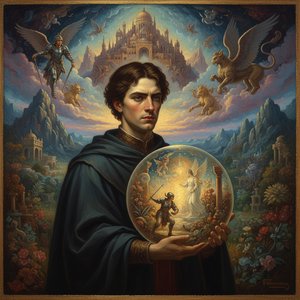
Gustave Moreau: Symbolism's Enigmatic Visionary & Precursors of Modern Fantasy Art
Explore the captivating world of Gustave Moreau, the leading Symbolist painter. Discover his iconic masterpieces, influences, and lasting legacy. Expert analysis for collectors & art enthusiasts.

Timeless Legends: A Curated Guide to the Eternal Allure of Mythological Masterpieces
Embark on a sophisticated journey through the eternal allure of mythological art. Discover how master painters breathe life into ancient legends, from Greek deities to Baroque masterpieces, and learn to curate these timeless narratives within your own exquisite art collection.