

 Aperçu en situation
 Partager
 Partager
 Détails
 Guide imprimable

 Télécharger
 Articles similaires
 Radiographie
 Voir le diaporama
 Statistiques
Sonja Knips
 Huile sur toile
- Art mural
- Sécession Viennoise
 1898
1898- Moderne
 145.0 x 145.0 cm
 Afficher la suite
Giclées et impressions d'art
Impressions giclées ou sur toile de qualité musée, avec une production rapide et des finitions au choix. ( Acheter la peinture faite à la main Passer au format image numérique)




P118B $10

P118H $10

P118W $10

P438Z $10

P508JH $12

P508YH $12

P805H $10

P805Z $10

P919BZ $10

P919G $10

P919XJ $10

P959ZH $10

P968JZ $12

W106C $8

W218G $10

W218JH $8

W218Y $10

W307PJ $10

W316G $10

W316PJ $8

W316Y $10

W398PJ $8

W4111J $10

W500HY $15

W500JH $15

W692G $12

W849H $8

W940BG $15

W953PJ $8




Choisissez parmi nos formats prédéfinis qui respectent les proportions originales de l’œuvre.

Vous pouvez saisir vos propres dimensions pour vous adapter à un cadre ou à un espace spécifique. Si la taille sélectionnée ne correspond pas aux proportions de l'image originale, nous recadrerons l'œuvre ou étendrons l'image avec une bordure en miroir ou une couleur unie. Une maquette numérique vous sera envoyée pour approbation avant le début de la production.
Veuillez noter que l'aperçu à l'écran ne reflète pas le recadrage ou l'extension réelle. Seule la maquette montrera avec précision la composition finale.
Bien que des tailles personnalisées soient disponibles, nous vous recommandons de choisir une dimension dans la liste prédéfinie afin de préserver les proportions originales.
Livraison dans le monde entier () en 2 semaines au lieu des 4/5 semaines habituelles. (25 septembre)

Livraison express gratuite dans le monde entier

Toile de lin de haute qualité

Assurance transport complète

Garantie de remboursement des droits de douane

Garantie de fidélité des couleurs

Garantie de retour de 100 jours (uniquement en cas de défaut)

Garantie de remboursement à 100%

Tarifs dégressifs sur quantité
 L'option verre n'est disponible que pour les dimensions inférieures à 110 cm.

Sonja Knips
Giclées et impressions d'art
Format de la reproduction
-


Prix total final
$ 80
A Portrait of Confidence: Unveiling Gustav Klimt’s ‘Sonja Knips’
Gustav Klimt's 1898 portrait, *Sonja Knips*, is a captivating example of his burgeoning artistic style, poised between academic tradition and the revolutionary spirit of the Vienna Secession. This oil on canvas (145 x 145 cm) doesn’t merely depict a woman; it presents a psychological study imbued with symbolism and an air of modern sophistication. The painting showcases Klimt's transition from decorative architectural work towards a more personal and expressive form of portraiture, marking a pivotal moment in his career. It immediately draws the viewer’s eye with its striking pink gown adorned with delicate white lace – a bold color choice for the time that speaks volumes about Sonja Knips’ individuality and vitality. Klimt masterfully balances this vibrancy against a darker, more subdued background featuring potted plants and chairs, creating depth and subtly directing attention to the central figure.Subject and Composition: A Study in Contrasts
The subject, Sonja Knips, is portrayed seated with an unwavering gaze that exudes confidence—a characteristic increasingly valued during Klimt’s era. Her posture conveys a quiet strength, hinting at independence and self-assurance. Klimt skillfully employs compositional techniques to heighten this impression; the slight off-center positioning of her figure lends an intimacy to the portrait, fostering a connection between the artist and his subject. The inclusion of a red object—its precise nature deliberately ambiguous—adds a layer of mystery and invites contemplation about Sonja’s inner life. Furthermore, Klimt's decision to depict her in a chair contributes to the overall sense of repose and elegance.Style & Technique: Echoes of Japan and the Secession
*Sonja Knips* exemplifies Klimt’s distinctive style, profoundly influenced by Japanese art—particularly *ukiyo-e* woodblock prints. This influence is palpable in the flattened perspective, bold outlines, and decorative patterns that permeate the canvas. While not yet fully embracing the opulent gold leaf that would define his “Golden Phase,” subtle hints of it shimmer beneath the surface, foreshadowing Klimt’s later iconic works. Klimt's technique involves loose, expressive brushstrokes—a deliberate departure from academic conventions—creating a textured surface that captures light beautifully and imbues the painting with an atmospheric quality. He prioritizes emotional resonance over strict realism, striving to convey not just what Sonja Knips *looks* like but also who she *is*.Historical Context: Vienna at the Turn of the Century
Painted during a period of significant social and artistic upheaval in Vienna—a city grappling with anxieties about modernity while simultaneously celebrating its cultural heritage—*Sonja Knips* reflects the spirit of the Vienna Secession. Founded in 1897, this movement rejected the conservative academic art establishment and championed new forms of expression. Klimt was a leading figure within the Secession, advocating for an art that was both aesthetically pleasing and intellectually stimulating. The painting’s frank portrayal of female confidence challenged prevailing societal norms—a courageous stance for its time—and cemented Klimt's reputation as a visionary artist ahead of his contemporaries like Gauguin, Munch, and Renoir.Symbolism & Emotional Impact: Beyond Representation
The symbolism within *Sonja Knips* operates on multiple levels, enriching the portrait’s meaning beyond mere visual representation. The red object she holds—likely a sketchbook—represents creativity, passion, and perhaps a hidden secret—elements that resonate deeply with Klimt's artistic vision. Her gaze directs unwavering attention to the viewer, conveying not only confidence but also an invitation to engage in contemplation about Sonja’s inner world. The overall emotional impact is one of quiet strength, understated elegance, and enigmatic allure—a testament to Klimt’s ability to capture the essence of human experience through art.- Explore Gustav Klimt's artistry and discover more about 'Sonja Knips'.
- Delve deeper into Klimt's life and work with resources available online.
- Consider a high-quality reproduction to bring the beauty of this iconic painting into your own space.
Early Life and Artistic Beginnings
Gustav Klimt, born July 14, 1862, in Baumgarten near Vienna, emerged from a family touched by both artistic inclination and financial hardship. His father, Ernst Klimt, was a gold engraver, a profession that would subtly yet profoundly influence the young Gustav’s aesthetic sensibilities—the allure of gold leaf, the meticulous detail, the sheer opulence. The family's struggles meant frequent moves within Vienna, a transient upbringing that perhaps fostered in Klimt a keen observation of his surroundings and a sensitivity to human experience. Even as a child, his drawing skills were remarkable, nurtured by his father’s profession and an innate talent that quickly became apparent. In 1876, he entered the Vienna Kunstgewerbeschule (School of Applied Arts), embarking on formal training in architectural painting under Ferdinand Laufberger. This provided him with a solid technical foundation, but also exposed him to the prevailinBiographie de l'artiste
Gustave Klimt : Vie, Art et Héritage
Jeunesse et Formation (1862-1883)
- Né le 14 juillet 1862 à Baumgarten, près de Vienne, en Autriche.
- Fils d'Ernst Klimt, graveur en or, et Anna Finster. Sa famille rencontra des difficultés financières, entraînant des déménagements fréquents dans Vienne.
- Talent Précoce : A montré de jeunes compétences en dessin encouragées par la profession de son père et les inclinations artistiques familiales.
- Il s'est inscrit à l'Académie des Beaux-Arts de Vienne (École des Arts Appliqués) en 1876, étudiant la peinture architecturale auprès de Ferdinand Laufberger. Cela lui a fourni une formation technique solide mais lui a également exposé aux styles académiques traditionnels.
- En 1877, il a formé la « Société des Artistes » avec son frère Ernst et Franz von Matsch, obtenant des commandes pour des fresques murales et des plafonds.
La Société des Artistes et Succès Précoce (1883-1900)
- Il a continué à travailler avec la « Société des Artistes » après avoir quitté l'Académie, obtenant une reconnaissance pour des projets décoratifs tels que des fresques au théâtre municipal de Karlsbad et des escaliers au Burgtheater de Vienne.
- Il a contribué aux décorations du Musée Historique de Vienne, démontrant une compétence technique mais suggérant un désir de rompre avec les contraintes artistiques.
Le Plafond de l'Université de Vienne et Controverse (1900)
- Il a reçu une commande prestigieuse vers 1900 pour peindre des fresques murales au Grand Hall de l'Université de Vienne, représentant la Philosophie, le Droit et la Théologie.
- Œuvres Controversées : Les fresques, en particulier *Philosophie*, ont été jugées provocantes voire pornographiques par les critiques, entraînant une indignation publique.
- Klimt a refusé de recevoir d'autres commandes publiques après la controverse, marquant un tournant dans sa carrière.
La « Phase Dorée » et Maturité Artistique (1901-1918)
- Il est entré dans sa « phase dorée », caractérisée par une utilisation généreuse de feuilles d'or inspirée des mosaïques byzantines et des manuscrits enluminés médiévaux.
- Œuvres Clés : *Le Baiser* (1907-1908) illustre le style opulent et la richesse symbolique de cette époque.
- *Portraits :* Les portraits comme *Portrait d'Adele Bloch-Bauer I* (1907) sont devenus très prisés, montrant sa capacité à capturer à la fois la ressemblance physique et la profondeur psychologique.
- Il a intégré de plus en plus d'éléments décoratifs dans ses compositions, brouillant les frontières entre la peinture et l’ornementation.
Influences et Style Artistique
- Hans Makart : Admiration précoce pour le peintre d'histoire vedette de Vienne a influencé sa formation académique initiale.
- Art Japonais (Japonisme) : Profondément influencé par les estampes japonaises, en particulier leur perspective aplatie, leurs motifs décoratifs et l’accent mis sur la ligne.
- Art Byzantin : L'utilisation de feuilles d'or et de l'ornementation riche des mosaïques byzantines a profondément influencé sa « phase dorée ».
- Caractéristiques du Style : Un mélange unique de Symbolisme, d’Art Nouveau et d’éléments décoratifs ; couleurs audacieuses, motifs complexes et représentations sensuelles de la forme féminine.
Années suivantes et Héritage (1918)
- Il a continué à peindre prolifiquement jusqu'à sa mort le 6 février 1918, d'un accident vasculaire cérébral.
- Ses œuvres ultérieures ont exploré des formes plus abstraites et des paysages, démontrant une évolution artistique continue.
- Signification Historique : Reconnu comme l’une des figures les plus importantes de l'art autrichien et un représentant majeur du Sécession viennoise. Ses peintures atteignent des prix élevés aux enchères, et son influence est visible dans l'art contemporain et le design.
- Le Musée Historique de Vienne conserve une collection importante de ses œuvres, assurant que son héritage continue d’inspirer.

Gustave Klimt
1862 - 1918 , Autriche
En bref
- Artistes Influents: ['Hans Makart']
- Date De Décès: 6 février 1918
- Date De Naissance: 14 juillet 1862
- Influences Artistiques:
- Art japonais
- Art byzantin
- Lieu De Naissance: Baumgarten, Autriche
- Mouvement Artistique: Sécession viennoise
- Nationalité: Autrichien(ne)
- Nom Complet: Gustav Klimt
- Œuvres Notables:
- Le Baiser
- Portrait d'Adele Bloch-Bauer I
Articles similaires
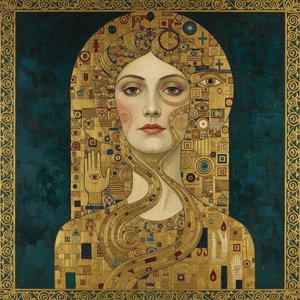
Gustave Klimt : Un héritage d'or de sensualité et de symbolisme dans l'art viennois
Découvrez l'univers fascinant de Gustav Klimt et de la Sécession viennoise. Analyse approfondie de ses œuvres, thèmes récurrents et héritage artistique durable. Un voyage au cœur d'une révolution esthétique.

The Vienna Secession: A Golden Revolution of Modernism and the Legacy of Gustav Klimt
Explore the profound impact of the Vienna Secession movement. Discover how visionaries like Gustav Klimt revolutionized modern art through symbolism, gold leaf, and the concept of Gesamtkunstwerk in this expert-led historical guide.

La Sécession Viennoise : Révolte Artistique et Éclosion d'un Nouveau Style à Vienne
Explorez la Sécession viennoise : un mouvement artistique révolutionnaire avec Klimt, Hoffmann et Olbrich. Découvrez son histoire, ses œuvres emblématiques et son héritage durable. Analyse approfondie par OriginalUniqueArt.
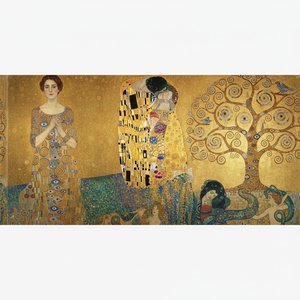
Gustave Klimt : Les 25 Œuvres Maîtresses d'un Artiste Symboliste Incontournable | OriginalUniqueArt
Plongez dans l'univers fascinant de Gustave Klimt ! Découvrez les 25 œuvres majeures du maître symboliste : Le Baiser, Judith et bien d'autres. Inspirez votre décoration intérieure avec OriginalUniqueArt.com et trouvez la reproduction parfaite.
Art Nouveau : Les 10 Chefs-d'œuvre Indémodables à Redécouvrir
Plongez dans l'univers fascinant de l'Art Nouveau ! Découvrez les 10 chefs-d’œuvre emblématiques de Klimt, Mucha et autres artistes majeurs. Inspirez votre décoration intérieure avec ces icônes du style floral et du symbolisme. Explorez la collection complète sur


