Aperçu en situation
 Partager
 Partager
 Détails
 Guide imprimable

 Télécharger
 Articles similaires
 Radiographie
 Voir le diaporama
 Statistiques
Fall Plowing


 Afficher la suite
Reproduction à l'huile faite à la main
Huile sur toile peinte à la main, avec cadre et dimensions personnalisés, réalisée sur commande par nos artistes. ( Passer au format impression Passer au format image numérique)




P118B €10

P118H €10

P118W €10

P438Z €10

P508JH €12

P508YH €12

P805H €10

P805Z €10

P919BZ €10

P919G €10

P919XJ €10

P959ZH €10

P968JZ €12

W106C €8

W218G €10

W218JH €8

W218Y €10

W307PJ €10

W316G €10

W316PJ €8

W316Y €10

W398PJ €8

W4111J €10

W500HY €15

W500JH €15

W692G €12

W849H €8

W940BG €15

W953PJ €8




Choisissez parmi nos formats prédéfinis qui respectent les proportions originales de l’œuvre.

Saisissez la largeur et la hauteur souhaitées, pour s'adapter à votre cadre ou à votre mur. Cette œuvre est peinte à la main ; ainsi, pour un format de forme différente, l'artiste peut peindre un peu plus autour du tableau ou réduire légèrement les bords — c'est vous qui choisissez. Nous vous envoyons une maquette numérique pour approbation avant que la peinture ne commence. L'image présentée sur cette page ne reflète pas le résultat réel — seule la maquette le fait.
Après la commande, l’équipe OriginalUniqueArt.com contactera le client par e-mail pour recueillir ses instructions et lui fournira une maquette d’aperçu
Livraison dans le monde entier () en 3 à 4 semaines au lieu des 5 semaines habituelles. (21 octobre). Aucun compromis sur la qualité.

Livraison express gratuite dans le monde entier

Toile de lin de haute qualité

Assurance transport complète

Garantie de remboursement des droits de douane

Garantie de fidélité des couleurs

Garantie de retour de 100 jours (uniquement en cas de défaut)

Garantie de remboursement à 100%

Tarifs dégressifs sur quantité
 L'option verre n'est disponible que pour les dimensions inférieures à 110 cm.

Fall Plowing
Technique de reproduction
Format de la reproduction
-


Prix total final
€ 262
The Soul of the American Heartland
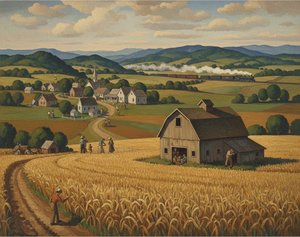
In the quiet, rhythmic pulse of the Midwestern landscape, Grant Wood’s Fall Plowing emerges as a profound meditation on labor, season, and the enduring spirit of the land. Painted in 1931, this masterpiece serves as a cornerstone of the Regionalism movement, an era when American artists turned their gaze away from European abstraction to find divinity in the local and the everyday. The scene unfolds with a breathtaking clarity, capturing a moment where the toil of man meets the inevitable transition of nature. As the farmer guides his horses through the earth, there is a palpable sense of duty and connection—a silent dialogue between the tiller and the soil that has defined rural existence for generations.
The composition is masterfully orchestrated to draw the viewer into the very heart of the autumnal ritual. In the foreground, the heavy presence of a plow rests upon the ground, its physical weight anchoring the scene and suggesting the immediate, tactile reality of agricultural life. As the eye wanders upward, it encounters rolling hills draped in a lush tapestry of green, punctuated by the fiery accents of trees turning yellow and red. This vibrant palette, set against a crisp, crystalline blue sky, creates a visual harmony that is both stimulating and deeply soothing. A solitary white farmhouse, nestled amongst the distant foliage, stands as a symbol of domestic stability and the quiet sanctuary found amidst the vastness of the plains.
Technique and the Flemish Legacy
While the subject matter is quintessentially American, Wood’s technical execution reveals a sophisticated debt to the Northern Renaissance. Influenced by the meticulous precision of Flemish masters like Jan van Eyck, Wood employs a luminous clarity that elevates the mundane to the monumental. Every furrow in the field and every leaf on the changing trees is rendered with an almost hyper-realistic devotion, lending the painting a sculptural quality. This disciplined approach to detail does not merely document a scene; it sanctifies it. The light seems to emanate from within the landscape itself, casting a glow that celebrates the textures of wood, metal, and earth.
For the discerning collector or interior designer, Fall Plowing offers more than just aesthetic beauty; it provides an emotional anchor for any space. The painting evokes a sense of nostalgia and tranquility, making it an ideal centerpiece for rooms designed to inspire reflection and warmth. Whether placed in a sun-drenched study or a sophisticated living area, this work brings with it the dignity of tradition and the peacefulness of the changing seasons. It is a piece that invites the viewer to slow down, to breathe in the crisp autumn air, and to appreciate the timeless beauty found in the honest labor of the American spirit.
Questions et réponses
Quelle saturation et quelle intensité «Fall Plowing» de Grant Wood présente-t-il ?
«Fall Plowing» de Grant Wood est représenté avec une saturation de Clear Color Presence et une intensité de Vivid.
Puis-je commander une reproduction à l'huile de « Fall Plowing » ?
Les reproductions peintes à la main de «Fall Plowing» de Grant Wood sont vendues sur ce site web : une reproduction à l'huile peinte à la main sur toile de lin, via sa page Reproduction peinte à la main.
D'où viennent les visiteurs de «Fall Plowing» de Grant Wood ?
Les statistiques concernant «Fall Plowing» de Grant Wood se trouvent sur la page Statistiques de l'œuvre : visites mensuelles de l'œuvre, visites des œuvres de l'artiste, ainsi que la répartition par pays et par langue des visiteurs récents.
Biographie de l'artiste
Premières années et carrière
Grant DeVolson Wood, un peintre américain, est né le 13 février 1891 à Anamosa, dans l'Iowa. Sa vie a pris une tournure significative après la mort de son père en 1901, lorsque sa mère a déménagé avec la famille à Cedar Rapids. Wood a commencé comme apprenti dans un atelier de métallurgie local et s'est ensuite inscrit à la Handicraft Guild, une école d'art dirigée par des femmes à Minneapolis en 1910.Influences artistiques et style
Le style artistique de Wood était fortement influencé par Jan van Eyck, un artiste flamand du XVe siècle connu pour sa clarté de technique. Cette influence est évidente dans son œuvre la plus célèbre, American Gothic, une peinture emblématique du XXe siècle. L'association de Wood avec le mouvement du réalisme régionaliste, qui mettait l'accent sur les scènes réalistes de la campagne et des petites villes américaines, a renforcé son image classiquement américaine.Œuvres notables et contributions
- American Gothic (1930) - une icône culturelle largement reconnue, comparable à la Joconde de Léonard de Vinci et Le Cri d'Edvard Munch.
- La colonie artistique de Stone City (1932) - fondée par Wood près de sa ville natale pour soutenir les artistes pendant la Grande Dépression.
- Enseignement à la School of Art de l'Université de l'Iowa de 1934 à 1941.
Vie personnelle et héritage
Wood est décédé le 12 février 1942, à l'âge de 51 ans, des suites d'un cancer du pancréas. Sa succession a été léguée à sa sœur, Nan Wood Graham, qui était également le sujet d’American Gothic. Aujourd'hui, les effets personnels de Wood et diverses œuvres d'art font partie de la collection du Figge Art Museum à Davenport, Iowa.- Découvrez l’œuvre emblématique de Grant Wood, ‘American Gothic’! Ce chef-d'œuvre de 1930 incarne l'identité rurale américaine et le régionalisme. Découvrez son symbolisme, sa technique et son attrait durable.
- Explorez le mouvement artistique du réalisme régionaliste : [https://OriginalUniqueArt.com/@@/a@d3cr7d-the-regionalism-art-movement](https://OriginalUniqueArt.com/@@/a@d3cr7d-the-regionalism-art-movement)
- Découvrez plus d'informations sur American Gothic : [https://en.wikipedia.org/wiki/american_gothic](https://en.wikipedia.org/wiki/american_gothic)
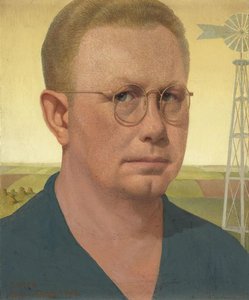
Grant Wood
1891 - 1942 , États-Unis d'Amérique
En bref
- Artistic Movement Or Style: Réalisme régionaliste
- Artists Who Influenced This Artist: ['Jan van Eyck']
- Date Of Birth: 13 février 1891
- Date Of Death: 12 février 1942
- Full Name: Grant DeVolson Wood
- Nationality: Américain
- Notable Artworks:
- American Gothic
- The Stone City Art Colony
- Filles de la Révolution
- Place Of Birth (City And Country): Anamosa, États-Unis
Articles connexes
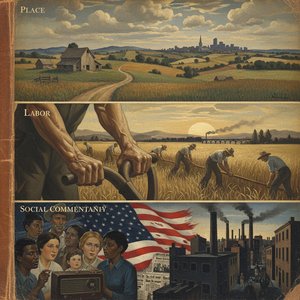
Le Régionalisme Américain : Identité, Espace et Commentaire Social dans la Peinture du XXe Siècle
Explorez le régionalisme américain : un mouvement artistique majeur du XXe siècle capturant l'identité rurale et les réalités sociales de l'Amérique. Analyse approfondie, artistes clés & héritage durable sur OriginalUniqueArt.
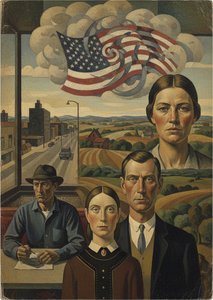
Échos de la terre : Le régionalisme américain et l'identité entre les deux guerres
Explorez le régionalisme américain et le réalisme entre les deux guerres : artistes emblématiques, thèmes clés et l'impact durable de ce mouvement sur l'art. Analyse approfondie par OriginalUniqueArt.

Grant Wood & American Regionalism: Identity, Myth & the Rural Landscape
Explore the world of Grant Wood & American Regionalism with OriginalUniqueArt. Discover the symbolism behind 'American Gothic', recurring themes, and the movement's lasting impact on art history. High-quality reproductions available.

Golden Hues & Crimson Leaves: Capturing the Magic of Autumn Colors in Fine Art
Embark on a visual journey through the golden hues of autumn fine art. Discover how masters like Van Gogh capture seasonal magic through vibrant oil landscapes and explore expert tips for collecting timeless autumnal masterpieces.
American Regionalism: Capturing the Soul of the Heartland through the Lens of Art History
Explore the profound beauty of American Regionalism. Delve into the art history of Grant Wood and John Steuart Curry, uncovering how these masters captured the soul of the American Heartland through iconic landscapes and rural identity.