 Envoyer
 Partager
 Détails de l'œuvre

 Télécharger
 Articles similaires
 Diaporama
Untitled, Harlem, New York


 Lire la suite
Giclées et impressions d'art
Impressions giclées ou sur toile de qualité musée, avec une production rapide et des finitions au choix. ( Commander la reproduction peinte à la main Télécharger l'image haute résolution)




































Choisissez parmi nos formats prédéfinis qui respectent les proportions originales de l’œuvre.

Vous pouvez saisir vos propres dimensions pour vous adapter à un cadre ou à un espace spécifique. Si la taille sélectionnée ne correspond pas aux proportions de l'image originale, nous recadrerons l'œuvre ou étendrons l'image avec une bordure en miroir ou une couleur unie. Une maquette numérique vous sera envoyée pour approbation avant le début de la production.
Veuillez noter que l'aperçu à l'écran ne reflète pas le recadrage ou l'extension réelle. Seule la maquette montrera avec précision la composition finale.
Bien que des tailles personnalisées soient disponibles, nous vous recommandons de choisir une dimension dans la liste prédéfinie afin de préserver les proportions originales.
Livraison dans le monde entier () en 2 semaines au lieu des 4/5 semaines habituelles. (20 août)

Livraison express gratuite dans le monde entier

Toile de lin de qualité supérieure

Assurance transport complète

Garantie de remboursement des droits de douane

Garantie de fidélité des couleurs

Politique de retour de 60 jours (uniquement en cas de défaut)

Garantie de remboursement à 100%

Offre de tarifs dégressifs
 L'option verre n'est disponible que pour les dimensions inférieures à 110 cm.

Untitled, Harlem, New York
Giclées et impressions d'art
Format de la reproduction
-


Prix total
$ 80
Description de la pièce
A Moment Frozen in Shadow: Gordon Parks’ “Untitled, Harlem, New York”
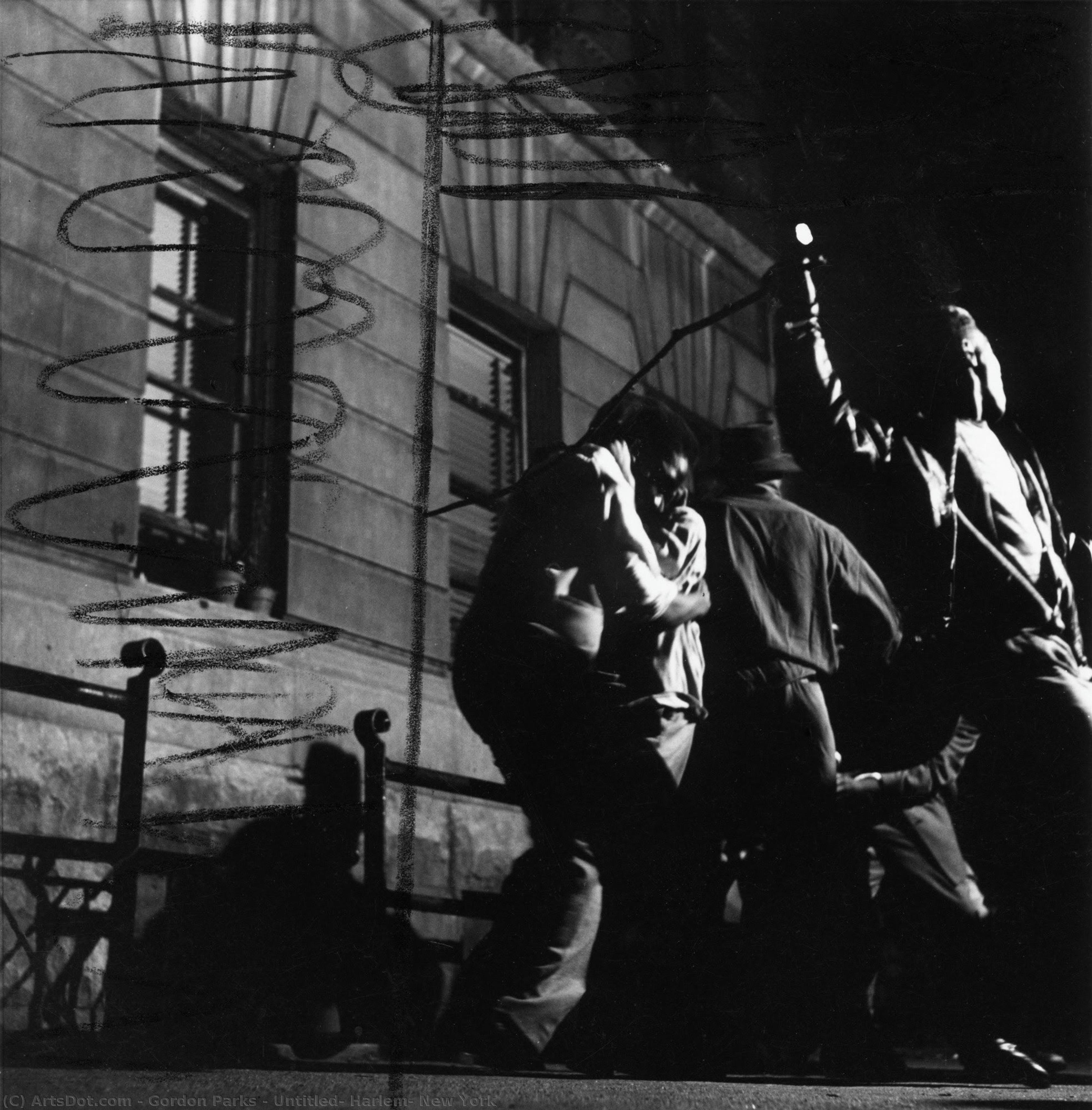
Gordon Parks' "Untitled, Harlem, New York," captured in 1948, isn’t merely a photograph; it’s a distilled essence of urban tension and the quiet desperation simmering beneath the surface of mid-20th century America. This gelatin silver print, measuring a modest 11 x 11 cm, punches far beyond its size, delivering a visceral experience that speaks volumes about race, poverty, and the precariousness of daily life in Harlem. The image immediately commands attention with its stark contrasts – an almost brutal interplay of light and shadow that sculpts figures into arresting silhouettes against a crumbling brick wall. It’s a scene ripped from the streets, raw and unvarnished, offering a rare glimpse into a world often obscured by societal narratives.
Composition and Technique: A Masterclass in Documentary Realism
Parks' compositional choices are deliberate and powerfully effective. The photograph is dominated by a man gripping a baseball bat, his arm raised in a gesture that simultaneously suggests threat and vulnerability. This central figure anchors the scene, drawing the viewer’s eye while the surrounding figures – a group of men huddled nearby – contribute to a palpable sense of unease. The diagonal lines created by the bat and the man's posture are expertly utilized to create dynamism and movement within the static frame. The photographer’s slightly angled perspective adds an element of immediacy, as if we’ve stumbled upon this confrontation unexpectedly. Parks masterfully employs the techniques of documentary photography, prioritizing realism over idealized representation. The grainy texture, a hallmark of gelatin silver prints from that era, lends authenticity to the scene, grounding it in the tangible reality of Harlem life.
Historical Context and the Shadow of Segregation
To fully appreciate “Untitled, Harlem, New York,” one must understand its historical context. Captured during a period of intense racial segregation and economic hardship, the photograph reflects the realities faced by African Americans in urban America. Parks’ work was initially commissioned for Life magazine as part of a federal government project documenting poverty and social issues. This assignment thrust him into the heart of Harlem's struggles, forcing him to confront the systemic inequalities that shaped the lives of its residents. The dilapidated building in the background serves as a potent symbol of neglect and decay – a visual representation of the challenges faced by communities marginalized by societal structures. Parks’ ability to capture this atmosphere of hardship speaks volumes about his commitment to portraying the truth, however uncomfortable it may be.
Symbolism and Emotional Resonance
The baseball bat is undoubtedly the photograph's most potent symbol – a loaded weapon representing potential violence and aggression. However, the man holding it isn’t depicted as a menacing villain; rather, his posture suggests a guarded defensiveness, perhaps born of years of facing adversity. The overall mood is one of anxiety and uncertainty, fueled by the dark setting and the tense body language of the figures. Parks doesn't offer easy answers or simplistic judgments; he simply presents a moment frozen in time, inviting viewers to contemplate the complexities of human experience within a context of social injustice. The photograph evokes a deep sense of empathy, prompting reflection on themes of power, vulnerability, and the enduring struggle for dignity.
A Legacy of Powerful Imagery
Gordon Parks’ “Untitled, Harlem, New York” stands as a testament to his extraordinary talent and unwavering commitment to social justice. His work continues to resonate today, reminding us of the importance of confronting uncomfortable truths and amplifying marginalized voices. Reproductions of this iconic image offer a powerful way to engage with history and contemplate the ongoing challenges of inequality. It’s more than just a photograph; it's a window into a specific time and place, a poignant reminder of the human cost of systemic injustice, and a compelling example of documentary photography at its finest.
Biographie de l'artiste
Jeunesse et carrière
Gordon Roger Alexander Buchanan Parks, photographe, musicien, écrivain et réalisateur américain, est né le 30 novembre 1912 à Fort Scott, Kansas. Il était le plus jeune de quinze enfants nés de Sarah (née Ross) et Jackson Parks. La jeunesse de Parks fut marquée par la ségrégation, une réalité qu'il a vécue en première main dans sa ville natale.En tant qu'artiste autodidacte, Parks a commencé sa carrière comme photographe, devenant finalement le premier Afro-Américain à travailler pour les magazines Life et Vogue. Ses photographies emblématiques des Américains démunis durant les années 1940, réalisées dans le cadre d'un projet gouvernemental fédéral, témoignent de son talent et de son dévouement.
Œuvres et réalisations notables
- Shaft (1971), un film réalisé par Parks, qui est devenu un phénomène culturel.
- The Learning Tree (1969), un film semi-autobiographique qui marque les débuts de Parks en tant que réalisateur.
- A Choice of Weapons (1985), un mémoire qui met en valeur le talent d'écriture de Parks.
- Les essais photographiques du magazine Life, qui ont cimenté le statut de Parks comme photojournaliste de premier plan.
Musées et collections
- La collection Melvin Holmes, présentant une vaste collection de travaux de Parks. [https://www.holmesartgallery.com/gordonparks](https://www.holmesartgallery.com/gordonparks)
- MoMA (The Museum of Modern Art), qui possède une impressionnante collection de photographies de Parks. [https://www.moma.org/artists/8083](https://www.moma.org/artists/8083)
Prix et héritage
- NAACP Image Award (2003)
- PGA Oscar Micheaux Award (1993)
- National Medal of Arts (1988)
- Spingarn Medal (1972)
L'héritage de Gordon Parks dépasse son impressionnant corpus d'œuvres, car il a ouvert la voie à des générations futures d'artistes afro-américains. Ses contributions au photojournalisme, au cinéma et à la musique continuent d'inspirer et d'influencer les artistes aujourd'hui.
Œuvres sélectionnées sur OriginalUniqueArt.com
- Emerging Man (tirage au gélatino-argentique), une photographie puissante qui témoigne du talent de Parks. [https://OriginalUniqueArt.com/d3xgfc-gordon-parks-emerging-man](https://OriginalUniqueArt.com/d3xgfc-gordon-parks-emerging-man)
- Portrait de Mme Lucy Johnson (tirage au gélatino-argentique), un portrait poignant qui souligne la capacité narrative de Parks. [https://OriginalUniqueArt.com/d4dblu-gordon-parks-portrait-of-mrs-lucy-johnson](https://OriginalUniqueArt.com/d4dblu-gordon-parks-portrait-of-mrs-lucy-johnson)

Gordon Parks
1912 - 2006 , États-Unis d'Amérique
L'essentiel de l'artiste
- Artistes Influencés: ['Futurs artistes afro-américains']
- Date De Décès: 7 mars 2006
- Date De Naissance: 30 novembre 1912
- Lieu De Naissance: Fort Scott, États-Unis
- Mouvement Artistique: Photojournalisme, Réalisme social
- Nationalité: Américaine
- Nom Complet: Gordon Roger Alexander Buchanan Parks
- Oeuvres Notables:
- Shaft (1971)
- The Learning Tree (1969)
- A Choice of Weapons (1985)
Articles connexes

Monochrome Visions: Exploring the Aesthetic & Historical Significance of Black & White Photography
Explore the rich history & artistic power of black and white photography. From early techniques to iconic masters like Ansel Adams, discover why monochrome continues to captivate art lovers today. Expert insights for collectors.
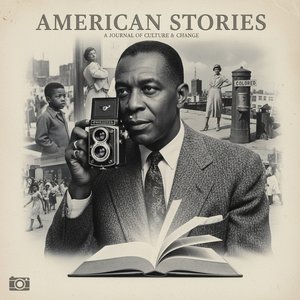
Gordon Parks: A Poetic Lens on American Life – Photography, Social Justice & Storytelling
Explore the profound work of Gordon Parks, a groundbreaking photographer who documented American life with unparalleled empathy and artistry. Discover his iconic images & lasting impact on social justice through Life magazine & beyond.

Blancs Sublimes : Les 10 Chefs-d'œuvre de la Peinture Révélés par
Plongez dans l'univers fascinant des 10 plus beaux tableaux blancs de l'histoire de l'art ! Découvrez Monet, Whistler, Kandinsky et d'autres maîtres. Inspirez votre décoration intérieure avec : reproductions de qualité muséale en ligne.
Shadow & Soul: Why Black & White Photography Remains the Ultimate Power Move in Modern Art
Discover why black & white photography remains a powerful force in contemporary art. Explore the impact of light, shadow, and texture through a visual journey of monochrome mastery and learn how to elevate your space with timeless grayscale aesthetics.
Witnessing History Through Lens & Light: Documentary Photography's Enduring Legacy
Explore the powerful history of documentary photography – from its origins to contemporary masters like Gordon Parks & W. Eugene Smith. Discover how this art form shapes our understanding of society and witness pivotal moments in time.