Aperçu en situation
 Envoyer
 Partager
 Détails de l'œuvre
 Guide
Guide

 Télécharger l'image
 Articles similaires
 Radiographie
 Diaporama
 Statistiques
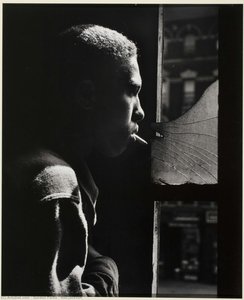
Devanture de magasin, Mobile, Alabama


 Lire la suite
L’œuvre d'art présentée sur cette page est protégée par le droit d'auteur, ce qui signifie que nous ne pouvons légalement créer ou vendre de reproduction identique. Cette protection est appliquée en vertu d'accords internationaux tels que la Convention de Berne et par les lois nationales, notamment celles énoncées par le Loi américaine sur le droit d'auteur - Titre 17.
En tant qu'alternative respectueuse et légale, nous proposons des œuvres d'art personnalisées, peintes à la main et inspirées de l'original. Nos artistes talentueux et professionnels étudient avec soin le style, l'ambiance et l'essence artistique de l'œuvre originale pour créer une pièce nouvelle et unique qui évoque la même émotion — tout en restant une création originale en soi.
Cette méthode est pleinement conforme aux réglementations sur le droit d'auteur car elle ne repose pas sur la copie ou la duplication de l'œuvre protégée. Il s'agit plutôt d'une réinterprétation créative — une nouvelle peinture qui s'inspire de l'original sans pour autant lui être identique.
Reproduction à l'huile faite à la main
Huile sur toile peinte à la main, avec cadre et dimensions personnalisés, réalisée sur commande par nos artistes. ( Passer au format impression Passer au format numérique)




P118B €10

P118H €10

P118W €10

P438Z €10

P508JH €12

P508YH €12

P805H €10

P805Z €10

P919BZ €10

P919G €10

P919XJ €10

P959ZH €10

P968JZ €12

W106C €8

W218G €10

W218JH €8

W218Y €10

W307PJ €10

W316G €10

W316PJ €8

W316Y €10

W398PJ €8

W4111J €10

W500HY €15

W500JH €15

W692G €12

W849H €8

W940BG €15

W953PJ €8




Choisissez parmi nos formats prédéfinis qui respectent les proportions originales de l’œuvre.

Saisissez la largeur et la hauteur souhaitées, pour s'adapter à votre cadre ou à votre mur. Cette œuvre est peinte à la main ; ainsi, pour un format de forme différente, l'artiste peut peindre un peu plus autour du tableau ou réduire légèrement les bords — c'est vous qui choisissez. Nous vous envoyons une maquette numérique pour approbation avant que la peinture ne commence. L'image présentée sur cette page ne reflète pas le résultat réel — seule la maquette le fait.
Après la commande, l’équipe OriginalUniqueArt.com contactera le client par e-mail pour recueillir ses instructions et lui fournira une maquette d’aperçu
Livraison dans le monde entier () en 3 à 4 semaines au lieu des 5 semaines habituelles. (25 octobre). Aucun compromis sur la qualité.

Livraison express gratuite dans le monde entier

Toile de lin de qualité supérieure

Assurance transport complète

Garantie de remboursement des droits de douane

Garantie de fidélité des couleurs

Politique de retour de 100 jours (uniquement en cas de défaut)

Garantie de remboursement à 100%

Offre de tarifs dégressifs
 L'option verre n'est disponible que pour les dimensions inférieures à 110 cm.

Devanture de magasin, Mobile, Alabama
Technique de reproduction
Format de la reproduction
-


Prix total
€ 263
A Frozen Moment in Southern Life
Gordon Parks’s “Store Front, Mobile, Alabama, 1956” isn't merely a photograph; it’s a meticulously crafted window into a vanished world—a poignant tableau of everyday life under the oppressive weight of Jim Crow segregation. Captured during his assignment for *Life* magazine, this image transcends its documentary origins to become a powerful meditation on empathy and the quiet dignity of ordinary people facing extraordinary circumstances. Parks, already a rising star in photography, eschewed the sensationalism often associated with civil rights imagery, instead choosing to focus on the seemingly mundane: a storefront in Mobile, Alabama, bathed in the warm, diffused light of a Southern afternoon. The scene is deceptively simple – a Coca-Cola sign proudly proclaiming its presence above the entrance, a weathered bench inviting weary customers, and several individuals gathered outside, engaged in conversation or simply observing the world around them. Yet, within this apparent stillness lies a profound narrative of resilience and quiet resistance.The Language of Color and Light
What immediately distinguishes “Store Front” is Parks’s masterful use of color—a bold departure from the predominantly black-and-white photography prevalent at the time. He deliberately employed saturated hues, particularly in the red of the Coca-Cola sign and the yellow of the building's facade, creating a vibrant contrast against the muted tones of the surrounding landscape. This deliberate infusion of color wasn’t simply aesthetic; it served to draw attention to the scene, inviting viewers to linger and contemplate its details. Parks expertly manipulated light, using natural illumination to sculpt the forms of the figures and create a sense of depth within the frame. The shadows cast by the building subtly emphasize the faces of those gathered outside, hinting at untold stories and experiences. This careful orchestration of color and light elevates the photograph beyond a simple snapshot, transforming it into a richly layered visual experience.A Window into Segregation’s Reality
The context surrounding this image is crucial to understanding its enduring power. Taken in 1956, during the height of the Civil Rights Movement, “Store Front” offers a rare glimpse into the daily realities of segregation in the American South. The Coca-Cola sign, a symbol of modernity and prosperity, stands in stark contrast to the racial inequalities that permeated every aspect of Southern life. The individuals depicted—a mix of Black men and women—represent the community’s resilience and their quiet determination to maintain dignity in the face of systemic oppression. Parks's choice to focus on this seemingly ordinary storefront highlights the fact that segregation wasn't confined to grand demonstrations or legal battles; it was woven into the fabric of everyday life, shaping people’s interactions, opportunities, and experiences. The photograph serves as a potent reminder of the pervasive nature of racial injustice and the importance of recognizing the humanity of those who have been marginalized.Symbolism and Emotional Resonance
Beyond its historical significance, “Store Front” is rich in symbolic meaning. The bench represents a brief respite from the hardships of daily life—a place for connection, conversation, and shared experience. The Coca-Cola sign, despite being a symbol of corporate America, also signifies a small measure of comfort and familiarity within a segregated environment. The figures themselves embody resilience, dignity, and community spirit. Parks’s deliberate framing invites viewers to project their own emotions onto the scene—to feel empathy for those depicted and to reflect on the enduring legacy of racial inequality. The photograph's emotional impact is profound, prompting us to confront uncomfortable truths about our past and to consider how we can build a more just and equitable future. It’s a testament to Parks’s skill that he could capture such complex emotions with such understated elegance.A Legacy of Photographic Storytelling
“Store Front, Mobile, Alabama, 1956” stands as a landmark achievement in photographic storytelling—a powerful example of how photography can be used to document social realities, challenge injustice, and foster empathy. Gordon Parks’s innovative use of color, his masterful manipulation of light, and his insightful portrayal of everyday life have cemented this image's place as an iconic representation of the Civil Rights Movement and a timeless meditation on human dignity. Reproductions of this photograph continue to resonate with audiences today, serving as a poignant reminder of the struggles faced by African Americans in the Jim Crow South and inspiring us to strive for a more inclusive and equitable society.Questions et réponses
Quel est le rapport entre le sujet de « Devanture de magasin, Mobile, Alabama » et les thèmes habituels de Gordon Parks ?
«Devanture de magasin, Mobile, Alabama» dépeint ségrégation, alabama, 1956, afro-américains, gordon parks, photographie, droits civiques, vie de famille, tandis que les thèmes récurrents de Gordon Parks sont photographie, droits civiques, ségrégation, documentaire, commentaire social. La comparaison des deux montre comment l'œuvre s'inscrit dans la lignée des sujets habituels de l'artiste.
Quel est le format de « Devanture de magasin, Mobile, Alabama » ?
L'œuvre « Devanture de magasin, Mobile, Alabama » est au format Format carré. Cette information est utile pour prévoir l'emplacement de sa reproduction.
L'œuvre « Devanture de magasin, Mobile, Alabama » est-elle dans le domaine public ?
Concernant les droits d'auteur, « Devanture de magasin, Mobile, Alabama » est dans le toujours protégé par le droit d'auteur.
Biographie de l'artiste
Jeunesse et carrière
Gordon Roger Alexander Buchanan Parks, photographe, musicien, écrivain et réalisateur américain, est né le 30 novembre 1912 à Fort Scott, Kansas. Il était le plus jeune de quinze enfants nés de Sarah (née Ross) et Jackson Parks. La jeunesse de Parks fut marquée par la ségrégation, une réalité qu'il a vécue en première main dans sa ville natale.En tant qu'artiste autodidacte, Parks a commencé sa carrière comme photographe, devenant finalement le premier Afro-Américain à travailler pour les magazines Life et Vogue. Ses photographies emblématiques des Américains démunis durant les années 1940, réalisées dans le cadre d'un projet gouvernemental fédéral, témoignent de son talent et de son dévouement.
Œuvres et réalisations notables
- Shaft (1971), un film réalisé par Parks, qui est devenu un phénomène culturel.
- The Learning Tree (1969), un film semi-autobiographique qui marque les débuts de Parks en tant que réalisateur.
- A Choice of Weapons (1985), un mémoire qui met en valeur le talent d'écriture de Parks.
- Les essais photographiques du magazine Life, qui ont cimenté le statut de Parks comme photojournaliste de premier plan.
Musées et collections
- La collection Melvin Holmes, présentant une vaste collection de travaux de Parks. [https://www.holmesartgallery.com/gordonparks](https://www.holmesartgallery.com/gordonparks)
- MoMA (The Museum of Modern Art), qui possède une impressionnante collection de photographies de Parks. [https://www.moma.org/artists/8083](https://www.moma.org/artists/8083)
Prix et héritage
- NAACP Image Award (2003)
- PGA Oscar Micheaux Award (1993)
- National Medal of Arts (1988)
- Spingarn Medal (1972)
L'héritage de Gordon Parks dépasse son impressionnant corpus d'œuvres, car il a ouvert la voie à des générations futures d'artistes afro-américains. Ses contributions au photojournalisme, au cinéma et à la musique continuent d'inspirer et d'influencer les artistes aujourd'hui.
Œuvres sélectionnées sur OriginalUniqueArt.com
- Emerging Man (tirage au gélatino-argentique), une photographie puissante qui témoigne du talent de Parks. [https://OriginalUniqueArt.com/d3xgfc-gordon-parks-emerging-man](https://OriginalUniqueArt.com/d3xgfc-gordon-parks-emerging-man)
- Portrait de Mme Lucy Johnson (tirage au gélatino-argentique), un portrait poignant qui souligne la capacité narrative de Parks. [https://OriginalUniqueArt.com/d4dblu-gordon-parks-portrait-of-mrs-lucy-johnson](https://OriginalUniqueArt.com/d4dblu-gordon-parks-portrait-of-mrs-lucy-johnson)

Gordon Parks
1912 - 2006 , États-Unis d'Amérique
L'essentiel de l'artiste
- Artistes Influencés: ['Futurs artistes afro-américains']
- Date De Décès: 7 mars 2006
- Date De Naissance: 30 novembre 1912
- Lieu De Naissance: Fort Scott, États-Unis
- Mouvement Artistique: Photojournalisme, Réalisme social
- Nationalité: Américaine
- Nom Complet: Gordon Roger Alexander Buchanan Parks
- Oeuvres Notables:
- Shaft (1971)
- The Learning Tree (1969)
- A Choice of Weapons (1985)
Articles connexes

Witnessing History Through Lens & Light: Documentary Photography's Enduring Legacy
Explore the powerful history of documentary photography – from its origins to contemporary masters like Gordon Parks & W. Eugene Smith. Discover how this art form shapes our understanding of society and witness pivotal moments in time.

Témoin de l'Histoire : La Photographie Documentaire, Révolution Artistique et Sociale
Explorez l'histoire de la photographie documentaire : des pionniers comme Courbet à Parks et Modotti. Découvrez comment cet art a révolutionné notre regard sur la société et continue d'inspirer aujourd'hui.
Gordon Parks: A Poetic Lens on American Life – Photography, Social Justice & Storytelling
Explore the profound work of Gordon Parks, a groundbreaking photographer who documented American life with unparalleled empathy and artistry. Discover his iconic images & lasting impact on social justice through Life magazine & beyond.

Monochrome Visions: Exploring the Aesthetic & Historical Significance of Black & White Photography
Explore the rich history & artistic power of black and white photography. From early techniques to iconic masters like Ansel Adams, discover why monochrome continues to captivate art lovers today. Expert insights for collectors.

Beyond the Lens: Photography's Enduring Influence on Modern & Contemporary Art
Explore photography's pivotal role in shaping modern & contemporary art. Discover key movements, influential artists like Stieglitz, and expert collecting advice from OriginalUniqueArt.