

 Aperçu en situation
 Partager
 Partager
 Détails
 Guide
Guide

 Télécharger
 Articles similaires
 Radiographie
 Voir le diaporama
 Statistiques
Camera obscura


 Afficher la suite
Giclées et impressions d'art
Impressions giclées ou sur toile de qualité musée, avec une production rapide et des finitions au choix. ( Acheter la peinture faite à la main Passer au format image numérique)




P118B $10

P118H $10

P118W $10

P438Z $10

P508JH $12

P508YH $12

P805H $10

P805Z $10

P919BZ $10

P919G $10

P919XJ $10

P959ZH $10

P968JZ $12

W106C $8

W218G $10

W218JH $8

W218Y $10

W307PJ $10

W316G $10

W316PJ $8

W316Y $10

W398PJ $8

W4111J $10

W500HY $15

W500JH $15

W692G $12

W849H $8

W940BG $15

W953PJ $8




Choisissez parmi nos formats prédéfinis qui respectent les proportions originales de l’œuvre.

Vous pouvez saisir vos propres dimensions pour vous adapter à un cadre ou à un espace spécifique. Si la taille sélectionnée ne correspond pas aux proportions de l'image originale, nous recadrerons l'œuvre ou étendrons l'image avec une bordure en miroir ou une couleur unie. Une maquette numérique vous sera envoyée pour approbation avant le début de la production.
Veuillez noter que l'aperçu à l'écran ne reflète pas le recadrage ou l'extension réelle. Seule la maquette montrera avec précision la composition finale.
Bien que des tailles personnalisées soient disponibles, nous vous recommandons de choisir une dimension dans la liste prédéfinie afin de préserver les proportions originales.
Livraison dans le monde entier () en 2 semaines au lieu des 4/5 semaines habituelles. (20 septembre)

Livraison express gratuite dans le monde entier

Toile de lin de haute qualité

Assurance transport complète

Garantie de remboursement des droits de douane

Garantie de fidélité des couleurs

Garantie de retour de 100 jours (uniquement en cas de défaut)

Garantie de remboursement à 100%

Tarifs dégressifs sur quantité
 L'option verre n'est disponible que pour les dimensions inférieures à 110 cm.

Camera obscura
Giclées et impressions d'art
Format de la reproduction
-


Prix total final
$ 80
A Sculptural Echo of Light and Vision
Canaletto’s “Camera Obscura,” a meticulously crafted wooden device dating back to around 1700, isn't merely a reproduction; it’s a tangible embodiment of the revolutionary vision that shaped his artistic practice. This intimate sculpture, presented against a stark black backdrop, immediately draws the eye, inviting us into a world where light and shadow dance in harmonious collaboration. The piece speaks volumes about Canaletto’s innovative approach to capturing reality – an approach deeply rooted in observation and a fascination with the mechanics of vision itself. The geometric precision of the boxy structure, constructed from carefully joined wooden panels, suggests both the artist's meticulousness and a profound understanding of spatial relationships. It’s not simply a representation of a camera obscura; it *is* the camera obscura, distilled into its essential form.
- Material & Construction: The use of wood – likely stained or varnished to preserve its beauty – speaks to Canaletto's appreciation for tactile quality and enduring craftsmanship. The intricate joinery hints at a deliberate process, reflecting the artist’s careful attention to detail.
- Form & Composition: The vertical orientation emphasizes the height and solidity of the device, creating a sense of direct engagement with the viewer. Lines dominate – sharp, clean lines defining the boxy structure, contrasting with the subtle texture of the wood grain.
- Symbolic Weight: The camera obscura itself represents a pivotal moment in art history—a precursor to photography and a testament to Canaletto’s pioneering spirit. It embodies the pursuit of accurate representation, challenging traditional methods and opening new avenues for artistic expression.
Unlocking the Secrets of Early Photography
Canaletto's fascination with the camera obscura wasn't simply an aesthetic curiosity; it was a deeply practical investigation into how light and shadow create images. The inscription on the device – “A Camera Obscura” – provides a crucial clue, revealing that this object belonged to the Venetian master himself. This discovery dramatically shifts our understanding of Canaletto’s process: he didn't just paint what he saw; he actively *observed* how light transformed his surroundings into visual forms. Research suggests that Canaletto utilized the camera obscura as a tool for sketching, meticulously documenting architectural details and urban landscapes with unprecedented accuracy. The device allowed him to capture perspective and spatial relationships with remarkable precision – a skill that profoundly influenced his later paintings.
Historical Context:The invention of the camera obscura in the 16th century marked a watershed moment in art history. Initially used as a scientific instrument for astronomical observation, it quickly gained popularity among artists seeking to improve their draftsmanship and understand perspective. Canaletto’s embrace of this technology demonstrates his commitment to innovation and his desire to push the boundaries of artistic representation.
A Window into Venice: The Artist's Process
The “Camera Obscura” offers a rare glimpse into Canaletto’s working methods. It’s believed that he used this device not just for sketching, but also as a means of studying light and shadow—analyzing how they interacted with buildings and streets to create the illusion of depth and volume. The resulting drawings were then translated into his celebrated paintings, imbuing them with an extraordinary sense of realism and atmospheric detail. The meticulousness evident in the camera obscura’s construction mirrors the painstaking care Canaletto invested in every brushstroke of his finished works. It's a testament to his dedication to capturing not just appearances, but also the very essence of Venice.
Recreating a Masterpiece: A Reproduction for Today
Reproducing Canaletto’s “Camera Obscura” is more than simply creating a copy; it’s about preserving a vital piece of art history and celebrating the ingenuity of one of Venice's greatest artists. The resulting reproduction captures not only the physical form of the device but also its symbolic significance—a reminder of the enduring power of observation, innovation, and the pursuit of accurate representation. This meticulously crafted replica serves as a tangible link to the 18th century, inviting viewers to contemplate the origins of photography and appreciate Canaletto’s pioneering legacy.
Biographie de l'artiste
Giovanni Antonio Canal
Giovanni Antonio Canal, commonly known as canaletto, was born in Venice on October 18, 1697, to Bernardo Canal, a painter of theatrical scene settings, and Artemisia Barbieri. He was the son of a noble family steeped in artistic tradition—Bernardo Canal himself had been a respected artist, establishing a lineage dedicated to visual representation. Canaletto’s early training commenced with his father, who instilled within him the fundamental principles of painting, shaping his formative years into an immersion in artistic craftsmanship. This familial influence would prove pivotal in nurturing his innate talent and guiding his subsequent artistic pursuits.The Making of a Master
In 1718, Canaletto embarked on a transformative journey to Rome—a city renowned for its artistic fervor and intellectual dynamism. During this period, he actively participated in the production of scenery for two operas by Alessandro Scarlatti, immersing himself in the theatrical world and honing his skills in designing immersive environments. This experience profoundly impacted his artistic development, exposing him to innovative techniques and fostering a keen understanding of visual storytelling—a cornerstone of his distinctive style. The collaboration with Scarlatti wasn’t merely professional; it was an encounter with the very essence of Baroque aesthetics. Upon returning to Venice, Canaletto swiftly established himself as a leading figure in Venetian landscape painting, adopting a technique that would soon earn him international acclaim: *veduta*. He meticulously crafted detailed depictions of the city's architectural grandeur and bustling public life—capturing not just what was seen but conveying an emotional resonance. His preparatory drawings were remarkably precise, reflecting his unwavering commitment to accuracy while simultaneously allowing for artistic interpretation. Canaletto’s method mirrored that of Giovanni Paolo Pannini, a Venetian artist who pioneered topographical art, emphasizing observation and meticulous documentation.Notable Works and Collaborations
Canaletto's oeuvre comprises numerous masterpieces that exemplify the zenith of Venetian landscape painting—a genre characterized by its luminous palette and masterful perspective. Among his most celebrated works are “The Stonemason’s Yard” (c. 1725), a captivating portrayal of Venetian craftsmanship, and “Regatta on the Grand Canal” (c. 1730), which vividly captures the splendor of Venice's ceremonial processions—a testament to Canaletto’s ability to convey both visual accuracy and emotional depth. His depiction of Eton College (1746-1756) stands as a poignant reminder of his influence in England, where he collaborated closely with Bernardo Bellotto, who became an equally accomplished artist. Together, they produced breathtaking panoramas of Dresden and Vienna—works that continue to inspire admiration for their compositional elegance and technical virtuosity.Artistic Style and Technique
Canaletto’s distinctive artistic style is inextricably linked to his pioneering use of the camera obscura—a darkened room equipped with a lens that projects an inverted image of the outside world onto a surface illuminated by candlelight. This ingenious device allowed him to achieve unparalleled topographical accuracy, ensuring that his paintings faithfully reproduced the contours and textures of Venice and London. However, Canaletto’s artistic vision extended beyond mere replication; he skillfully manipulated perspective and employed subtle tonal variations to create atmospheric effects—transforming ordinary scenes into emotionally evocative landscapes. His meticulous attention to detail—from the reflections in windows to the folds of drapery—elevated his paintings to levels of artistic sophistication rarely achieved by his contemporaries. Canaletto’s legacy resides not only in his technical prowess but also in his ability to imbue his works with a palpable sense of place and time—capturing the spirit of an era with remarkable sensitivity and artistry.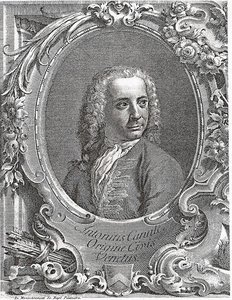
Giovanni Antonio Canal
1697 - 1768 , Italie
En bref
- Artistic Movement Or Style: Vedute Venice
- Artists Or Movements Influenced By This Artist: ['Tintoretto']
- Artists Who Influenced This Artist: ['Giovanni Paolo Pannini']
- Date Of Birth: October 18, 1697
- Date Of Death: April 19, 1768
- Full Name: Giovanni Antonio Canal
- Nationality: Italian
- Notable Artworks:
- The Stonemason's Yard
- Regatta on the Grand Canal
- Eton College
- Place Of Birth: Venice, Italy
Articles similaires

Constable : Les 25 Chefs-d'Œuvre du Maître Anglais | OriginalUniqueArt
Plongez dans l'univers de John Constable avec les 25 œuvres incontournables du maître anglais. Découvrez l'histoire, la technique et l'émotion derrière ses paysages romantiques. Reproductions de qualité muséale sur OriginalUniqueArt.com.

Évocations de lieux : Un voyage historique à travers l'art du paysage
Explorez l'histoire fascinante de la peinture de paysage à travers les chefs-d'œuvre du Romantisme. Découvrez Friedrich, Turner et Aivazovski et laissez-vous inspirer par la beauté sauvage et le sublime. Reproduction d'art de qualité chez OriginalUniqueArt.

Canaletto : Lumière, Espace et Observation Sociale dans la Venise du XVIIIe Siècle
Explorez l'œuvre de Canaletto et découvrez la magie de Venise au XVIIIe siècle. Analyse approfondie de sa technique, son observation sociale et son héritage artistique. Un voyage visuel incontournable pour les amateurs d'art.

Michelangelo Morlaiter: Venetian Landscapes & the Pursuit of Atmospheric Realism
Explore the captivating landscapes of Michelangelo Morlaiter, a key figure in 18th-century Venetian painting. Discover his mastery of atmospheric perspective and lasting influence on Italian art history. Learn more at OriginalUniqueArt.

Les 10 Chefs-d'œuvre du Paysage Romantique : Artistes et Décor d'Intérieur
Plongez dans l'émotion du Romantisme avec les 10 plus beaux paysages de Friedrich, Turner & Delacroix. Découvrez leur histoire et trouvez l'inspiration déco idéale sur OriginalUniqueArt.com !


