
 Passer au format impression
 Lire la suite







































 Pour les œuvres ou reproductions dont un côté mesure plus de 105 cm (environ 41 pouces), le cadre sera expédié sous forme de kit démonté. Cette méthode garantit une livraison sécurisée et prévient tout dommage pendant le transport.


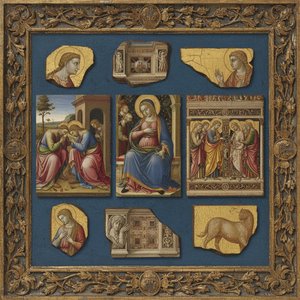
Baroncelli Polyptych (detail): A Window Into Florentine Spirituality
The Baroncelli Polyptych (detail) stands as a cornerstone of Florentine Gothic art and a pivotal moment in the burgeoning Renaissance movement. Created by Giotto Di Bondone around 1334 for the Baroncelli Chapel within Santa Croce Basilica, Florence, this masterpiece transcends mere decoration; it embodies profound theological contemplation and masterful artistic innovation. Its enduring appeal lies not only in its visual splendor but also in the intricate layers of symbolism woven into every brushstroke.The Genius of Giotto: Bridging Byzantium and Renaissance
Giotto Di Bondone’s legacy rests upon his audacious departure from Byzantine conventions—characterized by flattened figures and shimmering gold backgrounds—towards a more humanistic approach rooted in observation and emotion. Unlike his predecessors, Giotto sought to depict the human form with unprecedented realism, capturing subtle nuances of expression and posture that conveyed spiritual depth. This ambition is vividly realized in the Baroncelli Polyptych’s central panel, where Giotto skillfully portrays two figures—a man and a woman—engaged in an intimate gesture of compassion.A Detailed Examination: Technique and Symbolism
Executed in tempera paint on wood panels, the polyptych showcases Giotto's mastery of color and texture. The artist’s meticulous attention to detail is evident in the rendering of drapery folds, facial expressions, and anatomical accuracy—characteristics that would become hallmarks of Renaissance art. Furthermore, the composition itself speaks volumes about theological themes. The man gently places his hand on the woman’s head, symbolizing paternal care and divine protection, while she tenderly covers her stomach, representing pregnancy and the promise of new life – motifs deeply resonant with Christian iconography. The vibrant reds and golds adorning the chapel’s walls amplify the spiritual significance of the scene, creating a visual experience that transcends mere aesthetic pleasure.Historical Context: Patronage and Artistic Transformation
Commissioned by Giovanni Baroncelli, a wealthy Florentine banker and devout Catholic, the polyptych reflects the cultural fervor of its time—a period marked by burgeoning civic pride and intellectual curiosity. Giotto’s work served as a catalyst for artistic change, inspiring subsequent artists to embrace naturalism and humanist ideals. It stands alongside Taddeo Gaddi's frescoes in Santa Croce, demonstrating the collaborative spirit that fueled Florence’s artistic renaissance. The chapel itself is a testament to Florentine piety and architectural ambition, reflecting the city’s desire to express its faith through grand artistic endeavors.Legacy: An Icon of Early Renaissance Art
The Baroncelli Polyptych continues to captivate viewers today as an exemplar of Giotto Di Bondone's transformative vision—a vision that irrevocably altered the course of Western art history. Its influence can be traced throughout the Renaissance, shaping stylistic conventions and fostering a renewed appreciation for human emotion and natural representation. For those seeking inspiration or contemplating acquiring a reproduction, this artwork offers a glimpse into the spiritual heart of Florence during its golden age. Explore more about Giotto’s artistic achievements at Giotto on Wikipedia. And immerse yourself in the beauty of Santa Croce Basilica and its magnificent frescoes: Santa Croce Opera.Questions et réponses
Puis-je voir une vue aux rayons X de «Polyptyque de Baroncelli» de Giotto di Bondone ?
« Polyptyque de Baroncelli » peut être examiné couche par couche sur la page Radiographie de l'œuvre, un visionneur inspiré d'un banc lumineux de restaurateur proposant onze lectures optiques de l'image.
Quel artiste et quel style se cachent derrière « Polyptyque de Baroncelli » ?
Giotto di Bondone a créé « Polyptyque de Baroncelli » au sein du mouvement Proto-Renaissance.
En quoi "Polyptyque de Baroncelli" s'inscrit-il dans l'œuvre de Giotto di Bondone ?
«Polyptyque de Baroncelli» s'inscrit dans l'œuvre Proto-Renaissance de Giotto di Bondone, dont les thèmes récurrents incluent byzantine legacy, humanism emergence, religious narrative, florence patronage, innovation spatial depth, proto-renaissance style, iconic polyptych masterpiece.
 Aperçu en situation
 Envoyer
 Partager
 Détails de l'œuvre
 Guide
Guide

 Télécharger l'image
 Articles similaires
 Radiographie
 Diaporama
 Questions et réponses
 Statistiques








![Scrovegni - [05] - Le Rêve de Joachim](/media/artworks/images-thumb/8f/67/8f67bb5da87296bd452b3f0b237b528d.jpg)


