

 Aperçu en situation
 Envoyer
 Partager
 Détails de l'œuvre

 Télécharger
 Articles similaires
 Radiographie
 Diaporama
 Statistiques
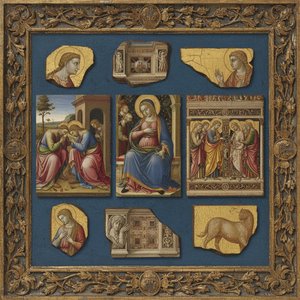
Políptico de Bolonia 3


 Lire la suite
Reproduction à l'huile faite à la main
Huile sur toile peinte à la main, avec cadre et dimensions personnalisés, réalisée sur commande par nos artistes. ( Passer au format impression Passer à l'image numérique)




P118B $10

P118H $10

P118W $10

P438Z $10

P508JH $12

P508YH $12

P805H $10

P805Z $10

P919BZ $10

P919G $10

P919XJ $10

P959ZH $10

P968JZ $12

W106C $8

W218G $10

W218JH $8

W218Y $10

W307PJ $10

W316G $10

W316PJ $8

W316Y $10

W398PJ $8

W4111J $10

W500HY $15

W500JH $15

W692G $12

W849H $8

W940BG $15

W953PJ $8




Choisissez parmi nos formats prédéfinis qui respectent les proportions originales de l’œuvre.

Vous pouvez saisir vos propres dimensions pour l'adapter à un cadre ou à un espace spécifique. Si la taille sélectionnée ne correspond pas aux proportions de l'image d'origine, nous recadrerons l'œuvre ou prolongerons la peinture avec des éléments peints à la main supplémentaires. Une maquette numérique vous sera envoyée pour approbation avant le début de la production.
Veuillez noter que l'aperçu à l'écran ne reflète pas le recadrage ou l'extension réels. Seule la maquette montrera fidèlement la composition finale.
Bien que des tailles personnalisées soient disponibles, nous vous recommandons de sélectionner une dimension dans la liste prédéfinie afin de préserver les proportions d'origine.
Après la commande, l’équipe OriginalUniqueArt.com contactera le client par e-mail pour recueillir ses instructions et lui fournira une maquette d’aperçu
Livraison dans le monde entier () en 3 à 4 semaines au lieu des 5 semaines habituelles. (11 septembre). Aucun compromis sur la qualité.

Livraison express gratuite dans le monde entier

Toile de lin de haute qualité

Assurance transport complète

Garantie de remboursement des droits de douane

Garantie de fidélité des couleurs

Garantie de retour de 100 jours (uniquement en cas de défaut)

Garantie de remboursement à 100%

Tarifs dégressifs sur quantité
 L'option verre n'est disponible que pour les dimensions inférieures à 110 cm.

Políptico de Bolonia 3
Technique de reproduction
Format de la reproduction
-


Prix total final
$ 300
A Revolutionary Vision: Giotto’s Políptico de Bolonia
In the long, storied lineage of Western art, few names command as much reverence as Giotto di Bondone. A Florentine master whose influence reverberates through the centuries, Giotto acted as the vital bridge between the rigid, symbolic traditions of the Medieval era and the burgeoning humanism of the Renaissance. His masterpiece, the Políptico de Bolonia, completed between 1330 and 1335, stands as a profound testament to this transformative spirit. Within its panels, we witness a radical departure from the flattened, ethereal aesthetics of Byzantine art, replaced instead by a burgeoning sense of weight, volume, and human presence that would forever alter the trajectory of painting.
The narrative heart of this work is found in its poignant depiction of the Passion of Christ. Rather than presenting a distant, iconographic spectacle, Giotto invites the viewer into a moment of raw, palpable grief. The scene captures Mary Magdalene kneeling before the tomb of Jesus, flanked by the figures of Nicodemus and Joseph of Arimathea. Here, the artist moves beyond mere religious instruction to explore the depths of the human psyche. Through his brush, we do not just see biblical figures; we witness the heavy mantle of sorrow, the tenderness of compassion, and the profound vulnerability of loss. It is this psychological depth that makes the piece so enduringly resonant for the modern observer.
Mastery of Form and Light
Technically, the Políptico de Bolonia showcases Giotto’s unparalleled ability to sculpt with paint. Utilizing the traditional medium of tempera on wood panels, he achieved a luminous quality that breathes life into every texture. One of his most significant contributions visible in this work is the masterful application of chiaroscuro—the dramatic interplay between light and shadow. By manipulating these tonal shifts, Giotto grants his figures a sense of three-dimensional solidity, making them appear as tangible beings occupying real space rather than mere silhouettes against a golden void.
This naturalistic approach was a bold defiance of the era's prevailing styles. While his predecessors relied on shimmering gold backgrounds to signify spiritual transcendence, Giotto utilized light to ground his subjects in an earthly reality. The textures of the stone architecture and the heavy folds of the robes are rendered with such meticulous care that they invite a tactile connection. For the collector or interior designer, this technique offers a unique opportunity; the painting possesses a sculptural presence that brings a sense of historical gravity and sophisticated depth to any curated space.
An Enduring Legacy for the Discerning Collector
To possess a reproduction of such a monumental work is to hold a piece of the very foundation of art history. The Políptico de Bolonia is more than a religious relic; it is an exploration of what it means to be human. Its themes of mourning, devotion, and resilience are universal, transcending the centuries since its creation in Florence. For those seeking to infuse their environments with intellectual depth and emotional resonance, Giotto’s work provides an unparalleled source of inspiration.
Whether displayed in a grand gallery or as a focal point in a refined private study, this piece serves as a window into a pivotal moment of human creativity. It invites conversation, prompts reflection, and stands as a sophisticated tribute to the dawn of the Renaissance. Bringing this level of historical mastery into a contemporary setting allows for a seamless blend of classical elegance and timeless storytelling.
Biographie de l'artiste
**Une vie d’innovation et de révolution artistique**
Giotto di Bondone, le peintre et architecte italien renommé, a laissé une marque indélébile sur le monde de l’art grâce à ses contributions novatrices aux périodes du proto-renaissance et gothique. Né en 1267 à Florence, en Italie, la vie de Giotto reste quelque peu enveloppée de mystère, mais son héritage artistique est incontestable.**Contributions et innovations artistiques**
L’œuvre la plus célèbre de Giotto, la Chapelle Scrovegni (ou Chapelle Arena) à Padoue, achevée vers 1305, témoigne de son esprit innovant. Cette fresque représentant la vie de la Vierge et la vie du Christ ne se contente pas de démontrer son génie artistique, mais illustre également une capacité narrative qui constituait une rupture significative avec l’approche stylisée byzantine.- Révolutionnant la peinture : L'accent mis par Giotto sur le naturalisme, l'attention aux émotions humaines et l’exploration des figures spatiales et volumétriques dans la peinture ont jeté les bases du développement de l’art occidental qui a suivi.
- Contributions architecturales : Sa commande en 1334 de la commune florentine pour concevoir le nouveau campanile (clocher) de la cathédrale de Florence affirme son double talent d'artiste et d'architecte.
**Œuvres notables et leur signification**
- L’Annonciation : la Vierge recevant le message (voir sur OriginalUniqueArt.com) : un exemple premier du style proto-renaissance de Giotto, caractérisé par son utilisation du naturalisme et son souci du détail.
- La Nativité. Naissance de Jésus (voir sur OriginalUniqueArt.com) : démontre la capacité de Giotto à transmettre des récits complexes à travers ses fresques, une caractéristique de la période proto-renaissance.
- La Madone d’Ognissanti (Madonne dans le majestue) (voir sur OriginalUniqueArt.com) : cette altierpe, commandée à l'église d'Ognissanti à Florence, est un exemple significatif de la peinture sur panneaux de Giotto et de son utilisation de la tempera.
**Héritage et influence**
L’influence de Giotto sur l’art occidental est profonde, jetant les bases du mouvement artistique de la Renaissance. Son accent sur le naturalisme, les émotions humaines et la conscience spatiale dans la peinture a perduré, assurant sa place en tant que figure fondamentale de l'histoire de l'art européen. Explorez davantage des œuvres et l’héritage de Giotto di Bondone sur OriginalUniqueArt.com.
Giotto di Bondone
1267 - 1337 , Italie
En bref
- Artistes Influents: ['Cimabue']
- Date De Décès: 1337
- Date De Naissance: 1267
- Influence Sur Les Artistes:
- Masaccio
- Léonard de Vinci
- Lieu De Naissance: Florence, Italie
- Mouvement Artistique: Proto-Renaissance, Gothique
- Nationalité: Italienne
- Nom Complet: Giotto di Bondone
- Oeuvres Notables:
- Chapelle Scrovegni
- Madone d'Ognissanti
- Fresques de Saint-François
Articles similaires
Giotto di Bondone : Les 25 Chefs-d'œuvre Incontournables pour Embellir Votre Intérieur
Plongez dans l'univers de Giotto di Bondone : découvrez les 25 fresques et chefs-d'œuvre qui ont révolutionné l'art médiéval italien. Explorez son style unique, ses couleurs vibrantes et l'histoire fascinante derrière chaque œuvre. Retrouvez des reproductions d'exception sur OriginalUniqueArt.com.
L'Éclat Intemporel de la Tempera sur Panneau : Techniques Ancestrales et Héritage Artistique
Explorez l'art de la tempera : techniques ancestrales, maîtres italiens et héritage artistique exceptionnel. Découvrez les secrets de cette peinture durable et intemporelle.
Les 10 Chefs-d'œuvre Légendaires à la Tempera sur Panneau qui ont Révolutionné l'Art
Plongez dans l'univers fascinant de la tempera sur panneau avec les 10 chefs-d'œuvre qui ont marqué l'histoire de l'art. Découvrez Giotto, Botticelli et Fra Angelico… Retrouvez ces icônes religieuses en reproductions d'exception sur OriginalUniqueArt.com !
Tempera on Panel: A Procurement Guide to Durable, High-Quality Art for Large-Scale Hospitality Projects
A professional procurement guide for hotel designers on the durability and prestige of tempera on panel. Discover how these high-quality, large-scale artworks offer unmatched longevity and architectural impact for premium hospitality projects and commercial interiors.
Proto-Renaissance : 10 Chefs-d'œuvre Révolutionnaires pour une Décoration d'Exception
Plongez au cœur de la Proto-Renaissance avec OriginalUniqueArt.com ! Découvrez 10 chefs-d'œuvre intemporels de Giotto, Cimabue et autres maîtres italiens. Retables gothiques, fresques émouvantes… Trouvez l’inspiration déco & achetez des reproductions d'art exceptionnelles. Explorez la collection sur OriginalUniqueArt




![Scrovegni - [05] - Le Rêve de Joachim](/media/artworks/images-thumb/8f/67/8f67bb5da87296bd452b3f0b237b528d.jpg)


