

 Aperçu en situation
 Partager
 Partager
 Détails
 Guide imprimable

 Télécharger
 Articles similaires
 Radiographie
 Voir le diaporama
 Statistiques
La Flagellation (détail)

 Afficher la suite
Giclées et impressions d'art
Impressions giclées ou sur toile de qualité musée, avec une production rapide et des finitions au choix. ( Acheter la peinture faite à la main Passer au format image numérique)




P118B $10

P118H $10

P118W $10

P438Z $10

P508JH $12

P508YH $12

P805H $10

P805Z $10

P919BZ $10

P919G $10

P919XJ $10

P959ZH $10

P968JZ $12

W106C $8

W218G $10

W218JH $8

W218Y $10

W307PJ $10

W316G $10

W316PJ $8

W316Y $10

W398PJ $8

W4111J $10

W500HY $15

W500JH $15

W692G $12

W849H $8

W940BG $15

W953PJ $8




Choisissez parmi nos formats prédéfinis qui respectent les proportions originales de l’œuvre.

Vous pouvez saisir vos propres dimensions pour vous adapter à un cadre ou à un espace spécifique. Si la taille sélectionnée ne correspond pas aux proportions de l'image originale, nous recadrerons l'œuvre ou étendrons l'image avec une bordure en miroir ou une couleur unie. Une maquette numérique vous sera envoyée pour approbation avant le début de la production.
Veuillez noter que l'aperçu à l'écran ne reflète pas le recadrage ou l'extension réelle. Seule la maquette montrera avec précision la composition finale.
Bien que des tailles personnalisées soient disponibles, nous vous recommandons de choisir une dimension dans la liste prédéfinie afin de préserver les proportions originales.
Livraison dans le monde entier () en 2 semaines au lieu des 4/5 semaines habituelles. (26 septembre)

Livraison express gratuite dans le monde entier

Toile de lin de haute qualité

Assurance transport complète

Garantie de remboursement des droits de douane

Garantie de fidélité des couleurs

Garantie de retour de 100 jours (uniquement en cas de défaut)

Garantie de remboursement à 100%

Tarifs dégressifs sur quantité
 L'option verre n'est disponible que pour les dimensions inférieures à 110 cm.

La Flagellation (détail)
Giclées et impressions d'art
Format de la reproduction
-


Prix total final
$ 80
A Moment Frozen in Time: Giotto’s Flagellation – A Testament to Emotional Realism
Giotto di Bondone, born around 1267 in Florence, stands as a monumental figure in the artistic landscape of the medieval period—a beacon illuminating the path toward the Renaissance. His influence transcends mere technical prowess; he fundamentally reshaped how artists approached depicting human emotion and capturing the natural world, establishing a precedent for generations to come. Legend recounts his discovery as a shepherd boy sketching remarkably lifelike sheep on rocks, an anecdote that perfectly embodies Giotto’s innate genius: an unparalleled ability to imbue his creations with palpable feeling and astonishing accuracy. Taken under the tutelage of Cimabue, Giotto swiftly surpassed his mentor, absorbing Byzantine artistic conventions while simultaneously forging a path distinctly his own—a path characterized by groundbreaking innovation.- The Byzantine Legacy: Giotto’s formative years were steeped in the stylistic dominance of Byzantium, where art prioritized spiritual contemplation over earthly representation. Figures were stylized and flattened, backgrounds adorned with shimmering gold to symbolize divine glory, and perspective was largely absent—techniques designed to elevate the viewer's gaze beyond the confines of the physical world.
- A Revolutionary Shift: Yet Giotto possessed an unwavering desire to transcend these established norms. He sought to depict human suffering with unprecedented honesty and sensitivity, mirroring the profound emotional impact experienced by pilgrims visiting sacred sites. This ambition fueled his experimentation with perspective—a technique previously considered impractical for religious art—resulting in a dramatic advancement toward creating immersive scenes that captured spatial depth.
The Flagellation: Detail – Capturing Suffering and Humanity
This particular detail from Giotto’s monumental fresco cycle, “Scrovegni Chapel,” exemplifies his revolutionary approach to artistic expression. The scene portrays Jesus being subjected to the agonizing ritual of flagellation—a symbolic act of humiliation intended to purify him before crucifixion. Observe the meticulous rendering of Christ's body: Giotto abandons the idealized forms favored by Byzantine art, opting instead for a depiction that conveys palpable pain and vulnerability. The artist’s masterful use of shading creates an illusion of three-dimensionality, drawing the viewer into the immediacy of the moment.- Technique & Material: Executed in tempera paint on plaster—a technique known for its luminosity and durability—the fresco demonstrates Giotto's mastery of pigment mixing and layering. The subtle gradations of color convey a profound understanding of anatomy and human emotion, surpassing the static representations typical of earlier artistic traditions.
- Symbolism & Narrative Depth: Beyond mere visual accuracy, “The Flagellation” communicates a powerful narrative message. The figures surrounding Jesus—soldiers, attendants, and onlookers—represent the multifaceted nature of human experience – cruelty, compassion, and faith. Giotto’s deliberate positioning of these characters underscores the universality of suffering and highlights the importance of empathy in confronting injustice.
A Lasting Impression: Influence Beyond Florence
Giotto's innovations didn't remain confined to Padua; they reverberated throughout Italy and beyond, profoundly impacting subsequent artists and shaping the trajectory of Western art history. His pioneering use of perspective established a cornerstone for Renaissance painters like Masaccio and Brunelleschi—artists who embraced Giotto’s vision of realism as they embarked on ambitious projects aimed at recreating the grandeur of classical antiquity. The emotional resonance captured in “The Flagellation” continues to inspire artists today, reminding us that true art transcends time, conveying timeless truths about human nature and spiritual contemplation.Biographie de l'artiste
**Une vie d’innovation et de révolution artistique**
Giotto di Bondone, le peintre et architecte italien renommé, a laissé une marque indélébile sur le monde de l’art grâce à ses contributions novatrices aux périodes du proto-renaissance et gothique. Né en 1267 à Florence, en Italie, la vie de Giotto reste quelque peu enveloppée de mystère, mais son héritage artistique est incontestable.**Contributions et innovations artistiques**
L’œuvre la plus célèbre de Giotto, la Chapelle Scrovegni (ou Chapelle Arena) à Padoue, achevée vers 1305, témoigne de son esprit innovant. Cette fresque représentant la vie de la Vierge et la vie du Christ ne se contente pas de démontrer son génie artistique, mais illustre également une capacité narrative qui constituait une rupture significative avec l’approche stylisée byzantine.- Révolutionnant la peinture : L'accent mis par Giotto sur le naturalisme, l'attention aux émotions humaines et l’exploration des figures spatiales et volumétriques dans la peinture ont jeté les bases du développement de l’art occidental qui a suivi.
- Contributions architecturales : Sa commande en 1334 de la commune florentine pour concevoir le nouveau campanile (clocher) de la cathédrale de Florence affirme son double talent d'artiste et d'architecte.
**Œuvres notables et leur signification**
- L’Annonciation : la Vierge recevant le message (voir sur OriginalUniqueArt.com) : un exemple premier du style proto-renaissance de Giotto, caractérisé par son utilisation du naturalisme et son souci du détail.
- La Nativité. Naissance de Jésus (voir sur OriginalUniqueArt.com) : démontre la capacité de Giotto à transmettre des récits complexes à travers ses fresques, une caractéristique de la période proto-renaissance.
- La Madone d’Ognissanti (Madonne dans le majestue) (voir sur OriginalUniqueArt.com) : cette altierpe, commandée à l'église d'Ognissanti à Florence, est un exemple significatif de la peinture sur panneaux de Giotto et de son utilisation de la tempera.
**Héritage et influence**
L’influence de Giotto sur l’art occidental est profonde, jetant les bases du mouvement artistique de la Renaissance. Son accent sur le naturalisme, les émotions humaines et la conscience spatiale dans la peinture a perduré, assurant sa place en tant que figure fondamentale de l'histoire de l'art européen. Explorez davantage des œuvres et l’héritage de Giotto di Bondone sur OriginalUniqueArt.com.
Giotto di Bondone
1267 - 1337 , Italie
En bref
- Artistes Influents: ['Cimabue']
- Date De Décès: 1337
- Date De Naissance: 1267
- Influence Sur Les Artistes:
- Masaccio
- Léonard de Vinci
- Lieu De Naissance: Florence, Italie
- Mouvement Artistique: Proto-Renaissance, Gothique
- Nationalité: Italienne
- Nom Complet: Giotto di Bondone
- Oeuvres Notables:
- Chapelle Scrovegni
- Madone d'Ognissanti
- Fresques de Saint-François
Articles similaires
Les 10 Chefs-d'œuvre de l'Art Médiéval : Décoration et Histoire
Plongez au cœur de l'art médiéval ! Découvrez les 10 chefs-d’œuvre incontournables, des vitraux gothiques aux enluminures. Histoire, artistes & inspiration déco sur OriginalUniqueArt.com.
Giotto di Bondone : Les 25 Chefs-d'œuvre Incontournables pour Embellir Votre Intérieur
Plongez dans l'univers de Giotto di Bondone : découvrez les 25 fresques et chefs-d'œuvre qui ont révolutionné l'art médiéval italien. Explorez son style unique, ses couleurs vibrantes et l'histoire fascinante derrière chaque œuvre. Retrouvez des reproductions d'exception sur OriginalUniqueArt.com.
Les 10 Chefs-d'œuvre Incontournables de l'Art Médiéval Tardif | OriginalUniqueArt
Plongez au cœur de l'art médiéval tardif avec OriginalUniqueArt. Découvrez 10 chefs-d'œuvre emblématiques de Giotto à Jan van Eyck, leurs histoires et techniques uniques. Trouvez l'inspiration déco et achetez des reproductions de qualité muséale sur OriginalUniqueArt.com
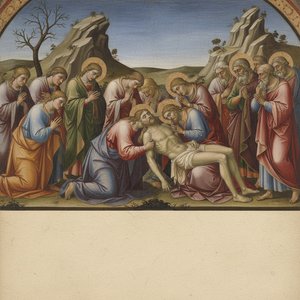
Giotto di Bondone: Revolutionizing Late Medieval Painting through Narrative Innovation
Explore the revolutionary art of Giotto di Bondone! Discover his groundbreaking techniques, iconic frescoes like those in the Arena Chapel, and lasting impact on Renaissance painting. A deep dive for art enthusiasts.
Proto-Renaissance : 10 Chefs-d'œuvre Révolutionnaires pour une Décoration d'Exception
Plongez au cœur de la Proto-Renaissance avec OriginalUniqueArt.com ! Découvrez 10 chefs-d'œuvre intemporels de Giotto, Cimabue et autres maîtres italiens. Retables gothiques, fresques émouvantes… Trouvez l’inspiration déco & achetez des reproductions d'art exceptionnelles. Explorez la collection sur OriginalUniqueArt




![Scrovegni - [05] - Le Rêve de Joachim](/media/artworks/images-thumb/8f/67/8f67bb5da87296bd452b3f0b237b528d.jpg)


