

 Aperçu en situation
 Partager
 Partager
 Détails
 Guide imprimable

 Télécharger
 Articles similaires
 Radiographie
 Voir le diaporama
 Statistiques
The Annunciation
 Acrylic On Canvas
- WallArt
- Renaissance
 19.0 x 22.0 cm
 Kupferstichkabinett
 Afficher la suite
Reproduction à l'huile faite à la main
Huile sur toile peinte à la main, avec cadre et dimensions personnalisés, réalisée sur commande par nos artistes. ( Passer au format impression Passer au format image numérique)




P118B €10

P118H €10

P118W €10

P438Z €10

P508JH €12

P508YH €12

P805H €10

P805Z €10

P919BZ €10

P919G €10

P919XJ €10

P959ZH €10

P968JZ €12

W106C €8

W218G €10

W218JH €8

W218Y €10

W307PJ €10

W316G €10

W316PJ €8

W316Y €10

W398PJ €8

W4111J €10

W500HY €15

W500JH €15

W692G €12

W849H €8

W940BG €15

W953PJ €8




Choisissez parmi nos formats prédéfinis qui respectent les proportions originales de l’œuvre.

Saisissez la largeur et la hauteur souhaitées, pour s'adapter à votre cadre ou à votre mur. Cette œuvre est peinte à la main ; ainsi, pour un format de forme différente, l'artiste peut peindre un peu plus autour du tableau ou réduire légèrement les bords — c'est vous qui choisissez. Nous vous envoyons une maquette numérique pour approbation avant que la peinture ne commence. L'image présentée sur cette page ne reflète pas le résultat réel — seule la maquette le fait.
Après la commande, l’équipe OriginalUniqueArt.com contactera le client par e-mail pour recueillir ses instructions et lui fournira une maquette d’aperçu
Livraison dans le monde entier () en 3 à 4 semaines au lieu des 5 semaines habituelles. (24 octobre). Aucun compromis sur la qualité.

Livraison express gratuite dans le monde entier

Toile de lin de haute qualité

Assurance transport complète

Garantie de remboursement des droits de douane

Garantie de fidélité des couleurs

Garantie de retour de 100 jours (uniquement en cas de défaut)

Garantie de remboursement à 100%

Tarifs dégressifs sur quantité
 L'option verre n'est disponible que pour les dimensions inférieures à 110 cm.

The Annunciation
Technique de reproduction
Format de la reproduction
-


Prix total final
€ 264
A Moment of Divine Revelation: Exploring Vasari’s ‘The Annunciation’
Giorgio Vasari's “The Annunciation,” painted circa 1567, isn’t merely a depiction of a biblical scene; it’s a carefully constructed tableau brimming with symbolic weight and technical mastery. This remarkable work, often considered a pivotal study for a larger ceiling painting, offers a rare glimpse into the artist’s process – a testament to his dedication to capturing not just likeness but also the profound emotional resonance of faith. The image, rendered in the delicate hues of carta azzurra (azure paper), immediately draws the eye with its ethereal quality and remarkable sense of spatial depth.
Vasari’s choice of blue pigment is crucial to understanding the painting's impact. The specific shade, a pale, almost luminous azure, was highly prized in Renaissance Italy for its ability to create an airy, atmospheric effect. It’s not simply a color; it’s a key element in conveying the divine presence and the sense of otherworldly grace that permeates the scene. The artist skillfully employs washes of ink and delicate highlights – a technique reminiscent of tempera painting – to build up layers of texture and luminosity, avoiding the heavy impasto favored by some of his contemporaries. This restrained approach allows for an astonishing level of detail, particularly in the rendering of Mary’s face and the angel Gabriel's flowing robes.
Architectural Echoes: Composition and Spatial Dynamics
Beyond its exquisite color palette, “The Annunciation” is distinguished by its sophisticated architectural design. Vasari masterfully integrates architectural elements – a coffered ceiling, a portal in the background, and a tent-shaped baldachin – to reinforce the composition’s clarity and stability. These aren't merely decorative flourishes; they serve as visual anchors, guiding the viewer’s eye through the scene and creating a sense of depth and perspective. The low vantage point, characteristic of ceiling paintings, emphasizes the scale of the figures and the grandeur of the event. Notice how Vasari uses linear perspective to create the illusion of receding space – the distant portal subtly diminishing in size, drawing us into the narrative.
The arrangement of the figures is equally deliberate. Gabriel, positioned on the left, extends his arm towards Mary, who sits serenely in the center of the frame. The subtle gestures and expressions convey a sense of reverence and anticipation. Even the secondary figures – a man near the top-left corner and another at the bottom-right – contribute to the scene’s dynamism, suggesting a broader context and inviting contemplation. The inclusion of a simple chair and vase adds a touch of domesticity, grounding the divine event within a recognizable human setting.
A Renaissance Masterpiece: Context and Legacy
Giorgio Vasari (1511-1574) was more than just a painter; he was a polymath – an architect, sculptor, historian, and biographer. His “Lives of the Most Excellent Painters, Sculptors, and Architects,” published in 1550, established a framework for understanding Renaissance art that continues to influence scholars today. Vasari’s work profoundly shaped our perception of the period, elevating the status of artists and establishing Florence as the epicenter of artistic innovation. “The Annunciation” exemplifies his commitment to capturing both the beauty and the spiritual significance of religious subjects.
Further research reveals that this painting was originally intended for a ceiling in the Chapel of Santa Michele in the Torre Pia, Vatican Palace, alongside three other roundels depicting the Nativity, the Annunciation, Zacharias and the Angel, and the Liberation of St. Peter. The rediscovery of these related works has illuminated Vasari’s artistic process and provided valuable insights into the history of Renaissance art. The image's presence in the Louvre Museum and its detailed documentation through online resources – such as WikiArt and Google Arts & Culture – ensure that this remarkable masterpiece remains accessible to a global audience.
Reproductions and Inspiration
A high-quality reproduction of Vasari’s “The Annunciation” offers a stunning opportunity to bring the drama and beauty of this Renaissance painting into your home or office. The delicate color palette, masterful composition, and profound symbolism will undoubtedly captivate viewers and evoke a sense of serenity and contemplation. Consider commissioning a hand-painted replica – a faithful recreation that captures the essence of Vasari’s original work, allowing you to experience the artistry firsthand.
Questions et réponses
Qui vend des reproductions peintes à la main de «The Annunciation» de Giorgio Vasari ?
Les reproductions peintes à la main de «The Annunciation» de Giorgio Vasari sont vendues sur ce site web : une reproduction à l'huile peinte à la main sur toile de lin, via sa page Reproduction peinte à la main.
Puis-je utiliser la réalité augmentée pour voir «The Annunciation» de Giorgio Vasari dans ma pièce ?
« The Annunciation » dispose d'un aperçu en réalité augmentée : la page Aperçu RA de l'œuvre vous permet de la visualiser dans votre propre espace sur un appareil compatible.
De quoi est fait « The Annunciation » ?
Giorgio Vasari a utilisé la technique du Acrylic On Canvas pour "The Annunciation". Cette technique définit la nature matérielle de l'œuvre originale.
Biographie de l'artiste
Première jeunesse et formation
Giorgio Vasari, né le 30 juillet 1511 à Arezzo, en Toscane, était un artiste polyvalent. Peintre, architecte, collectionneur d'art, écrivain et historien, Vasari est aujourd’hui principalement reconnu comme l’auteur de *Les Vies des plus excellents peintres, sculpteurs et architectes*. Cet ouvrage fondamental dans l’histoire de l’art a servi de prototype à toutes les biographies d’artistes. Descendant de générations de potiers, Vasari reçut sa première formation artistique à Arezzo auprès du peintre et verrier Guillaume de Marcillat. Il acquit également une base d'humanisme, comprenant le latin. Il déménagea ensuite à Florence où il travailla sous la direction du peintre Andrea del Sarto et du sculpteur Baccio Bandinelli. Vasari mena une carrière prolifique dans cette ville, travaillant principalement pour la famille Médicis, notamment pour Cosme Ier, Grand-Duc de Toscane. Il cultiva des amitiés avec de nombreux artistes, dont Michel-Ange, qui influença son style.Carrière artistique
Les peintures maniéristes de Vasari furent très admirées de son vivant. En 1529, il visita Rome où il étudia les œuvres de Raphaël et d'autres artistes de la haute Renaissance romaine. Parmi ses œuvres notables figurent :- L’atelier du peintre (fresque, 1548), situé dans Casa Vasari, à Arezzo
- Le Jugement Dernier (fresque, 1572), dans la coupole de la cathédrale de Florence
- L’Adoration des Mages (peinture à l'huile, 1566), dans l'église Santa Croce, à Florence
Contributions architecturales
Les réalisations architecturales de Vasari comprennent :- La loggia du Palazzo degli Uffizi, à Florence, qui sert de place publique
- Le corridor de Vasari, reliant les Offices au palais Pitti à Florence
- La rénovation d'églises médiévales, telles que Santa Maria Novella et Santa Croce
Héritage
Vasari est souvent appelé « le premier historien de l’art » en raison de son livre *Les Vies des plus excellents peintres, sculpteurs et architectes*, qui reste un texte fondamental dans l'écriture de l'histoire de l'art. Il est également considéré comme un précurseur dans la collecte de dessins, rassemblant les œuvres graphiques de nombreux artistes au cours de sa vie et les organisant, comme une sorte d’histoire illustrée de l’art, dans son *Libro de' Disegni*. Enfin, il est le fondateur, avec Vincenzo Borghini, de l'académie du dessin de Florence, la première académie publique d'art de l'histoire. Il mourut le 27 juin 1574 à Florence, grand-duché de Toscane, à l’âge de 62 ans. Son œuvre a profondément influencé la manière dont nous comprenons et étudions l'histoire de l'art occidental.
Giorgio Vasari
1511 - 1574 , Italie
En bref
- Artistes Influents:
- Raphaël
- Andrea del Sarto
- Michel-Ange
- Date De Décès: 27 juin 1574
- Date De Naissance: 30 juillet 1511
- Influences Artistiques:
- Histoire de l'art
- Renaissance florentine
- Lieu De Naissance: Arezzo, Italie
- Mouvement Artistique: Manierisme
- Nationalité: Italienne
- Nom Complet: Giorgio Vasari
- Oeuvres Notables:
- Le Studio du peintre
- Le Jugement Dernier
- L'Adoration des Mages
Articles connexes

Les 10 Chefs-d'œuvre Dominés par le Bleu Ardoise : Art, Histoire & Décor
Plongez dans l'univers fascinant des 10 plus beaux tableaux dominés par le bleu ardoise. Découvrez l'histoire, les artistes et les techniques de ces chefs-d'œuvre impressionnistes et contemporains. Inspirez votre décoration intérieure avec !

Ephemeral Expressions: Exploring the Nuances of Ink on Paper Through History & Contemporary Art
Explore the captivating world of ink wash painting – from its ancient origins to contemporary masters. Discover techniques, symbolism & conservation insights with OriginalUniqueArt.com.

The Alchemy of Ink: Mastering the Timeless Beauty and Art History of Paper and Brush
Embark on a sophisticated exploration of ink wash painting and Sumi-e. Uncover the profound historical lineages, Zen philosophies, and technical mastery behind this timeless medium in our authoritative guide for fine art enthusiasts.

Serene Blue Backgrounds: Discover Soulful Art to Transform Your Space with Timeless Elegance
Transform your home with soulful blue art. From serene Monet impressions to modern textured sculptures, discover curated masterpieces designed to inspire calm. Explore expert art consultations and bespoke hand-painted reproductions to create your personal sanctuary.
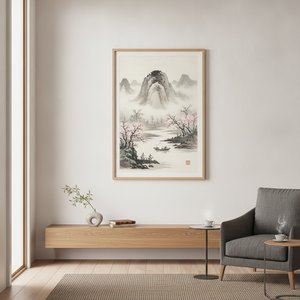
The Beauty of Ink Wash: Discover Serene & Soulful Art for Your Home
Discover the tranquil beauty of ink wash painting. Explore how Sumi-e and monochrome landscapes bring Zen-inspired serenity and soulful elegance to your home decor through expert curation and timeless East Asian aesthetics.


