

 Aperçu en situation
 Partager
 Partager
 Détails
 Guide imprimable

 Télécharger
 Articles similaires
 Radiographie
 Voir le diaporama
 Statistiques
Justice
 Oil On Panel
- WallArt
- Baroque
 1542
1542- Renaissance
 79.0 x 188.0 cm
 Gallerie dell’Accademia
 Afficher la suite
Giclées et impressions d'art
Impressions giclées ou sur toile de qualité musée, avec une production rapide et des finitions au choix. ( Acheter la peinture faite à la main Passer au format image numérique)




P118B €10

P118H €10

P118W €10

P438Z €10

P508JH €12

P508YH €12

P805H €10

P805Z €10

P919BZ €10

P919G €10

P919XJ €10

P959ZH €10

P968JZ €12

W106C €8

W218G €10

W218JH €8

W218Y €10

W307PJ €10

W316G €10

W316PJ €8

W316Y €10

W398PJ €8

W4111J €10

W500HY €15

W500JH €15

W692G €12

W849H €8

W940BG €15

W953PJ €8




Choisissez parmi nos formats prédéfinis qui respectent les proportions originales de l’œuvre.

Saisissez la largeur et la hauteur souhaitées pour qu'elles s'adaptent à votre cadre ou à votre mur. Une impression ne peut être que découpée, elle ne peut jamais être agrandie au-delà de l'image originale ; ainsi, un format de forme différente entraînera la perte d'une partie de l'image. Nous vous envoyons une maquette numérique pour approbation avant toute impression. L'image présentée sur cette page ne montre pas le recadrage réel — seule la maquette le permet.
Livraison dans le monde entier () en 2 semaines au lieu des 4/5 semaines habituelles. (24 octobre)

Livraison express gratuite dans le monde entier

Toile de lin de haute qualité

Assurance transport complète

Garantie de remboursement des droits de douane

Garantie de fidélité des couleurs

Garantie de retour de 100 jours (uniquement en cas de défaut)

Garantie de remboursement à 100%

Tarifs dégressifs sur quantité
 L'option verre n'est disponible que pour les dimensions inférieures à 110 cm.

Justice
Giclées et impressions d'art
Format de la reproduction
-


Prix total final
€ 70
A Symphony of Virtue: The Eternal Resonance of Vasari’s Justice
In the grand tapestry of the Italian Renaissance, few works capture the profound intersection of moral philosophy and visual splendor as exquisitely as Giorgio Vasari’s “Justice.” Completed in 1542, this monumental oil on panel is far more than a mere depiction of a virtue; it is a carefully orchestrated visual sermon. As one gazes upon the central figure, a woman draped in flowing, luminous robes, there is an immediate sense of the profound stability she represents. Her face, serene yet resolute, serves as the emotional anchor for the entire composition. Through Vasari’s masterful hand, the painting transcends its historical moment to become a timeless emblem of human dignity and the pursuit of truth, making it a captivating centerpiece for any collection dedicated to the intellectual depth of the sixteenth century.
The brilliance of this masterpiece lies in its intricate layer of symbolism, where every element serves a higher allegorical purpose. The figure of Justice is famously blindfolded, a poignant reminder of her impartiality and the refusal to be swayed by personal bias. In her left hand, she holds the scales, balanced with delicate precision, while her right hand rests upon a sword—a symbol of the necessary power required to enforce law and maintain order. Beneath her throne, a globe signifies her universal jurisdiction, suggesting that justice is not merely a local concern but a cosmic principle. This symbolic language is further enriched by the presence of three men engaged in earnest conversation; they represent the voices of reason and deliberation, embodying the Renaissance ideal that true justice arises from thoughtful discourse and the weighing of evidence.
The Elegance of Mannerism and Artistic Mastery
To appreciate “Justice” is to witness the height of the Mannerist style. Moving away from the balanced naturalism of the High Renaissance, Vasari embraces a more sophisticated and tension-filled aesthetic. The figures possess an elegant elongation, and their poses are characterized by a dramatic, almost theatrical grace that directs the viewer's eye through the composition in a rhythmic dance. This stylistic choice creates a sense of movement and intellectual energy, preventing the allegorical subject from feeling static or purely instructional. Vasari’s technique is nothing short of virtuosic; his ability to manipulate light and shadow—the chiaroscuro—bestows a remarkable three-dimensionality upon the drapery and the flesh, lending a palpable realism to the otherwise stylized forms.
For the discerning collector or interior designer, a high-quality reproduction of this work offers more than just aesthetic beauty; it brings a sense of historical gravity and intellectual prestige to a space. The painting’s rich textures and complex narrative invite prolonged contemplation, making it an ideal focal point for a library, a formal study, or a sophisticated gallery wall. It serves as a conversation piece that bridges the gap between the classical past and the modern interior, embodying a legacy of wisdom and strength. Owning a tribute to Vasari’s “Justice” is an invitation to surround oneself with the enduring ideals of balance, truth, and the magnificent artistry of the Italian Renaissance.
Questions et réponses
Est-ce que "Justice" est une bonne idée de cadeau ?
En guise de cadeau, «Justice» de Giorgio Vasari est suggéré pour Corporate Gift. D'autres occasions peuvent également convenir.
Quelle est la technique et la date de création de «Justice» de Giorgio Vasari ?
«Justice» a été réalisé en 1542, en Oil On Panel.
Est-ce que Giorgio Vasari, créateur de « Justice », est connu sous d'autres noms ?
Giorgio Vasari apparaît sous les noms alternatifs Giorgio di Antonio Vasari, Vasari.
Biographie de l'artiste
Première jeunesse et formation
Giorgio Vasari, né le 30 juillet 1511 à Arezzo, en Toscane, était un artiste polyvalent. Peintre, architecte, collectionneur d'art, écrivain et historien, Vasari est aujourd’hui principalement reconnu comme l’auteur de *Les Vies des plus excellents peintres, sculpteurs et architectes*. Cet ouvrage fondamental dans l’histoire de l’art a servi de prototype à toutes les biographies d’artistes. Descendant de générations de potiers, Vasari reçut sa première formation artistique à Arezzo auprès du peintre et verrier Guillaume de Marcillat. Il acquit également une base d'humanisme, comprenant le latin. Il déménagea ensuite à Florence où il travailla sous la direction du peintre Andrea del Sarto et du sculpteur Baccio Bandinelli. Vasari mena une carrière prolifique dans cette ville, travaillant principalement pour la famille Médicis, notamment pour Cosme Ier, Grand-Duc de Toscane. Il cultiva des amitiés avec de nombreux artistes, dont Michel-Ange, qui influença son style.Carrière artistique
Les peintures maniéristes de Vasari furent très admirées de son vivant. En 1529, il visita Rome où il étudia les œuvres de Raphaël et d'autres artistes de la haute Renaissance romaine. Parmi ses œuvres notables figurent :- L’atelier du peintre (fresque, 1548), situé dans Casa Vasari, à Arezzo
- Le Jugement Dernier (fresque, 1572), dans la coupole de la cathédrale de Florence
- L’Adoration des Mages (peinture à l'huile, 1566), dans l'église Santa Croce, à Florence
Contributions architecturales
Les réalisations architecturales de Vasari comprennent :- La loggia du Palazzo degli Uffizi, à Florence, qui sert de place publique
- Le corridor de Vasari, reliant les Offices au palais Pitti à Florence
- La rénovation d'églises médiévales, telles que Santa Maria Novella et Santa Croce
Héritage
Vasari est souvent appelé « le premier historien de l’art » en raison de son livre *Les Vies des plus excellents peintres, sculpteurs et architectes*, qui reste un texte fondamental dans l'écriture de l'histoire de l'art. Il est également considéré comme un précurseur dans la collecte de dessins, rassemblant les œuvres graphiques de nombreux artistes au cours de sa vie et les organisant, comme une sorte d’histoire illustrée de l’art, dans son *Libro de' Disegni*. Enfin, il est le fondateur, avec Vincenzo Borghini, de l'académie du dessin de Florence, la première académie publique d'art de l'histoire. Il mourut le 27 juin 1574 à Florence, grand-duché de Toscane, à l’âge de 62 ans. Son œuvre a profondément influencé la manière dont nous comprenons et étudions l'histoire de l'art occidental.
Giorgio Vasari
1511 - 1574 , Italie
En bref
- Artistes Influents:
- Raphaël
- Andrea del Sarto
- Michel-Ange
- Date De Décès: 27 juin 1574
- Date De Naissance: 30 juillet 1511
- Influences Artistiques:
- Histoire de l'art
- Renaissance florentine
- Lieu De Naissance: Arezzo, Italie
- Mouvement Artistique: Manierisme
- Nationalité: Italienne
- Nom Complet: Giorgio Vasari
- Oeuvres Notables:
- Le Studio du peintre
- Le Jugement Dernier
- L'Adoration des Mages
Articles connexes

Maerten van Heemskerck: Bridging Mannerism & Renaissance Ideals
Explore the captivating world of Maerten van Heemskerck, a pivotal Dutch Renaissance painter bridging Mannerism & Italian influence. Discover his masterpieces and legacy with OriginalUniqueArt.
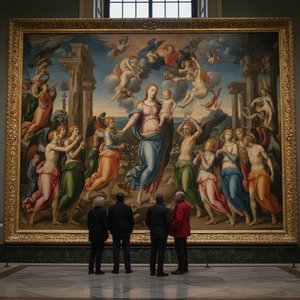
Beyond Perfection: The Elegant Drama and Sophisticated Artifice of Mannerist Masterpieces
Explore the captivating world of Mannerist art. Discover how masters like Parmigianino transitioned from Renaissance harmony to elegant drama, tension, and sophisticated artifice in this deep dive into 16th-century Italian mastery.

Unveiling Hidden Meanings: Allegory in Western Art History
Explore the rich history of allegory in Western art! Discover hidden meanings in masterpieces from Giotto to Bosch & beyond. Expert insights for collectors and enthusiasts at OriginalUniqueArt.
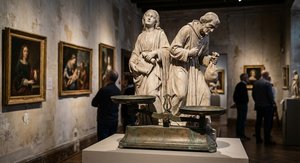
The Weight of Virtue and Vice: Exploring Moral Themes in Art History
Explore the captivating world of moral allegory in art history! Discover how Renaissance masters like Bosch, Botticelli & Lotto depicted virtue & vice. Expert analysis and stunning reproductions at OriginalUniqueArt.
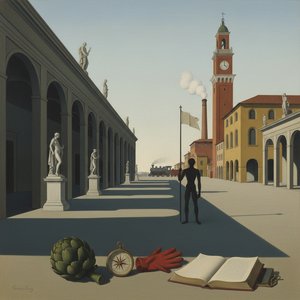
Giorgio de Chirico: Metaphysical Realities & the Poetics of Absence
Explore the captivating world of Giorgio de Chirico and his groundbreaking Metaphysical painting movement. Discover the philosophical depths & surreal imagery that influenced generations of artists. Learn more at OriginalUniqueArt.


