 Aperçu en situation
 Envoyer
 Partager
 Détails de l'œuvre

 Télécharger
 Articles similaires
 Radiographie
 Diaporama
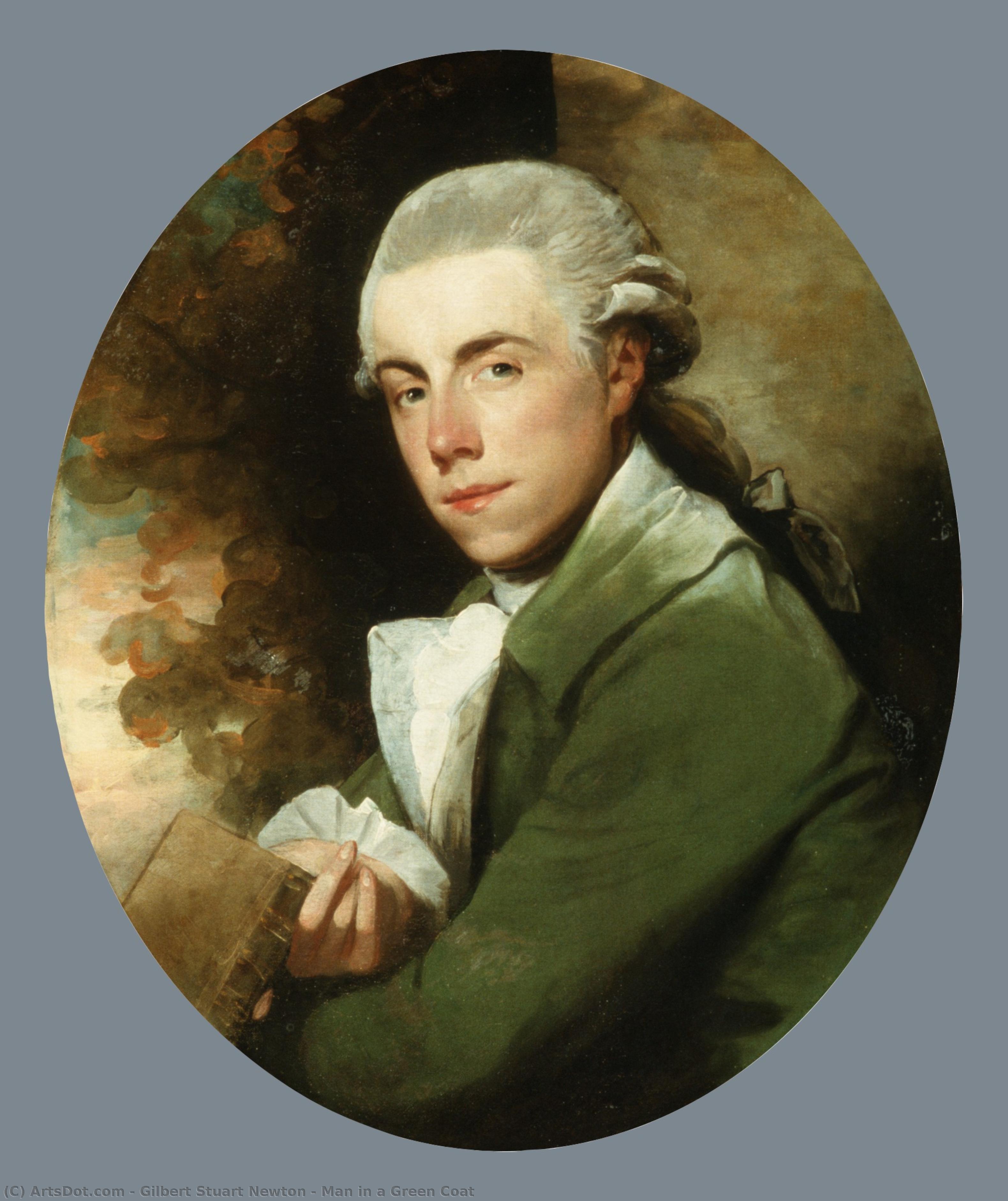
Man in a Green Coat
 Oil On Canvas
- WallArt
- Romanticism
 1779
1779 72.0 x 60.0 cm
 Metropolitan Museum of Art
 Lire la suite
Giclées et impressions d'art
Impressions giclées ou sur toile de qualité musée, avec une production rapide et des finitions au choix. ( Commander la reproduction peinte à la main Télécharger l'image haute résolution)




P118B $10

P118H $10

P118W $10

P438Z $10

P508JH $12

P508YH $12

P805H $10

P805Z $10

P919BZ $10

P919G $10

P919XJ $10

P959ZH $10

P968JZ $12

W106C $8

W218G $10

W218JH $8

W218Y $10

W307PJ $10

W316G $10

W316PJ $8

W316Y $10

W398PJ $8

W4111J $10

W500HY $15

W500JH $15

W692G $12

W849H $8

W940BG $15

W953PJ $8




Choisissez parmi nos formats prédéfinis qui respectent les proportions originales de l’œuvre.

Vous pouvez saisir vos propres dimensions pour vous adapter à un cadre ou à un espace spécifique. Si la taille sélectionnée ne correspond pas aux proportions de l'image originale, nous recadrerons l'œuvre ou étendrons l'image avec une bordure en miroir ou une couleur unie. Une maquette numérique vous sera envoyée pour approbation avant le début de la production.
Veuillez noter que l'aperçu à l'écran ne reflète pas le recadrage ou l'extension réelle. Seule la maquette montrera avec précision la composition finale.
Bien que des tailles personnalisées soient disponibles, nous vous recommandons de choisir une dimension dans la liste prédéfinie afin de préserver les proportions originales.
Livraison dans le monde entier () en 2 semaines au lieu des 4/5 semaines habituelles. (18 août)

Livraison express gratuite dans le monde entier

Toile de lin de qualité supérieure

Assurance transport complète

Garantie de remboursement des droits de douane

Garantie de fidélité des couleurs

Politique de retour de 60 jours (uniquement en cas de défaut)

Garantie de remboursement à 100%

Offre de tarifs dégressifs
 L'option verre n'est disponible que pour les dimensions inférieures à 110 cm.

Man in a Green Coat
Giclées et impressions d'art
Format de la reproduction
-


Prix total
$ 80
Description de la pièce
A Glimpse into the 1770s: Gilbert Stuart Newton’s ‘Man in a Green Coat’
Gilbert Stuart Newton's “Man in a Green Coat,” painted in 1779, isn’t merely a portrait; it’s a carefully constructed window into the burgeoning artistic landscape of early Georgian England. The painting immediately draws the eye with its subtly unsettling elegance – a man, formally dressed in a rich green coat, holds a book open before him, his gaze averted, creating an aura of quiet contemplation and perhaps even a touch of melancholy. The composition is deceptively simple: a rectangular format initially transformed into a more intimate oval, suggesting a deliberate shaping of the image to capture the sitter’s essence. Newton's brushwork, described by contemporary observers as “brushy,” isn’t indicative of sloppiness but rather a conscious choice – a technique that lends the work an immediacy and intimacy rarely found in the rigidly formal portraits of the era.
The Influence of Gainsborough and the Seeds of Romanticism
Newton’s work reveals a clear debt to Thomas Gainsborough, whose portraits were immensely popular during this period for their atmospheric backgrounds and relaxed poses. Notice how Newton mimics Gainsborough's use of light and shadow – the soft illumination highlighting the man’s face and coat, while the muted background creates depth without overwhelming the subject. The green of the coat itself is particularly noteworthy; it’s not a vibrant, assertive hue but rather a delicate pastel shade, echoing the gentle colors favored by Gainsborough and contributing to the painting's overall sense of understated beauty. However, “Man in a Green Coat” transcends mere imitation. Newton introduces a subtle psychological complexity that anticipates the Romantic movement – a hint of sadness, an unspoken story hinted at through the sitter’s averted gaze. This is not simply a likeness; it’s an exploration of mood and character.
A Portrait of Uncertainty: Identity and Historical Context
The identity of the man in the green coat remains one of art history's enduring mysteries. Newton, a British artist working in London during this period, was influenced by both English and American artistic trends. Born in Nova Scotia to an artistic lineage tracing back to Gilbert Stuart, the renowned American portrait painter, Newton’s early life reflects this transatlantic connection. The painting’s date – 1779 – places it squarely within a turbulent era of political upheaval, as Britain grappled with its colonies across the Atlantic. The man's attire and demeanor suggest a gentleman of means, perhaps a merchant or landowner, reflecting the growing prosperity of the British economy. Yet, his introspective posture hints at anxieties and uncertainties that were prevalent during this period of colonial tensions.
Symbolism and Artistic Technique
Beyond its immediate visual appeal, “Man in a Green Coat” is rich in symbolic detail. The book he holds suggests intellectual pursuits and perhaps a yearning for knowledge or escape. The oval format itself can be interpreted as a symbol of completeness – a contained world reflecting the sitter’s inner life. Newton's masterful use of oil paint creates a remarkable sense of texture, capturing the sheen of the coat fabric and the subtle nuances of light and shadow. The painting’s current location at the Metropolitan Museum of Art in New York City underscores its significance as a masterpiece of early modern portraiture – a testament to Newton’s skill and his ability to capture both the outward appearance and the inner essence of his subject.
Biographie de l'artiste
Gilbert Stuart Newton : Vie et Héritage
Jeunesse et Origines Familiales
- Naissance et Origines : Gilbert Stuart Newton est né le 2 septembre 1795 à Halifax, en Nouvelle-Écosse. Il était le benjamin d'une fratrie de douze enfants.
- Liens Familiaux : Son père, Henry Newton, était un fonctionnaire des douanes, tandis que sa mère, Ann, portait en elle une lignée artistique prestigieuse – elle était la fille de Gilbert Stuart, le célèbre portraitiste américain.
- Jeunesse et Retour aux États-Unis : La famille résidait initialement à Boston, mais est revenue s'installer à Charlestown, près de Boston, en 1803 après le décès de son père.
Formation Artistique et Influences
- Chemin Initial et Encadrement par Son Oncle : Bien qu’il ait été initialement destiné à une carrière commerciale, Newton fut placé en apprentissage auprès de son oncle, Gilbert Stuart, marquant ainsi le véritable début de son voyage artistique.
- Études en Europe : Il voyagea en Europe accompagné d'un frère aîné et étudia la peinture à Florence. Ses visites ultérieures à Paris en 1817 lui firent découvrir des artistes tels que Charles Robert Leslie, Washington Allston et David Wilkie.
- Royal Academy et Formation Formelle : Newton poursuivit son éducation à la Royal Academy de Londres après une période passée aux Pays-Bas.
Style Artistique et Thèmes Majeurs
- Sensibilités Romantiques : L'œuvre de Newton est généralement classée au sein du mouvement romantique, se distinguant par son intensité émotionnelle et ses récits dramatiques.
- Inspirations Littéraires et Poétiques : Il acquit une renommée particulière pour ses peintures inspirées de la littérature et de la poésie. Des sujets tirés d'œuvres telles que *Don Quichotte* ou les pièces de Shakespeare occupent une place prédominante dans son œuvre.
- Portraiture et Scènes de Genre : S'il réalisa des portraits, notamment ceux de figures notables comme Washington Irving, Newton excella également dans les scènes de genre, capturant avec brio des instants suspendus issus de récits littéraires.
Réalisations Clés et Reconnaissance
- Affiliation à la Royal Academy : Newton fut élu académicien honoraire de la National Academy of Design en 1827, associé de la Royal Academy en 1829, et enfin membre titulaire en 1832.
- Expositions et Mécénat : Il exposa régulièrement à la Royal Academy à partir de 1818, s'attirant ainsi la reconnaissance du public et le soutien de mécènes tels que le marquis de Lansdowne.
- Collections Publiques : Ses œuvres ont intégré de prestigieuses collections publiques, notamment la National Gallery et le South Kensington Museum (aujourd'hui le V&A).
Fin de Vie et Héritage
- Santé Mentale et Dernières Années : Peu après son élection à la Royal Academy, Newton commença à souffrir de troubles mentaux. Il fut admis dans un asile à Chelsea, où il continua à peindre jusqu'à son décès, le 5 août 1835.
- Lieu de Sépulture : Il repose en l'église St Mary de Wimbledon, à Londres.
- Importance Historique : Bien que parfois éclipsé par la renommée de son oncle Gilbert Stuart, Newton a su se forger une identité propre en tant qu'artiste habile et imaginatif de l'ère romantique. Ses peintures d'inspiration littéraire offrent un regard précieux sur les goûts culturels et les tendances artistiques de la Grande-Bretagne du XIXe siècle.

Gilbert Stuart Newton
1795 - 1835 , Nouvelle-Écosse
L'essentiel de l'artiste
- Movement: Romantisme
- Name: Gilbert Stuart Newton
- Nationality: Britannique
Articles connexes
Verdant Visions: Exploring the Symbolism & Aesthetic Impact of Green in Art History
Explore the rich history & symbolism of green in art! Discover iconic paintings, techniques, and how to bring verdant harmony into your home with OriginalUniqueArt's expert guide.
Top 10 des Peintures Célèbres Dominées par le Vert Olive Sombre | Art & Décor
Plongez dans le monde fascinant des 10 plus célèbres peintures dominées par le vert olive sombre. Découvrez Monet, Van Gogh et Cézanne… Retrouvez l'histoire de ces chefs-d'œuvre et trouvez votre reproduction d'art idéale sur !
Top 10 des Tableaux Célèbres Dominés par le Vert Chrome : Art & Décor d'Intérieur
Plongez dans le monde fascinant du vert chrome à travers 10 tableaux célèbres de Monet, Van Gogh & Cézanne. Découvrez l'histoire et la technique derrière ces chefs-d'œuvre impressionnistes. Trouvez votre inspiration déco sur !
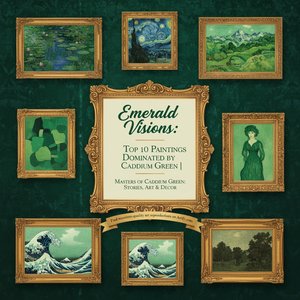
Top 10 des Peintures Célèbres Dominées par le Vert Cadmium : Art & Décor
Plongez dans le monde fascinant du vert cadmium ! Découvrez 10 peintures célèbres de Monet, Van Gogh et autres maîtres. Inspirez votre décoration intérieure avec des reproductions d'art de qualité musée sur .

Top 10 des Peintures Célèbres Dominées par le Vert Mer : Art & Décor Intérieur
Plongez dans le monde fascinant des 10 plus célèbres peintures dominées par le vert mer ! Découvrez l'histoire de Monet, Degas et Renoir. Trouvez l’inspiration déco & achetez des reproductions d'art de qualité musée sur OriginalUniqueArt.com.