

 Commander l'impression Acheter l'image haute résolution
 Partager
 Partager
 Détails de l'œuvre
 Ajouter aux favoris

 Télécharger
 Articles similaires
 Radiographie
 Diaporama
Astronomy


 Afficher la suite
Reproduction à l'huile faite à la main
Huile sur toile peinte à la main, avec cadre et dimensions personnalisés, réalisée sur commande par nos artistes.




































Choisissez parmi nos formats prédéfinis qui respectent les proportions originales de l’œuvre.

Vous pouvez saisir vos propres dimensions pour l'adapter à un cadre ou à un espace spécifique. Si la taille sélectionnée ne correspond pas aux proportions de l'image d'origine, nous recadrerons l'œuvre ou prolongerons la peinture avec des éléments peints à la main supplémentaires. Une maquette numérique vous sera envoyée pour approbation avant le début de la production.
Veuillez noter que l'aperçu à l'écran ne reflète pas le recadrage ou l'extension réels. Seule la maquette montrera fidèlement la composition finale.
Bien que des tailles personnalisées soient disponibles, nous vous recommandons de sélectionner une dimension dans la liste prédéfinie afin de préserver les proportions d'origine.
Après la commande, l’équipe OriginalUniqueArt.com contactera le client par e-mail pour obtenir ses instructions et lui fournira une maquette d’aperçu.
Livraison dans le monde entier () en 3 à 4 semaines au lieu des 5 semaines habituelles. (21 juillet). Aucune concession sur la qualité.

Livraison express gratuite dans le monde entier

Toile de lin de haute qualité

Assurance transport complète

Garantie de remboursement des frais de douane

Garantie de fidélité des couleurs

Politique de retour de 60 jours (uniquement en cas de défaut)

Garantie de remboursement à 100%

Réduction sur les achats groupés
 L'option verre n'est disponible que pour les dimensions inférieures à 110 cm.

Astronomy
Technique de reproduction
Format de reproduction
-


Prix total final
-
Description de l'œuvre
A Celestial Dance: Giambologna’s “Astronomy”
Giambologna's "Astronomy," a bronze sculpture commanding attention with its opulent gilding and dynamic pose, isn’t merely a depiction of a figure; it’s an invitation to contemplate the vastness of the cosmos. Created during the height of Mannerism in the early 17th century, this piece transcends simple portraiture, embodying a profound connection between humanity and the heavens. The sculpture, housed within the Metropolitan Museum of Art in New York City, immediately draws the eye with its sheer richness – the burnished gold reflecting light in a way that seems to emanate from the stars themselves. But beneath the surface gleam lies a complex narrative woven through classical symbolism and artistic innovation.
Born Jean Boulogne in Douai, Belgium (now France) in 1529, Giambologna’s journey to Rome marked a pivotal moment in his career. He initially trained under Jacques Du Broeucq in Antwerp, honing his skills in architectural sculpture before immersing himself in the artistic currents of the Italian Renaissance. This immersion profoundly shaped his distinctive Mannerist style – characterized by an exquisite sensitivity to surface texture, refined elegance, and a deliberate departure from the emotional fervor prevalent in earlier Renaissance art. Giambologna’s work is distinguished by its elongated figures, exaggerated poses, and intricate details, reflecting a fascination with movement and a masterful command of three-dimensional form.
The Figure: A Personification of Celestial Knowledge
At the heart of “Astronomy” stands a female figure, undeniably embodying the concept of Astronomy. Her posture is strikingly dynamic – one arm raised as if gesturing towards the heavens, while the other gracefully drapes across her body. This isn’t a static representation; it's an active engagement with the cosmos, suggesting a quest for understanding and a willingness to reach beyond earthly boundaries. The elaborate headdress, adorned with swirling patterns and what appear to be stylized stars, further reinforces this symbolic connection. Her face is serene yet thoughtful, conveying a sense of quiet contemplation – as if she’s absorbing the secrets held within the celestial sphere.
The sculpture's design deliberately evokes classical mythology. The figure’s stance mirrors that of Athena, the Greek goddess of wisdom and strategic warfare, often associated with observation and knowledge. However, Giambologna subtly departs from traditional depictions, imbuing her with a sense of grace and ethereal beauty rather than the sternness typically associated with such figures. This delicate balance between classical reference and personal interpretation is a hallmark of Giambologna’s artistic vision.
Craftsmanship & Technique: The Art of Gilded Bronze
The sheer artistry of “Astronomy” lies not only in its symbolic content but also in the meticulous execution of its construction. Crafted from bronze, the sculpture was then painstakingly gilded with gold – a technique that dramatically enhances its visual impact and adds to its sense of luxury. Giambologna’s mastery of bronze casting is evident in the figure's flowing lines and remarkably detailed drapery. The surface texture is deliberately smooth, achieved through careful polishing, yet subtle variations in reflectivity suggest underlying texture from the bronze itself – a testament to his technical skill.
The pedestal, constructed from a dark, polished stone, provides a striking contrast to the golden figure above. Its geometric forms—circular bases and sharply angled planes—ground the sculpture while simultaneously emphasizing its verticality. The use of gold on both the figure and the pedestal creates a unified visual experience, reinforcing the theme of celestial harmony and divine illumination. Giambologna’s ability to seamlessly integrate these diverse elements into a cohesive whole is truly remarkable.
A Legacy of Elegance: Giambologna's Enduring Influence
Giambologna’s “Astronomy” stands as a prime example of the Mannerist style, showcasing his innovative approach to sculpture. His work profoundly influenced subsequent generations of artists, particularly during the Baroque period. The sculpture’s emphasis on dynamism, elegance, and intricate detail continues to resonate with viewers today. Reproductions of this iconic piece offer an accessible way to experience Giambologna's genius – a chance to bring a touch of celestial beauty into any space.
Biographie de l'artiste
Giambologna: The Sculptor Who Defined Mannerism
Jean Boulogne, later known as Giambologna (1529 – 1608), stands as one of the most influential sculptors of the Italian Renaissance and Baroque periods. Born in Douai, Flanders—now France—his artistic journey began with formative studies under Jacques Du Broeucq in Antwerp before he embarked on a transformative relocation to Rome in 1550, where he immersed himself in the legacy of classical sculpture and absorbed the stylistic innovations championed by Michelangelo. This immersion profoundly shaped his distinctive Mannerist style, characterized by an exquisite sensitivity to surface texture, refined elegance, and a deliberate departure from the emotional fervor prevalent in earlier Renaissance art.Early Life & Training
Giambologna’s initial artistic inclinations were nurtured in Antwerp's architectural milieu, equipping him with foundational skills that would prove invaluable as he pursued his studies in Rome. His engagement with Michelangelo’s monumental works instilled a deep appreciation for anatomical precision and sculptural dynamism—principles that would become hallmarks of Giambologna’s oeuvre. He began his artistic education under Jacques Du Broeucq, mastering the techniques of Flemish sculpture and gaining experience in designing architectural facades. This exposure to Michelangelo's sculptures—particularly *David*, which embodies idealized beauty and masterful execution—established a cornerstone for Giambologna’s artistic vision.Roman Influence & Patronage
Giambologna's time in Rome coincided with the burgeoning patronage of the Medici family, securing him commissions that propelled his artistic reputation and solidified his position as a leading sculptor of the era. Francesco I de’ Medici recognized Giambologna’s talent early on, commissioning numerous sculptures for Palazzo Vecchio and Villa Medici—works that showcased Giambologna's ability to synthesize classical ideals with humanist sensibilities into a singularly compelling aesthetic experience. The influence of Michelangelo extended beyond mere stylistic imitation; it fostered a philosophical commitment to achieving idealized beauty through meticulous observation and masterful execution—a conviction that permeated Giambologna’s entire artistic practice.The Mannerist Style: A Departure from Tradition
Giambologna decisively rejected the harmonious balance and emotive grandeur characteristic of High Renaissance sculpture. Instead, he embraced Mannerism—a stylistic movement that prioritized intellectual contemplation over visceral sensation. This approach manifested in several key features: elongated figures with subtly distorted proportions; attenuated drapery conveying a sense of precariousness; and an emphasis on decorative surface treatment—particularly polished marble—that achieved unparalleled luminosity. Giambologna’s sculptures weren't intended to convey immediate emotional impact but rather to provoke reflection upon complex philosophical concepts, mirroring the broader intellectual currents of his time. He skillfully employed *contrapposto*, a pose where the torso tilts slightly away from the viewer, creating an illusion of movement and balance—a technique perfected by Michelangelo and subsequently adopted by Giambologna himself. This stylistic innovation distinguished Giambologna from his predecessors and signaled a radical reimagining of sculptural representation.Notable Works & Commissions
Giambologna’s prolific output encompassed monumental sculptures for public spaces and intimate portraits alike, cementing his legacy as one of the most celebrated artists of his generation. Among his crowning achievements are:- Neptune Fountain (Bologna): Collaborating with Tommaso Laureti on this ambitious project—the centerpiece of Bologna’s Piazza Nettuno—Giambologna created a colossal bronze sculpture depicting Neptune, god of the sea, surrounded by subsidiary figures embodying various elements of maritime mythology.
- The Rape of Sabine Women (Florence): Completed between 1574 and 1582, this marble masterpiece exemplifies Giambologna’s mastery of Mannerist technique—particularly *contrapposto*—and captures the dramatic narrative of Roman legend with breathtaking precision.
- Mercury Statue (Florence): Giambologna's depiction of Mercury—the messenger god—is celebrated for its graceful pose and luminous surface finish, embodying the spirit of Mannerist elegance and intellectual contemplation.

Giambologna
1529 - 1608 , France
En bref
- Artistic Movement Or Style: Mannerisme sculpturale
- Artists Or Movements Influenced By This Artist: ['Baroque']
- Artists Who Influenced This Artist: ['Michelangelo']
- Date Of Birth: 1529
- Full Name: Jean Boulogne
- Nationality: Flemish
- Notable Artworks:
- La Raep de Sabine
- Mercure
- Place Of Birth: Douai, France
Articles connexes
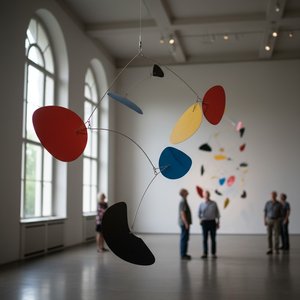
Alexander Calder: Kinetic Sculpture, Mobile Art & the Poetics of Chance
Explore the revolutionary world of Alexander Calder's kinetic sculptures & mobiles. Discover insights for collectors, acquisition advice, and the enduring legacy of this modern master. Expert analysis & art valuation.

Theatricality & Triumph: Baroque Drama in Painting & Sculpture
Explore the dramatic world of Baroque art! Discover its history, defining characteristics, & lasting influence on painting & sculpture. Expert insights into Caravaggio, Zurbarán, and Bernini – plus high-quality reproductions at OriginalUniqueArt.

The Dramatic Flourish: Exploring the Baroque Movement's Enduring Legacy in Art History
Explore the dramatic world of Baroque art! Discover iconic artists like Caravaggio & Rubens, defining techniques, and its lasting impact on art history. Expert insights for collectors & enthusiasts at OriginalUniqueArt.
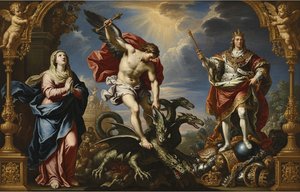
The Dramatic Flourish: Exploring Themes of Power, Faith & Emotion in Baroque Artworks
Explore the dramatic world of Baroque art! Discover masters like Zurbarán & the powerful influence of religious zeal on painting techniques. Expert insights for collectors and enthusiasts.

L'Art de la Composition Décalée : Harmonie Spatiale et Cohérence Visuelle dans les Arrangements Multiples d'Œuvres
Maîtrisez l'art de la composition décalée ! Découvrez les principes essentiels pour créer des arrangements d'œuvres harmonieux et captivants. Conseils d'experts pour une décoration intérieure raffinée.



