

 Aperçu en situation
 Envoyer
 Partager
 Détails de l'œuvre

 Télécharger
 Articles similaires
 Radiographie
 Diaporama
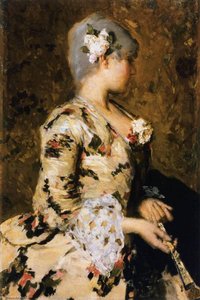
Self Portrait

 Lire la suite
Giclées et impressions d'art
Impressions giclées ou sur toile de qualité musée, avec une production rapide et des finitions au choix. ( Commander la reproduction peinte à la main Télécharger l'image haute résolution)




































Choisissez parmi nos formats prédéfinis qui respectent les proportions originales de l’œuvre.

Vous pouvez saisir vos propres dimensions pour vous adapter à un cadre ou à un espace spécifique. Si la taille sélectionnée ne correspond pas aux proportions de l'image originale, nous recadrerons l'œuvre ou étendrons l'image avec une bordure en miroir ou une couleur unie. Une maquette numérique vous sera envoyée pour approbation avant le début de la production.
Veuillez noter que l'aperçu à l'écran ne reflète pas le recadrage ou l'extension réelle. Seule la maquette montrera avec précision la composition finale.
Bien que des tailles personnalisées soient disponibles, nous vous recommandons de choisir une dimension dans la liste prédéfinie afin de préserver les proportions originales.
Livraison dans le monde entier () en 2 semaines au lieu des 4/5 semaines habituelles. (22 août)

Livraison express gratuite dans le monde entier

Toile de lin de qualité supérieure

Assurance transport complète

Garantie de remboursement des droits de douane

Garantie de fidélité des couleurs

Politique de retour de 60 jours (uniquement en cas de défaut)

Garantie de remboursement à 100%

Offre de tarifs dégressifs
 L'option verre n'est disponible que pour les dimensions inférieures à 110 cm.

Self Portrait
Giclées et impressions d'art
Format de la reproduction
-


Prix total
$ 80
Biographie de l'artiste
Giacomo Favretto: Venetian Painter of Everyday Life
Giacomo Favretto (August 11, 1849 – June 12, 1887) was an Italian painter who achieved renown for his captivating genre scenes depicting the vibrant life of Venice during the late nineteenth century. Born into a modest family in Venice, his father was a carpenter, shaping his formative years amidst the artisan traditions of his hometown.
Favretto’s artistic journey began at the Accademia di Belle Arti di Venezia in 1864, where he honed his skills under the tutelage of Pompeo Marino Molmenti. Recognizing his innate talent and visionary approach to art, Molmenti championed Favretto's distinctive style—one that diverged from prevailing academic trends.
A pivotal moment arrived when Favretto encountered Alessandro Ciardi, a fellow artist who recognized his potential and secured him a position at the Venice Academy. This encounter proved instrumental in fostering Favretto’s artistic development, exposing him to influential figures and broadening his horizons. Notably, he lost sight in one eye due to a severe infection in 1877, an experience that profoundly impacted his perspective on life and art.
Favretto's breakthrough came at the Brera Academy Exhibition of 1873, where his genre painting garnered considerable acclaim from Camillo Boito, a celebrated poet and critic. Boito recognized Favretto’s ability to capture the essence of Venetian society—its rituals, customs, and daily routines—with remarkable sensitivity and artistic precision.
Inspired by younger artists like Domenico Morelli, Favretto embraced a stylistic ethos that prioritized observation and spontaneity over grand narratives. He eschewed mythological or historical subjects in favor of scenes from ordinary life, portraying Venetian citizens engaged in their occupations and leisure activities. His technique involved alternating between meticulously finished areas and loose, expressive sketches—a deliberate choice reflecting his belief in conveying emotion and atmosphere authentically.
Favretto’s palette favored muted hues—grays, browns, whites, blacks—creating a tranquil ambiance reminiscent of Venetian interiors. He skillfully blended colors to evoke subtle nuances of light and shadow, mirroring the atmospheric conditions prevalent in Venice during his era. His canvases pulsed with vitality thanks to flashes of vibrant color—orange, green, red—adding dynamism and visual interest.
Favretto’s success propelled him into Venetian society's upper echelons, where he cultivated relationships with prominent figures like Queen Margherita. He became a symbol of artistic achievement and Venetian cultural pride. Despite facing hardships such as illness and personal loss, Favretto remained steadfast in his dedication to art—a testament to his unwavering passion for capturing the beauty and complexity of human experience.
His legacy solidified at the Venice National Exhibition of 1887, where his paintings captivated audiences and critics alike. Among his most celebrated works was *Liston Odierno* (*Promenade Today* in Venice), a masterpiece that exemplifies Favretto’s distinctive style—characterized by its atmospheric perspective and nuanced portrayal of Venetian life.
Favretto's influence extended beyond his own lifetime, inspiring subsequent generations of Venetian artists. He championed the notion that art should reflect the realities of everyday existence, fostering a tradition of genre painting rooted in observation and empathy. Giacomo Favretto remains an enduring figure in Italian art history—a painter who transformed Venice into a canvas for capturing the spirit of its time.
giacomo favretto
1849 - 1887
L'essentiel de l'artiste
- Artistic Movement Or Style: Venetian Genre Painting
- Artists Or Movements Influenced By This Artist: ['Michelangelo Grigoletti']
- Artists Who Influenced This Artist: ['Pompeo Marino Molmenti']
- Date Of Birth: August 11, 1849
- Date Of Death: June 12, 1887
- Full Name: Giacomo Favretto
- Nationality: Italian
- Notable Artworks:
- The Poultry Seller
- After the Bath
- Entrance to a Noble Home
- Place Of Birth: Venice, Italy

