- Accueil

- Impression sur toile
- Gerhard Richter
- Paysage Madrid

 Preview
 Commander la reproduction Acheter l'image haute résolution
 Partager
 Partager
 Détails de l'œuvre
 Ajouter aux favoris

 Télécharger
 Articles similaires
 Radiographie
 Diaporama
Paysage Madrid


 Afficher la suite
Giclée / Impression d'art
Impression giclée ou sur toile de qualité musée, avec une production rapide et des finitions au choix.




P118B $10

P118H $10

P118W $10

P438Z $10

P508JH $12

P508YH $12

P805H $10

P805Z $10

P919BZ $10

P919G $10

P919XJ $10

P959ZH $10

P968JZ $12

W106C $8

W218G $10

W218JH $8

W218Y $10

W307PJ $10

W316G $10

W316PJ $8

W316Y $10

W398PJ $8

W4111J $10

W500HY $15

W500JH $15

W692G $12

W849H $8

W940BG $15

W953PJ $8




Choisissez parmi nos formats prédéfinis qui respectent les proportions originales de l’œuvre.

Vous pouvez saisir vos propres dimensions pour vous adapter à un cadre ou à un espace spécifique. Si la taille sélectionnée ne correspond pas aux proportions de l'image originale, nous recadrerons l'œuvre ou étendrons l'image avec une bordure en miroir ou une couleur unie. Une maquette numérique vous sera envoyée pour approbation avant le début de la production.
Veuillez noter que l'aperçu à l'écran ne reflète pas le recadrage ou l'extension réelle. Seule la maquette montrera avec précision la composition finale.
Bien que des tailles personnalisées soient disponibles, nous vous recommandons de choisir une dimension dans la liste prédéfinie afin de préserver les proportions originales.
Livraison dans le monde entier () en 2 semaines au lieu des 4/5 semaines habituelles. (27 juillet)

Livraison express gratuite dans le monde entier

Toile de lin de haute qualité

Assurance transport complète

Garantie de remboursement des frais de douane

Garantie de fidélité des couleurs

Politique de retour de 60 jours (uniquement en cas de défaut)

Garantie de remboursement à 100%

Réduction sur les achats groupés
 L'option verre n'est disponible que pour les dimensions inférieures à 110 cm.

Paysage Madrid
Giclée / Impression d'art
Format de reproduction
-


Prix total final
-
Description de l'œuvre
Townscape Madrid : A Meditation on Urban Silence
Gerhard Richter, one of the most influential contemporary artists, has left an indelible mark on modern art with his unique blend of photorealism and abstraction. Among his notable works is “Townscape Madrid,” a captivating black and white painting that invites viewers to immerse themselves in the quietude of urban life. This piece transcends mere representation; it’s an exploration of perception itself—a deliberate challenge to capture the essence of a cityscape without resorting to conventional color palettes or dramatic compositions. Richter's masterful approach speaks volumes about his artistic philosophy, prioritizing subtlety and contemplation over immediate visual gratification.Composition and Technique : Embracing Monochrome
“Townscape Madrid” (1968) is characterized by its stark, monochromatic palette—primarily shades of gray—which imbues the cityscape with a sense of serenity. The absence of vibrant hues forces the viewer’s gaze inward, encouraging a deeper engagement with the intricate details of the buildings and the urban infrastructure. Richter's technique relies heavily on photorealism, meticulously recreating architectural forms using loose brushstrokes that create an illusion of depth—a deceptively simple method that demands considerable precision. These strokes aren’t intended to mimic photographic texture exactly; rather, they subtly distort reality, hinting at Richter’s fascination with the transformative power of artistic interpretation. The painting depicts a street scene devoid of human activity, emphasizing the isolation inherent in urban spaces and prompting reflection on our relationship with the environment.Artistic Context : Reality Revisited
Richter's work often delves into the complexities of representing reality—a preoccupation that finds its expression powerfully in “Townscape Madrid.” By utilizing a photograph as his source material, he questions the notion of originality within art while simultaneously highlighting how the painter’s hand can reshape and reinterpret visual information. This approach aligns with broader artistic trends of the era, reflecting a desire to move beyond purely descriptive depictions toward explorations of subjective experience. The painting subtly echoes the anxieties surrounding post-war reconstruction—a period marked by both optimism and disillusionment—and Richter's deliberate simplification serves as a counterpoint to the overwhelming sensory input of modern life.Comparative Analysis : A Quiet Counterpoint
In contrast to other urban landscapes, such as Huguette El Khoury’s “City II” or Widad Al-Orfali’s “View From Abbasid Baghdad,” Richter's "Townscape Madrid" stands out for its minimalist aesthetic. While these works pulsate with life and color, Richter’s painting is a contemplative reflection on the urban environment—a deliberate rejection of spectacle in favor of quiet observation. This stylistic choice underscores Richter’s belief that art can communicate profound ideas without resorting to overt emotional expression. It's a piece designed not just to be seen but to be felt—to evoke a sense of stillness and invite viewers to contemplate the beauty hidden within seemingly unremarkable scenes.Conclusion : The Enduring Appeal of Simplicity
“Townscape Madrid” by Gerhard Richter is a masterpiece that encapsulates the essence of modern urbanity, filtered through the lens of abstraction. Its monochrome palette and photorealistic technique—executed with remarkable sensitivity—create a sense of calmness, inviting viewers to consider the profound impact of visual art on our understanding of the world around us. For those interested in exploring more works by Richter or similar artists who prioritize understated elegance and intellectual depth, Gerhard Richter: Townscape Madrid and other paintings are available for viewing at OriginalUniqueArt. Similarly, architectural photography offers a fascinating glimpse into the built environment—consider Leo Herbert Felton’s evocative images of Leo Herbert Felton's architectural explorations at OriginalUniqueArt. And if you wish to delve deeper into the realm of architectural photography, visit The Museum Teatro Olimpico (Vicenza, Italy) for inspiration and insight. Richter’s “Townscape Madrid” remains a testament to the enduring power of simplicity—a reminder that beauty can be found in restraint and contemplation.Biographie de l'artiste
**Jeunesse et Éducation**
Gerhard Richter, artiste visuel allemand renommé, est né le 9 février 1932 à l'hôpital de Dresde-Neustadt, à Dresde, en Saxe. Il a grandi à Reichenau, Basse Silésie (aujourd’hui Bogatynia, Pologne), et à Waltersdorf (Zittauer Gebirge), dans la campagne supérieure de Lusace. Le père de Richter, Horst Richter, était étudiant en mathématiques et en physique à l'Technische Hochschule de Dresde.**Carrière artistique**
Richter a commencé son parcours artistique comme apprenti peintre décorateur et a ensuite étudié à l’Académie des Beaux-Arts de Dresde. Ses premières œuvres ont été influencées par les styles de Picasso et Jean Arp, ce qui est évident dans ses peintures abstraites et photoréalistes. En 1957, Richter a travaillé comme stagiaire maître à l'académie, réalisant des commandes pour l'époque de la République Démocratique allemande de l’Est.**Œuvres notables et réalisations**
* Abstrait (2012) a établi un prix de vente aux enchères record pour une peinture d'un artiste vivant à 34 millions de dollars (£21 million). * Domplatz, Mailand (Place de la cathédrale, Milan) (1968) a été vendu pour 37,1 millions de dollars (£24,4 million) à New York. * Abstrait (2015) a été vendu pour 44,52 millions de dollars (£30,4 million) lors de la vente aux enchères contemporaine de Sotheby's.**Style et mouvement artistique**
Le travail de Richter est caractérisé par son éclectisme, combinant des styles abstraits et photoréalistes. Avec Sigmar Polke, il a introduit le terme Kapitalistischer Realismus (Réalisme capitaliste), un anti-style d'art qui s'approprie le langage pictural de la publicité.**Vie personnelle**
Richter a épousé Marianne Eufinger en 1957 et a eu une fille. Il a plus tard épousé Isa Genzken en 1982 et Sabine Moritz en 1995, avec qui il a eu deux fils et une fille. **Note :** Cet article est basé sur les informations fournies et peut ne pas être une biographie complète. Pour plus d’informations détaillées, veuillez consulter les sources liées.
Gerhard Richter
1932 - , Allemagne
En bref
- Artistes Influents:
- Picasso
- Jean Arp
- Date De Naissance: 9 février 1932
- Lieu De Naissance: Dresde, Allemagne
- Mouvement Artistique:
- Abstraction
- Photoréalisme
- Nationalité: Allemand
- Nom Complet: Gerhard Richter
- Oeuvres Notables:
- Abstraktes Bild (2012)
- Domplatz, Milan (1968)
- Nuages
- S. avec enfant
- Style Artistique: Réalisme capitaliste
Articles connexes
Claude Monet : Les 25 Chefs-d'Œuvre Impressionnistes à Redécouvrir | OriginalUniqueArt
Plongez dans l'univers impressionniste de Claude Monet ! Découvrez les 25 œuvres les plus célèbres du maître, de 'Impression soleil levant' aux 'Nymphéas'. Inspirez votre décoration intérieure avec OriginalUniqueArt.com et trouvez la reproduction parfaite.
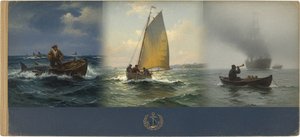
Winslow Homer : Les 25 Œuvres Maîtresses d'un Artiste Américain Iconique | OriginalUniqueArt
Plongez dans l'univers de Winslow Homer avec les 25 œuvres incontournables du maître américain. Découvrez ses peintures marines, paysages et scènes de genre, et trouvez l'inspiration déco idéale. Reproductions d'art de qualité muséale sur OriginalUniqueArt.com.

Paul Cézanne : Les 25 Œuvres Maîtresses d'un Génie Révolutionnaire | OriginalUniqueArt
Plongez dans l'univers de Paul Cézanne avec les 25 œuvres incontournables du maître post-impressionniste. Découvrez l'histoire, la technique et l'émotion derrière ses tableaux iconiques comme 'Les Baigneuses' ou 'Mont Sainte-Victoire'. Reproductions d'art haute qualité sur OriginalUniqueArt.com.
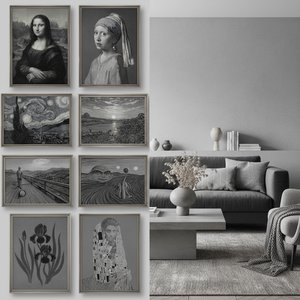
Les 10 Chefs-d'œuvre Grisants : Peintures Célèbres et Décoration d'Intérieur
Plongez dans l'univers subtil des 10 plus beaux tableaux gris de l'histoire de l'art. Découvrez Monet, Van Gogh et d'autres maîtres et trouvez l'inspiration déco parfaite sur !

Gerhard Richter: A Retrospective on Abstraction, Memory & the Photographic Source
Explore the profound world of Gerhard Richter's abstract paintings. Discover his techniques, influences, and lasting impact on contemporary art – a guide for discerning collectors.