

 Aperçu en situation
 Partager
 Partager
 Détails
 Guide imprimable

 Télécharger
 Articles similaires
 Radiographie
 Voir le diaporama
 Statistiques
Les Bougies


 Afficher la suite
L’œuvre d'art présentée sur cette page est protégée par le droit d'auteur, ce qui signifie que nous ne pouvons légalement créer ou vendre de reproduction identique. Cette protection est appliquée en vertu d'accords internationaux tels que la Convention de Berne et par les lois nationales, notamment celles énoncées par le Loi américaine sur le droit d'auteur - Titre 17.
Cette méthode est pleinement conforme aux réglementations sur le droit d'auteur car elle ne repose pas sur la copie ou la duplication de l'œuvre protégée. Il s'agit plutôt d'une réinterprétation créative — une nouvelle peinture qui s'inspire de l'original sans pour autant lui être identique.
Giclées et impressions d'art
Impressions giclées ou sur toile de qualité musée, avec une production rapide et des finitions au choix. ( Acheter la peinture faite à la main Passer au format image numérique)




P118B €10

P118H €10

P118W €10

P438Z €10

P508JH €12

P508YH €12

P805H €10

P805Z €10

P919BZ €10

P919G €10

P919XJ €10

P959ZH €10

P968JZ €12

W106C €8

W218G €10

W218JH €8

W218Y €10

W307PJ €10

W316G €10

W316PJ €8

W316Y €10

W398PJ €8

W4111J €10

W500HY €15

W500JH €15

W692G €12

W849H €8

W940BG €15

W953PJ €8




Choisissez parmi nos formats prédéfinis qui respectent les proportions originales de l’œuvre.

Saisissez la largeur et la hauteur souhaitées pour qu'elles s'adaptent à votre cadre ou à votre mur. Une impression ne peut être que découpée, elle ne peut jamais être agrandie au-delà de l'image originale ; ainsi, un format de forme différente entraînera la perte d'une partie de l'image. Nous vous envoyons une maquette numérique pour approbation avant toute impression. L'image présentée sur cette page ne montre pas le recadrage réel — seule la maquette le permet.
Livraison dans le monde entier () en 2 semaines au lieu des 4/5 semaines habituelles. (21 octobre)

Livraison express gratuite dans le monde entier

Toile de lin de haute qualité

Assurance transport complète

Garantie de remboursement des droits de douane

Garantie de fidélité des couleurs

Garantie de retour de 100 jours (uniquement en cas de défaut)

Garantie de remboursement à 100%

Tarifs dégressifs sur quantité
 L'option verre n'est disponible que pour les dimensions inférieures à 110 cm.

Les Bougies
Giclées et impressions d'art
Format de la reproduction
-


Prix total final
€ 70
Gerhard Richter’s Candles: A Silent Protest Against Oppression
Gerhard Richter, arguably the most influential figure in contemporary art, crafted a series of paintings titled *Candles*, which transcend mere visual representation to embody profound philosophical concepts – hope and mortality. Created in 1983, *Kertz*—as it’s known in German—holds its place within The Art Institute of Chicago's collection, attracting considerable attention from art connoisseurs like Frances Outred during the Christie Auction House’s Post-War & Contemporary Art gallery in 2011. Outred eloquently articulated Richter’s artistic vision, proclaiming that “this painting illuminated the room,” capturing not just light but also an intangible essence of contemplation.
- Early Life and Artistic Formation: Richter's formative years in East Germany profoundly shaped his artistic trajectory. Marked by displacement during wartime and a pervasive atmosphere of dogma, he developed a distinctive approach to painting characterized by intellectual rigor and a questioning spirit. Escaping to West Germany in 1961, he embraced experimentation with abstraction and realism, mirroring the anxieties of a divided nation.
- Richter’s Style: Richter's artistic style is defined by his masterful blending of photographic realism and blurred abstraction—a technique that distinguishes him from many of his contemporaries. He deliberately avoids sharp edges and precise details, favoring instead a hazy aesthetic that invites viewers to engage in active interpretation. This stylistic choice reflects his broader preoccupation with exploring the relationship between perception and reality.
Symbolism and Technique: A Dialogue Between Light and Darkness
The painting exudes an undeniable warmth, symbolizing both the optimism inherent in existence and the inevitability of death—a duality that resonates deeply within Richter’s oeuvre. His meticulous use of oil on canvas generates a palpable sense of depth and texture, drawing the viewer into the scene's contemplative atmosphere. The soft glow emanating from the candlelight serves as a visual echo of photographic images produced during his formative years, mirroring works like *Betty*, which similarly eschewed radical abstraction for honest portrayal.
- Photographic Influence: Richter’s artistic method draws heavily on the principles of photography—specifically the technique of blurring—to convey a sense of uncertainty and to challenge conventional notions of representation. This deliberate distortion serves as a conduit for exploring psychological states and questioning the reliability of visual perception.
- Color Palette & Texture: The muted color palette contributes to the painting’s melancholic mood, emphasizing the subtle nuances of tonal variation—a hallmark of Richter's artistic style. Furthermore, the textured surface of the canvas enhances the viewer’s sensory experience, fostering a connection with the artwork that transcends mere visual observation.
Historical Context and Relevance
Richter’s *Candles* series stands as a poignant testament to his ability to communicate complex emotions through deceptively simple imagery—a characteristic that aligns perfectly with the spirit of Minimalism, which emerged in the 1960s. The painting gained prominence during a period marked by political upheaval and ideological conflict, reflecting Richter's unwavering commitment to confronting uncomfortable truths about society.
- Reaction Against Socialist Realism: Richter’s rejection of Socialist Realism—the dominant artistic style in East Germany—represented a decisive break from prevailing cultural norms. This rebellious stance underscored his conviction that art should serve as a vehicle for critical engagement with the social and political landscape.
- Iconic Representation of Resilience: *Candles* has become an enduring symbol of hope and resilience in the face of adversity—a sentiment powerfully conveyed by Richter’s masterful manipulation of photographic technique and color palette. Its continued relevance speaks to its ability to resonate across generations of artists and art enthusiasts alike.
Reproduction and Preservation: Capturing the Essence of Richter's Vision
At OriginalUniqueArt.com, we offer exceptional reproductions of Gerhard Richter’s *Candles*, crafted by skilled artisans who meticulously recreate every detail of the original artwork. Our commitment to quality ensures that each reproduction embodies the same contemplative spirit and profound honesty as Richter’s masterpiece—a timeless reflection on beauty, mortality, and the enduring power of artistic expression.
Questions et réponses
Quel emplacement convient au format de «Les Bougies» de Gerhard Richter ?
Avec sa forme Format carré, une reproduction de « Les Bougies » est idéale pour un(e) Salon.
«Les Bougies» de Gerhard Richter est-il une peinture, un dessin ou une estampe ?
Dans le catalogue, «Les Bougies» de Gerhard Richter est répertorié comme Art mural. Cette catégorie permet de trouver des œuvres similaires.
Puis-je prévisualiser «Les Bougies» de Gerhard Richter avant de commander ?
Pour prévisualiser une reproduction de «Les Bougies» de Gerhard Richter, ouvrez la page Aperçu de l'œuvre.
Biographie de l'artiste
**Jeunesse et Éducation**
Gerhard Richter, artiste visuel allemand renommé, est né le 9 février 1932 à l'hôpital de Dresde-Neustadt, à Dresde, en Saxe. Il a grandi à Reichenau, Basse Silésie (aujourd’hui Bogatynia, Pologne), et à Waltersdorf (Zittauer Gebirge), dans la campagne supérieure de Lusace. Le père de Richter, Horst Richter, était étudiant en mathématiques et en physique à l'Technische Hochschule de Dresde.**Carrière artistique**
Richter a commencé son parcours artistique comme apprenti peintre décorateur et a ensuite étudié à l’Académie des Beaux-Arts de Dresde. Ses premières œuvres ont été influencées par les styles de Picasso et Jean Arp, ce qui est évident dans ses peintures abstraites et photoréalistes. En 1957, Richter a travaillé comme stagiaire maître à l'académie, réalisant des commandes pour l'époque de la République Démocratique allemande de l’Est.**Œuvres notables et réalisations**
* Abstrait (2012) a établi un prix de vente aux enchères record pour une peinture d'un artiste vivant à 34 millions de dollars (£21 million). * Domplatz, Mailand (Place de la cathédrale, Milan) (1968) a été vendu pour 37,1 millions de dollars (£24,4 million) à New York. * Abstrait (2015) a été vendu pour 44,52 millions de dollars (£30,4 million) lors de la vente aux enchères contemporaine de Sotheby's.**Style et mouvement artistique**
Le travail de Richter est caractérisé par son éclectisme, combinant des styles abstraits et photoréalistes. Avec Sigmar Polke, il a introduit le terme Kapitalistischer Realismus (Réalisme capitaliste), un anti-style d'art qui s'approprie le langage pictural de la publicité.**Vie personnelle**
Richter a épousé Marianne Eufinger en 1957 et a eu une fille. Il a plus tard épousé Isa Genzken en 1982 et Sabine Moritz en 1995, avec qui il a eu deux fils et une fille. **Note :** Cet article est basé sur les informations fournies et peut ne pas être une biographie complète. Pour plus d’informations détaillées, veuillez consulter les sources liées.
Gerhard Richter
1932 - , Allemagne
En bref
- Artistes Influents:
- Picasso
- Jean Arp
- Date De Naissance: 9 février 1932
- Lieu De Naissance: Dresde, Allemagne
- Mouvement Artistique:
- Abstraction
- Photoréalisme
- Nationalité: Allemand
- Nom Complet: Gerhard Richter
- Oeuvres Notables:
- Abstraktes Bild (2012)
- Domplatz, Milan (1968)
- Nuages
- S. avec enfant
- Style Artistique: Réalisme capitaliste
Articles connexes

Abstraction Géométrique : Les 10 Chefs-d'œuvre qui ont Marqué l'Histoire de l'Art
Plongez au cœur de l'abstraction géométrique avec OriginalUniqueArt.com ! Découvrez les 10 œuvres majeures de Mondrian, Malevitch et Kandinsky qui ont révolutionné l'art moderne. Inspirez votre décoration intérieure avec des reproductions de tableaux exceptionnelles. Explorez la collection en ligne !

Expressionnisme Abstrait : Les 10 Chefs-d'Œuvre Incontournables pour Décorer avec Art et Histoire
Plongez au cœur de l'Expressionnisme Abstrait avec ! Découvrez les 10 œuvres majeures de Pollock, Rothko et De Kooning. Histoire, techniques & inspiration déco. Explorez la collection complète en ligne.
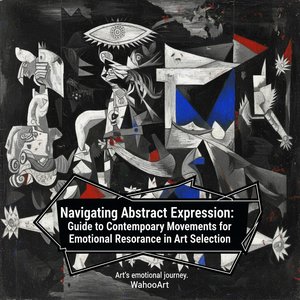
Naviguer l'Expression Abstraite : Guide des Mouvements Contemporains pour une Résonance Émotionnelle dans la Sélection Artistique
Guide expert pour collectionner l'expressionnisme abstrait : découvrez les maîtres (Pollock, Rothko), les tendances et conseils d'experts pour une sélection éclairée. OriginalUniqueArt.
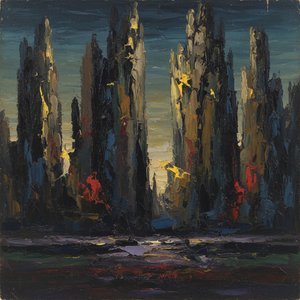
Clyfford Still's Abstract Expressionism: A Study of Color, Form & the Existential Landscape
Explore the profound world of Clyfford Still's Abstract Expressionism with OriginalUniqueArt. Discover his unique style, existential themes & investment potential. Expert analysis for discerning collectors.

Gerhard Richter: A Retrospective on Abstraction, Memory & the Photographic Source
Explore the profound world of Gerhard Richter's abstract paintings. Discover his techniques, influences, and lasting impact on contemporary art – a guide for discerning collectors.


