

 Aperçu en situation
 Partager
 Partager
 Détails
 Guide imprimable

 Télécharger
 Articles similaires
 Radiographie
 Voir le diaporama
 Statistiques
Intercepteurs Fantômes


 Afficher la suite
L’œuvre d'art présentée sur cette page est protégée par le droit d'auteur, ce qui signifie que nous ne pouvons légalement créer ou vendre de reproduction identique. Cette protection est appliquée en vertu d'accords internationaux tels que la Convention de Berne et par les lois nationales, notamment celles énoncées par le Loi américaine sur le droit d'auteur - Titre 17.
Cette méthode est pleinement conforme aux réglementations sur le droit d'auteur car elle ne repose pas sur la copie ou la duplication de l'œuvre protégée. Il s'agit plutôt d'une réinterprétation créative — une nouvelle peinture qui s'inspire de l'original sans pour autant lui être identique.
Giclées et impressions d'art
Impressions giclées ou sur toile de qualité musée, avec une production rapide et des finitions au choix. ( Acheter la peinture faite à la main Passer au format image numérique)




P118B €10

P118H €10

P118W €10

P438Z €10

P508JH €12

P508YH €12

P805H €10

P805Z €10

P919BZ €10

P919G €10

P919XJ €10

P959ZH €10

P968JZ €12

W106C €8

W218G €10

W218JH €8

W218Y €10

W307PJ €10

W316G €10

W316PJ €8

W316Y €10

W398PJ €8

W4111J €10

W500HY €15

W500JH €15

W692G €12

W849H €8

W940BG €15

W953PJ €8




Choisissez parmi nos formats prédéfinis qui respectent les proportions originales de l’œuvre.

Saisissez la largeur et la hauteur souhaitées pour qu'elles s'adaptent à votre cadre ou à votre mur. Une impression ne peut être que découpée, elle ne peut jamais être agrandie au-delà de l'image originale ; ainsi, un format de forme différente entraînera la perte d'une partie de l'image. Nous vous envoyons une maquette numérique pour approbation avant toute impression. L'image présentée sur cette page ne montre pas le recadrage réel — seule la maquette le permet.
Livraison dans le monde entier () en 2 semaines au lieu des 4/5 semaines habituelles. (21 octobre)

Livraison express gratuite dans le monde entier

Toile de lin de haute qualité

Assurance transport complète

Garantie de remboursement des droits de douane

Garantie de fidélité des couleurs

Garantie de retour de 100 jours (uniquement en cas de défaut)

Garantie de remboursement à 100%

Tarifs dégressifs sur quantité
 L'option verre n'est disponible que pour les dimensions inférieures à 110 cm.

Intercepteurs Fantômes
Giclées et impressions d'art
Format de la reproduction
-


Prix total final
€ 70
A Study in Motion and Illusion: Gerhard Richter’s Phantom Interceptors
Gerhard Richter's 1964 photograph, “Phantom Interceptors,” stands as a testament to the burgeoning New European Painting movement and Richter’s pioneering exploration of blending photography with painting. More than just a depiction of two McDonnell Douglas F-4 Phantom II fighter jets soaring against a turbulent sky, it embodies a profound interrogation of representation itself—a characteristic hallmark of Richter's artistic vision.
- Composition and Technique: The image’s central focus is undeniably the pair of Phantoms, positioned symmetrically on either side of the frame. Their proximity suggests an intense aerial engagement, perhaps a dogfight or a demonstration of military prowess. Richter skillfully employs a blurring technique—a hallmark of his style—to convey movement without sacrificing detail. This deliberate obfuscation isn’t merely stylistic; it reflects a broader philosophical stance questioning the viewer's perception of reality.
- Historical Context: Created during a period marked by Cold War anxieties and technological advancement, “Phantom Interceptors” captures the zeitgeist of its era. The photograph was taken shortly after the establishment of the Chuvash State Art Museum in Cheboksary, Russia—a symbol of Soviet cultural ambition—further anchoring the artwork within its socio-political landscape.
- Color Palette and Lighting: Richter’s masterful use of grayscale elevates the photograph beyond a simple record of observation. The stark contrast between light and shadow sculpts the aircraft forms, creating dramatic visual impact and emphasizing their three-dimensional presence. This deliberate restriction of color underscores the artwork's emotional core—a sense of austere beauty and contemplative reflection.
- Symbolism & Emotional Impact: Beyond its technical merits, “Phantom Interceptors” speaks to themes of power, speed, and perhaps even tension. The blurred jets symbolize the elusive nature of experience, mirroring Richter’s broader preoccupation with capturing fleeting moments and conveying intangible emotions. It invites viewers to contemplate the relationship between observation and interpretation.
- Further Exploration: Interested in delving deeper into Richter's artistic journey? Explore his extensive collection at OriginalUniqueArt.com (
Questions et réponses
Où puis-je acheter une impression de «Intercepteurs Fantômes» de Gerhard Richter ?
« Intercepteurs Fantômes » est disponible en tant que une impression d'art sur toile de coton ou sur papier canvas d'archive. Les commandes s'effectuent sur sa page Impression d'art fine, dans le format de votre choix.
Quelle est la popularité de « Intercepteurs Fantômes » au sein du mouvement New European Painting ?
« Intercepteurs Fantômes » est répertorié comme étant Reconnue parmi les œuvres du New European Painting dans le catalogue.
Quelle est la teinte dominante de «Intercepteurs Fantômes» de Gerhard Richter ?
«Intercepteurs Fantômes» tend vers une nuance Spectre du vert au violet.
Biographie de l'artiste
**Jeunesse et Éducation**
Gerhard Richter, artiste visuel allemand renommé, est né le 9 février 1932 à l'hôpital de Dresde-Neustadt, à Dresde, en Saxe. Il a grandi à Reichenau, Basse Silésie (aujourd’hui Bogatynia, Pologne), et à Waltersdorf (Zittauer Gebirge), dans la campagne supérieure de Lusace. Le père de Richter, Horst Richter, était étudiant en mathématiques et en physique à l'Technische Hochschule de Dresde.**Carrière artistique**
Richter a commencé son parcours artistique comme apprenti peintre décorateur et a ensuite étudié à l’Académie des Beaux-Arts de Dresde. Ses premières œuvres ont été influencées par les styles de Picasso et Jean Arp, ce qui est évident dans ses peintures abstraites et photoréalistes. En 1957, Richter a travaillé comme stagiaire maître à l'académie, réalisant des commandes pour l'époque de la République Démocratique allemande de l’Est.**Œuvres notables et réalisations**
* Abstrait (2012) a établi un prix de vente aux enchères record pour une peinture d'un artiste vivant à 34 millions de dollars (£21 million). * Domplatz, Mailand (Place de la cathédrale, Milan) (1968) a été vendu pour 37,1 millions de dollars (£24,4 million) à New York. * Abstrait (2015) a été vendu pour 44,52 millions de dollars (£30,4 million) lors de la vente aux enchères contemporaine de Sotheby's.**Style et mouvement artistique**
Le travail de Richter est caractérisé par son éclectisme, combinant des styles abstraits et photoréalistes. Avec Sigmar Polke, il a introduit le terme Kapitalistischer Realismus (Réalisme capitaliste), un anti-style d'art qui s'approprie le langage pictural de la publicité.**Vie personnelle**
Richter a épousé Marianne Eufinger en 1957 et a eu une fille. Il a plus tard épousé Isa Genzken en 1982 et Sabine Moritz en 1995, avec qui il a eu deux fils et une fille. **Note :** Cet article est basé sur les informations fournies et peut ne pas être une biographie complète. Pour plus d’informations détaillées, veuillez consulter les sources liées.
Gerhard Richter
1932 - , Allemagne
En bref
- Artistes Influents:
- Picasso
- Jean Arp
- Date De Naissance: 9 février 1932
- Lieu De Naissance: Dresde, Allemagne
- Mouvement Artistique:
- Abstraction
- Photoréalisme
- Nationalité: Allemand
- Nom Complet: Gerhard Richter
- Oeuvres Notables:
- Abstraktes Bild (2012)
- Domplatz, Milan (1968)
- Nuages
- S. avec enfant
- Style Artistique: Réalisme capitaliste
Articles connexes

10 chefs-d'œuvre de la photographie noir et blanc qui ont marqué l'histoire de l'art
Plongez dans l'essence de la lumière et de l'ombre avec nos 10 chefs-d'œuvre de la photographie noir et blanc. De Warhol à Dalí, explorez des œuvres iconiques pour votre décoration. Trouvez vos reproductions de qualité musée sur OriginalUniqueArt.com.
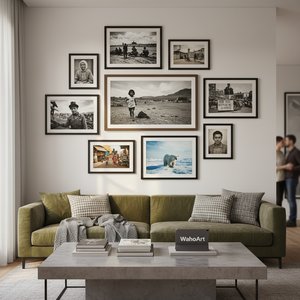
Les 10 Chefs-d'œuvre de la Photographie Documentaire : Artistes & Décor Intérieur
Plongez au cœur de la photographie documentaire avec les 10 œuvres incontournables qui ont marqué l'histoire. Découvrez les artistes, leurs techniques et trouvez l'inspiration déco sur ! Explorez notre collection en ligne.

Les 10 Chefs-d'œuvre Noirs : Peintures Célèbres et Décoration d'Intérieur
Plongez dans l'univers fascinant des 10 plus beaux tableaux noirs de l'histoire de l'art. Découvrez les secrets de Goya, Manet, Rothko et autres maîtres. Inspirez votre décoration intérieure avec !

10 chefs-d'œuvre de la photographie noir et blanc qui ont révolutionné l'art
Plongez dans l'âme du monochrome avec nos 10 chefs-d'œuvre de la photographie noir et blanc. De Warhol à Gordon Parks, explorez l'histoire de ces icônes et trouvez l'inspiration pour votre décoration avec nos reproductions d'art. Découvrez tous les chefs-d'œuvre sur OriginalUniqueArt.com.
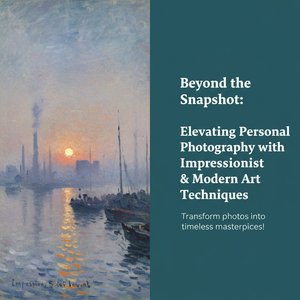
Au-delà de l'Instantané : L'Élévation de la Photographie Personnelle par les Techniques Impressionnistes et Modernes
Explorez l'évolution de la photographie personnelle au-delà du simple instantané. Découvrez les techniques impressionnistes et modernes qui élèvent cet art à un niveau supérieur. Expertise, conseils & collection exclusive sur OriginalUniqueArt.


