 Aperçu en situation
 Envoyer
 Partager
 Détails de l'œuvre
 Guide
Guide

 Télécharger l'image
 Articles similaires
 Radiographie
 Diaporama
 Questions et réponses
 Statistiques
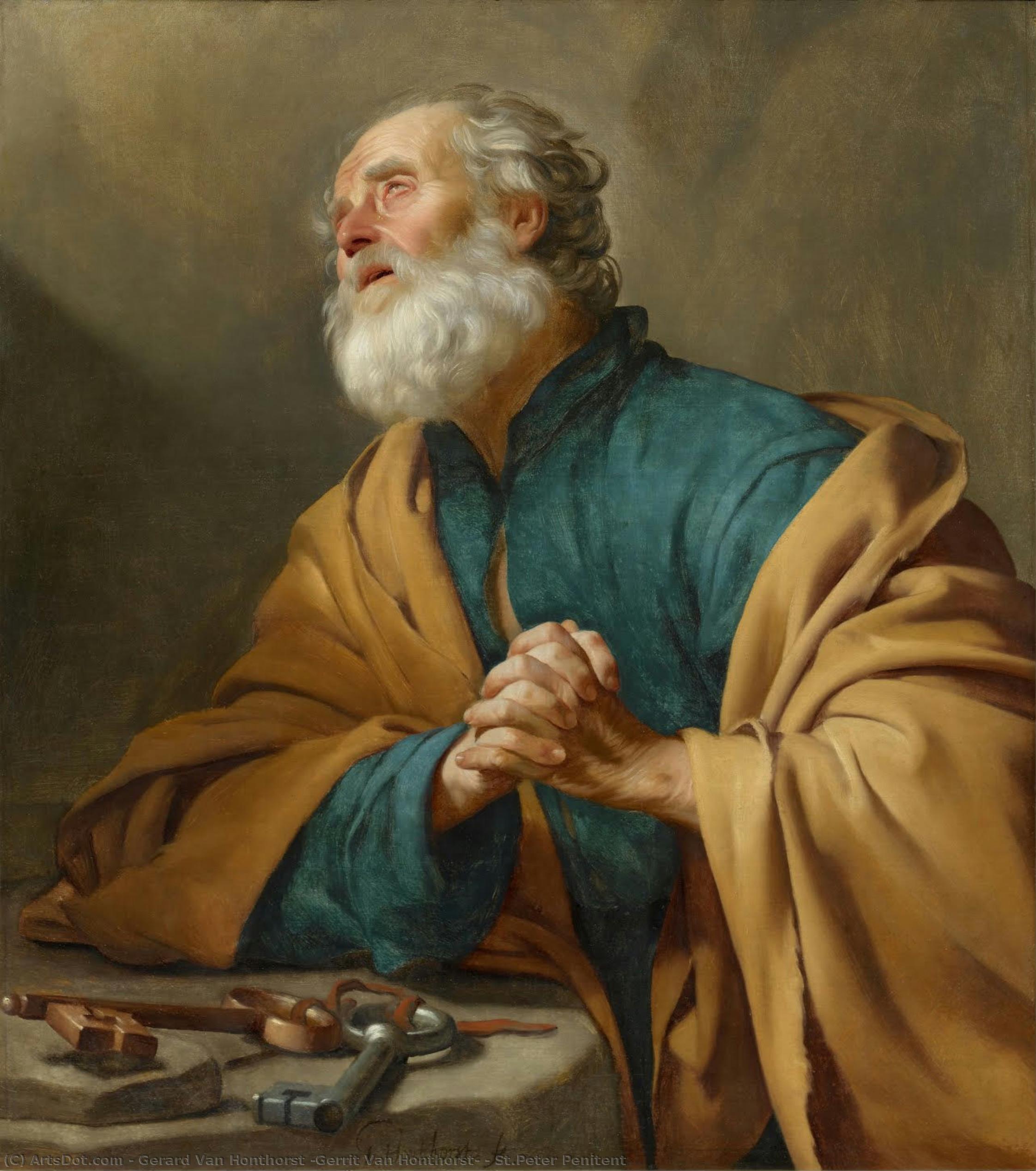
St.Peter Penitent

- 97.0 x 110.0 cm


 Lire la suite
Obtenez un fichier prêt pour l'impression qui dépasse de loin la qualité de l'aperçu web. Chaque image numérique que nous proposons est issue d'un fichier maître haute résolution de notre base de données — mesurant généralement entre 5 000 et 15 000 pixels de large — vous permettant ainsi d'imprimer en grand format, de recadrer avec précision ou de reproduire les détails les plus fins en toute confiance.
Aucun fichier ne quitte notre studio sans être retouché. Un expert numérique vérifie la colorimétrie par rapport à l'œuvre originale et la corrige si nécessaire, puis améliore la clarté et les détails à l'aide d'outils de retouche professionnels — tout en restant toujours fidèle au coup de pinceau et au style de l'artiste. Le résultat est une image qui ressemble au tableau, et non à un simple scan filtré.
Validez avant de finaliser : notre expert vous envoie l'image par e-mail sous 72 heures pour examen. Non satisfait ? Demandez des améliorations ou des corrections, ou demandez un remboursement si la qualité ne répond pas à vos attentes.
C'est une qualité sur laquelle s'appuient éditeurs, studios de création, galeries et ateliers d'impression.
Image numérique
Téléchargez un fichier haute résolution pour votre usage personnel, l'impression et vos projets créatifs. ( Passer au format impression Commander la reproduction peinte à la main)
Inclus avec chaque commande d'image numérique
Livraison numérique experte, garantie.
En choisissant OriginalUniqueArt.com, vous n'obtenez pas seulement une simple image : vous recevez une œuvre numérique sublimée avec professionnalisme, conçue avec précision et accompagnée d'une garantie de satisfaction. Voici tout ce qui accompagne automatiquement votre commande :

Envoi rapide par e-mail
Votre fichier d'image numérique haute résolution vous sera envoyé par e-mail sous 72 heures après votre commande — prêt à un usage immédiat.

Fichier numérique optimisé par l'IA
Votre œuvre d'art bénéficie d'une optimisation professionnelle grâce à des outils d'IA avancés et une retouche manuelle, garantissant un niveau maximal de détail, de clarté et de fidélité chromatique.

Réexpédition gratuite à vie
Vous avez accidentellement supprimé ou perdu votre fichier ? Pas d'inquiétude — nous vous le renverrons gratuitement, quand vous le souhaitez.

Aucuns frais de douane — À jamais
Profitez de votre œuvre d'art instantanément sans frais de douane ni de livraison — les téléchargements numériques sont toujours exonérés de taxes.

Garantie de fidélité des couleurs
Nous garantissons que votre image numérique reproduit les couleurs de l'original aussi fidèlement que possible grâce à des outils professionnels et une gestion rigoureuse des couleurs.

Garantie de satisfaction 100 jours
Si vous n'êtes pas satisfait de votre image numérique, nous la retoucherons ou vous rembourserons 100% sous 100 jours — sans poser de questions.

Garantie de remboursement à 100%
Pas satisfait ? Obtenez un remboursement intégral dans les 100 jours suivant la réception de votre fichier numérique — sans aucune question posée.

Réductions sur les commandes groupées
Achetez 3 images, économisez 10% - Achetez 5, économisez 15% - Achetez 10+, économisez 20%. Idéal pour les projets créatifs, les galeries et les agences.
A Study in Shadow and Faith: Gerard van Honthorst’s ‘St. Peter Penitent’
Gerard van Honthorst's “St. Peter Penitent” is more than just a portrait; it’s a profound meditation on faith, repentance, and the dramatic interplay of light and darkness – hallmarks of the artist’s distinctive style forged in the crucible of the Roman Baroque. Painted circa 1618-20, this work offers a rare glimpse into the artistic sensibilities of a master who skillfully blended Caravaggio's revolutionary tenebrism with his own nuanced approach to human emotion.
- The Figure: The central subject is an elderly man, rendered with remarkable realism and sensitivity. His posture – head bowed, hands clasped in prayer – immediately conveys a sense of deep introspection and sorrow. The details of his weathered face, the furrowed brow, and the carefully observed folds of his blue robe speak to a life lived, perhaps one marked by both virtue and regret.
- Caravaggio’s Legacy: Honthorst's debt to Caravaggio is undeniable. Just as Caravaggio used stark contrasts to heighten emotional impact, Honthorst employs dramatic lighting to isolate Peter within a sphere of illumination, drawing the viewer’s eye directly to his face and intensifying the sense of his inner turmoil.
- Technical Mastery: The painting demonstrates a sophisticated understanding of oil paint techniques. Notice the subtle gradations in tone, achieved through meticulous layering and blending, creating a rich texture that adds depth and realism to the figure. The use of impasto – thick application of paint – particularly around the folds of the robe, further enhances the three-dimensional effect.
The Language of Light: Tenebrism and its Impact
Honthorst’s masterful manipulation of light is central to the painting's power. The tenebrist technique, popularized by Caravaggio, isn’t merely a stylistic choice; it’s a deliberate strategy for conveying psychological states. The deep shadows enveloping Peter suggest a hidden world of doubt and remorse, while the single source of illumination – likely from an unseen window – symbolizes divine grace or perhaps the flickering hope of redemption. This contrast creates a palpable tension within the composition, forcing the viewer to confront the complexities of faith and human fallibility.
“The darkness is not merely the absence of light,” Honthorst seems to suggest, “but an active element in the drama of the soul.”Symbolism and Context
Beyond its immediate devotional subject matter, "St. Peter Penitent" resonates with broader symbolic meanings. The tools scattered around the figure – wrenches and screwdrivers – are a striking anomaly, introducing an element of earthly labor and repair into a scene traditionally associated with spiritual contemplation. This juxtaposition could represent the ongoing struggle between faith and worldly concerns, or perhaps the need for constant vigilance against temptation. Painted during a period of intense religious fervor and artistic innovation, the work reflects the broader cultural anxieties and aspirations of its time.
- Historical Context: Honthorst was working in Utrecht during a period of significant artistic change, influenced by the influx of Italian artists and ideas.
- Royal Patronage: The painting’s creation coincided with Honthorst's increasing prominence within European royal circles, including Queen Elizabeth of Bohemia, who commissioned numerous works from him.
A Timeless Masterpiece
"St. Peter Penitent" remains a compelling and emotionally resonant work of art. Its dramatic lighting, meticulous detail, and profound subject matter continue to captivate viewers centuries after its creation. It’s a testament to Gerard van Honthorst's artistic genius – a master of light, shadow, and the human condition.
Questions et réponses
«St.Peter Penitent» de Gérard van Honthorst est-il une œuvre lumineuse ou sombre ?
« St.Peter Penitent » présente une luminosité globale de shadow, avec une luminance de Dark.
Existe-t-il une fiche informative sur «St.Peter Penitent» de Gérard van Honthorst destinée aux étudiants ?
Une page Fiche pédagogique est disponible pour «St.Peter Penitent» de Gérard van Honthorst : une fiche pédagogique imprimable sur l'œuvre, conçue pour les étudiants et un usage en classe.
Qui est l'artiste derrière « St.Peter Penitent » ?
« St.Peter Penitent » a été créé par Gérard van Honthorst. Les informations présentes sur cette page décrivent l'œuvre originale de Gérard van Honthorst.
Biographie de l'artiste
Première jeunesse et formation
Gérard van Honthorst, peintre néerlandais important de l'âge d'or néerlandais, est né le 4 novembre 1590 à Utrecht. Il était le fils d’un peintre décorateur et a initialement été formé sous la direction de son père. Plus tard, il a poursuivi sa formation artistique sous Abraham Bloemaert.Carrière et influences
La carrière précoce de van Honthorst a impliqué une visite à Rome, où il a été fortement influencé par le style de Caravage. Cette influence se manifeste dans ses œuvres ultérieures, en particulier dans son utilisation de scènes éclairées artificiellement, ce qui lui a valu le surnom de « Gherardo delle Notti » ou « Gérard des nuits ». À son retour aux Pays-Bas, van Honthorst est devenu un peintre portraitiste de premier plan.Commandes notables et mécénat
Le travail de van Honthorst était très demandé, avec des mécènes notables tels que Vincenzo Giustiniani, qui l’a chargé de peindre « Christ devant le grand prêtre », exposé à la National Gallery de Londres. Il a également travaillé pour Cosme II de Médicis, grand-duc de Toscane, et était un favori auprès de la République néerlandaise et à l’étranger.Héritage et vie ultérieure
En 1620, van Honthorst est retourné à Utrecht, où il a bâti une réputation considérable. En 1623, année de son mariage, il était devenu président de la guilde Saint-Luc d’Utrecht. Son succès a conduit à des recommandations par Sir Dudley Carleton pour l'Earl of Arundel et Lord Dorchester.Œuvres clés et collaborations
- La prise du Christ, une œuvre collaborative initialement attribuée à van Honthorst, aujourd'hui reconnue comme l’œuvre d’un autre artiste.
- Christ devant le grand prêtre, commandée par Vincenzo Giustiniani, met en valeur la capacité de van Honthorst à capturer des scènes éclairées artificiellement.
- Des collaborations avec d’autres artistes, tels que Peter Paul Rubens, démontrent son influence sur le style baroque flamand.
Mouvement artistique et style
Van Honthorst faisait partie du mouvement des Utrecht Caravaggistes, caractérisé par l’utilisation d’un éclairage dramatique et d’une profondeur émotionnelle intense. Son travail reflète l’influence de la baroque italienne, tout en contribuant au développement de l'âge d'or néerlandais. Principaux liens :
Gérard van Honthorst
1590 - 1656 , Pays-Bas
En bref
- Artistic Movement Or Style: Caravagisme d'Utrecht, Baroque
- Artists Or Movements Influenced By This Artist:
- Rembrandt van Rijn
- Georges de la Tour
- Artists Who Influenced This Artist:
- Caravage
- Abraham Bloemaert
- Date Of Birth: 4 novembre 1590
- Date Of Death: 27 avril 1656
- Full Name: Gérard van Honthorst
- Nationality: Néerlandais
- Notable Artworks:
- Christ avant le grand prêtre
- La Prise du Christ
- Place Of Birth (City And Country): Utrecht, Pays-Bas