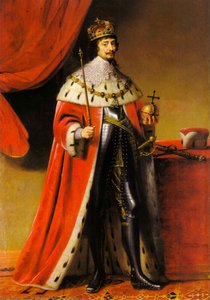
Aperçu en situation
 Partager
 Partager
 Détails
 Guide imprimable

 Télécharger
 Articles similaires
 Radiographie
 Voir le diaporama
 Statistiques
St Jerome
 Huile sur toile
- Art mural
- Baroque Dramatic Light
 109.0 x 139.0 cm
 Musée de Liechtenstein
 Afficher la suite
Giclées et impressions d'art
Impressions giclées ou sur toile de qualité musée, avec une production rapide et des finitions au choix. ( Acheter la peinture faite à la main Passer au format image numérique)




P118B €10

P118H €10

P118W €10

P438Z €10

P508JH €12

P508YH €12

P805H €10

P805Z €10

P919BZ €10

P919G €10

P919XJ €10

P959ZH €10

P968JZ €12

W106C €8

W218G €10

W218JH €8

W218Y €10

W307PJ €10

W316G €10

W316PJ €8

W316Y €10

W398PJ €8

W4111J €10

W500HY €15

W500JH €15

W692G €12

W849H €8

W940BG €15

W953PJ €8




Choisissez parmi nos formats prédéfinis qui respectent les proportions originales de l’œuvre.

Saisissez la largeur et la hauteur souhaitées pour qu'elles s'adaptent à votre cadre ou à votre mur. Une impression ne peut être que découpée, elle ne peut jamais être agrandie au-delà de l'image originale ; ainsi, un format de forme différente entraînera la perte d'une partie de l'image. Nous vous envoyons une maquette numérique pour approbation avant toute impression. L'image présentée sur cette page ne montre pas le recadrage réel — seule la maquette le permet.
Livraison dans le monde entier () en 2 semaines au lieu des 4/5 semaines habituelles. (21 octobre)

Livraison express gratuite dans le monde entier

Toile de lin de haute qualité

Assurance transport complète

Garantie de remboursement des droits de douane

Garantie de fidélité des couleurs

Garantie de retour de 100 jours (uniquement en cas de défaut)

Garantie de remboursement à 100%

Tarifs dégressifs sur quantité
 L'option verre n'est disponible que pour les dimensions inférieures à 110 cm.

St Jerome
Giclées et impressions d'art
Format de la reproduction
-


Prix total final
€ 70
Saint Jerome by Gerrit van Honthorst: Illuminating the Dutch Golden Age with Caravaggism & Courtly Grace
The painting Saint Jerome by Gerard van Honthorst (Gerrit Van Honthorst) stands as a testament to the Baroque aesthetic, capturing not merely a depiction of biblical scripture but also an atmosphere steeped in contemplation and intellectual rigor. Executed in oil on canvas circa 1647-1650, this artwork resides within the Liechtenstein Museum’s collection in Vienna, Austria—a location that underscores its significance as a cornerstone of Dutch Baroque art history. Measuring approximately 109 x 139 cm, Van Honthorst's masterpiece distinguishes itself through masterful use of chiaroscuro – a technique pioneered by Caravaggio – transforming light and shadow into instruments of dramatic expression and psychological insight.- Subject Matter: The scene portrays Saint Jerome in his study, meticulously rendered against a dimly lit interior punctuated by the stark illumination emanating from a large mirror positioned to the left. This mirror serves not merely as an optical element but also as a symbolic device reflecting both the saint’s figure and the room itself—a motif frequently employed during the Baroque period to heighten visual impact and convey notions of duality and introspection.
- Style & Technique: Van Honthorst's signature style embodies Caravaggio’s influence, prioritizing dramatic realism achieved through tenebrism – a bold juxtaposition of intense light against deep darkness. The artist skillfully employs subtle modeling of light and shadow to sculpt the contours of Jerome’s robe and torso, creating an illusion of volume that draws the viewer’s gaze inward.
- Symbolism: Scattered throughout the composition are symbolic objects—a skull prominently displayed in Jerome's left hand—representing mortality and serving as a poignant reminder of human vulnerability. Alongside the skull rests a book open on his desk, symbolizing knowledge and spiritual contemplation. The inclusion of another skull positioned near the mirror reinforces this thematic preoccupation with death and decay.
- Historical Context: Produced during the Dutch Golden Age – a period characterized by unprecedented artistic flourishing—Saint Jerome reflects the intellectual currents of its time. Artists like Van Honthorst sought to elevate religious imagery beyond mere representation, aiming instead to evoke profound emotional responses and stimulate contemplation on existential themes.
- Emotional Impact: The painting’s subdued color palette—dominated by earthy tones—contributes to its melancholic mood, fostering a sense of solitude and introspection that aligns perfectly with Jerome's ascetic lifestyle. Van Honthorst’s meticulous attention to detail—evident in the textures of the robe, the reflections in the mirror, and the subtle modeling of light—further enhances the artwork’s immersive quality, transporting viewers into the contemplative space of Saint Jerome’s study.
Detailed Analysis: Caravaggism & Chiaroscuro Mastery
Gerard van Honthorst's masterful manipulation of chiaroscuro – derived directly from Caravaggio’s groundbreaking approach – elevates Saint Jerome beyond a simple portrait into an embodiment of Baroque dramatic idealism. The artist meticulously sculpts the figure with light, creating a palpable sense of volume and depth that draws the viewer’s eye toward Jerome’s central form. This technique isn't merely decorative; it serves as a conduit for conveying psychological states—the saint’s inner turmoil mirrored in the stark contrasts of light and shadow. The mirror reflects not only Jerome’s physical presence but also the room’s ambiance, amplifying the painting’s contemplative atmosphere and reinforcing its symbolic significance.Notable Comparisons & Artistic Influences
Saint Jerome stands alongside other seminal Baroque paintings—such as Rembrandt's *The Return of Susanna* and Rubens' *The Descent from Calvary*—as exemplifying the period's artistic conventions. Van Honthorst’s work shares a common thread with these masterpieces: an unwavering commitment to realism infused with expressive emotion. Like Caravaggio, he prioritized capturing the human condition with unflinching honesty, eschewing idealized representations in favor of portraying figures grappling with profound spiritual dilemmas.Provenance & Artistic Legacy
Currently housed at the Liechtenstein Museum, Saint Jerome’s journey through art history reflects the broader dissemination of Baroque ideals across Europe. Its meticulous execution and symbolic richness underscore Van Honthorst's enduring contribution to Dutch artistic heritage—a legacy that continues to inspire artists and collectors alike. The painting serves as a poignant reminder of the Baroque period’s fascination with introspection, mortality, and the pursuit of spiritual enlightenment.Questions et réponses
Quel niveau de contraste présente «St Jerome» de Gérard van Honthorst ?
«St Jerome» de Gérard van Honthorst présente un contraste Serein entre ses zones claires et ses zones sombres.
Comment peut-on intégrer «St Jerome» de Gérard van Honthorst dans la décoration intérieure ?
L'utilisation (Accent coloré) et l'espace (Salon) sont les deux recommandations enregistrées pour «St Jerome» de Gérard van Honthorst.
Quelle est la luminance de «St Jerome» de Gérard van Honthorst ?
La luminance enregistrée pour «St Jerome» de Gérard van Honthorst est de Sombre.
Biographie de l'artiste
Première jeunesse et formation
Gérard van Honthorst, peintre néerlandais important de l'âge d'or néerlandais, est né le 4 novembre 1590 à Utrecht. Il était le fils d’un peintre décorateur et a initialement été formé sous la direction de son père. Plus tard, il a poursuivi sa formation artistique sous Abraham Bloemaert.Carrière et influences
La carrière précoce de van Honthorst a impliqué une visite à Rome, où il a été fortement influencé par le style de Caravage. Cette influence se manifeste dans ses œuvres ultérieures, en particulier dans son utilisation de scènes éclairées artificiellement, ce qui lui a valu le surnom de « Gherardo delle Notti » ou « Gérard des nuits ». À son retour aux Pays-Bas, van Honthorst est devenu un peintre portraitiste de premier plan.Commandes notables et mécénat
Le travail de van Honthorst était très demandé, avec des mécènes notables tels que Vincenzo Giustiniani, qui l’a chargé de peindre « Christ devant le grand prêtre », exposé à la National Gallery de Londres. Il a également travaillé pour Cosme II de Médicis, grand-duc de Toscane, et était un favori auprès de la République néerlandaise et à l’étranger.Héritage et vie ultérieure
En 1620, van Honthorst est retourné à Utrecht, où il a bâti une réputation considérable. En 1623, année de son mariage, il était devenu président de la guilde Saint-Luc d’Utrecht. Son succès a conduit à des recommandations par Sir Dudley Carleton pour l'Earl of Arundel et Lord Dorchester.Œuvres clés et collaborations
- La prise du Christ, une œuvre collaborative initialement attribuée à van Honthorst, aujourd'hui reconnue comme l’œuvre d’un autre artiste.
- Christ devant le grand prêtre, commandée par Vincenzo Giustiniani, met en valeur la capacité de van Honthorst à capturer des scènes éclairées artificiellement.
- Des collaborations avec d’autres artistes, tels que Peter Paul Rubens, démontrent son influence sur le style baroque flamand.
Mouvement artistique et style
Van Honthorst faisait partie du mouvement des Utrecht Caravaggistes, caractérisé par l’utilisation d’un éclairage dramatique et d’une profondeur émotionnelle intense. Son travail reflète l’influence de la baroque italienne, tout en contribuant au développement de l'âge d'or néerlandais. Principaux liens :
Gérard van Honthorst
1590 - 1656 , Pays-Bas
En bref
- Artistic Movement Or Style: Caravagisme d'Utrecht, Baroque
- Artists Or Movements Influenced By This Artist:
- Rembrandt van Rijn
- Georges de la Tour
- Artists Who Influenced This Artist:
- Caravage
- Abraham Bloemaert
- Date Of Birth: 4 novembre 1590
- Date Of Death: 27 avril 1656
- Full Name: Gérard van Honthorst
- Nationality: Néerlandais
- Notable Artworks:
- Christ avant le grand prêtre
- La Prise du Christ
- Place Of Birth (City And Country): Utrecht, Pays-Bas
Articles connexes

Les 10 Chefs-d'œuvre du Baroque Néerlandais : Artistes et Décor Intemporels
Plongez au cœur du Baroque néerlandais avec les 10 œuvres incontournables de Rembrandt, Vermeer et autres maîtres hollandais. Découvrez l'histoire, la lumière et les couleurs qui ont façonné ce mouvement artistique. Reproductions d'art de qualité muséale sur OriginalUniqueArt.com

Les 10 Chefs-d'œuvre Baroques qui ont Révolutionné l'Art |
Plongez au cœur du baroque avec les 10 chefs-d'œuvre de Caravaggio, Rembrandt et Rubens. Découvrez l'histoire fascinante de ces artistes et leurs tableaux célèbres. Reproductions d'art de qualité muséale sur – Explorez la collection !

L'Éclat du Baroque : Comprendre le Drame et l'Émotion de l'Art du XVIIe Siècle
Explorez le drame et la lumière du XVIIe siècle à travers Caravage et Rubens. Plongez dans l'intensité de l'art baroque dès maintenant.

Rembrandt van Rijn : Les 25 Œuvres Maîtresses à Redécouvrir | OriginalUniqueArt
Plongez dans l'univers de Rembrandt van Rijn avec les 25 œuvres incontournables du maître baroque. Découvrez l'histoire, la technique et l'émotion derrière ses portraits célèbres et 'La Ronde de Nuit'. Reproductions tableaux haute qualité sur OriginalUniqueArt.com
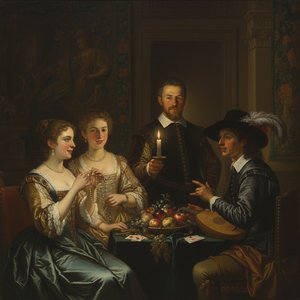
Gerard van Honthorst: Illuminating the Dutch Golden Age with Caravaggism & Courtly Grace
Explore the captivating world of Gerard van Honthorst, a Dutch Golden Age master renowned for his dramatic chiaroscuro & courtly portraits. Discover his life, art, and lasting influence on Baroque painting.