Aperçu en situation
 Partager
 Partager
 Détails
 Guide imprimable

 Télécharger
 Articles similaires
 Radiographie
 Voir le diaporama
 Statistiques
Merry Company
 Acrylic On Canvas
- WallArt
- Baroque Painting
 1623
1623 125.0 x 157.0 cm
 Staatsgalerie
 Afficher la suite
Giclées et impressions d'art
Impressions giclées ou sur toile de qualité musée, avec une production rapide et des finitions au choix. ( Acheter la peinture faite à la main Passer au format image numérique)




P118B €10

P118H €10

P118W €10

P438Z €10

P508JH €12

P508YH €12

P805H €10

P805Z €10

P919BZ €10

P919G €10

P919XJ €10

P959ZH €10

P968JZ €12

W106C €8

W218G €10

W218JH €8

W218Y €10

W307PJ €10

W316G €10

W316PJ €8

W316Y €10

W398PJ €8

W4111J €10

W500HY €15

W500JH €15

W692G €12

W849H €8

W940BG €15

W953PJ €8




Choisissez parmi nos formats prédéfinis qui respectent les proportions originales de l’œuvre.

Vous pouvez saisir vos propres dimensions pour vous adapter à un cadre ou à un espace spécifique. Si la taille sélectionnée ne correspond pas aux proportions de l'image originale, nous recadrerons l'œuvre ou étendrons l'image avec une bordure en miroir ou une couleur unie. Une maquette numérique vous sera envoyée pour approbation avant le début de la production.
Veuillez noter que l'aperçu à l'écran ne reflète pas le recadrage ou l'extension réelle. Seule la maquette montrera avec précision la composition finale.
Bien que des tailles personnalisées soient disponibles, nous vous recommandons de choisir une dimension dans la liste prédéfinie afin de préserver les proportions originales.
Livraison dans le monde entier () en 2 semaines au lieu des 4/5 semaines habituelles. (12 octobre)

Livraison express gratuite dans le monde entier

Toile de lin de haute qualité

Assurance transport complète

Garantie de remboursement des droits de douane

Garantie de fidélité des couleurs

Garantie de retour de 100 jours (uniquement en cas de défaut)

Garantie de remboursement à 100%

Tarifs dégressifs sur quantité
 L'option verre n'est disponible que pour les dimensions inférieures à 110 cm.

Merry Company
Giclées et impressions d'art
Format de la reproduction
-


Prix total final
€ 69
A Dance in Shadow: Gerard van Honthorst’s “Merry Company”
Gerard van Honthorst's "Merry Company," painted in 1623, isn’t merely a depiction of a tavern scene; it’s a carefully orchestrated tableau of light, social interaction, and the subtle drama inherent in human connection. This remarkable work, now residing within the Alte Pinakothek in Munich, offers a captivating glimpse into the vibrant heart of the Dutch Golden Age – a period defined by burgeoning wealth, artistic innovation, and a fascination with capturing the nuances of everyday life.
The painting immediately draws the eye with its masterful use of chiaroscuro, a technique borrowed directly from Caravaggio and central to Honthorst’s signature style. Deep shadows engulf much of the composition, creating an atmosphere of intimacy and drawing attention to the illuminated figures clustered around a table laden with goblets, wine glasses, and platters of food. This dramatic interplay of light and dark isn't simply aesthetic; it serves to heighten the sense of drama and immediacy, as if we are witnessing a fleeting moment frozen in time.
The Setting: A Tavern’s Embrace
The scene unfolds within what appears to be a richly appointed tavern – though the specific location remains somewhat elusive. The details suggest a comfortable, well-established establishment, likely frequented by merchants and members of the local elite. Notice the carefully rendered furniture, the warm glow emanating from unseen candles, and the abundance of drinkware. The composition is deliberately crowded, reflecting the lively atmosphere of a social gathering. Several figures are seated, engaged in conversation or perhaps enjoying music – though the instruments themselves aren’t explicitly visible, their presence is strongly implied.
A key element to note is the inclusion of several women amongst the men. This was relatively uncommon in Dutch genre paintings of this era, and suggests a deliberate attempt by Honthorst to portray a more balanced and inclusive representation of social life. The women are not merely decorative; they actively participate in the conversation and revelry, contributing to the overall sense of merriment.
A Caravaggistic Influence: Light and Emotion
Honthorst’s debt to Caravaggio is undeniable. Like his Italian predecessor, he understood the power of light to shape perception and evoke emotion. The strong directional lighting casts dramatic shadows that sculpt the figures' faces and bodies, emphasizing their expressions and gestures. The use of a single, unseen light source creates a sense of immediacy and realism, as if we are present at this lively gathering ourselves.
Furthermore, Honthorst’s attention to detail is remarkable. From the folds of the clothing to the textures of the furniture, every element contributes to the overall sense of authenticity. The figures themselves are rendered with a subtle psychological depth – their expressions ranging from jovial amusement to quiet contemplation. This level of realism was highly valued by Dutch artists during this period and reflects Honthorst’s skill as a portraitist.
Symbolism and Social Commentary
Beyond its immediate visual appeal, “Merry Company” offers subtle insights into the social dynamics of 17th-century Holland. The painting can be interpreted as a celebration of prosperity and leisure – hallmarks of the Dutch Golden Age. However, it also subtly hints at the potential pitfalls of excess and indulgence. The abundance of drink and merriment serves as a reminder of the importance of moderation and self-control.
The inclusion of figures like the older woman holding a candle is particularly intriguing. Her presence suggests a contemplation on time, beauty, and mortality – themes that were frequently explored in Dutch art during this period. The flickering candlelight symbolizes both love and vanity, highlighting the transient nature of earthly pleasures. “Merry Company” isn’t simply a depiction of a social gathering; it's a carefully constructed meditation on life, death, and the human condition.
A Timeless Masterpiece
Gerard van Honthorst’s “Merry Company” remains a captivating masterpiece – a testament to his artistic skill and his profound understanding of light, emotion, and the complexities of human interaction. Its dramatic chiaroscuro, rich detail, and subtle symbolism continue to resonate with viewers today, offering a glimpse into the vibrant world of 17th-century Holland.
Questions et réponses
En quelle année «Merry Company» de Gérard van Honthorst a-t-il été créé ?
«Merry Company» date de 1623. Cette date inscrit l'œuvre dans la carrière de Gérard van Honthorst ainsi que dans son époque.
Qui est l'auteur de « Merry Company » et en quelle année a-t-elle été créée ?
«Merry Company» a été créé par Gérard van Honthorst en 1623.
«Merry Company» est-il une œuvre célèbre du Baroque Painting ?
Au sein du mouvement Baroque Painting, « Merry Company » affiche un niveau de popularité Recognized.
Que représente «Merry Company» de Gérard van Honthorst ?
Les sujets de « Merry Company » sont merry company, dutch golden age, caravaggism, tavern scene, group portrait, chiaroscuro, festive gathering.
«Merry Company» de Gérard van Honthorst est-il une œuvre lumineuse ou sombre ?
«Merry Company» de Gérard van Honthorst présente une luminosité de deep_shadow, avec une luminance de Dark.
Quel emplacement convient au format de «Merry Company» de Gérard van Honthorst ?
Avec sa forme Landscape, une reproduction de « Merry Company » est idéale pour un(e) Living Room.
Quel espace est suggéré pour «Merry Company» de Gérard van Honthorst ?
Une reproduction de « Merry Company » s'intègre parfaitement dans une Living Room.
Quel âge avait Gérard van Honthorst lors de la création de « Merry Company » ?
Gérard van Honthorst avait 33 ans lors de la création de « Merry Company » en 1623. L'âge est calculé à partir de l'année de naissance de l'artiste, 1590.
Biographie de l'artiste
Première jeunesse et formation
Gérard van Honthorst, peintre néerlandais important de l'âge d'or néerlandais, est né le 4 novembre 1590 à Utrecht. Il était le fils d’un peintre décorateur et a initialement été formé sous la direction de son père. Plus tard, il a poursuivi sa formation artistique sous Abraham Bloemaert.Carrière et influences
La carrière précoce de van Honthorst a impliqué une visite à Rome, où il a été fortement influencé par le style de Caravage. Cette influence se manifeste dans ses œuvres ultérieures, en particulier dans son utilisation de scènes éclairées artificiellement, ce qui lui a valu le surnom de « Gherardo delle Notti » ou « Gérard des nuits ». À son retour aux Pays-Bas, van Honthorst est devenu un peintre portraitiste de premier plan.Commandes notables et mécénat
Le travail de van Honthorst était très demandé, avec des mécènes notables tels que Vincenzo Giustiniani, qui l’a chargé de peindre « Christ devant le grand prêtre », exposé à la National Gallery de Londres. Il a également travaillé pour Cosme II de Médicis, grand-duc de Toscane, et était un favori auprès de la République néerlandaise et à l’étranger.Héritage et vie ultérieure
En 1620, van Honthorst est retourné à Utrecht, où il a bâti une réputation considérable. En 1623, année de son mariage, il était devenu président de la guilde Saint-Luc d’Utrecht. Son succès a conduit à des recommandations par Sir Dudley Carleton pour l'Earl of Arundel et Lord Dorchester.Œuvres clés et collaborations
- La prise du Christ, une œuvre collaborative initialement attribuée à van Honthorst, aujourd'hui reconnue comme l’œuvre d’un autre artiste.
- Christ devant le grand prêtre, commandée par Vincenzo Giustiniani, met en valeur la capacité de van Honthorst à capturer des scènes éclairées artificiellement.
- Des collaborations avec d’autres artistes, tels que Peter Paul Rubens, démontrent son influence sur le style baroque flamand.
Mouvement artistique et style
Van Honthorst faisait partie du mouvement des Utrecht Caravaggistes, caractérisé par l’utilisation d’un éclairage dramatique et d’une profondeur émotionnelle intense. Son travail reflète l’influence de la baroque italienne, tout en contribuant au développement de l'âge d'or néerlandais. Principaux liens :
Gérard van Honthorst
1590 - 1656 , Pays-Bas
En bref
- Artistic Movement Or Style: Caravagisme d'Utrecht, Baroque
- Artists Or Movements Influenced By This Artist:
- Rembrandt van Rijn
- Georges de la Tour
- Artists Who Influenced This Artist:
- Caravage
- Abraham Bloemaert
- Date Of Birth: 4 novembre 1590
- Date Of Death: 27 avril 1656
- Full Name: Gérard van Honthorst
- Nationality: Néerlandais
- Notable Artworks:
- Christ avant le grand prêtre
- La Prise du Christ
- Place Of Birth (City And Country): Utrecht, Pays-Bas
Articles similaires

Les 10 Chefs-d'œuvre du Baroque Néerlandais : Artistes et Décor Intemporels
Plongez au cœur du Baroque néerlandais avec les 10 œuvres incontournables de Rembrandt, Vermeer et autres maîtres hollandais. Découvrez l'histoire, la lumière et les couleurs qui ont façonné ce mouvement artistique. Reproductions d'art de qualité muséale sur OriginalUniqueArt.com
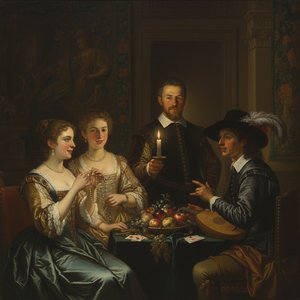
Gerard van Honthorst: Illuminating the Dutch Golden Age with Caravaggism & Courtly Grace
Explore the captivating world of Gerard van Honthorst, a Dutch Golden Age master renowned for his dramatic chiaroscuro & courtly portraits. Discover his life, art, and lasting influence on Baroque painting.
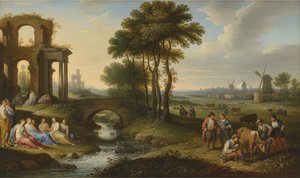
Cornelis van Poelenburch: Bridging Mannerism & the Dutch Baroque Landscape
Discover Cornelis van Poelenburch, a pivotal Dutch Baroque landscape painter bridging Mannerism & Italianate styles. Explore his life, key works, and lasting influence on 17th-century art with OriginalUniqueArt.

Rembrandt van Rijn : Les 25 Œuvres Maîtresses à Redécouvrir | OriginalUniqueArt
Plongez dans l'univers de Rembrandt van Rijn avec les 25 œuvres incontournables du maître baroque. Découvrez l'histoire, la technique et l'émotion derrière ses portraits célèbres et 'La Ronde de Nuit'. Reproductions tableaux haute qualité sur OriginalUniqueArt.com

L'Âge d'Or Néerlandais : Splendeur Baroque et Révolution Artistique
Explorez l'Âge d'Or néerlandais : découvrez les maîtres baroques (Rembrandt, Fabritius) et leur révolution artistique. Analyse approfondie, contexte historique et héritage durable. Un voyage au cœur de la peinture du XVIIe siècle.