Aperçu en situation
 Envoyer
 Partager
 Détails de l'œuvre
 Guide
Guide

 Télécharger l'image
 Articles similaires
 Radiographie
 Diaporama
 Statistiques
Le Concert
 Huile sur toile
- Art mural
- Baroque
 1623
1623- L'époque moderne
 124.0 x 205.0 cm
 Lire la suite
Giclées et impressions d'art
Impressions giclées ou sur toile de qualité musée, avec une production rapide et des finitions au choix. ( Commander la reproduction peinte à la main Passer au format numérique)




P118B €10

P118H €10

P118W €10

P438Z €10

P508JH €12

P508YH €12

P805H €10

P805Z €10

P919BZ €10

P919G €10

P919XJ €10

P959ZH €10

P968JZ €12

W106C €8

W218G €10

W218JH €8

W218Y €10

W307PJ €10

W316G €10

W316PJ €8

W316Y €10

W398PJ €8

W4111J €10

W500HY €15

W500JH €15

W692G €12

W849H €8

W940BG €15

W953PJ €8




Choisissez parmi nos formats prédéfinis qui respectent les proportions originales de l’œuvre.

Saisissez la largeur et la hauteur souhaitées pour qu'elles s'adaptent à votre cadre ou à votre mur. Une impression peut être recadrée, mais jamais agrandie au-delà de l'image originale ; ainsi, un format de forme différente entraînera la perte d'une partie de l'image. Nous vous envoyons une maquette numérique pour approbation avant toute impression. L'image présentée sur cette page ne montre pas le recadrage réel — seule la maquette le permet.
Livraison dans le monde entier () en 2 semaines au lieu des 4/5 semaines habituelles. (26 octobre)

Livraison express gratuite dans le monde entier

Toile de lin de qualité supérieure

Assurance transport complète

Garantie de remboursement des droits de douane

Garantie de fidélité des couleurs

Politique de retour de 100 jours (uniquement en cas de défaut)

Garantie de remboursement à 100%

Offre de tarifs dégressifs
 L'option verre n'est disponible que pour les dimensions inférieures à 110 cm.

Le Concert
Giclées et impressions d'art
Format de la reproduction
-


Prix total
€ 70
Une symphonie d'ombre et de lumière
Au cœur de l'Âge d'or néerlandais, peu d'artistes possédaient la capacité de maîtriser l'obscurité aussi magistralement que Gerard van Honthorst. Son chef-d'œuvre de 1623, Le Concert, n'est pas seulement la peinture d'un rassemblement musical ; c'est une expérience théâtrale capturée dans l'huile. Tandis que le regard parcourt la composition, on est immédiatement frappé par l'usage profond du ténébrisme — une technique où une lumière intense et focalisée perce avec perspicacité les ombres profondes et veloutées. Ce jeu dramatique crée un sentiment de volume et de présence qui donne l'impression que les personnages pourraient s'extraire directement de la toile pour entrer dans la pièce. La scène se déroule dans un intérieur opulent, où la lueur chaude et vacillante illumine un groupe de musiciens et de spectateurs, leurs visages capturés dans des moments de concentration intense ou de loisir paisible.
La composition est un triomphe de l'arrangement baroque. Honthorst emploie une structure pyramidale, guidant le regard du spectateur vers la figure centrale — un contrebassiste penché sur sa partition. Cette hiérarchie délibérée garantit que, bien que la pièce soit densément peuplée d'activité, il existe une ancre émotionnelle et visuelle claire à l'œuvre. Les musiciens sont rendus avec un réalisme si méticuleux que l'on peut presque entendre la vibration des cordes et le doux froissement des tissus de satin. Chaque texture, du bois poli des instruments au lustre lumineux des vêtements, a été capturée avec une précision époustouflante, offrant une richesse sensorielle qui s'adresse à la fois à l'intellect et à l'âme.
L'héritage du peintre de la nuit
Pour comprendre le poids émotionnel du Le Concert, il faut revenir aux années de formation d'Honthorst à Rome. C'est là qu'il rencontra les œuvres révolutionnaires du Caravage, une rencontre qui lui valut le surnom évocateur de Gherardo delle Notti — Gérard des Nuits. Cette influence est palpable dans chaque coup de pinceau de cette œuvre ; la manière dont la lumière ne se contente pas d'éclairer, mais sculpte activement la forme humaine à partir du vide. Cette pièce sert de pont entre le style radical des caravagistes italiens et l'excellence observationnelle et raffinée de la tradition néerlandaise. Elle capture un moment de grâce sociétale, reflétant la fascination du XVIIe siècle pour les quêtes intellectuelles, la musique et la jouissance sophistiquée des arts.
Pour le collectionneur averti ou le décorateur d'intérieur, Le Concert offre bien plus qu'une simple beauté esthétique ; il constitue un point focal d'un caractère profond. La capacité du tableau à équilibrer des ombres denses avec des rehauts brillants en fait un choix extraordinaire pour créer une atmosphère dans un espace. Qu'il soit placé dans un cadre de galerie contemporaine ou dans un cabinet classique, l'œuvre apporte avec elle un air de prestige historique et d'élégance intemporelle. C'est une célébration des moments harmonieux de la vie, figés dans le temps grâce à une technique qui demeure aussi captivante aujourd'hui qu'il y a près de quatre siècles.
Questions et réponses
Quelle technique et quel style caractérisent «Le Concert» de Gérard van Honthorst ?
Dans « Le Concert », la technique du Huile sur toile rencontre le mouvement Baroque.
À quel point la palette de "Le Concert" est-elle saturée ?
La palette de « Le Concert » présente une saturation Saturation modérée.
Quelle intensité lumineuse les couleurs de "Le Concert" semblent-elles refléter ?
La luminance enregistrée pour «Le Concert» de Gérard van Honthorst est de Ombre douce.
Biographie de l'artiste
Première jeunesse et formation
Gérard van Honthorst, peintre néerlandais important de l'âge d'or néerlandais, est né le 4 novembre 1590 à Utrecht. Il était le fils d’un peintre décorateur et a initialement été formé sous la direction de son père. Plus tard, il a poursuivi sa formation artistique sous Abraham Bloemaert.Carrière et influences
La carrière précoce de van Honthorst a impliqué une visite à Rome, où il a été fortement influencé par le style de Caravage. Cette influence se manifeste dans ses œuvres ultérieures, en particulier dans son utilisation de scènes éclairées artificiellement, ce qui lui a valu le surnom de « Gherardo delle Notti » ou « Gérard des nuits ». À son retour aux Pays-Bas, van Honthorst est devenu un peintre portraitiste de premier plan.Commandes notables et mécénat
Le travail de van Honthorst était très demandé, avec des mécènes notables tels que Vincenzo Giustiniani, qui l’a chargé de peindre « Christ devant le grand prêtre », exposé à la National Gallery de Londres. Il a également travaillé pour Cosme II de Médicis, grand-duc de Toscane, et était un favori auprès de la République néerlandaise et à l’étranger.Héritage et vie ultérieure
En 1620, van Honthorst est retourné à Utrecht, où il a bâti une réputation considérable. En 1623, année de son mariage, il était devenu président de la guilde Saint-Luc d’Utrecht. Son succès a conduit à des recommandations par Sir Dudley Carleton pour l'Earl of Arundel et Lord Dorchester.Œuvres clés et collaborations
- La prise du Christ, une œuvre collaborative initialement attribuée à van Honthorst, aujourd'hui reconnue comme l’œuvre d’un autre artiste.
- Christ devant le grand prêtre, commandée par Vincenzo Giustiniani, met en valeur la capacité de van Honthorst à capturer des scènes éclairées artificiellement.
- Des collaborations avec d’autres artistes, tels que Peter Paul Rubens, démontrent son influence sur le style baroque flamand.
Mouvement artistique et style
Van Honthorst faisait partie du mouvement des Utrecht Caravaggistes, caractérisé par l’utilisation d’un éclairage dramatique et d’une profondeur émotionnelle intense. Son travail reflète l’influence de la baroque italienne, tout en contribuant au développement de l'âge d'or néerlandais. Principaux liens :
Gérard van Honthorst
1590 - 1656 , Pays-Bas
L'essentiel de l'artiste
- Artistic Movement Or Style: Caravagisme d'Utrecht, Baroque
- Artists Or Movements Influenced By This Artist:
- Rembrandt van Rijn
- Georges de la Tour
- Artists Who Influenced This Artist:
- Caravage
- Abraham Bloemaert
- Date Of Birth: 4 novembre 1590
- Date Of Death: 27 avril 1656
- Full Name: Gérard van Honthorst
- Nationality: Néerlandais
- Notable Artworks:
- Christ avant le grand prêtre
- La Prise du Christ
- Place Of Birth (City And Country): Utrecht, Pays-Bas
Articles connexes

Les 10 Chefs-d'œuvre du Baroque Néerlandais : Artistes et Décor Intemporels
Plongez au cœur du Baroque néerlandais avec les 10 œuvres incontournables de Rembrandt, Vermeer et autres maîtres hollandais. Découvrez l'histoire, la lumière et les couleurs qui ont façonné ce mouvement artistique. Reproductions d'art de qualité muséale sur OriginalUniqueArt.com

L'Âge d'Or Néerlandais : Splendeur Baroque et Révolution Artistique
Explorez l'Âge d'Or néerlandais : découvrez les maîtres baroques (Rembrandt, Fabritius) et leur révolution artistique. Analyse approfondie, contexte historique et héritage durable. Un voyage au cœur de la peinture du XVIIe siècle.

Golden Light & Dutch Skies: The Timeless Magic of Dutch Golden Age Landscapes
Discover the breathtaking beauty of Dutch Golden Age landscapes. Explore the mastery of light, chiaroscuro, and 17th-century realism through an expert art history lens, celebrating the enduring legacy of the Dutch Masters for discerning collectors and art lovers.
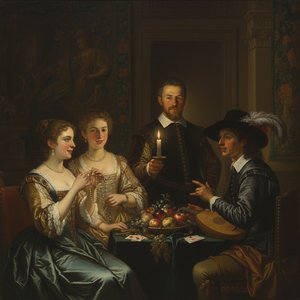
Gerard van Honthorst: Illuminating the Dutch Golden Age with Caravaggism & Courtly Grace
Explore the captivating world of Gerard van Honthorst, a Dutch Golden Age master renowned for his dramatic chiaroscuro & courtly portraits. Discover his life, art, and lasting influence on Baroque painting.

L'Âge d'Or Néerlandais : 10 Chefs-d'œuvre Incontournables pour Décorer avec Art et Histoire
Plongez au cœur de l'Âge d'Or néerlandais ! Découvrez 10 chefs-d'œuvre intemporels de Rembrandt, Vermeer et autres maîtres hollandais. Explorez leur histoire, technique & trouvez l'inspiration déco sur