Aperçu en situation
 Partager
 Partager
 Détails
 Guide
Guide

 Télécharger
 Articles similaires
 Radiographie
 Voir le diaporama
 Statistiques
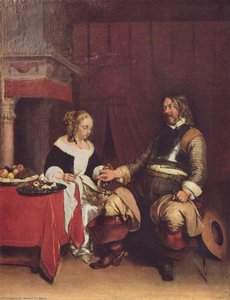
LE GALANT MILITAIRE


 Afficher la suite
Reproduction à l'huile faite à la main
Huile sur toile peinte à la main, avec cadre et dimensions personnalisés, réalisée sur commande par nos artistes. ( Passer au format impression Passer au format image numérique)




P118B $10

P118H $10

P118W $10

P438Z $10

P508JH $12

P508YH $12

P805H $10

P805Z $10

P919BZ $10

P919G $10

P919XJ $10

P959ZH $10

P968JZ $12

W106C $8

W218G $10

W218JH $8

W218Y $10

W307PJ $10

W316G $10

W316PJ $8

W316Y $10

W398PJ $8

W4111J $10

W500HY $15

W500JH $15

W692G $12

W849H $8

W940BG $15

W953PJ $8




Choisissez parmi nos formats prédéfinis qui respectent les proportions originales de l’œuvre.

Vous pouvez saisir vos propres dimensions pour l'adapter à un cadre ou à un espace spécifique. Si la taille sélectionnée ne correspond pas aux proportions de l'image d'origine, nous recadrerons l'œuvre ou prolongerons la peinture avec des éléments peints à la main supplémentaires. Une maquette numérique vous sera envoyée pour approbation avant le début de la production.
Veuillez noter que l'aperçu à l'écran ne reflète pas le recadrage ou l'extension réels. Seule la maquette montrera fidèlement la composition finale.
Bien que des tailles personnalisées soient disponibles, nous vous recommandons de sélectionner une dimension dans la liste prédéfinie afin de préserver les proportions d'origine.
Après la commande, l’équipe OriginalUniqueArt.com contactera le client par e-mail pour recueillir ses instructions et lui fournira une maquette d’aperçu
Livraison dans le monde entier () en 3 à 4 semaines au lieu des 5 semaines habituelles. (21 septembre). Aucun compromis sur la qualité.

Livraison express gratuite dans le monde entier

Toile de lin de haute qualité

Assurance transport complète

Garantie de remboursement des droits de douane

Garantie de fidélité des couleurs

Garantie de retour de 100 jours (uniquement en cas de défaut)

Garantie de remboursement à 100%

Tarifs dégressifs sur quantité
 L'option verre n'est disponible que pour les dimensions inférieures à 110 cm.

LE GALANT MILITAIRE
Technique de reproduction
Format de la reproduction
-


Prix total final
$ 325
A Quiet Encounter in the Golden Age
In the soft, amber glow of a seventeenth-century Dutch interior, Gerard ter Borch captures a moment that feels both profoundly private and eternally suspended. LE GALANT MILITAIRE is not merely a painting; it is an invitation into a whispered conversation, a masterclass in the art of the subtle. As we gaze upon this scene, we find ourselves seated at the edge of a domestic sanctuary, witnessing a delicate dance between a young woman and a man whose military attire hints at a world of duty and distant travels. The composition draws the eye inward, centering our attention on the intimate proximity of these two figures, while the warmth of the hearth in the background provides a sense of security and domestic peace.
Ter Borch, a pioneer of Dutch genre painting, possessed an uncanny ability to elevate the mundane into the magnificent. Here, the subject matter transcends a simple meeting; it embodies the burgeoning fascination of the Dutch Golden Age with the nuances of human interaction. The man, likely a soldier on leave or a gentleman of high standing, presents himself with a certain gallantry that justifies the painting's title. There is a palpable tension in the air—a mixture of tenderness and social decorum—that makes the viewer feel like an accidental witness to a secret shared between hearts.
The Mastery of Texture and Light
To behold this work is to experience a tactile journey through the medium of oil on canvas. Ter Borch’s technique is nothing short of extraordinary, characterized by an unwavering commitment to realism that defies the limitations of the brush. He does not simply paint fabric; he breathes life into it. One can almost feel the heavy, luxurious drape of the woman's garments and the crisp, structural presence of the man's military attire. His mastery lies in the meticulous layering of glazes, which allows light to penetrate the surface and reflect back, creating a luminous quality that mimics the true behavior of light hitting silk, stone, and skin.
< p>The color palette is a sophisticated arrangement of earthy, muted tones—creams, deep browns, and subtle ochres—interrupted only by the occasional, meaningful splash of red or the bright zest of fruit. This restrained use of color ensures that the focus remains on the interplay of light and shadow. The lighting itself appears to emanate from an unseen source within the room, casting gentle, soft-edged shadows that define the contours of a face or the curve of a piece of fruit, lending the entire scene a dreamlike, atmospheric depth.Symbolism and the Soul of the Canvas
Beyond its visual splendor, LE GALANT MILITAIRE is rich with the symbolic language of the seventeenth century. In the Dutch tradition, every element placed upon a table or tucked into a corner often carried a weight of meaning. The presence of fruit, for instance, serves as a subtle nod to the prosperity and economic vitality of the Dutch Republic, yet it can also hint at the fleeting nature of youth and pleasure. Even the title suggests a performance of character—the gallant soldier navigating the complexities of courtship within the safe confines of a domestic setting.
For the discerning collector or the interior designer, this piece offers more than just aesthetic beauty; it offers an emotional anchor. It brings a sense of historical gravity and refined elegance to any space. Whether placed in a sunlit gallery or a moody, contemporary study, the painting radiates a quiet sophistication. It is a work that rewards repeated viewing, revealing new layers of detail—a subtle facial expression, a glint of light on a metal plate, or the texture of a stone mantel—each time deepening our connection to this timeless moment of human connection.
Biographie de l'artiste
**Une Vie Dédiée à la Maîtrise du Genre : Gerard ter Borch**
Gerard ter Borch, également connu sous le nom de Gerard Terburg, est un peintre néerlandais du Siècle d'Or, reconnu pour son approche novatrice et sa capacité à capturer l’intimité de la vie quotidienne. Né en décembre 1617 à Zwolle et décédé le 8 décembre 1681, il a laissé une empreinte durable sur l'histoire de l'art.**Jeunesse, Formation et Premières Influences**
Né dans une famille d’artistes – son père, Gerard ter Borch l’Ancien, était lui-même un artiste et poète – Gerard ter Borch a bénéficié d’une éducation soignée dès son plus jeune âge. Ses premiers dessins datés de 1625 et 1626 témoignent de son talent précoce. Il a voyagé à Amsterdam en 1632, où il a probablement étudié avec Willem Cornelisz Duyster ou Pieter Codde. En 1634, il devient l'élève de Pieter de Molijn à Haarlem. Ses voyages en Angleterre (1635), en Allemagne, en France, en Espagne et en Italie ont considérablement élargi ses horizons artistiques, influençant son style unique et raffiné. Sa sœur Gesina a également embrassé une carrière artistique, renforçant l'héritage familial dans le domaine de la peinture.**Œuvres Majeures et Évolution Artistique**
Ter Borch est célèbre pour ses scènes de genre, ses portraits et ses compositions intérieures d’une grande finesse. Parmi ses œuvres les plus notables figurent :- La Lettre : Un chef-d'œuvre illustrant sa maîtrise de la lumière et des textures.
- Conversation galante : Gravée par Johann Georg Wille, cette œuvre témoigne de sa capacité à exprimer des émotions subtiles.
- Un Cavalier (1634) : Une œuvre précoce révélant son talent naissant.
- L'Arrivée d'Adrien Pauw à Münster (1646) : Un tableau important qui met en évidence ses compétences narratives.
**Influence et Héritage Artistique**
L'influence de Gerard ter Borch sur d’autres artistes néerlandais est indéniable. Gabriel Metsu, Gerrit Dou, Eglon van der Neer et Johannes Vermeer ont tous été influencés par son approche novatrice du genre pictural. Ter Borch a contribué à définir les caractéristiques de la peinture de genre hollandaise du XVIIe siècle, en mettant l'accent sur le réalisme, la lumière et l’observation attentive des détails de la vie quotidienne. Son attention particulière aux textures, aux effets de lumière et à la psychologie de ses personnages a fait de lui un artiste majeur de son époque.**Reconnaissance Posthume et Présence dans les Collections Internationales**
Bien que reconnu de son vivant, l'œuvre de Gerard ter Borch a connu une reconnaissance accrue au fil des siècles. Aujourd’hui, ses tableaux sont exposés dans certains des musées les plus prestigieux du monde :- Le Musée de l'Ermitage (Saint-Pétersbourg) : Possède six de ses œuvres, témoignant de son importance internationale.
- Le Musée de Berlin : Présente six tableaux, illustrant son attrait au-delà des frontières néerlandaises.
- Le Getty Center (Los Angeles) : Détient trois peintures, soulignant la valeur de son art dans les collections américaines.

Gerard ter Borch
1617 - 1681 , Pays-Bas
En bref
- Artistic Movement Or Style: Peinture de genre néerlandaise
- Artists Or Movements Influenced By This Artist:
- Gabriel Metsu
- Gerrit Dou
- Eglon van der Neer
- Johannes Vermeer
- Date Of Birth: Décembre 1617
- Date Of Death: 8 décembre 1681
- Full Name: Gerard ter Borch
- Nationality: Néerlandais
- Notable Artworks:
- La Lettre
- Conversation galante
- Man on horseback
- Arrivée à Münster
- Place Of Birth (City And Country): Zwolle, Pays-Bas
Articles similaires

L'Âge d'Or Néerlandais : Splendeur Baroque et Révolution Artistique
Explorez l'Âge d'Or néerlandais : découvrez les maîtres baroques (Rembrandt, Fabritius) et leur révolution artistique. Analyse approfondie, contexte historique et héritage durable. Un voyage au cœur de la peinture du XVIIe siècle.

L'Âge d'Or Néerlandais : 10 Chefs-d'œuvre Incontournables pour Décorer avec Art et Histoire
Plongez au cœur de l'Âge d'Or néerlandais ! Découvrez 10 chefs-d'œuvre intemporels de Rembrandt, Vermeer et autres maîtres hollandais. Explorez leur histoire, technique & trouvez l'inspiration déco sur

Mastering Light & Shadow: A Journey Through the Dutch Golden Age's Luminous Legacy
Embark on a cultural journey through the Dutch Golden Age. Explore the masterful interplay of light and shadow in 17th-century masterpieces, from Rembrandt to Vermeer, and discover how this era of profound realism continues to inspire fine art collectors today.

Golden Light & Dutch Skies: The Timeless Magic of Dutch Golden Age Landscapes
Discover the breathtaking beauty of Dutch Golden Age landscapes. Explore the mastery of light, chiaroscuro, and 17th-century realism through an expert art history lens, celebrating the enduring legacy of the Dutch Masters for discerning collectors and art lovers.

Gerard ter Borch: Intimacy & Light in the Dutch Golden Age
Explore the captivating world of Gerard ter Borch, a master of Dutch Golden Age genre painting. Discover his intimate scenes, masterful light, and lasting influence on art history. Learn more at OriginalUniqueArt.