

 Aperçu en situation
 Partager
 Partager
 Détails
 Guide imprimable

 Télécharger
 Articles similaires
 Radiographie
 Voir le diaporama
 Statistiques
Untitled (D2X7PJ)
 Oil On Canvas
- WallArt
- Northern Renaissance
 1510
1510 88.0 x 30.0 cm
 Metropolitan Museum of Art
 Afficher la suite
Reproduction à l'huile faite à la main
Huile sur toile peinte à la main, avec cadre et dimensions personnalisés, réalisée sur commande par nos artistes. ( Passer au format impression Passer au format image numérique)




P118B €10

P118H €10

P118W €10

P438Z €10

P508JH €12

P508YH €12

P805H €10

P805Z €10

P919BZ €10

P919G €10

P919XJ €10

P959ZH €10

P968JZ €12

W106C €8

W218G €10

W218JH €8

W218Y €10

W307PJ €10

W316G €10

W316PJ €8

W316Y €10

W398PJ €8

W4111J €10

W500HY €15

W500JH €15

W692G €12

W849H €8

W940BG €15

W953PJ €8




Choisissez parmi nos formats prédéfinis qui respectent les proportions originales de l’œuvre.

Type the width and the height you need, to fit your frame or your wall. This is hand-painted, so for a size with a different shape the artist can paint a bit more around the picture, or cut a bit — you choose. We send you a digital mockup to approve before the painting starts. The picture shown on this page does not show the real result — only the mockup does.
Après la commande, l’équipe OriginalUniqueArt.com contactera le client par e-mail pour recueillir ses instructions et lui fournira une maquette d’aperçu
Livraison dans le monde entier () en 3 à 4 semaines au lieu des 5 semaines habituelles. (14 octobre). Aucun compromis sur la qualité.

Livraison express gratuite dans le monde entier

Toile de lin de haute qualité

Assurance transport complète

Garantie de remboursement des droits de douane

Garantie de fidélité des couleurs

Garantie de retour de 100 jours (uniquement en cas de défaut)

Garantie de remboursement à 100%

Tarifs dégressifs sur quantité
 L'option verre n'est disponible que pour les dimensions inférieures à 110 cm.

Untitled (D2X7PJ)
Technique de reproduction
Format de la reproduction
-


Prix total final
€ 260
A Glimpse into the Soul of Early Netherlandish Painting
Gerard David’s “Untitled (D2X7PJ),” a captivating religious scene rendered in oil on panel around 1510, offers more than just a visual experience; it's a portal into the contemplative heart of early Renaissance Flanders. Born in Oudewater and trained under Albert van Oudewater, David quickly established himself as a leading figure in Bruges’ vibrant artistic community, inheriting and refining the traditions of his predecessors while simultaneously forging a uniquely personal style. This particular work, often referred to simply as “The Angel Gabriel Announcing the Virgin,” exemplifies this delicate balance – a masterful synthesis of meticulous detail, luminous color, and profound spiritual depth.
The painting depicts a serene moment within the Annunciation narrative: the Archangel Gabriel appears before the Virgin Mary, delivering the momentous news that she will conceive and bear the Son of God. David’s approach diverges subtly from the more rigidly formal depictions prevalent at the time. While retaining elements of late medieval iconography – the carefully positioned halos, the symbolic gestures – he imbues the scene with a remarkable sense of intimacy and naturalism. The figures are not presented as distant deities but rather as human beings caught in a profound exchange, their expressions conveying both surprise and acceptance.
The Language of Light and Color
David’s genius lies primarily in his manipulation of light and color. He eschews the stark contrasts favored by some of his contemporaries, opting instead for a subtle, almost ethereal illumination that permeates the entire composition. This “Flemish Light,” as it's often called, creates an atmosphere of quiet reverence and imbues the scene with a sense of otherworldly beauty. The palette is restrained yet remarkably rich – deep blues and purples dominate the background, contrasted by the warm, creamy tones of Mary’s robes and the radiant glow surrounding Gabriel. Notice how he uses layering of translucent glazes to build up depth and luminosity, capturing the delicate textures of fabric and skin with astonishing precision.
The artist's attention to detail is equally remarkable. The folds of Mary’s garments are rendered with meticulous care, each crease and pleat conveying a sense of volume and movement. Gabriel’s wings, depicted in shimmering gold leaf, seem to radiate light, while the delicate details of the angel’s face – his serene expression, the subtle curve of his lips – reveal a profound understanding of human anatomy and emotion.
Symbolism and Spiritual Resonance
Beyond its aesthetic beauty, “Untitled (D2X7PJ)” is rich in symbolic meaning. The dove, hovering above the scene, represents the Holy Spirit, while the lilies adorning Mary’s hands symbolize purity and virginity. The carefully chosen gestures of both figures – Gabriel’s outstretched hand offering the message, Mary’s receptive posture – underscore the central theme of divine grace and human humility. This is not merely a depiction of an event; it's a meditation on faith, obedience, and the profound mystery of God’s plan.
Furthermore, David’s choice to portray this pivotal moment with such quiet contemplation reflects the prevailing spiritual currents of his time – a shift away from the more overtly dramatic representations of religious subjects that had characterized earlier periods. He invites the viewer not just to observe but to participate in the scene, fostering a sense of personal connection and spiritual reflection.
A Timeless Masterpiece for Today
“Untitled (D2X7PJ)” stands as a testament to Gerard David’s artistic genius and his enduring legacy. Reproduced faithfully by OriginalUniqueArt.com, this painting continues to captivate audiences with its beauty, serenity, and profound spiritual resonance. Whether adorning a private residence or gracing the walls of a museum, it serves as a poignant reminder of the power of art to transcend time and connect us to something larger than ourselves. Its subtle colors and evocative imagery create an atmosphere of peace and contemplation – a perfect addition to any space seeking beauty, depth, and a touch of timeless grace.
Questions et réponses
À quel sentiment "Untitled (D2X7PJ)" est-il associé ?
«Untitled (D2X7PJ)» est associé à un sentiment Calm. La tonalité émotionnelle décrit l'impression que dégage l'œuvre.
D'où viennent les visiteurs de «Untitled (D2X7PJ)» de Gérard David ?
Une page Statistiques est disponible pour « Untitled (D2X7PJ) ». Elle présente l'évolution mensuelle des visites de l'œuvre ainsi que des autres créations de l'artiste, avec une répartition par pays et par langue.
Puis-je commander une reproduction à l'huile de « Untitled (D2X7PJ) » ?
Hand-painted copies of «Untitled (D2X7PJ)» de Gérard David are sold on ce site web: une reproduction à l'huile peinte à la main sur toile de lin, ordered from its Hand-Painted Reproduction page.
Biographie de l'artiste
Vie et carrière
Gérard David, figure marquante du mouvement de la peinture néerlandaise primitive, a laissé une empreinte indélébile sur le monde de l'art grâce à son utilisation brillante de la couleur. Né vers 1460 à Oudewater, aux Pays-Bas, la vie de David reste largement mystérieuse, avec seulement quelques détails biographiques connus. On pense qu’il pourrait avoir été Meester Geraerdt van Brugghe, qui devint maître de la guilde des imagiers et selliers d'Anvers en 1515. David connut un succès considérable durant sa vie, dirigeant probablement deux ateliers à Anvers et Bruges. Sa réputation déclina au XVIIe siècle mais fut redécouverte au XIXe siècle.Style artistique et œuvres notables
L’approche innovante de David envers le paysage et son utilisation magistrale de la lumière et de l'ombre caractérisent son œuvre. Parmi ses pièces les plus remarquables, on trouve :- Le Mariage de Cana à la National Gallery, Londres.
- Le triptyque de la Vierge à l'Enfant et des saints dans la collection Brignole-Sale, Gênes.
- La Vierge parmi les vierges, aujourd'hui au musée de Rouen, qu’il a offert aux Carmélites de Sion à Bruges.
Influences et développement artistique
David a été influencé par plusieurs artistes importants de son époque, notamment Jan van Eyck et Hugo van der Goes. Il a su intégrer les techniques des premiers maîtres néerlandais tout en développant un style personnel caractérisé par une palette de couleurs vives et une attention particulière aux détails du paysage. Son œuvre témoigne d'une transition entre l'art médiéval tardif et la Renaissance, marquant une évolution significative dans la peinture néerlandaise.Héritage et importance historique
L’impact de Gérard David sur le monde de l'art est indéniable. Son style unique et son approche de la couleur ont influencé de nombreux artistes, et ses œuvres continuent d'être célébrées dans divers musées et collections à travers le monde. Il a contribué à façonner l'esthétique de la peinture néerlandaise du début du XVIe siècle et a laissé un héritage durable qui continue d'inspirer les artistes contemporains.Collections et expositions
Les œuvres de Gérard David sont visibles dans plusieurs musées prestigieux, notamment :- OriginalUniqueArt: explorez la collection étendue des peintures de Gérard David, y compris L'Adoration des Mages.
- Musée Groeninge, Bruges, Belgique : ce musée municipal présente une impressionnante collection de peintures flamandes et belges, dont les œuvres de Gérard David.

Gérard David
1450 - 1523 , Netherlands
En bref
- Artistes Influents:
- Jan van Eyck
- Hugo van der Goes
- Diric Bouts
- Date De Décès: 1523
- Date De Naissance: vers 1460
- Influence Sur D'Autres Artistes:
- Ambrosius Benson
- Adriaen Isenbrant
- Lieu De Naissance: Oude Woerden, Pays-Bas
- Mouvement Artistique: Première École néerlandaise
- Nationalité: Néerlandais
- Nom Complet: Gerard David
- Œuvres Notables:
- Le Mariage de Cana
- Vierge à l'Enfant
- La Vierge parmi les vierges
Articles similaires

Messagers Célestes : Exploration Historique et Artistique des Anges dans la Peinture
Explorez l'histoire fascinante des anges dans la peinture, de Byzance à la Renaissance. Découvrez le symbolisme religieux et les chefs-d'œuvre de Fra Angelico, Mantegna et autres maîtres. Analyse approfondie et reproductions d'art exceptionnelles.

The Enduring Power of Painting: A Historical & Contemporary Exploration of Form and Emotion
Explore the rich history & enduring techniques of oil painting with OriginalUniqueArt. Discover masterpieces, learn about art collecting, and find authentic handmade reproductions crafted by skilled artists.

Celestial Messengers: A Comprehensive Exploration of Angelic Representation in Art History
Explore the captivating history of angels in art! Discover symbolism, iconic Renaissance masterpieces & renowned artists. Expert insights for art lovers & collectors at OriginalUniqueArt.

The Enduring Legacy of Oil on Canvas: Technique, History & Aesthetic Impact
Explore the rich history & techniques of oil painting – from Renaissance masters to Impressionism. Discover pigments, layering methods, and why this timeless medium endures. Expert insights for artists & art enthusiasts.
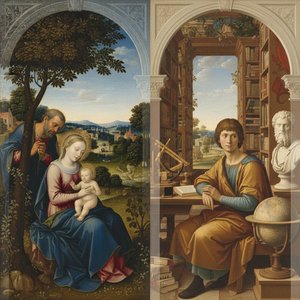
Gerard David: Bridging Late Medieval Tradition with Early Renaissance Humanism
Explore the captivating world of Gerard David, a pivotal figure bridging late medieval artistry with the Early Renaissance. Discover his innovative techniques, religious masterpieces, and enduring legacy – a must-read for discerning art collectors.


