

 Aperçu en situation
 Envoyer
 Partager
 Détails de l'œuvre
 Guide
Guide

 Télécharger l'image
 Articles similaires
 Radiographie
 Diaporama
 Statistiques
Jésus in the suburb

 Lire la suite
L’œuvre d'art présentée sur cette page est protégée par le droit d'auteur, ce qui signifie que nous ne pouvons légalement créer ou vendre de reproduction identique. Cette protection est appliquée en vertu d'accords internationaux tels que la Convention de Berne et par les lois nationales, notamment celles énoncées par le Loi américaine sur le droit d'auteur - Titre 17.
Cette méthode est pleinement conforme aux réglementations sur le droit d'auteur car elle ne repose pas sur la copie ou la duplication de l'œuvre protégée. Il s'agit plutôt d'une réinterprétation créative — une nouvelle peinture qui s'inspire de l'original sans pour autant lui être identique.
Giclées et impressions d'art
Impressions giclées ou sur toile de qualité musée, avec une production rapide et des finitions au choix. ( Commander la reproduction peinte à la main Passer au format numérique)




P118B €10

P118H €10

P118W €10

P438Z €10

P508JH €12

P508YH €12

P805H €10

P805Z €10

P919BZ €10

P919G €10

P919XJ €10

P959ZH €10

P968JZ €12

W106C €8

W218G €10

W218JH €8

W218Y €10

W307PJ €10

W316G €10

W316PJ €8

W316Y €10

W398PJ €8

W4111J €10

W500HY €15

W500JH €15

W692G €12

W849H €8

W940BG €15

W953PJ €8




Choisissez parmi nos formats prédéfinis qui respectent les proportions originales de l’œuvre.

Saisissez la largeur et la hauteur souhaitées pour qu'elles s'adaptent à votre cadre ou à votre mur. Une impression peut être recadrée, mais jamais agrandie au-delà de l'image originale ; ainsi, un format de forme différente entraînera la perte d'une partie de l'image. Nous vous envoyons une maquette numérique pour approbation avant toute impression. L'image présentée sur cette page ne montre pas le recadrage réel — seule la maquette le permet.
Livraison dans le monde entier () en 2 semaines au lieu des 4/5 semaines habituelles. (27 octobre)

Livraison express gratuite dans le monde entier

Toile de lin de qualité supérieure

Assurance transport complète

Garantie de remboursement des droits de douane

Garantie de fidélité des couleurs

Politique de retour de 100 jours (uniquement en cas de défaut)

Garantie de remboursement à 100%

Offre de tarifs dégressifs
 L'option verre n'est disponible que pour les dimensions inférieures à 110 cm.

Jésus in the suburb
Giclées et impressions d'art
Format de la reproduction
-


Prix total
€ 70
Georges Rouault’s “Jésus in the suburb”: A Meditation on Suffering and Light
The painting "Jésus in the suburb" by Georges Rouault isn't merely an image; it’s a visceral experience—a journey into the heart of Expressionist conviction. Created around 1930, during a period marked by profound social anxieties and spiritual disillusionment following the Great Depression, this artwork transcends simple representation to deliver a powerful statement about faith amidst despair. Rouault's artistic trajectory began in humble circumstances – his family’s refuge in a cellar during the Siege of Paris—a formative experience that instilled within him an unwavering compassion for humanity’s vulnerable moments. This early influence permeated his entire artistic vision, shaping his distinctive style and thematic preoccupations.- Style & Technique: Rouault's signature technique is characterized by bold contours framing luminous color fields—a deliberate homage to medieval stained glass windows. He employed a layered approach using oil paint on canvas, applying thick impasto in certain areas to convey texture and immediacy. Visible brushstrokes aren’t merely accidental; they are integral to the artist’s intention to communicate emotional intensity directly to the viewer.
- Historical Context: The painting emerged from the turbulent backdrop of the 1930s, a time when Europe wrestled with economic hardship and existential uncertainty. Rouault's artistic response mirrored the broader cultural preoccupation with confronting suffering—a reaction against the perceived emptiness of rational optimism.
Composition & Color Palette: Darkness Embraced by Fleeting Radiance
The composition is strikingly simple yet profoundly effective. A central perspective guides the eye along a receding road, flanked by buildings rendered in muted browns and greys—a deliberate choice to convey the bleakness of urban poverty. Dominating the upper portion of the frame is a large moon, positioned against a dark sky, serving as a beacon of hope amidst pervasive gloom. Rouault’s masterful use of color reinforces this duality; while predominantly dark hues dominate the scene, splashes of crimson—perhaps symbolizing divine compassion—punctuate the darkness, creating a dynamic interplay between light and shadow.- Symbolism: The moon itself embodies spiritual illumination—a reminder that even in darkest times, faith persists. Rouault’s figures are depicted with solemn expressions, conveying vulnerability and sorrow—reflecting the artist's empathy for those burdened by hardship.
Emotional Impact & Artistic Legacy
“Jésus in the suburb” isn’t designed to elicit comfortable contemplation; rather, it compels viewers to confront uncomfortable truths about human suffering and spiritual longing. Rouault’s artistic legacy extends far beyond stylistic innovation—he championed a humanist ethos rooted in compassion for the marginalized and vulnerable. His unwavering commitment to portraying the realities of poverty and despair continues to inspire artists today, cementing his place as one of the foremost Expressionist voices of the 20th century.- Interior Design Considerations: Reproductions of Rouault’s work can inject a contemplative mood into interior spaces—particularly those featuring muted palettes and dramatic lighting. Consider framing “Jésus in the suburb” alongside pieces that explore themes of faith, resilience, and human compassion.
Concluding Thoughts: A Testament to Artistic Integrity
Ultimately, Rouault’s "Jésus in the suburb" stands as a testament to artistic integrity—a refusal to compromise on emotional honesty in pursuit of aesthetic beauty. It remains an enduring symbol of Expressionist conviction and a poignant reminder that art can serve as a conduit for confronting profound moral questions.Questions et réponses
Sous quels autres noms ou pseudonymes Georges Rouault est-il connu ?
Georges Rouault est également connu sous le nom de Georges-Henri Rouault.
Quel est l'usage recommandé pour une impression de « Jésus in the suburb » ?
L'utilisation suggérée pour «Jésus in the suburb» de Georges Rouault est Mood. Elle peut également servir à d'autres fins.
Quel est le format de « Jésus in the suburb » ?
L'œuvre « Jésus in the suburb » est au format Portrait. Cette information est utile pour prévoir l'emplacement de sa reproduction.
Biographie de l'artiste
Premières années et formation
Georges Henri Rouault, peintre, dessinateur et graveur français, est né à Paris le 27 mai 1871, dans une famille modeste. Sa mère encouragea son amour pour les arts, et dès l'âge de 14 ans, il commença un apprentissage de verrier et restaurateur, qui dura jusqu’en 1890. Cette expérience précoce influença probablement son style pictural mature, caractérisé par des contours noirs marqués et des couleurs lumineuses, rappelant le vitrail.Carrière artistique
Pendant son apprentissage, Rouault suivit des cours du soir à l'École des Beaux-Arts puis entra à l'École des beaux-arts en 1891, où il étudia sous la direction de Gustave Moreau. Ses premières œuvres révèlent un symbolisme dans l’utilisation de la couleur, reflétant l'influence de Moreau. Après le décès de Moreau en 1898, Rouault fut nommé conservateur du musée Moreau à Paris.Fauvisme et Expressionnisme
Rouault rencontra des artistes notables tels que Henri Matisse, Albert Marquet, Henri Manguin et Charles Camoin, ce qui l'amena vers le mouvement fauviste, avec Matisse comme leader. Son utilisation de contrastes saisissants et d’émotion fut influencée par Vincent van Gogh. Ses caractérisations de personnalités grotesques exagérées inspirèrent les peintres expressionnistes.Œuvres notables et expositions
* En 1891, Rouault peignit *Le Chemin de Calvary*. * À partir de 1895, il participa à d'importantes expositions publiques, dont le Salon d’Automne qu’il contribua à fonder. * En 1907, Rouault commença une série de peintures consacrées aux tribunaux, aux clowns et aux prostituées, interprétées comme une critique morale et sociale.Héritage et vie ultérieure
À partir de 1917, Rouault se consacra à la peinture, sa foi chrétienne influençant son œuvre. Il créa des dessins pour le ballet *Le Fils prodigue* de Diaghilev en 1929. En 1930, il commença à exposer dans d'autres pays, principalement à Londres, New York et Chicago. Rouault est décédé à Paris le 13 février 1958, laissant derrière lui un héritage en tant que l’un des artistes chrétiens les plus passionnés du XXe siècle. Important : À la fin de sa vie, Rouault brûla 300 de ses tableaux, estimés aujourd'hui à plus d'un demi-milliard de francs.
Georges Rouault
1871 - 1958 , France
L'essentiel de l'artiste
- Artistes Influents:
- Gustave Moreau
- Vincent van Gogh
- Henri Matisse
- Date De Décès: 13 février 1958
- Date De Naissance: 27 mai 1871
- Influences Artistiques:
- Expressionnisme
- Fauvisme
- Lieu De Naissance: Paris, France
- Mouvement Artistique: Expressionnisme, Fauvisme
- Nationalité: Française
- Nom Complet: Georges Rouault
- Œuvres Notables:
- Le Chemin de Calvary
- Dame du Haut-Quartier
Articles connexes

Georges Seurat : Les 25 Œuvres Maîtresses du Pointillisme | OriginalUniqueArt
Plongez dans l'univers lumineux de Georges Seurat ! Découvrez les 25 œuvres majeures du pointillisme, de 'Un dimanche après-midi à l'Île de la Grande Jatte' aux 'Poseuses'. Reproductions d'art exceptionnelles et inspiration déco sur OriginalUniqueArt.com.
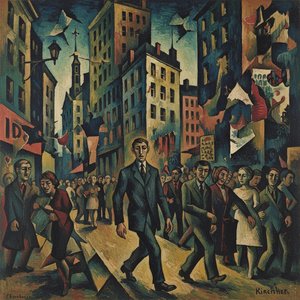
Ernst Ludwig Kirchner : Anxiété urbaine et fragmentation de l'identité moderne dans l'Expressionnisme allemand
Explorez l'œuvre poignante d'Ernst Ludwig Kirchner et l'Expressionnisme allemand. Analyse approfondie de Die Brücke, de la vie urbaine berlinoise et de la fragmentation identitaire. Découvrez des reproductions de haute qualité sur OriginalUniqueArt.

Saint George in Art: A Scholarly Exploration of Iconic Masterpieces and Eternal Legends
Delve into the profound legacy of Saint George through art history. Explore iconic masterpieces by Raphael and Dürer, decoding the iconography of the dragon legend. Discover scholarly insights and bring these timeless tales to life with our museum-quality, hand-painted oil reproductions.

Georges Braque : Les 25 Œuvres Maîtresses du Cubisme et de la Modernité | OriginalUniqueArt
Plongez dans l'univers de Georges Braque avec les 25 œuvres incontournables du cubisme. Découvrez l'histoire, les techniques et l'impact de ce maître de l'art moderne. Reproductions d'art exceptionnelles sur OriginalUniqueArt.com.
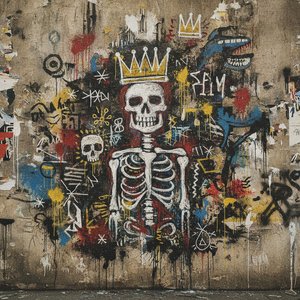
Basquiat and Raw Pop: The High-Energy Rebellion of Neo-Expressionism and the Legacy of Urban Street Art
Explore the raw energy of Jean-Michel Basquiat and the Neo-Expressionist movement. Discover how urban rebellion and SAMO© transformed 1980s New York art history through deep academic insight and visual analysis.


