

 Aperçu en situation
 Envoyer
 Partager
 Détails de l'œuvre

 Télécharger
 Articles similaires
 Radiographie
 Diaporama
untitled (7166)


 Lire la suite
Giclées et impressions d'art
Impressions giclées ou sur toile de qualité musée, avec une production rapide et des finitions au choix. ( Commander la reproduction peinte à la main Acheter l'image haute résolution)




P118B $10

P118H $10

P118W $10

P438Z $10

P508JH $12

P508YH $12

P805H $10

P805Z $10

P919BZ $10

P919G $10

P919XJ $10

P959ZH $10

P968JZ $12

W106C $8

W218G $10

W218JH $8

W218Y $10

W307PJ $10

W316G $10

W316PJ $8

W316Y $10

W398PJ $8

W4111J $10

W500HY $15

W500JH $15

W692G $12

W849H $8

W940BG $15

W953PJ $8




Choisissez parmi nos formats prédéfinis qui respectent les proportions originales de l’œuvre.

Vous pouvez saisir vos propres dimensions pour vous adapter à un cadre ou à un espace spécifique. Si la taille sélectionnée ne correspond pas aux proportions de l'image originale, nous recadrerons l'œuvre ou étendrons l'image avec une bordure en miroir ou une couleur unie. Une maquette numérique vous sera envoyée pour approbation avant le début de la production.
Veuillez noter que l'aperçu à l'écran ne reflète pas le recadrage ou l'extension réelle. Seule la maquette montrera avec précision la composition finale.
Bien que des tailles personnalisées soient disponibles, nous vous recommandons de choisir une dimension dans la liste prédéfinie afin de préserver les proportions originales.
Livraison dans le monde entier () en 2 semaines au lieu des 4/5 semaines habituelles. (31 août)

Livraison express gratuite dans le monde entier

Toile de lin de qualité supérieure

Assurance transport complète

Garantie de remboursement des droits de douane

Garantie de fidélité des couleurs

Politique de retour de 60 jours (uniquement en cas de défaut)

Garantie de remboursement à 100%

Offre de tarifs dégressifs
 L'option verre n'est disponible que pour les dimensions inférieures à 110 cm.

untitled (7166)
Giclées et impressions d'art
Format de la reproduction
-


Prix total
$ 80
Georges Braque’s “Untitled (7166)” – A Fragmented Vision of Modernity
Georges Braque's "Untitled (7166)," a captivating study in blue and stark contrasts, presents a compelling enigma from the early years of 20th-century art. This seemingly simple composition—a muted blue backdrop punctuated by a fractured helmet and a dismantled airplane propeller—is far more than a mere assemblage of objects; it’s a potent distillation of the anxieties and burgeoning futurism that defined the era, reflecting Braque's pivotal role in pioneering Cubism alongside Pablo Picasso. The painting, shrouded in an air of mystery regarding its precise date and size, invites us to contemplate the fractured realities of a rapidly changing world.
The immediate impact is one of disorientation. The black helmet, rendered with sharp angles and suggesting damage or even disintegration, dominates the right side of the canvas. It’s not merely a military artifact; it embodies a sense of loss, perhaps representing the casualties of conflict or the breakdown of traditional order. Juxtaposed against this is the airplane propeller in the left foreground – a symbol of technological advancement, speed, and ultimately, the dehumanizing potential of industrial progress. The deliberate placement creates a dynamic tension, forcing the viewer to confront these opposing forces.
The Roots of Cubism: Cézanne’s Influence and Geometric Deconstruction
To fully appreciate “Untitled (7166),” one must understand Braque's artistic journey within the context of early 20th-century art. Following his training as a house painter, Braque’s innate artistic sensibility led him to formal studies at the École des Beaux-Arts in Le Havre. However, it was his encounter with the Fauvist movement – characterized by its bold use of color and emotional expression – that served as a crucial stepping stone. Crucially, Braque's subsequent immersion in the work of Paul Cézanne proved transformative. Cézanne’s emphasis on geometric forms, multiple perspectives, and the flattening of space profoundly influenced Braque’s approach to representation.
This influence is strikingly evident in “Untitled (7166).” Braque's technique mirrors Cézanne’s – a deliberate deconstruction of form into fragmented planes. The helmet isn’t depicted as a solid, unified object; instead, it’s broken down into geometric shards, suggesting multiple viewpoints simultaneously. Similarly, the propeller is similarly dissected, its whirling blades reduced to angular segments. This fragmentation wasn't simply an aesthetic choice; it was a radical attempt to represent reality in a way that captured the dynamism and complexity of modern life – a key tenet of Cubism.
Symbolic Layers: War, Technology, and the Fragmented Self
Beyond its formal innovations, “Untitled (7166)” resonates with deeper symbolic meanings. The helmet, often associated with military conflict and authority, hints at the pervasive influence of war during this period. The airplane propeller, a symbol of technological progress and modernity, simultaneously evokes anxieties about industrialization and its potential consequences – displacement, alienation, and the loss of human connection. The figure holding a gun further amplifies these themes, suggesting a world where violence and control are ever-present.
Furthermore, the painting can be interpreted as an exploration of the fragmented self—a common theme in early 20th-century art reflecting the psychological impact of rapid social change. Braque’s deconstructed forms mirror the breakdown of traditional values and the disorientation experienced by individuals navigating a rapidly evolving world. The overall effect is one of unsettling beauty, prompting viewers to question their own perceptions of reality and the nature of modern existence.
A Legacy of Innovation: Braque's Contribution to Modern Art
“Untitled (7166)” stands as a testament to Georges Braque’s pivotal role in shaping the course of 20th-century art. Alongside Pablo Picasso, he was instrumental in developing Cubism – an artistic movement that irrevocably altered the way artists represented space, form, and perspective. His meticulous study of Cézanne's principles, combined with his own innovative experimentation, resulted in a body of work characterized by its geometric precision, multiple viewpoints, and profound exploration of modern themes. Reproductions of this piece offer a unique opportunity to experience firsthand the genius of Braque’s vision – a fragmented yet powerfully evocative reflection of a world on the cusp of transformation.
Biographie de l'artiste
**Jeunesse et formation**
Georges Braque, peintre français renommé, collagiste, dessinateur, graveur et sculpteur, est né le 13 mai 1882 à Argenteuil, dans les Val-d'Oise. Il a grandi à Le Havre et a initialement été formé pour devenir peigneur et décorateur comme son père et son grand-père. Cependant, les inclinations artistiques de Braque l’ont conduit à étudier la peinture à l’École des Beaux-Arts de Le Havre de 1897 à 1899.**Évolution artistique et fauvisme**
En 1902, après avoir terminé son apprentissage auprès d'un décorateur à Paris, Braque a fréquenté l’Académie Humbert jusqu’en 1904. Cette période a marqué son introduction au fauvisme, un style caractérisé par des couleurs vives et des réponses émotionnelles. Influencé par les œuvres de Henri Matisse et André Derain, Braque a adopté une approche fauviste, comme en témoigne son tableau La Patience (fauvisme, huile sur toile).**Contribution au cubisme**
La collaboration de Braque avec Pablo Picasso de 1908 à 1912 a conduit au développement du cubisme. Leurs œuvres cubistes analytiques, telles que Georges Braque: La Patience et Pablo Picasso: Le Clarinette(cubisme analytique, huile sur toile), sont aujourd’hui considérées comme des jalons de l'histoire de l'art.**Héritage et œuvres notables**
* Maisons à l’Estaque : Témoignage de l'utilisation innovante de la géométrie et de la perspective simultanée par Braque. * La Patience(fauvisme, huile sur toile) : démontre le style fauve de Braque. * Le Clarinette(cubisme analytique, huile sur toile) : œuvre cubiste collaborative avec Picasso.**Musées et collections**
* Musée d'Orsay : présente une vaste collection d'art impressionniste et post-impressionniste, incluant des œuvres de Braque. * Musée de l'Orangerie : expose une large gamme d'œuvres d'art, incluant celles de Braque et d'autres artistes notables.- Découvrez-en davantage sur la vie et l’œuvre de Georges Braque sur OriginalUniqueArt.com
- Explorez la collection du Musée d'Orsay, présentant des œuvres de Braque et d'autres artistes, sur Musée d'Orsay - Wikipédia
- Apprenez-en davantage sur le fauvisme et son influence sur le développement du cubisme avec le mouvement artistique fauviste sur OriginalUniqueArt.com
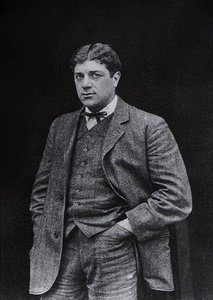
Georges Braque
1882 - 1963 , France
L'essentiel de l'artiste
- Artistes Influents:
- Henri Matisse
- André Derain
- Paul Cézanne
- Date De Décès: 1963
- Date De Naissance: 13 mai 1882
- Influence Sur Les Artistes: ['Pablo Picasso']
- Lieu De Naissance: Argenteuil, France
- Mouvement Artistique: Cubisme, Fauvisme
- Nationalité: Française
- Nom Complet: Georges Braque
- Oeuvres Notables:
- Maisons à L'Estaque
- La Patience
- Le Clarinette
- Nature morte avec cruets
Articles connexes

Georges Braque : Les 25 Œuvres Maîtresses du Cubisme et de la Modernité | OriginalUniqueArt
Plongez dans l'univers de Georges Braque avec les 25 œuvres incontournables du cubisme. Découvrez l'histoire, les techniques et l'impact de ce maître de l'art moderne. Reproductions d'art exceptionnelles sur OriginalUniqueArt.com.

Georges Seurat : Les 25 Œuvres Maîtresses du Pointillisme | OriginalUniqueArt
Plongez dans l'univers lumineux de Georges Seurat ! Découvrez les 25 œuvres majeures du pointillisme, de 'Un dimanche après-midi à l'Île de la Grande Jatte' aux 'Poseuses'. Reproductions d'art exceptionnelles et inspiration déco sur OriginalUniqueArt.com.

Les 10 Chefs-d'œuvre Dominés par le Bleu Ardoise : Art, Histoire & Décor
Plongez dans l'univers fascinant des 10 plus beaux tableaux dominés par le bleu ardoise. Découvrez l'histoire, les artistes et les techniques de ces chefs-d'œuvre impressionnistes et contemporains. Inspirez votre décoration intérieure avec !
Serene Blue Backgrounds: Discover Soulful Art to Transform Your Space with Timeless Elegance
Transform your home with soulful blue art. From serene Monet impressions to modern textured sculptures, discover curated masterpieces designed to inspire calm. Explore expert art consultations and bespoke hand-painted reproductions to create your personal sanctuary.

Cubism Unveiled: How Picasso and Braque Redefined Modern Art through Geometric Revolution
Explore the revolutionary world of Cubism. Discover how Pablo Picasso and Georges Braque dismantled perspective to redefine modern art through geometric innovation and analytical mastery. An essential guide for art students, collectors, and history enthusiasts.



